
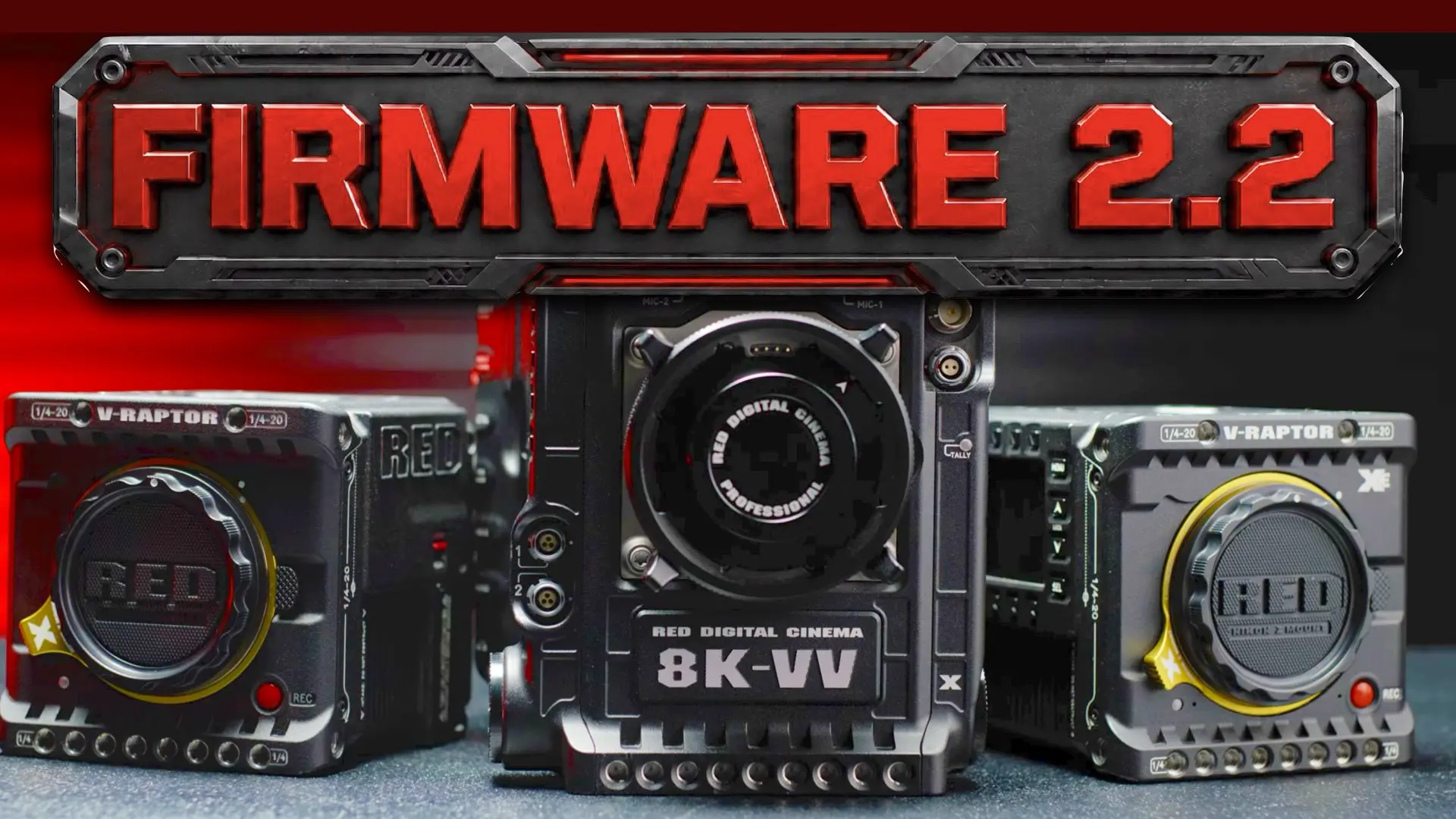
RED has released Firmware 2.2 for the V-Raptor platforms, and this one deserves more attention than a routine software update. The update brings faster boot times, lower power draw, improved ND control, better monitoring tools, tally-based recording, expanded RED Connect support, and new Phantom Track flexibility. In plain English, RED is making the V-Raptor X more responsive, more efficient, and more useful in live production environments where cinema quality and broadcast speed need to work together.
![Firmware 2.2 is now available for the V-RAPTOR platform, including V-RAPTOR XL [X] and V-RAPTOR XE.](https://ymcinema.com/wp-content/uploads/2026/05/RED-Firmware-2.2-Turns-V.RAPTOR-X-Into-a-Faster-8K-Live-Production-Camera.002.webp)
What RED added in Firmware 2.2
According to RED’s official firmware release information, version 2.2.4 is now available for V-RAPTOR, V-RAPTOR X, and V-RAPTOR XE cameras. RED lists the release date as May 18, 2026, which makes this a current update for the platform rather than an older beta feature set. The most important additions include reduced boot time, reduced power consumption, Broadcast R3D support in RED Connect, Phantom Track support in RED Connect, Discrete Phantom Track control, timecode-triggered recording, External Tally Recording, test patterns, user button video overlays, ND Iris Tracking, and media-related updates. The RED Tech breakdown gives the practical production context. RED says its engineering team measured power draw reductions of up to 5 watts. That may sound modest to a casual reader, but on a long production day, it can affect battery behavior, rig planning, heat, runtime, and operational confidence. A camera that consumes less power is easier to manage on handheld rigs, shoulder rigs, drones, gimbals, cranes, car mounts, and long multi-camera days. Boot time has also been improved by around 8 to 10 seconds. Again, that sounds like a small engineering detail until the camera is being used in the field. Documentary crews, wildlife shooters, sports operators, news adjacent productions, and fast-moving commercial sets all value a camera that wakes faster. In real production, speed often feels invisible until a camera costs the crew a shot.
The update is really about live 8K
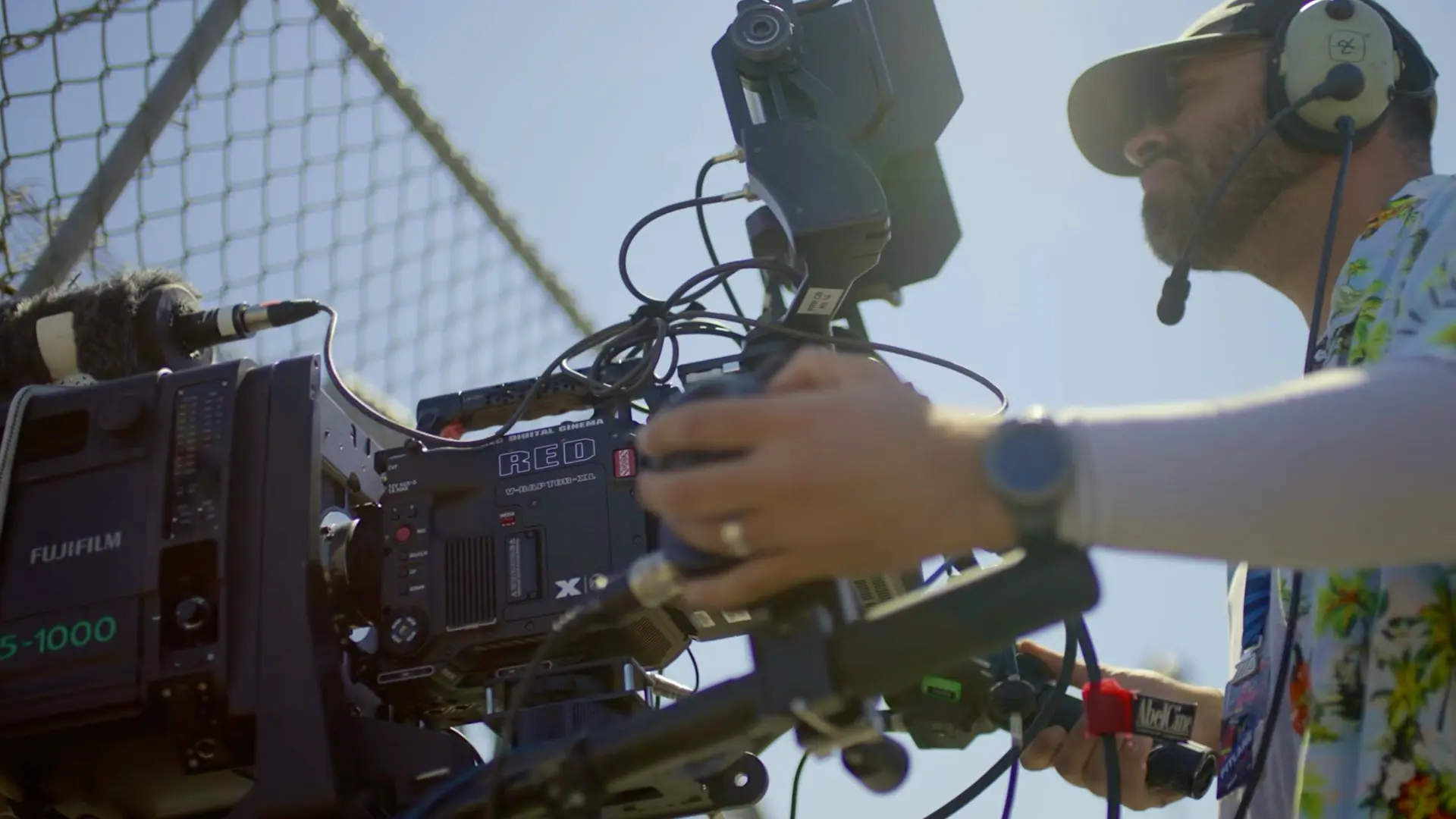
The most interesting feature is External Tally Recording. In a traditional live production, a video switcher controls which camera is live, which camera is in preview, and which camera is off-air. RED’s new tally-based recording workflow allows the camera to start and stop recording according to external tally commands. When the camera receives a preview tally, it can start prerecording. When it receives a program tally, it records the live moment. When the tally turns off, recording stops. That sounds like a broadcast feature, but the consequence is much larger. In a multi-camera live production, recording full resolution 8K from every camera all the time creates a major data problem. A show with 4, 8, or more camera positions can generate an enormous amount of footage. RED’s approach allows productions to capture the relevant full-resolution material around the moments when each camera is actually part of the show. That can make the difference between a theoretically beautiful 8K archive and a practical post workflow.
RED Connect becomes more central
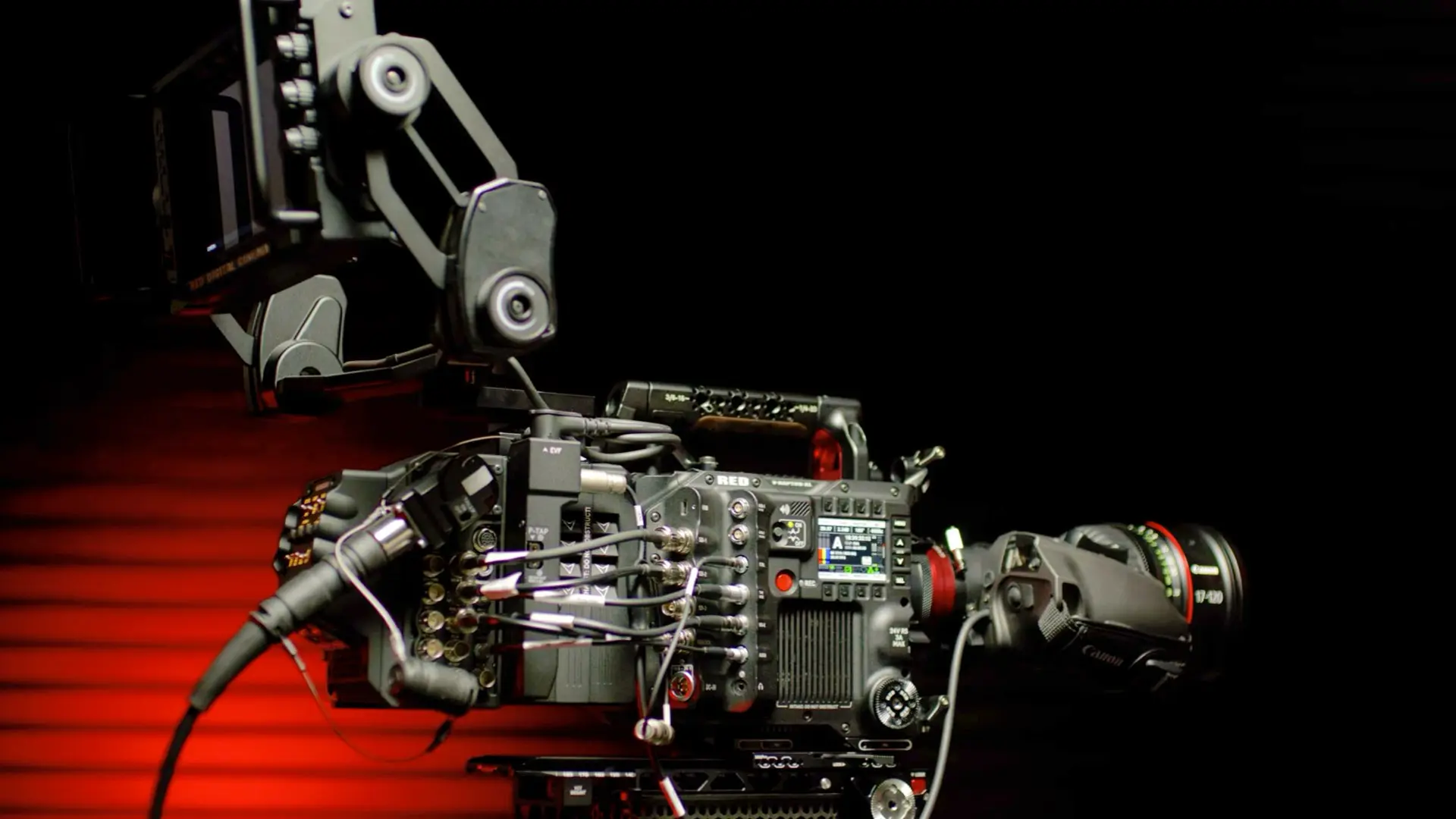
Firmware 2.2 adds support for Broadcast R3D and Phantom Track inside RED Connect. RED describes workflows such as live 4K 240p EVS style super slow motion and 8K live production using its broadcast color pipeline. This is a strategic signal. RED is no longer speaking only to the cinematographer recording R3D files for post. It is speaking to productions that want high-end image capture, live output, remote color handling, and broadcast-style control in the same ecosystem. That includes sports, concerts, esports, live entertainment, premium corporate events, virtual production shows, and hybrid productions that want a cinematic look without giving up live control. For YMCinema readers, this is where the update becomes especially relevant. The camera industry is no longer separated into neat categories of cinema, broadcast, creator, and virtual production. High-end cameras are being asked to serve all of those environments. A firmware update that strengthens RED Connect and Broadcast R3D support is a sign that RED wants V-RAPTOR X to compete inside that convergence.
Phantom Track gets more flexible for LED stages
The virtual production angle is also important. V-RAPTOR X and V-RAPTOR XL X include RED’s Phantom Track feature, which allows productions to capture final pixel and green screen imagery simultaneously from a single camera. This is designed for LED volume workflows where the camera and display environment must work together with exact timing. Firmware 2.2 adds Discrete Phantom Track control. Previously, the shutter speeds for both Phantom Track captures had to match. RED says the new firmware allows different shutter speeds and variable timing between the 2 tracks. That gives virtual production teams more control over LED wall timing, phase behavior, and frame remapping workflows. This is a very technical feature, but the practical meaning is simple. LED volume production depends on timing. If the camera, LED processor, shutter, and image playback are not aligned properly, artifacts can appear. More flexible shutter and timing control gives crews a better chance to tune the system for the stage instead of forcing the stage to conform to a rigid camera behavior. RED specifically mentions feedback from partners and processor companies such as Brompton and Megapixel. That tells us this was not designed in a vacuum. The update appears to respond to real stage workflow needs, which gives the feature more weight than a spec sheet addition.
Small camera behavior changes can affect real sets
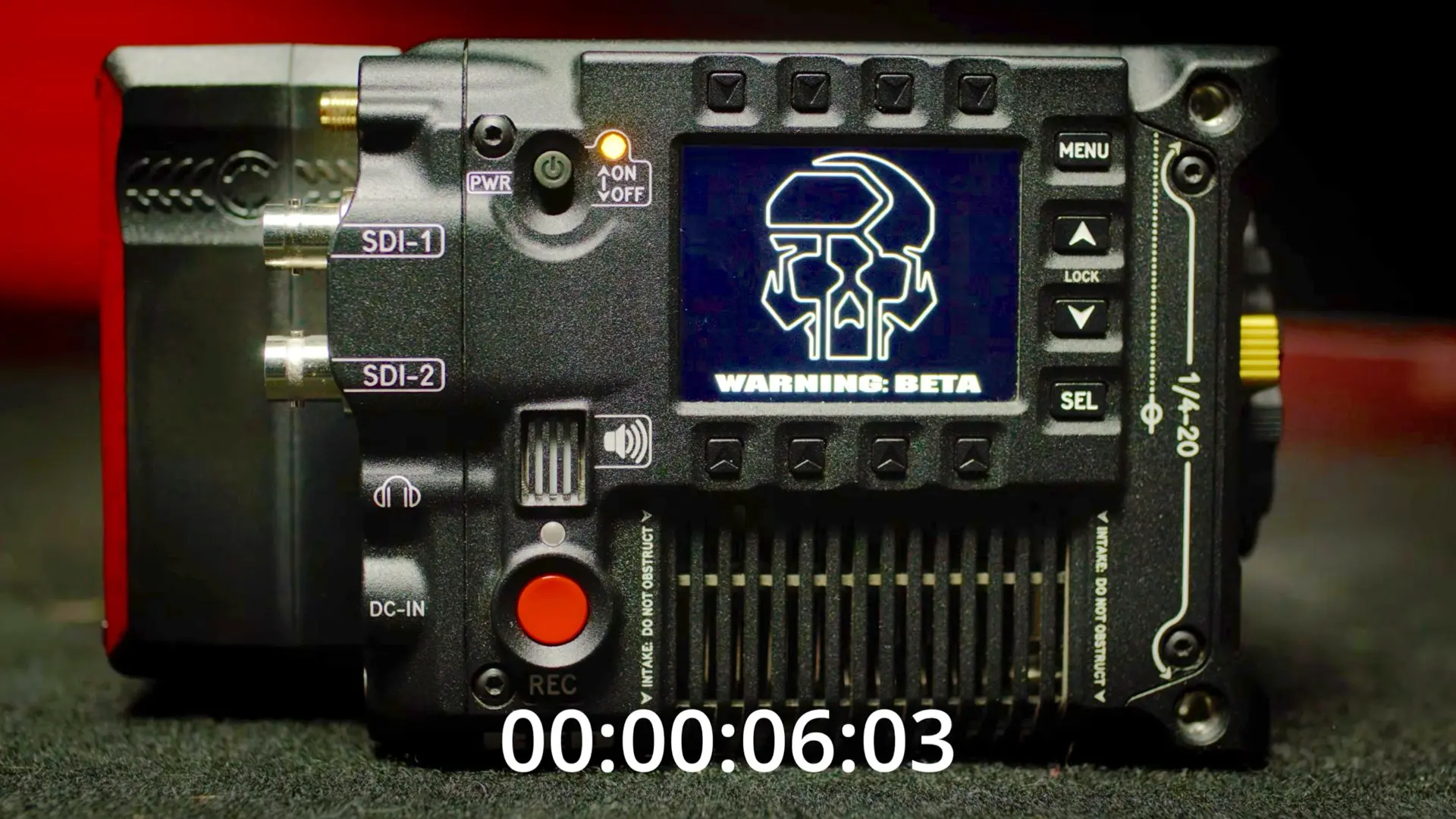
Firmware 2.2 also includes practical improvements that will interest operators. RED added touchscreen-based fine ND control for DSMC3, which means users can make smoother exposure adjustments without relying on an external controller. That is useful in changing light, especially for solo operators or compact crews. The 7-inch display also gains expanded assignable button behavior, including the ability to call up specific focus and exposure tools and trigger side LCD user page functions. Focus peaking has been improved, and built-in test patterns or solid colors can be sent from the camera for calibration and confidence checks.
YMCinema take
Firmware 2.2 should be read as a production workflow update, not a feature checklist. The most important part is not 1 single item. It is the combination of lower power draw, faster boot, RED Connect expansion, Broadcast R3D, tally based recording, Discrete Phantom Track, and better onboard control. For narrative filmmakers, the update makes the camera more responsive and efficient. For live production teams, it makes full-resolution RED capture more manageable. For virtual production crews, it gives Phantom Track more flexibility. For broadcast environments, it pushes V-RAPTOR X closer to a serious live systems camera. That is the direction the premium camera market is taking. Hence, the camera is still a RED cinema machine at its core, but the update makes it more useful in the places where modern production is expanding fastest. Download it here.

![Nikon Is Developing Nine NIKKOR Z CINEMA T1.9 VV Lenses for RED V RAPTOR [X]](https://ymcinema.com/wp-content/uploads/2026/09/Nikon-Is-Developing-Nine-NIKKOR-Z-CINEMA-T1.9-VV-Lenses-for-RED-V-RAPTOR-X.001-480x384.webp)








![Nikon Is Developing Nine NIKKOR Z CINEMA T1.9 VV Lenses for RED V RAPTOR [X]](https://ymcinema.com/wp-content/uploads/2026/09/Nikon-Is-Developing-Nine-NIKKOR-Z-CINEMA-T1.9-VV-Lenses-for-RED-V-RAPTOR-X.001-150x150.webp)
These are some great upgrades, but all I really want is in and out points and loop on playback. LIKE WE HAD A DECADE AGO ON THE EPIC.