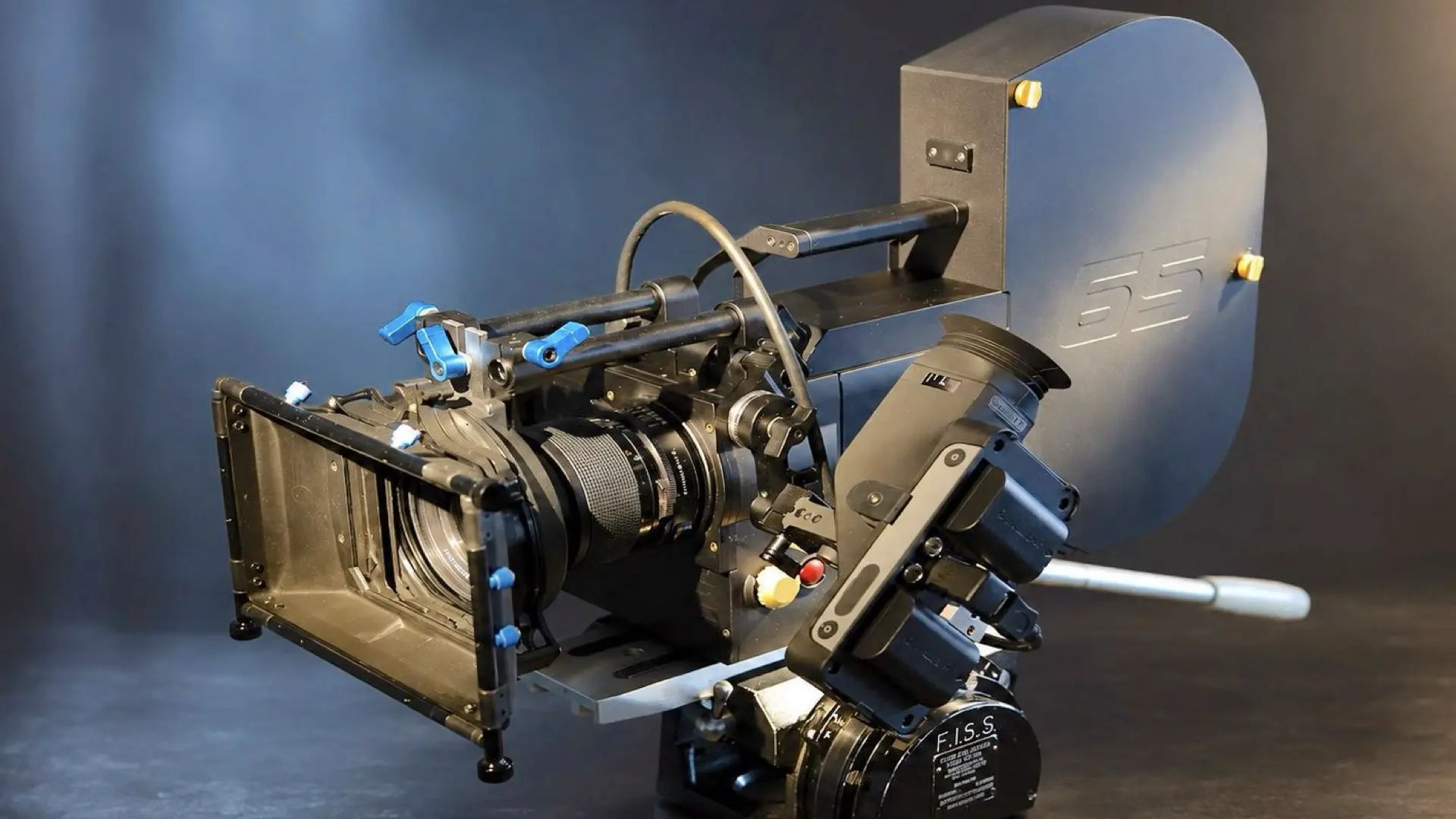
The Danish-built Magellan puts 5-perf 65mm film into a shoulder-mount package weighing around 15 kg, ready to shoot, and Hoyte van Hoytema took the prototype onto Christopher Nolan’s Tenet. Announced in April 2018, it introduced a lightweight, shoulder-mount approach to 5-perf 65mm filmmaking. Here’s a cool tribute to this beast.
The Logmar Magellan
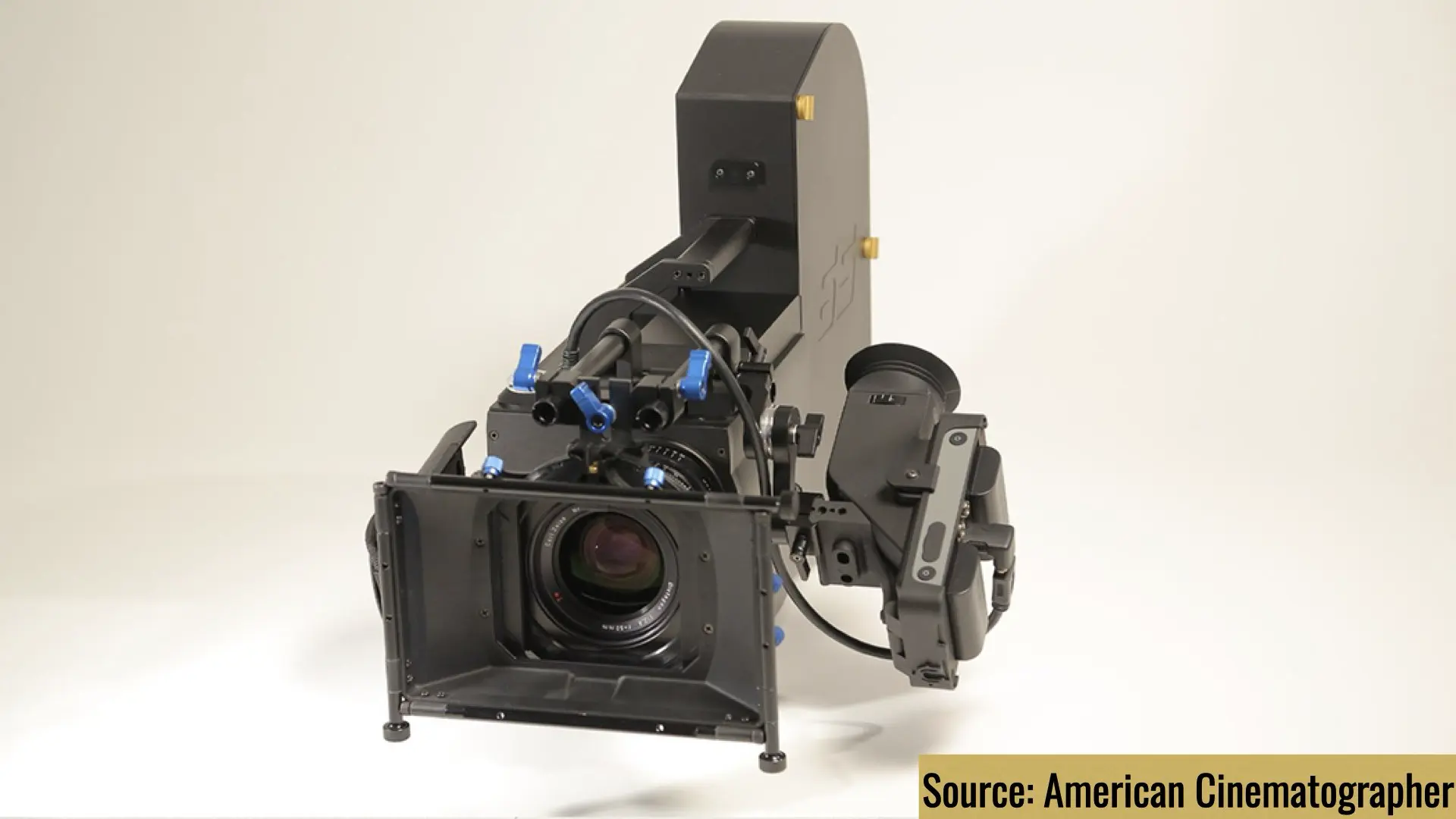
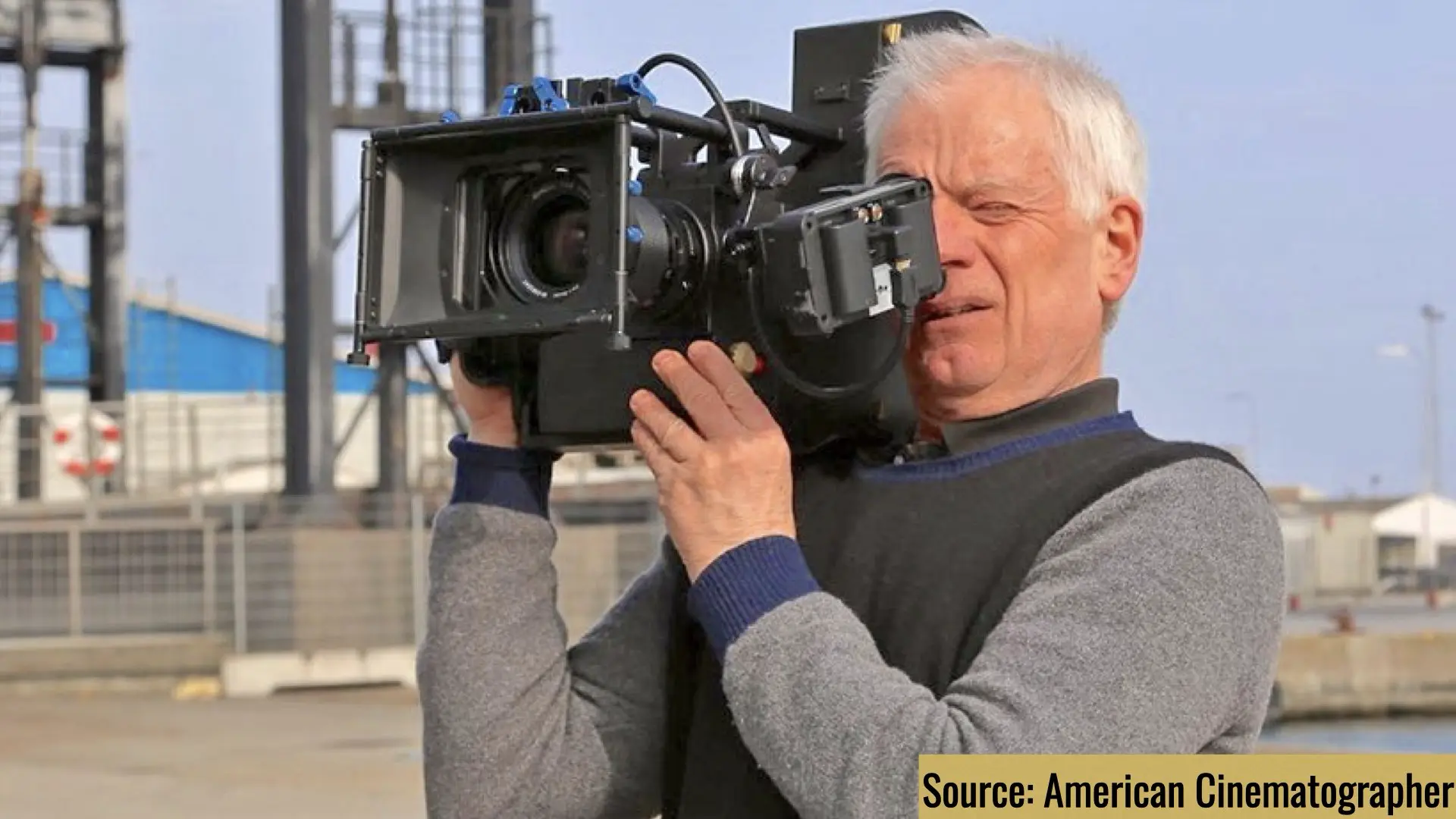
65mm film cameras are usually associated with substantial bodies, heavy magazines, large support systems, and productions capable of accommodating them. The Logmar Magellan 65 was announced in April 2018, and designed around a very different idea: take the image area of 5-perf 65mm film and put it into a camera compact enough to operate from the shoulder. The result is a remarkably small large-format film camera. Logmar currently specifies the Magellan at around 15 kg (33 lb) in a ready-to-shoot configuration including lens, battery, and 500 feet of 65mm film. The company describes it as suitable for shoulder and Steadicam operation and even states that the complete configuration is light enough for drone applications. That is Magellan’s reason for existing by attempts to make one of cinema’s largest established acquisition formats considerably easier to move.
65mm built around portability
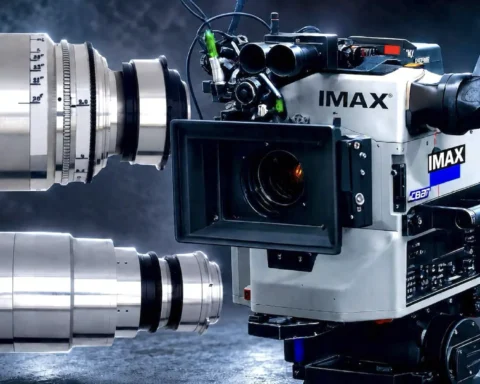
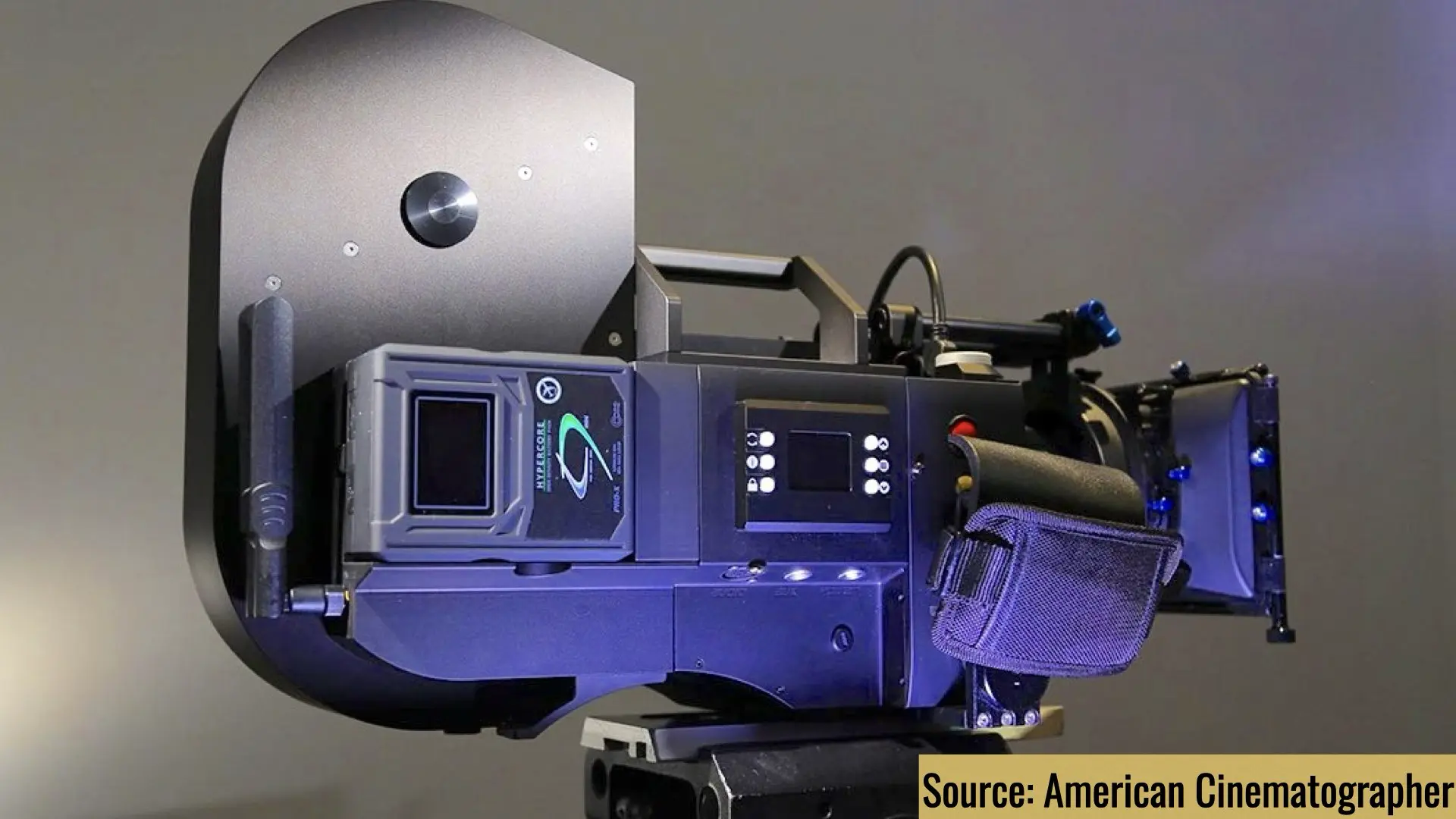
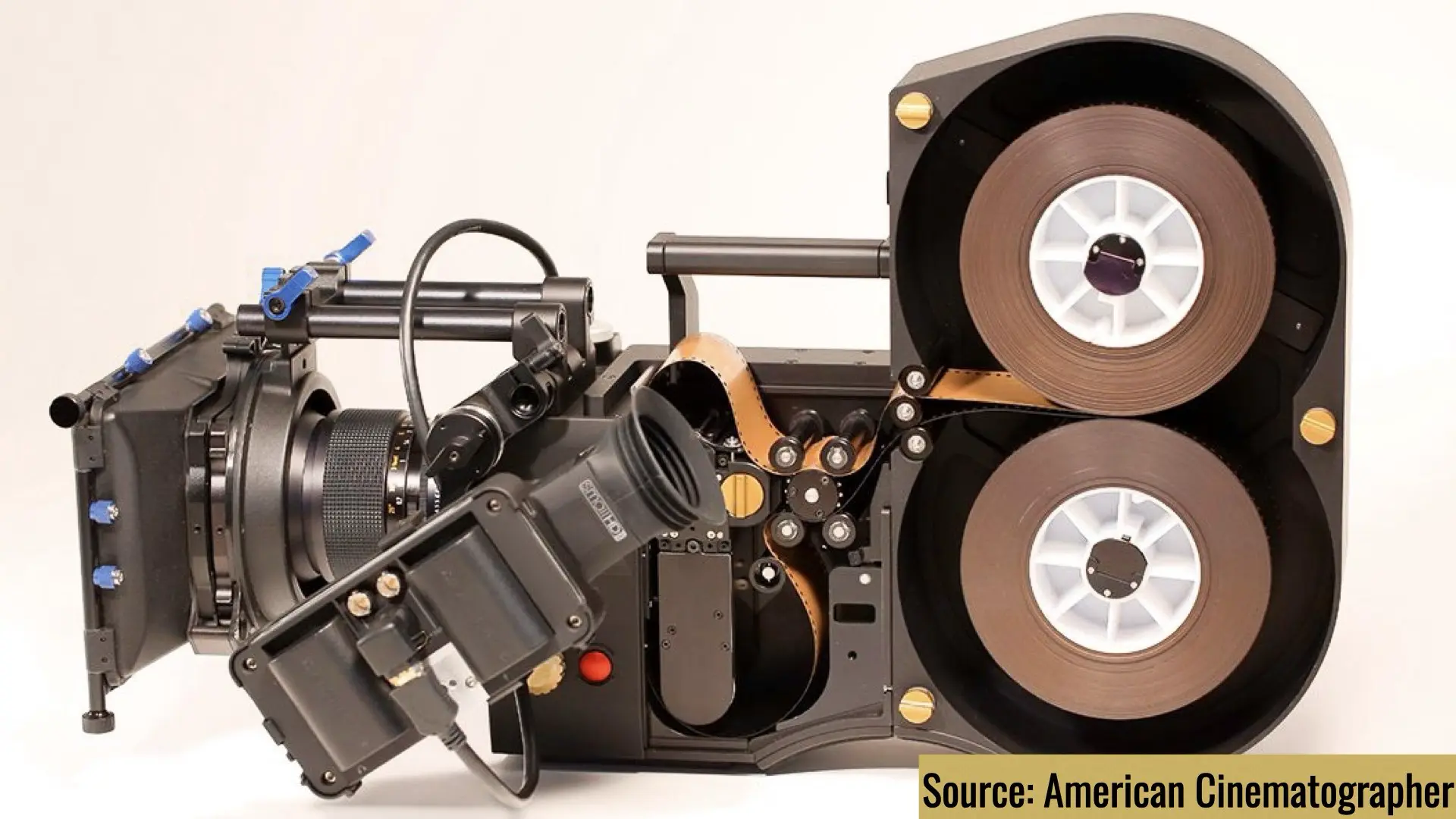
The Magellan transports 65mm negative vertically using the familiar 5-perf format rather than the horizontal 15-perf transport used by IMAX cameras. Its current configuration runs at 24 fps in forward motion, employs a fixed 172.8-degree shutter, carries a standard 500-foot magazine, and operates as a MOS camera. A 3G-SDI 1080p60 output provides through-the-lens electronic monitoring. One of its more unusual engineering features is Logmar’s proprietary dual registration unit. According to the manufacturer, the mechanism registers the center of the frame actually being exposed rather than using an adjacent frame for registration, with the objective of maintaining extremely stable positioning of the 65mm negative.
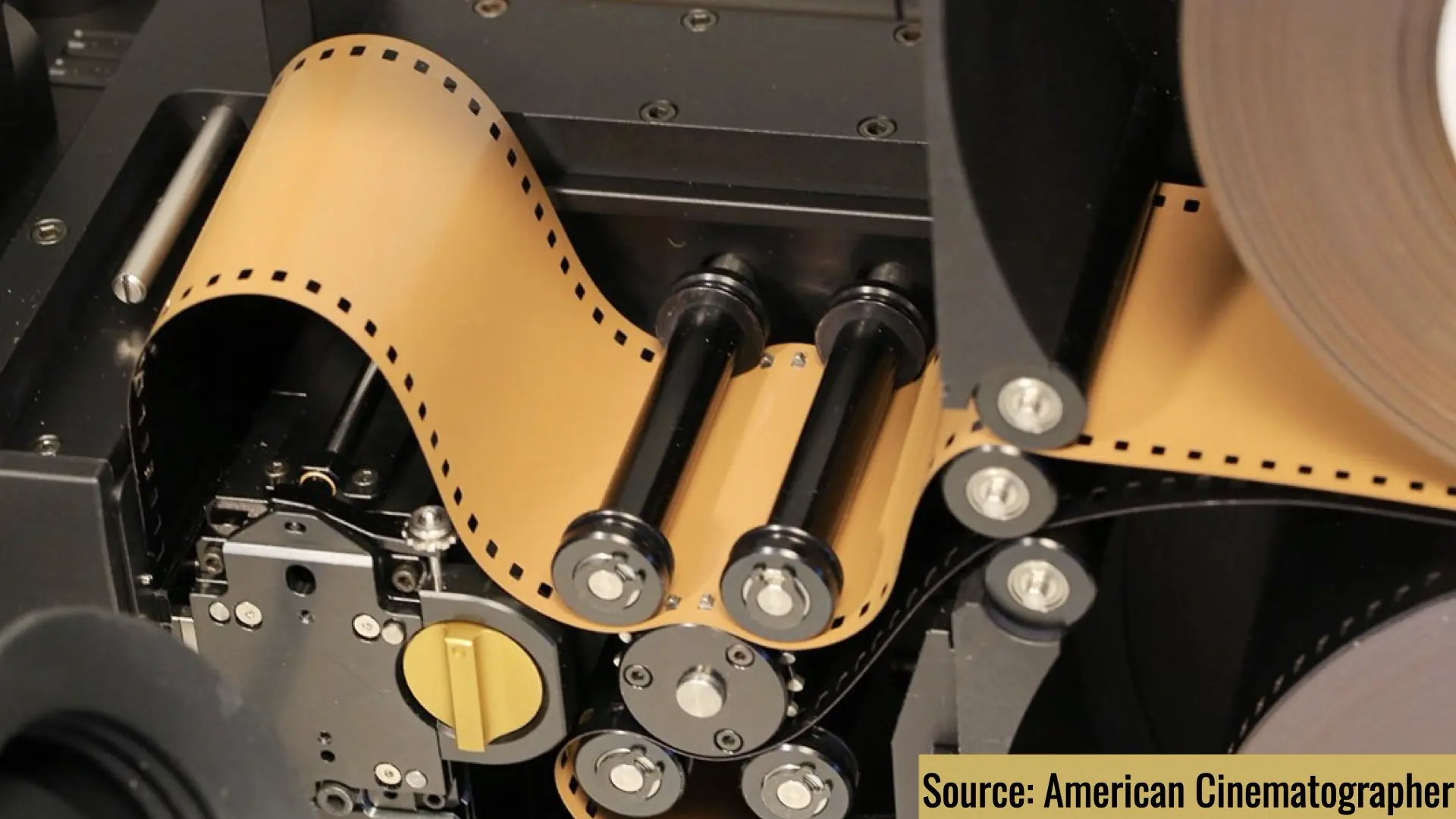
The electronic viewing system is another departure from traditional large-format film-camera design. The Magellan was conceived without the need to package a conventional optical viewing architecture into the body, helping Logmar pursue a shorter, lighter camera optimized around handheld use. The original camera presented at Cine Gear in 2018 was even more ambitious electronically. American Cinematographer reported a 12 kg body, 2–54 fps operation, Wi-Fi connectivity, electronic preview recording, and compatibility with medium-format Hasselblad/Zeiss lenses.
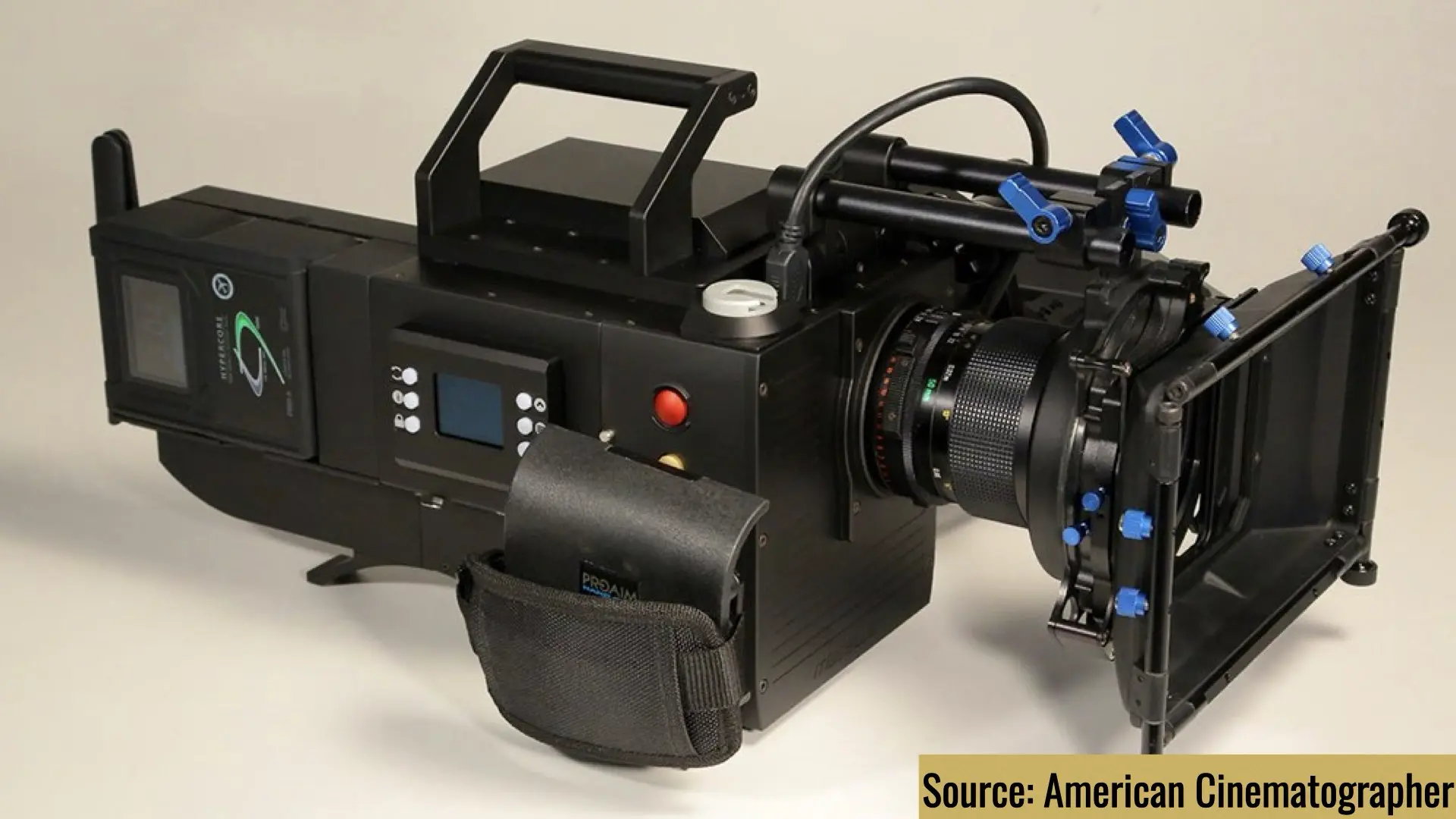
The Magellan evolved considerably after that initial specification. Its present version is listed by Logmar as 24 fps only, with a 172.8-degree shutter and 500-foot magazine. So the specifications associated with the 2018 prototype should not be confused with those of the camera in its current form.
From Cine Gear to Christopher Nolan’s Tenet
The Magellan gained attention quickly after its Cine Gear debut. According to a detailed account presented by Logmar Product Test Manager Orla Nielsen at the 2023 Todd-AO 70mm Festival, cinematographers Hoyte van Hoytema and Linus Sandgren were among those who examined the camera at Cine Gear in 2018. Van Hoytema was preparing Christopher Nolan’s Tenet and subsequently invited Logmar to bring the camera to Hollywood. That created an unusual situation for a camera still emerging from development. Logmar prepared a working unit, followed by approximately ten days of testing and preparation with Panavision before the Magellan entered the production environment. The camera accompanied the Tenet production at locations that included California, London, and Denmark.
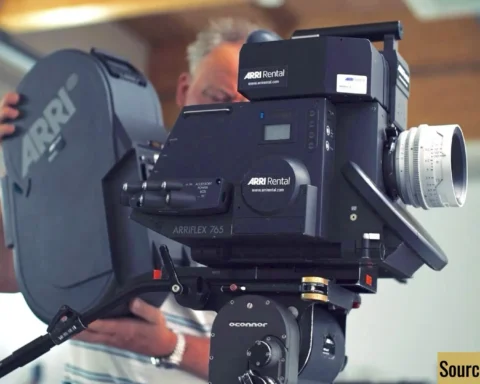
Logmar lists Tenet as the Magellan’s first motion-picture project. The production itself used several large-format systems, including IMAX cameras, the ARRIFLEX 765, and Panavision System 65 equipment alongside the Magellan prototype. The Magellan was not Nolan’s replacement for IMAX. Rather, it offered Van Hoytema another way of putting 65mm negative into positions and operating configurations where a more substantial large-format camera could become limiting. Check out some sample footage below:
An exceptionally rare camera
Despite the high-profile Tenet connection, the Magellan never became a common rental-house 65mm system. During the 2023 presentation, Logmar stated that components had been manufactured for roughly 10–12 cameras, with two completed units and another two close to completion at that point. The company continued refining the design after Tenet, including work on shutter balance and viewfinder quality, while WhitePoint Optics developed a dedicated WPLM lens mount and lenses for the system. In October 2025, researchers at the University of Salford revealed that they had been working with Logmar for six months on extensive testing of the Magellan. The university explicitly stated that the camera had not been used on another feature film since Tenet. The tests went considerably beyond running registration charts. The camera was operated on studio sets, mounted to a Steadicam, taken on location in Wales, and evaluated in cooperation with Kodak Film Lab London, Orchard Film, and other industry partners. Logmar provided the camera in exchange for access to the resulting research as the Danish manufacturer works on a successor model. That also clarifies the Magellan’s present status. Logmar still maintains the camera on its website and publishes its current specifications, but there is no conventional public purchase price or broadly advertised rental network. Access appears to remain highly specialized rather than comparable to a mainstream production camera. The Magellan therefore occupies an unusual place among contemporary cinema cameras. It combines one of cinema’s oldest premium acquisition formats with an engineering philosophy closer to a modern shoulder camera: electronic viewing, low weight, compact packaging, and an emphasis on mobility. At 15 kg ready to shoot, nobody would call it a lightweight camera by digital standards. For a camera transporting 65mm negative, however, the Magellan is a very different proposition, essentially an attempt to make large-format film behave like a camera that can actually move with the operator.