

As Canon celebrates the 20th anniversary of the revolutionary EOS 5 interchangeable-lens digital camera series, it’s a great time to reflect on how these cameras have shaped both professional photography and the creative journey of advanced amateur users. From the early days of the EOS 5D to the cutting-edge EOS R5 Mark II, the EOS 5 series has consistently pushed the envelope with innovative features, helping photographers and videographers around the world achieve new levels of creative excellence.

The Birth of the EOS 5 Series
EOS 5D (2005)
The journey of the EOS 5 series began in 2005 with the release of the Canon EOS 5D, the world’s first full-frame DSLR camera aimed at advanced amateur photographers. Canon’s decision to introduce a full-frame CMOS sensor to a more affordable camera was revolutionary, providing high-quality resolution and rich color gradation previously available only in professional-grade cameras. It’s no surprise that the EOS 5D was an instant success, helping to popularize full-frame digital cameras for enthusiasts and professionals alike. The EOS 5D also set the stage for a series of advancements that would follow, with Canon continuously introducing features that kept the series at the forefront of both photography and video capabilities.
EOS 5D Mark II (2008): The DSLR Video Revolution
In 2008, Canon released the EOS 5D Mark II, which became a game-changer for the video production world. This camera was the first DSLR to offer full-HD video recording, allowing filmmakers to create high-quality video with a shallow depth of field that was previously only achievable with much more expensive equipment. The EOS 5D Mark II helped drive the DSLR video revolution, making it a favorite among indie filmmakers, content creators, and even professionals looking for an affordable yet capable video solution. If you’re interested in Canon’s current contributions to the video and filmmaking world, check out the article The Best VR Pro Creator Deal on Amazon Right Now: Canon EOS R5 ($2,799 on Amazon) & Dual Fisheye Lens, which highlights the Canon EOS R5 and its latest video features. This marks a continuation of Canon’s commitment to pushing the boundaries in both photography and videography. Also, check out the ML article 😉
EOS 5D Mark III (2012): Precision and Speed
The EOS 5D Mark III, released in 2012, took the series’ performance to new heights with improved autofocus accuracy, enhanced low-light performance, and faster continuous shooting speeds. These upgrades made it a favorite for action photographers and those working in demanding environments. This model provided greater versatility for capturing everything from fast-moving sports to detailed portraits. In addition to these technical improvements, the EOS 5D Mark III continued to build on the video capabilities introduced with the Mark II, allowing professionals to use the camera for both stills and video seamlessly.
EOS 5Ds & 5Ds R (2015): Pushing Resolution
In 2015, Canon took another major step forward with the introduction of the EOS 5Ds and 5Ds R models, boasting a remarkable 50.6-megapixel sensor—the highest resolution in a full-frame DSLR at the time. These cameras were aimed at photographers who demanded extreme detail, such as landscape, architectural, and studio photographers. The 5Ds R model featured a removal of the optical low-pass filter, delivering even sharper images but at the cost of an increased risk of moiré. This shift towards pushing resolution made the 5Ds and 5Ds R a favorite for those who needed maximum detail in their images, setting the stage for even more powerful successors.
EOS 5D Mark IV (2016): Balancing Features and Performance
In 2016, Canon introduced the EOS 5D Mark IV, which struck a perfect balance between resolution, autofocus, and speed. With a 30.4-megapixel sensor, faster continuous shooting (7 fps), and excellent low-light performance, the 5D Mark IV was a versatile all-rounder that appealed to a wide range of professionals. The camera also offered 4K video recording, an upgrade that helped solidify Canon’s dominance in both the stills and video markets. To see Canon’s ongoing efforts to offer well-rounded, powerful cameras, be sure to check out Canon’s Prime Day Celebration and top-rated camera and lens deals in the article Canon’s Prime Day Celebration: 22 Top-Rated Camera and Lens Deals You Can Actually Trust, showcasing the company’s ability to balance professional quality with affordability.
EOS R5 (2020): A New Era of Mirrorless Innovation
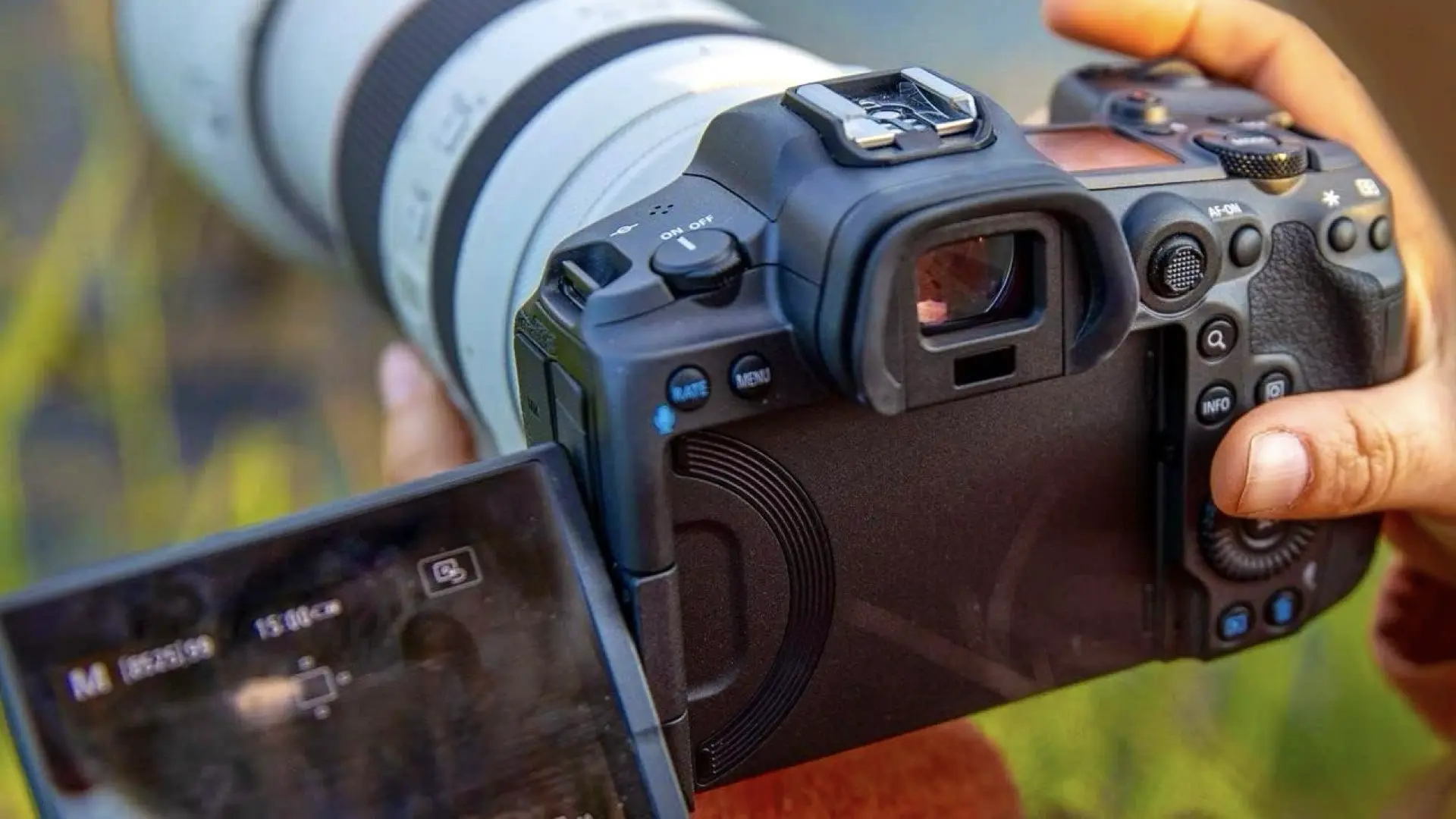
In 2020, Canon introduced the EOS R5, the first full-frame mirrorless camera in the EOS 5 series. The R5 brought groundbreaking features, such as 8K video recording, the fastest autofocus in its class, and a highly advanced image processor. These advancements made it one of the most powerful mirrorless cameras on the market, combining the high performance of the EOS 5D Mark IV with the benefits of a more compact mirrorless design.
EOS R5 Mark II (2024): The Future of Photography and Video
The EOS R5 Mark II, released in August 2024, takes the R5’s performance to the next level with improved image processing and enhanced subject tracking. This camera integrates deep learning technology, offering better mobility and more intuitive autofocus, making it a fantastic option for both still photography and video production. As Canon continues to push the envelope with the EOS 5 series, the R5 Mark II solidifies its position as one of the most advanced cameras for professional creators today. To learn more about the Canon EOS R5 and its standing as the most professional camera under $3000, check out The Canon EOS R5: The Most Professional Camera Under $3000 on Amazon, where you’ll find in-depth details about its features and capabilities.
Conclusion: Canon’s Legacy of Innovation
The EOS 5 series has earned its place as one of Canon’s most celebrated camera lines, known for its trailblazing technology, exceptional image quality, and versatility. Over the course of 20 years, the EOS 5 series has continuously raised the bar, from the introduction of the EOS 5D with its groundbreaking full-frame sensor to the state-of-the-art EOS R5 Mark II, which combines advanced processing with innovative tracking features. Canon’s legacy is defined by its constant drive to innovate, and with the EOS 5 series, it has created a product line that continues to inspire photographers and videographers worldwide. As we look to the future, the EOS 5 series remains at the forefront of the photography and video industries, helping users express their creative vision in ways once thought impossible. While Canon’s EOS 5 series has undoubtedly revolutionized video and photography, especially with innovations like the EOS 5D Mark II and EOS R5, one has to wonder: Is Canon truly ahead of its competitors, or have Sony and Nikon caught up (or surpassed) in key areas like autofocus and video capabilities? Do Canon’s recent offerings still maintain their edge, or are they lagging behind in certain aspects of the professional market? What do you think? Has Canon kept pace with the evolving demands of filmmakers, or is it time for a new player to lead the change?
Canon EOS 5 Series on Amazon
Gear mentioned in this article
Available on Amazon
| Product | New | Renewed | Used |
|---|---|---|---|
| Canon EOS R5 Mark II | — | — | From $3,368.89 |
| Canon EOS R5 | $2,799 | — | From $2,384.77 |
Prices checked: Sep 13, 2026, 9:31 AM GMT+0000
As an Amazon Associate, Y.M.Cinema earns from qualifying purchases. If you buy through our links, we may earn a small commission at no extra cost to you.
Product prices and availability are accurate as of the date/time indicated and are subject to change. Any price and availability information displayed on Amazon.com at the time of purchase will apply to the purchase of this product.
CERTAIN CONTENT THAT APPEARS ON THIS SITE COMES FROM AMAZON. THIS CONTENT IS PROVIDED “AS IS” AND IS SUBJECT TO CHANGE OR REMOVAL AT ANY TIME.







What about the eos m5? Lols