
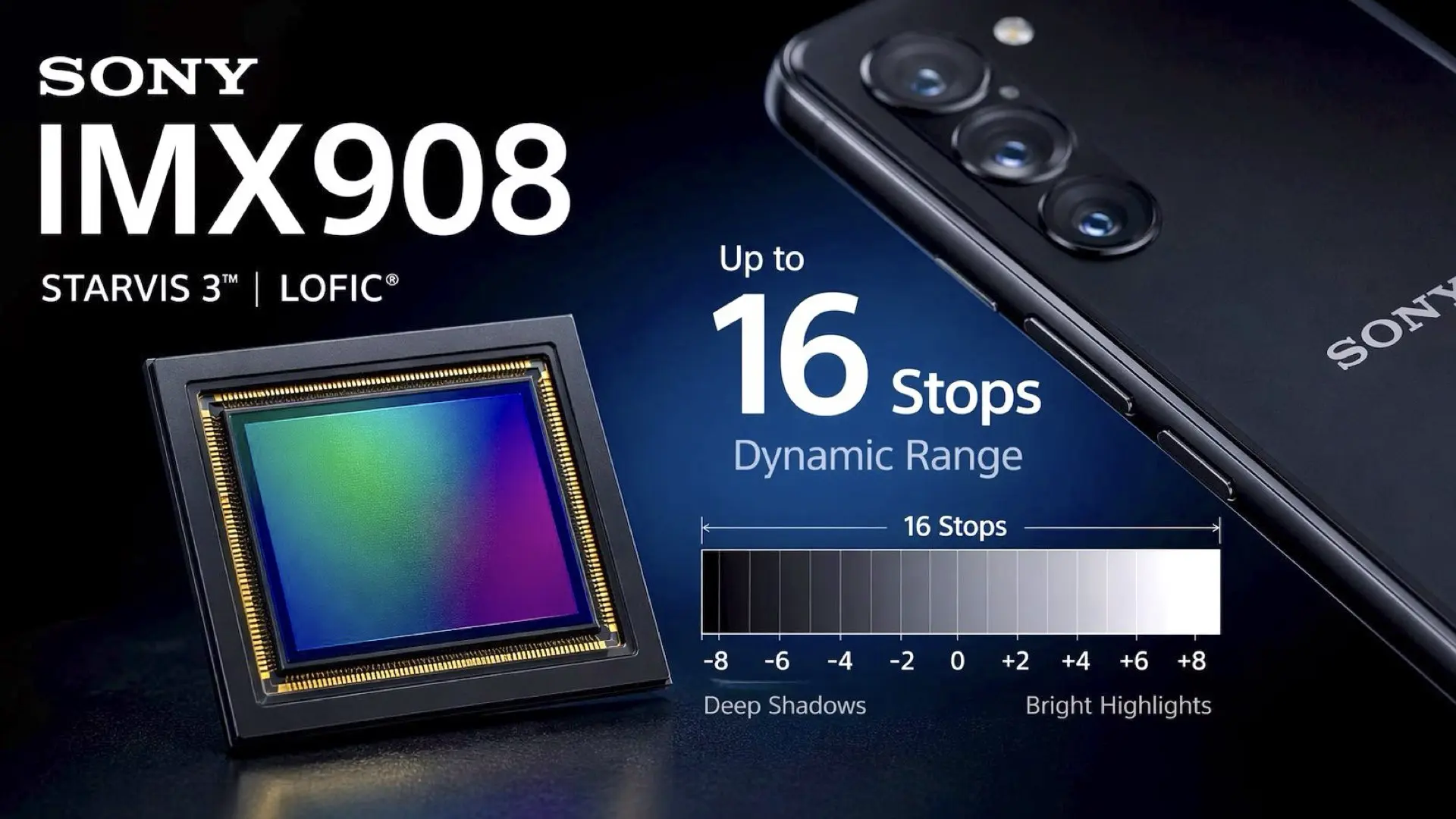
Sony has begun sample shipments of the IMX908, a 1/2.8 inch mobile class image sensor that delivers up to 96 dB HDR, which corresponds to roughly 16 stops of dynamic range. With samples shipping from March 2026, the sensor moves from announcement into the production pipeline, making it available for evaluation and integration by manufacturers.
What 16 stops of dynamic range means in practice
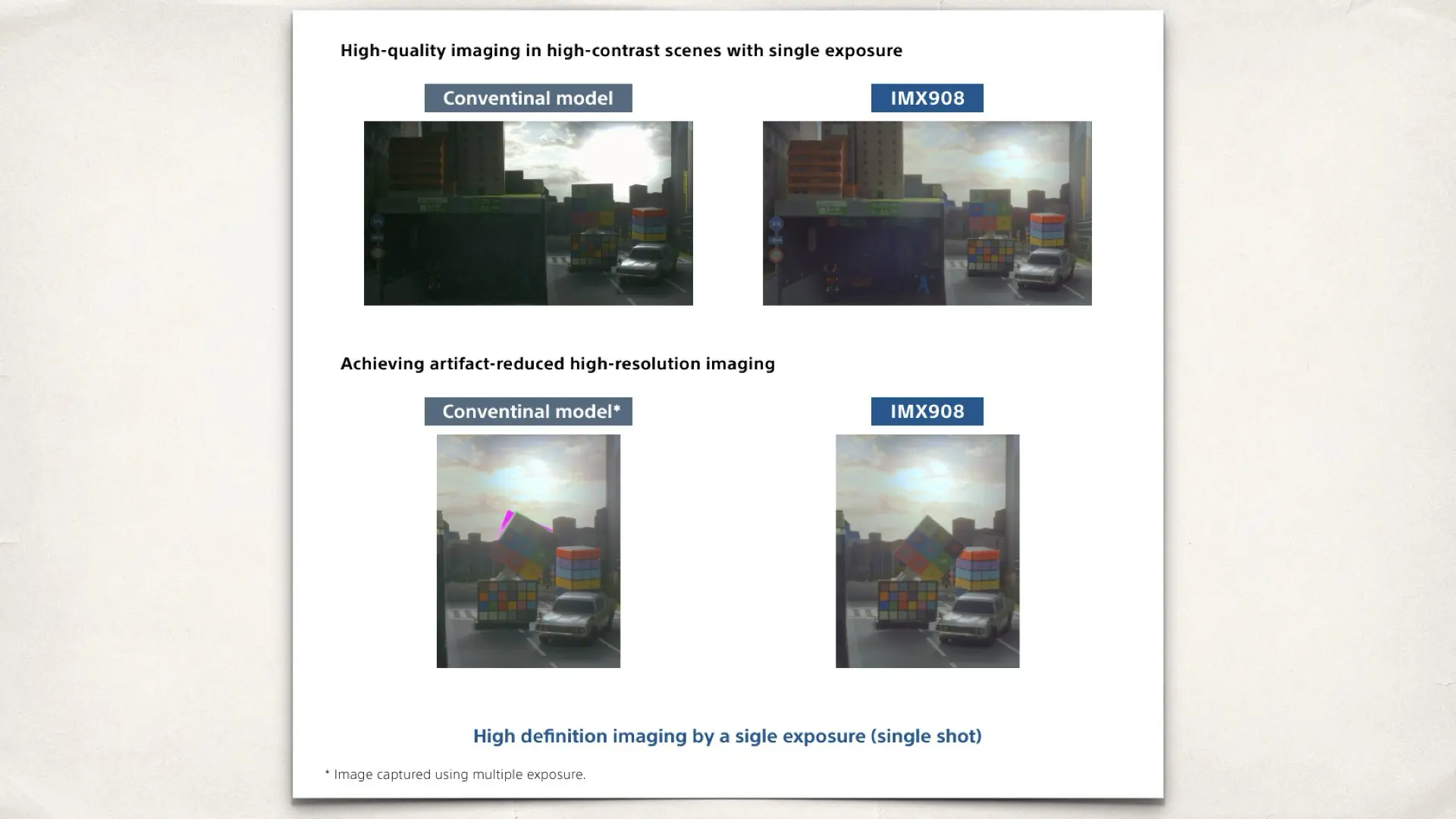
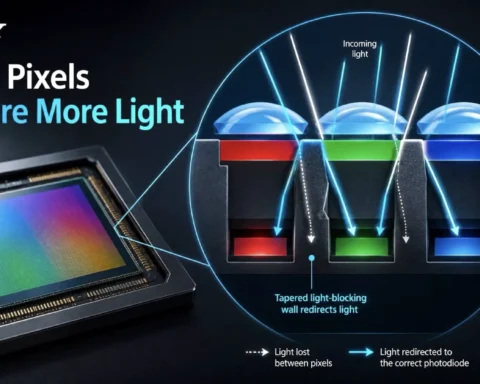
Dynamic range describes how much detail a sensor can capture between the darkest and brightest parts of a scene. A higher value allows the camera to preserve highlight detail without losing shadow information. A 16-stop figure is typically associated with high-end imaging systems, although the effective usable range in real conditions is lower due to noise and processing limits. In a mobile scale sensor, this level of headroom is significant because it allows more flexibility in exposure, grading, and HDR rendering, especially in scenes with strong contrast, such as backlit subjects or night environments with bright light sources. Most mobile imaging systems rely on combining multiple exposures to create an HDR image. This method can improve dynamic range but often introduces motion artifacts and inconsistencies between frames. The IMX908 takes a different approach using Sony’s LOFIC structure. Each pixel includes an additional charge storage element that captures excess signal instead of clipping highlights. This enables the sensor to retain more information within a single exposure. As a result, the image is more stable in motion and better suited for video capture, where multi-frame HDR is more difficult to apply without artifacts.
Why is this sensor introduced in security cameras?
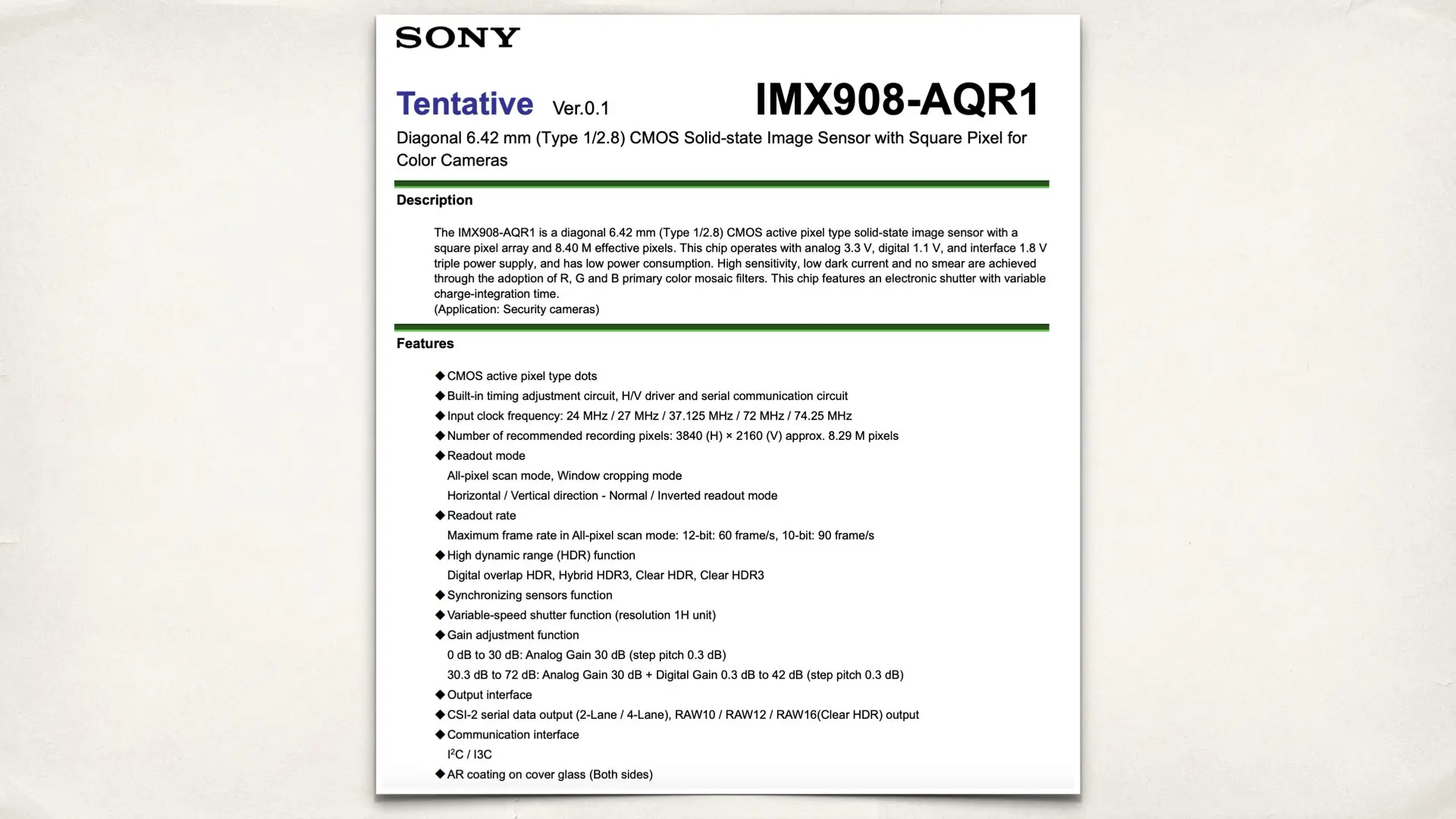
Sony positions the IMX908 for security applications, where cameras must operate in challenging lighting conditions such as strong backlight, night scenes, and mixed illumination. These environments benefit directly from higher dynamic range and improved low-light performance. At the same time, many sensor technologies first appear in industrial or security segments before being adapted to mobile and consumer devices. This progression allows manufacturers to validate performance and reliability before scaling to higher volume markets.
What entering production means for future devices
The transition to sample shipments indicates that the sensor is ready for integration into real products. Manufacturers can now evaluate performance, design imaging pipelines, and prepare for commercial deployment. Based on typical development timelines, technologies at this stage may appear in shipping devices within the next product cycles. While the IMX908 itself is targeted at security, the underlying architecture can be adapted to other formats, including mobile cameras and compact imaging systems. Moreover, the IMX908 reflects a broader shift toward improving image quality at the sensor level rather than relying primarily on computational processing. Over the past years, mobile imaging has advanced through multi-frame techniques and AI-based processing. Sony’s approach focuses on capturing more information directly during exposure, which simplifies processing and can improve consistency across frames. If this architecture scales to larger sensors or higher resolutions, it may influence how future imaging systems balance hardware capability and computational enhancement. For a detailed technical analysis of the IMX908 and its LOFIC architecture, see our article: Sony IMX908 STARVIS 3 LOFIC.





It was huge pride and satisfaction using the retro-cameras, for decades. Now, digital cameras have upset that pride, for good. Nobody can now hold a top camera pride for a few months because, new higher specification cameras are being churned out almost every month, also at fabulous and untouchable prices for the camera enthusiasts