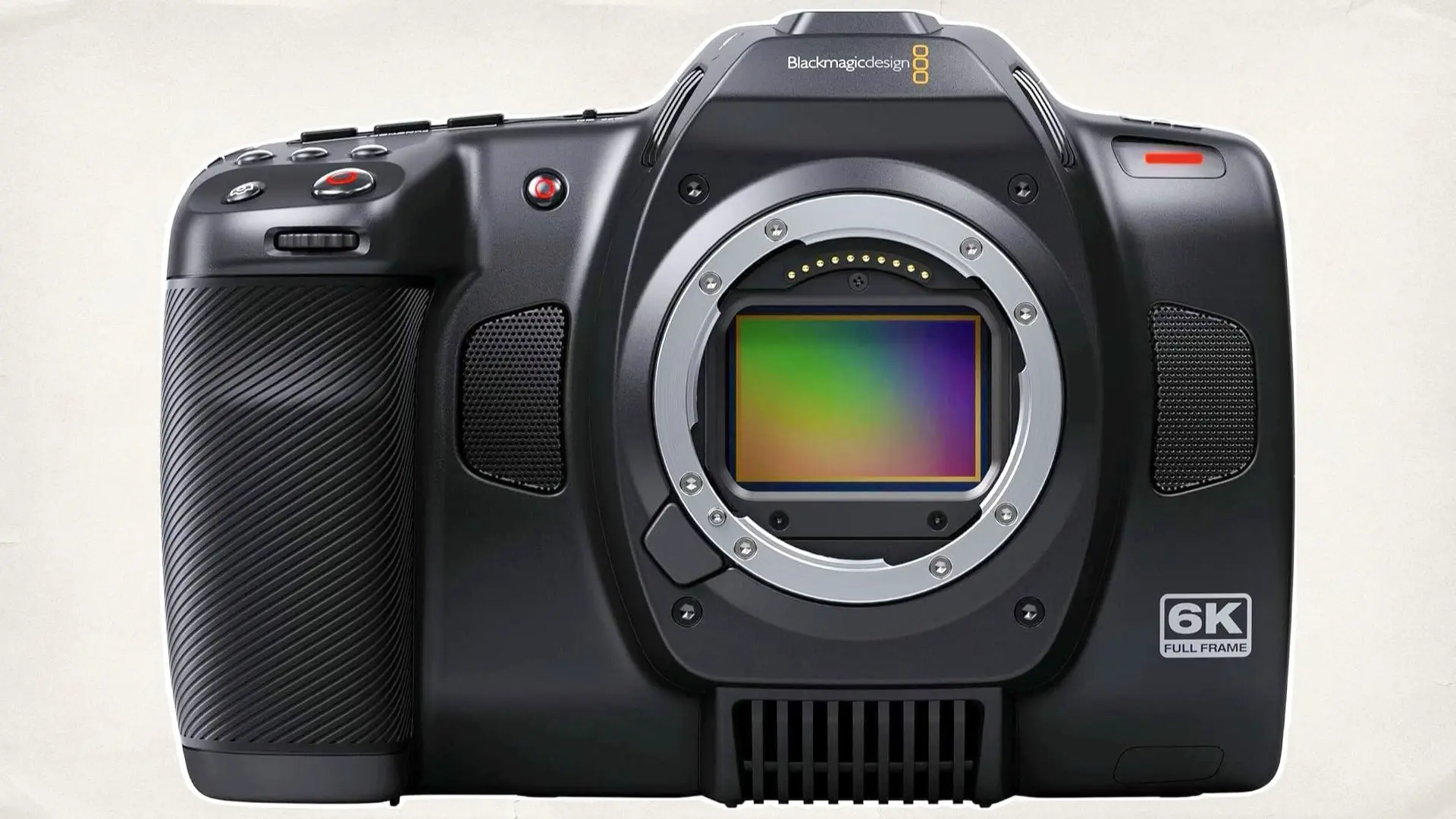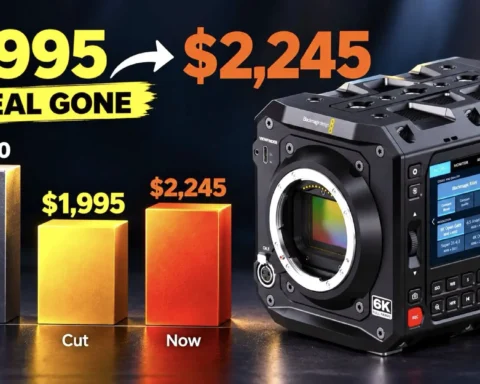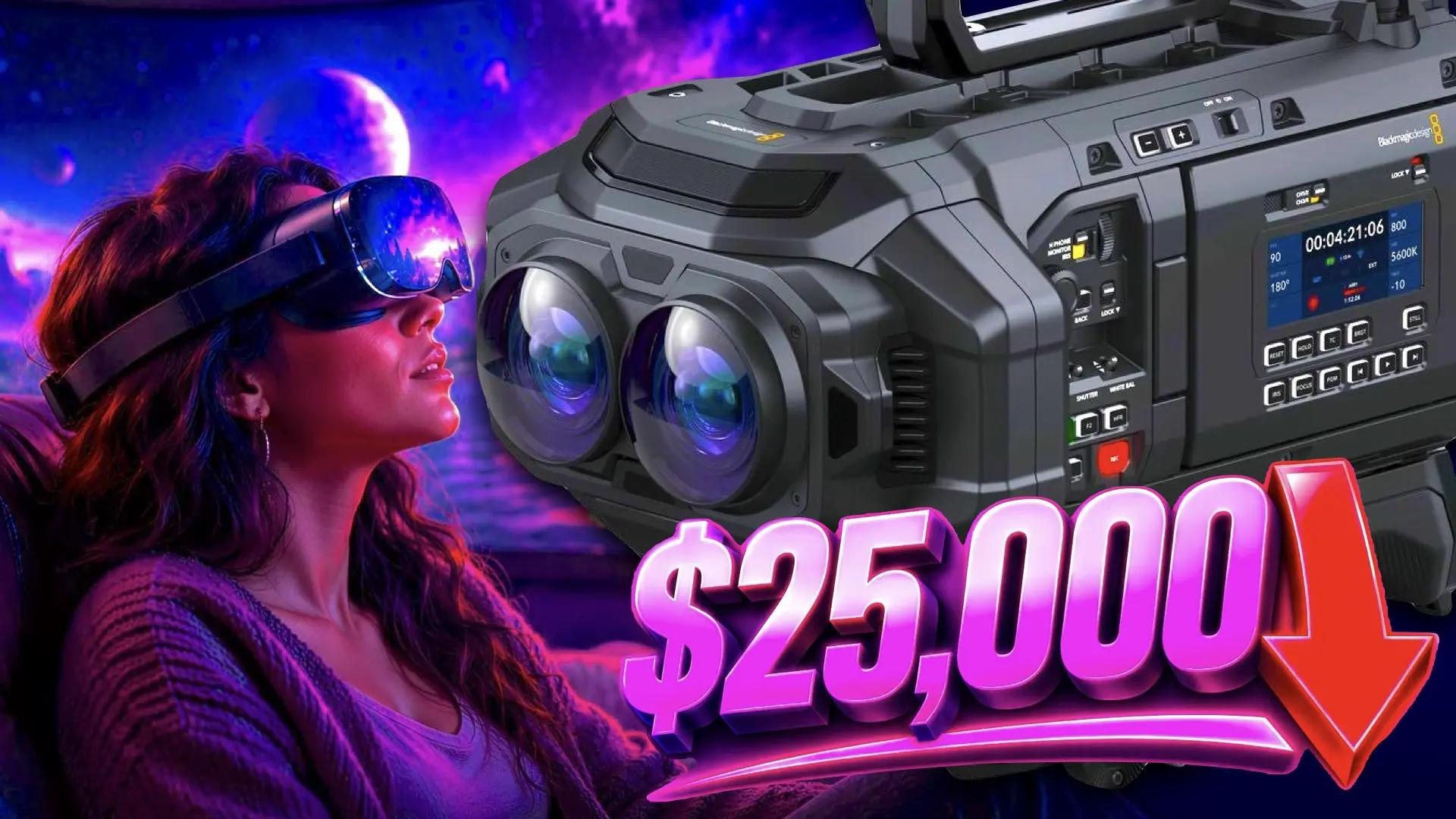
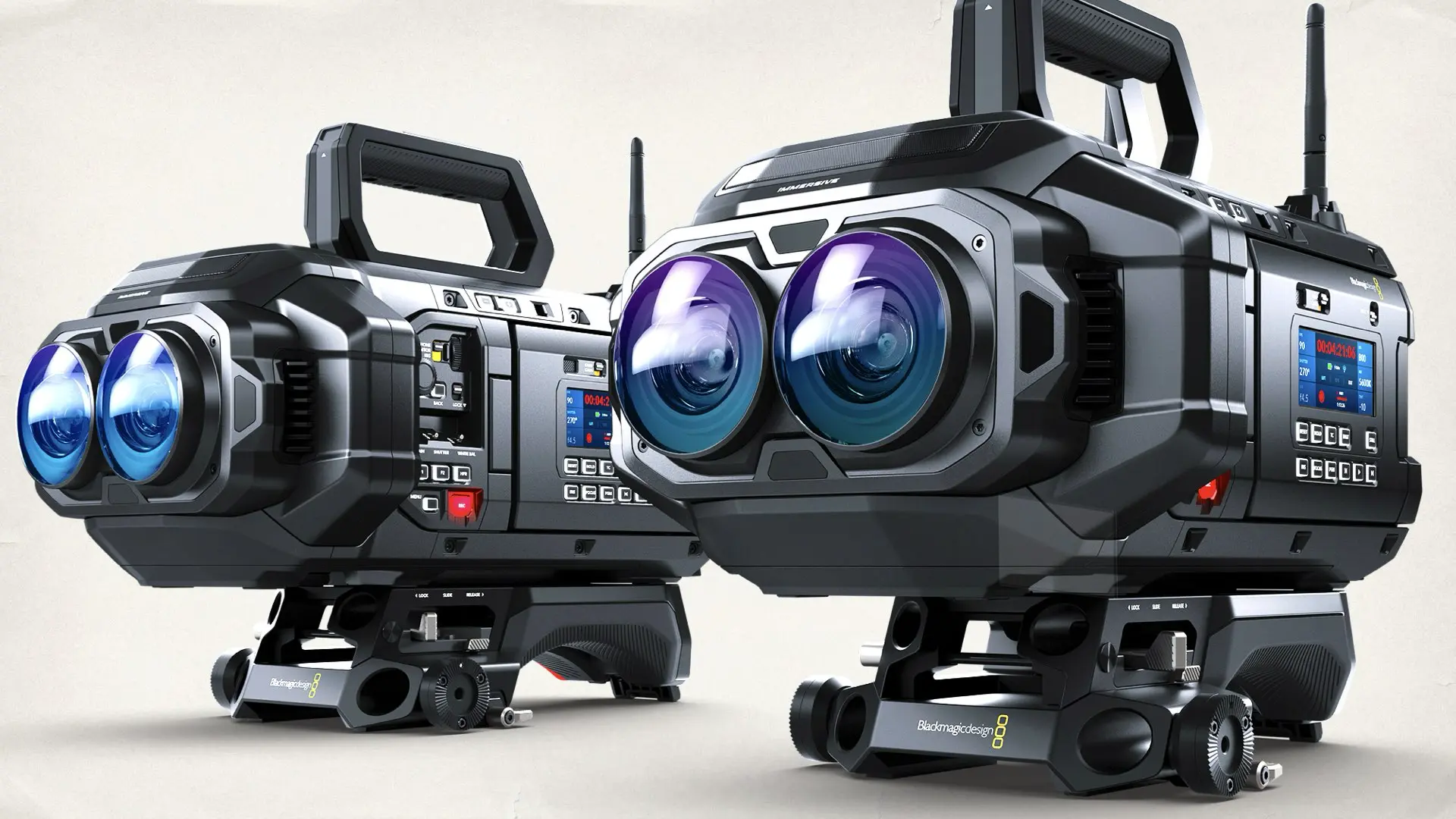
Blackmagic Design has reduced the price of its URSA Cine Immersive to $24,995, down from $27,500, and originally introduced at around $30,000. That progression is important. We think that this is a gradual repositioning of immersive cinema capture. At the same time, the company introduced a new URSA Cine Immersive 100G variant for $26,495, alongside a dedicated Live Encoder priced at $1,495. While the new hardware is drawing attention, the more meaningful development is the adjustment of the standard model’s price.
Blackmagic enters emerging segments early, lowers pricing pressure over time, and expands the user base. That approach helped democratize digital cinema tools. The same logic is now being applied to immersive capture.
What was announced
The URSA Cine Immersive 100G is designed for live immersive production. Its defining feature is a 100G Ethernet interface that enables real-time output over SMPTE 2110 pipelines when paired with the URSA Live Encoder. That encoder functions as a high-speed compression and processing module. It combines stereo high frame rate streams and encodes them into Apple ProRes for SMPTE 2110 22 IP delivery. The intention is clear. Move immersive capture into live environments rather than relying solely on post-production workflows. Importantly, the imaging system remains unchanged. The platform still uses dual 8K by 8K RGBW sensors and delivers up to 16 stops of dynamic range. This is not a new image pipeline. It is a new transmission pipeline.

The real shift is pricing
The more consequential move is the repositioning of the standard URSA Cine Immersive. Moving from an initial $30,000 level, down to $27,500, and now to $24,995 places the camera firmly within high-end digital cinema territory. This shift has practical implications. Rental houses can more easily justify adding it to their fleets. Smaller studios can explore immersive production without committing to extreme budgets. Independent creators working on emerging formats gain access to hardware that previously required stronger financial justification. This is not aggressive price disruption but is controlled market positioning over time.

Separating capture from live infrastructure
The introduction of the 100G model clarifies the broader strategy. Blackmagic is separating capture from transmission. The standard URSA Cine Immersive becomes the entry point for cinematic immersive acquisition. The 100G version, combined with the Live Encoder, targets live production environments such as broadcast workflows and XR stages. This separation ensures that the lower-priced model remains relevant. At the same time, it allows Blackmagic to expand into high-bandwidth live pipelines without increasing the cost of entry for content creators. It seems that BM believes in Immersive cinematic broadcasting (we’ll talk about that in our next articles, so no worries).

Why now?
Immersive content still faces a supply constraint. The tools to consume it are advancing, but the volume of high-quality material remains limited. Cost has been one of the barriers. Not just in absolute terms, but in how immersive capture has been positioned as a specialized and expensive workflow. By lowering the price in stages, Blackmagic reduces that friction. It does not solve distribution or audience demand, but it makes experimentation and production more accessible. Moreover, this move follows a recognizable pattern. Blackmagic enters emerging segments early, lowers pricing pressure over time, and expands the user base. That approach helped democratize digital cinema tools. The same logic is now being applied to immersive capture. The headline announcement is a 100 G-capable immersive camera for live production. The more important development is the continued reduction in the cost of the standard model. And that is what has the potential to move immersive cinema forward.