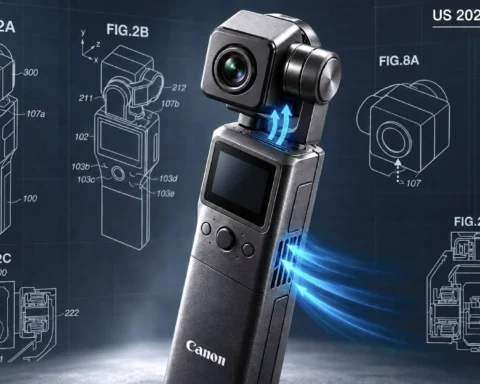
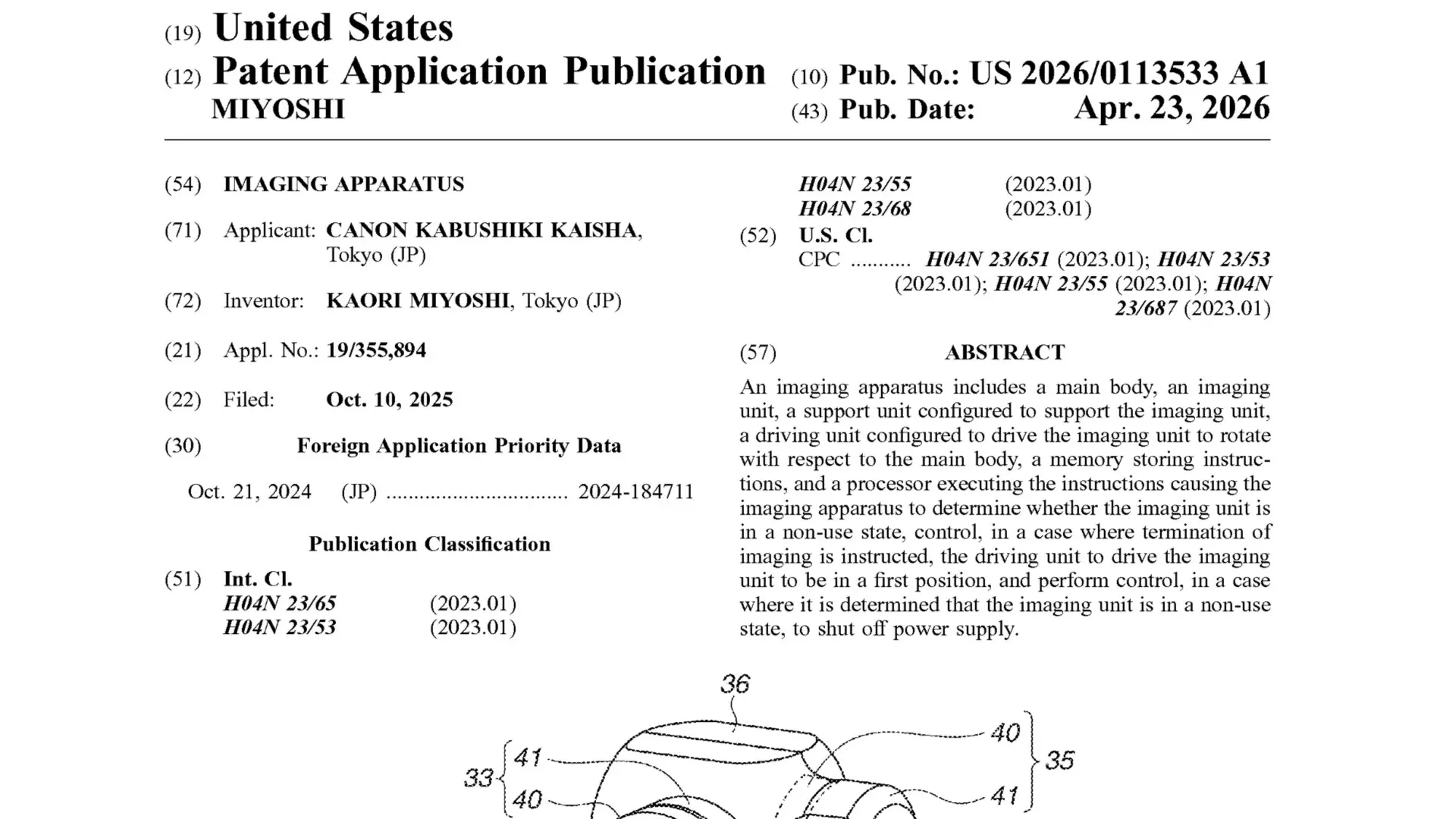
Canon continues to develop its gimbal camera, and a newly published patent confirms that the concept is moving forward. While earlier designs focused on ambitious hardware, this latest filing reveals a more refined approach, one that prioritizes real-world usability, power management, and reliability. Let’s dive a bit into the new patent.
The original vision that never shipped
In 2021, Canon explored a radical concept. A compact camera mounted on a motorized gimbal, combined with interchangeable lenses. It aimed to deliver cinema-level flexibility in a handheld stabilized form. The idea was ambitious. Too ambitious. If you revisit our coverage about the previous patent, the core problem becomes clear. Mechanical complexity. Weight distribution. Cost. Reliability. All of these factors made the concept difficult to bring to market. Canon did not release it. But it also did not abandon it.

A second attempt: Solving the shooting problem
Canon’s next move was not about hardware, but more about the behavior of the tech. A later patent introduced an auto-flipping gimbal system designed to maintain continuous shooting without interruption. The camera could dynamically adjust orientation without stopping recording, solving a key limitation of compact stabilized systems. This marked an important shift. Canon started to rethink how a gimbal camera should function in real-world use, focusing on user experience instead of mechanical ambition.

Now, a practical product starts to appear
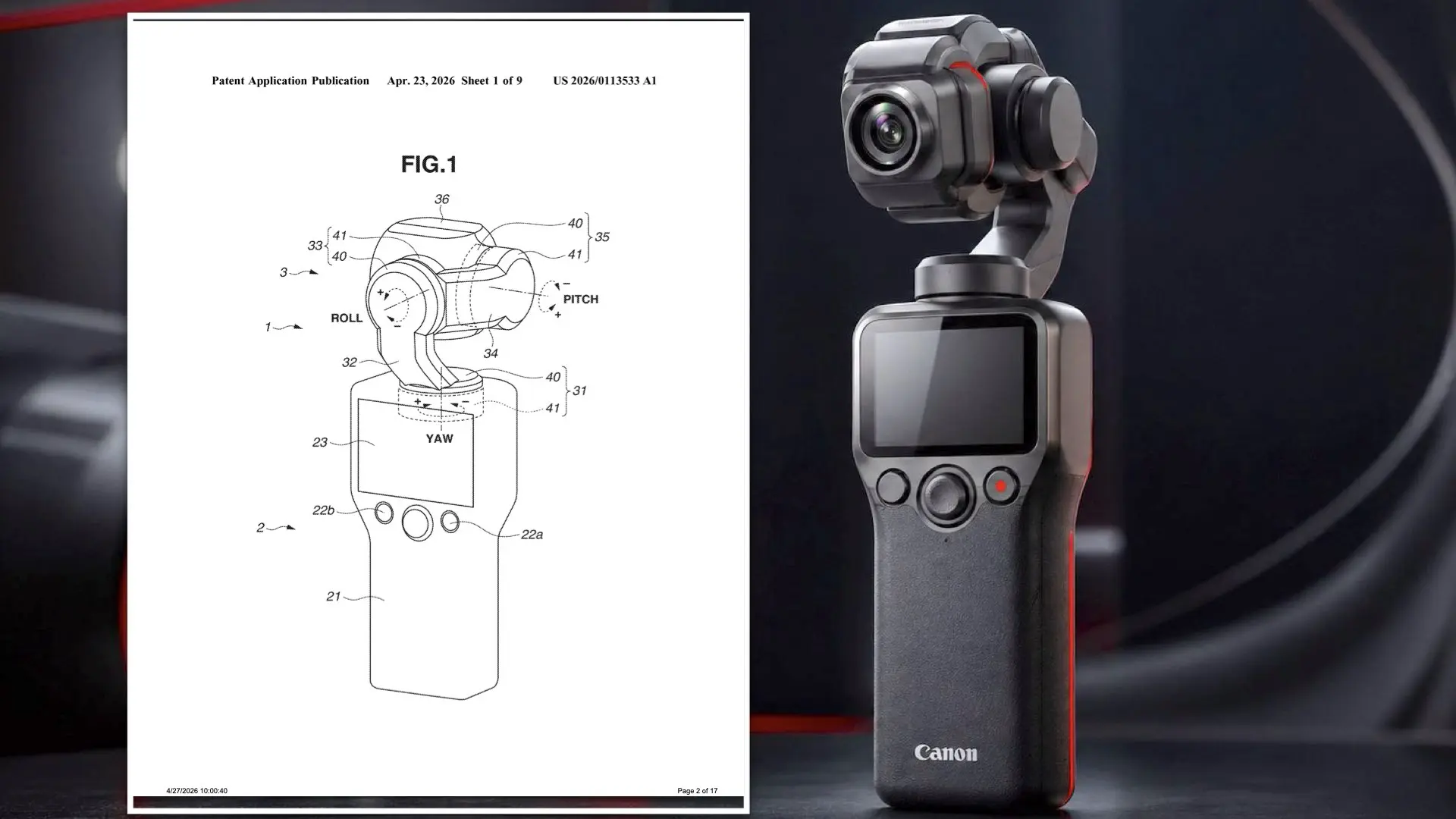
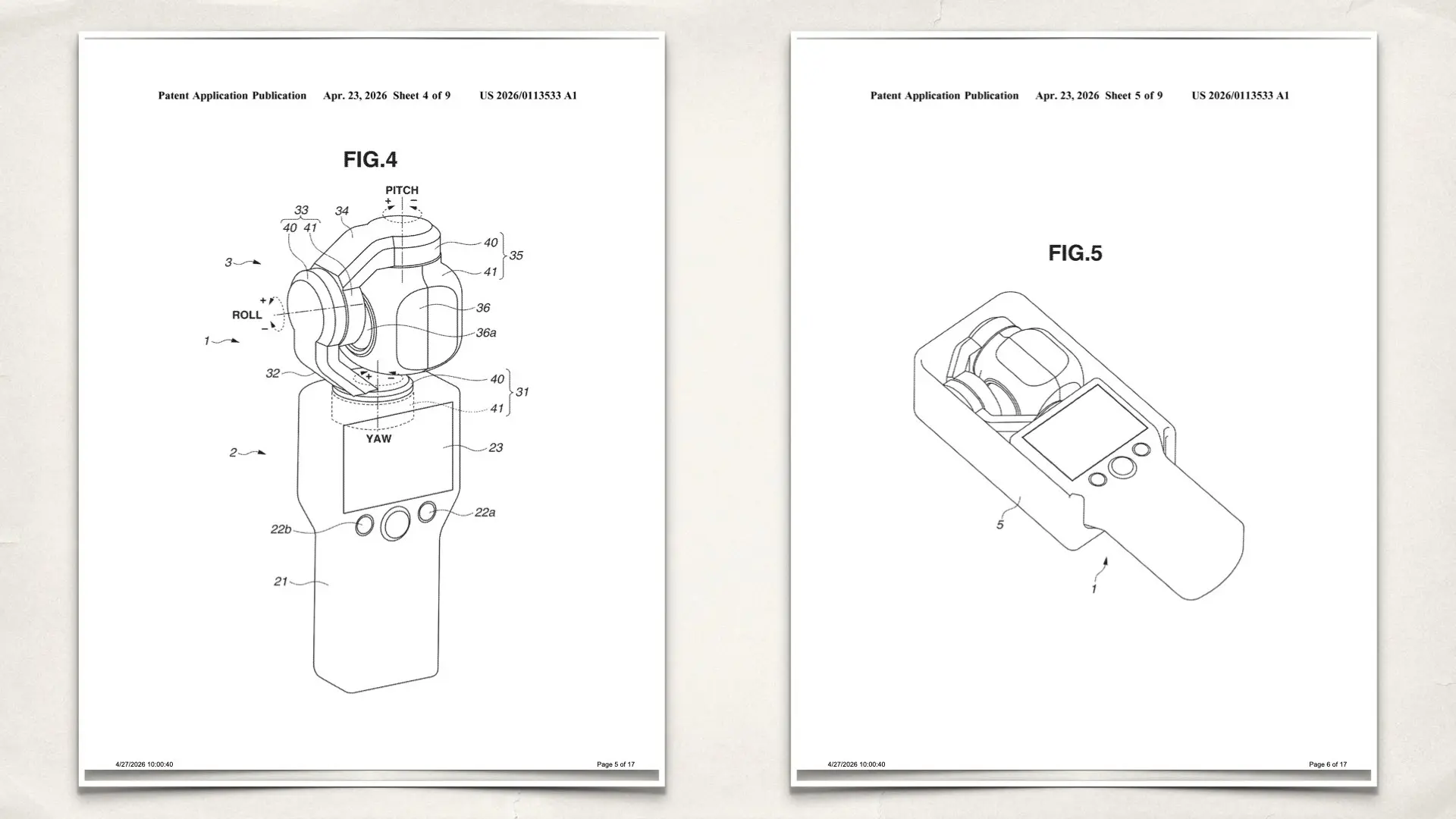
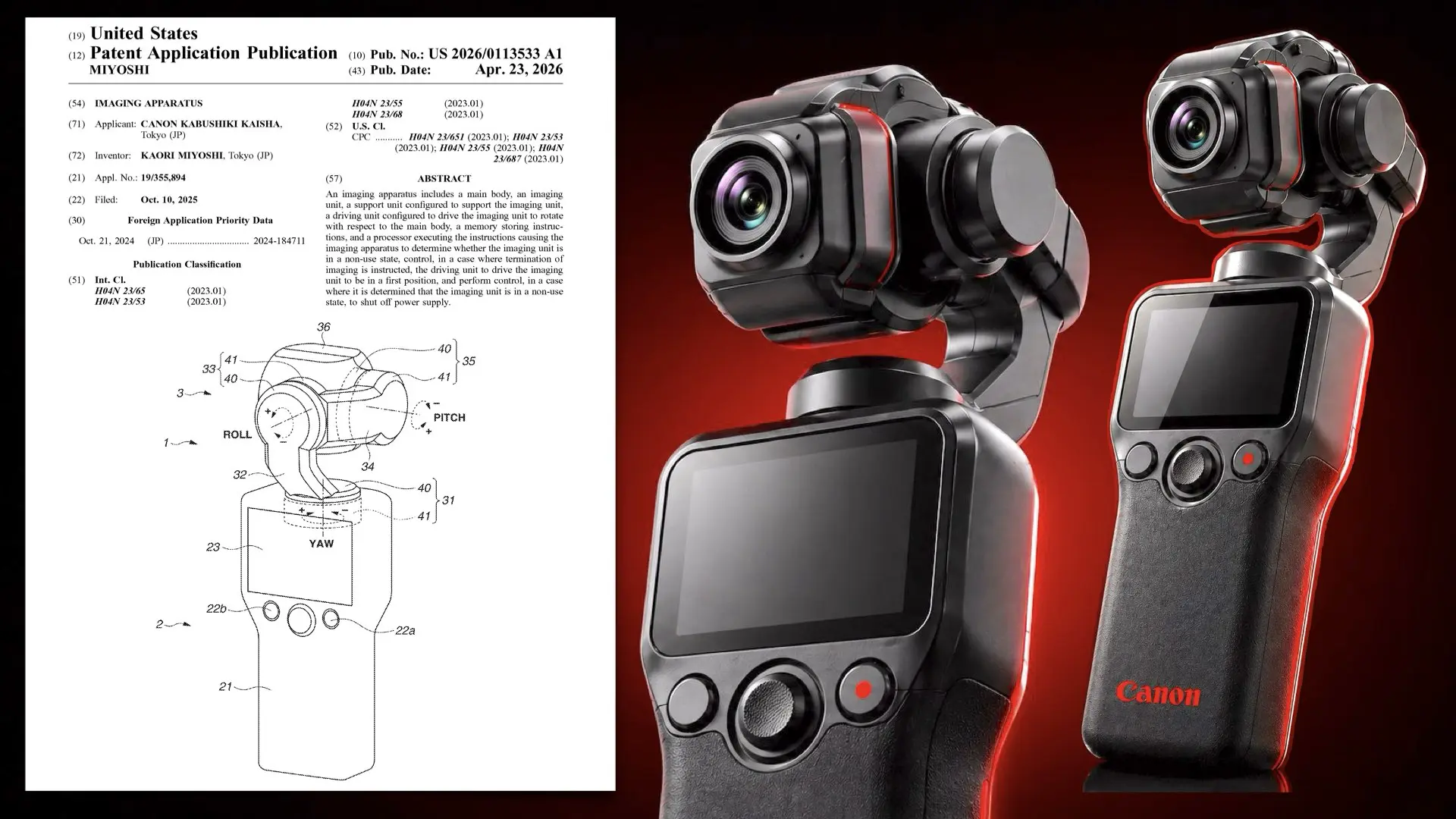
The latest patent brings everything closer to reality. It describes a compact handheld camera with a fully integrated three-axis gimbal. The structure is familiar. A grip with a screen. A fixed lens camera head. Yaw, roll, and pitch stabilization. A folding mechanism that allows the camera to collapse into a protected position for storage. At first glance, this looks similar to products from DJI, particularly devices like the DJI Osmo Pocket 3 ($395 on Amazon) . But the real difference is not the hardware. It is the control system behind it.
The detail that changes everything
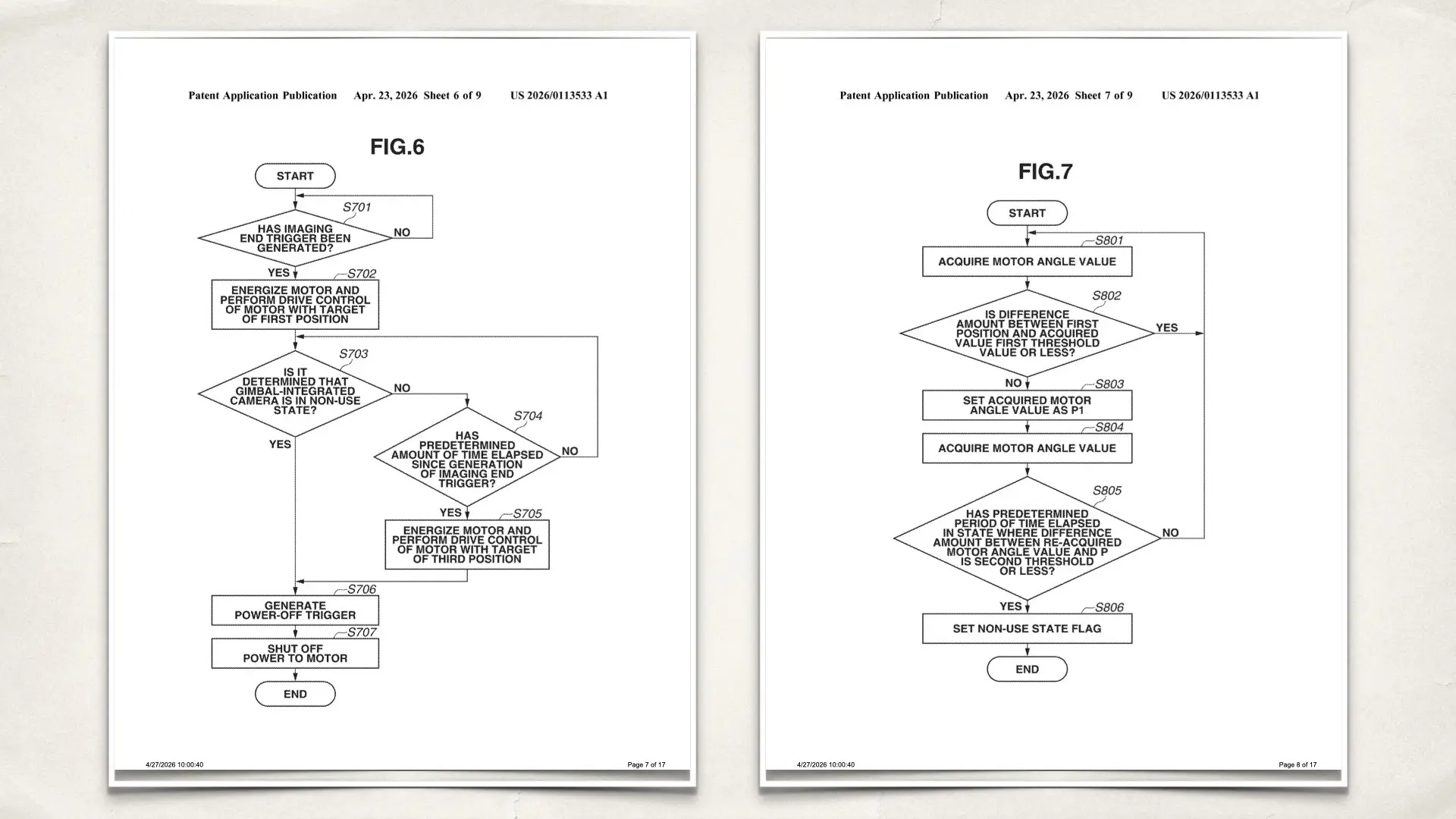
Instead of shutting down immediately after recording ends, the camera follows a sequence. It first moves the gimbal into a precise folded position. Then it evaluates whether the device is still being used. Only after confirming that it has been placed aside or stored does it cut power to the motors. This may sound minor, but it solves a real problem. When gimbal motors lose power, the structure becomes loose. That affects durability and portability. Canon’s approach keeps the system stable until it is safe to shut down, reducing both power consumption and mechanical stress.
A smarter way to understand the user
The patent goes further. Canon proposes multiple ways to detect that the camera is no longer in use. It can analyze motor position changes to detect external forces. It can track user input through buttons and touch interactions. It can even evaluate changes in the captured image or detect when the camera is placed inside a case using magnetic sensors. This layered detection system shows how much emphasis Canon is placing on reliability and control.
From concept to product strategy
When you connect all three patents, a clear progression emerges. The first concept pushed the limits of hardware. The second focused on improving shooting continuity. The latest one refines usability, power management, and real-world handling. Hence, Canon is gradually transforming a complex idea into a product that could actually ship.
Why Canon is moving now
Compact stabilized cameras have become essential tools for creators. DJI has dominated this segment, while smartphones continue to improve stabilization and usability. Canon has been absent from this space. That absence is becoming harder to justify. A pocket gimbal camera would give Canon a direct entry point into fast, lightweight content creation. It would also allow the company to extend its imaging pipeline into a category it has not addressed before. Moreover, modern cameras are becoming more aware of context. They adapt to user behavior. They optimize power consumption. They integrate software logic deeply into the core operation. Canon appears to be building a system that is not defined only by optics or sensors, but by how intelligently it behaves. The company moved from an ambitious but impractical design toward a refined and realistic product concept. Each patent adds another layer, from mechanical design to shooting behavior to power control. If this direction continues, Canon may finally enter a category it has ignored for years. So, are you prepared for Canon’s new camera gimbal?
Gear mentioned in this article
Available on Amazon
| Product | New | Renewed | Used |
|---|---|---|---|
| DJI Osmo Pocket | $395 | — | From $363.89 |
Prices checked: Oct 7, 2026, 1:30 PM GMT+0000
As an Amazon Associate, Y.M.Cinema earns from qualifying purchases. If you buy through our links, we may earn a small commission at no extra cost to you.
Product prices and availability are accurate as of the date/time indicated and are subject to change. Any price and availability information displayed on Amazon.com at the time of purchase will apply to the purchase of this product.
CERTAIN CONTENT THAT APPEARS ON THIS SITE COMES FROM AMAZON. THIS CONTENT IS PROVIDED “AS IS” AND IS SUBJECT TO CHANGE OR REMOVAL AT ANY TIME.