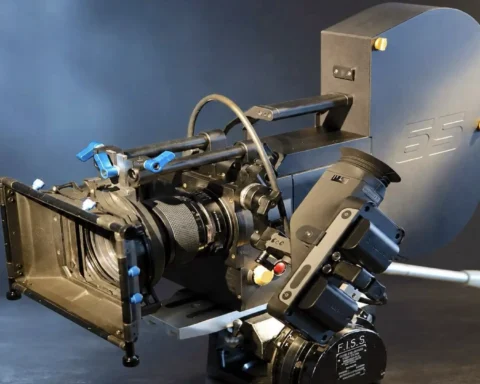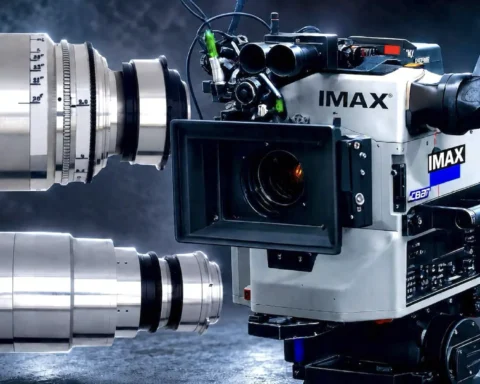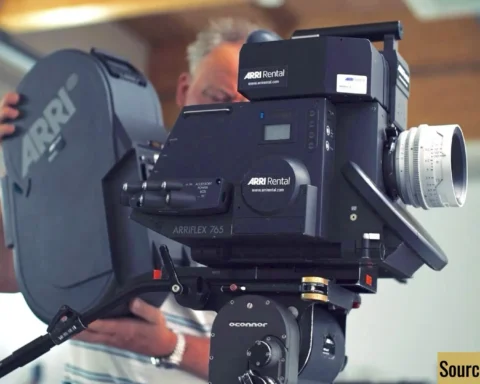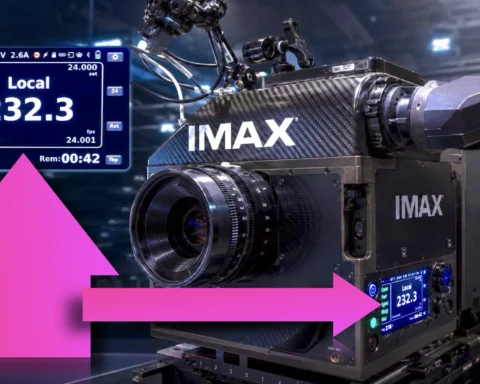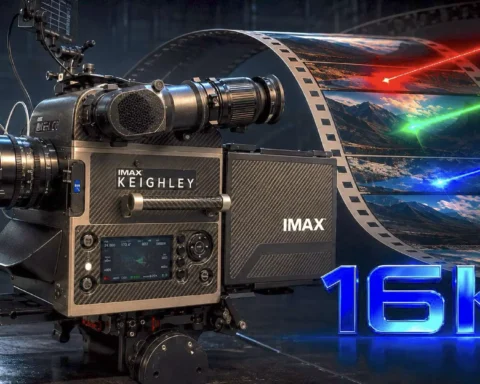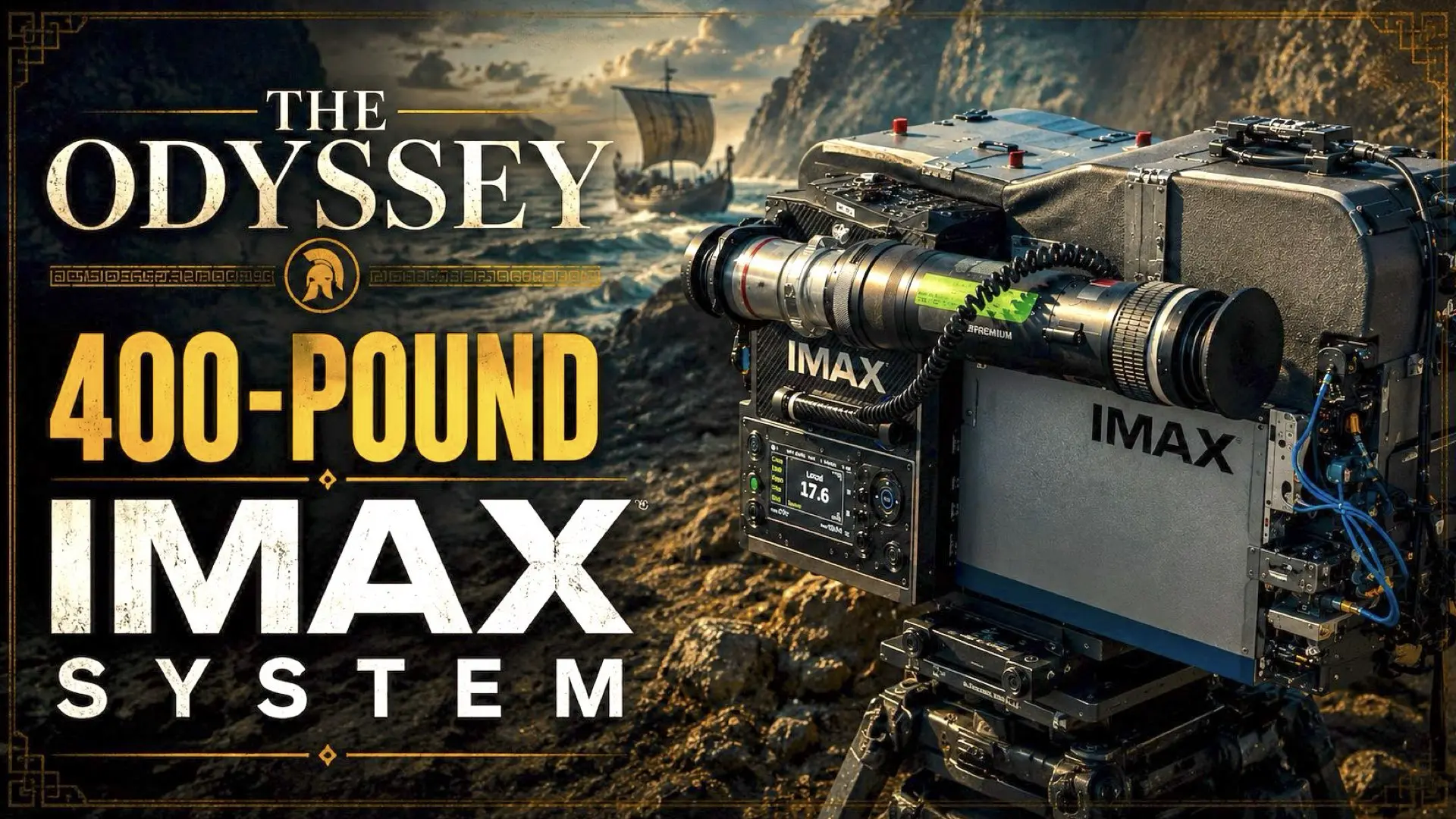
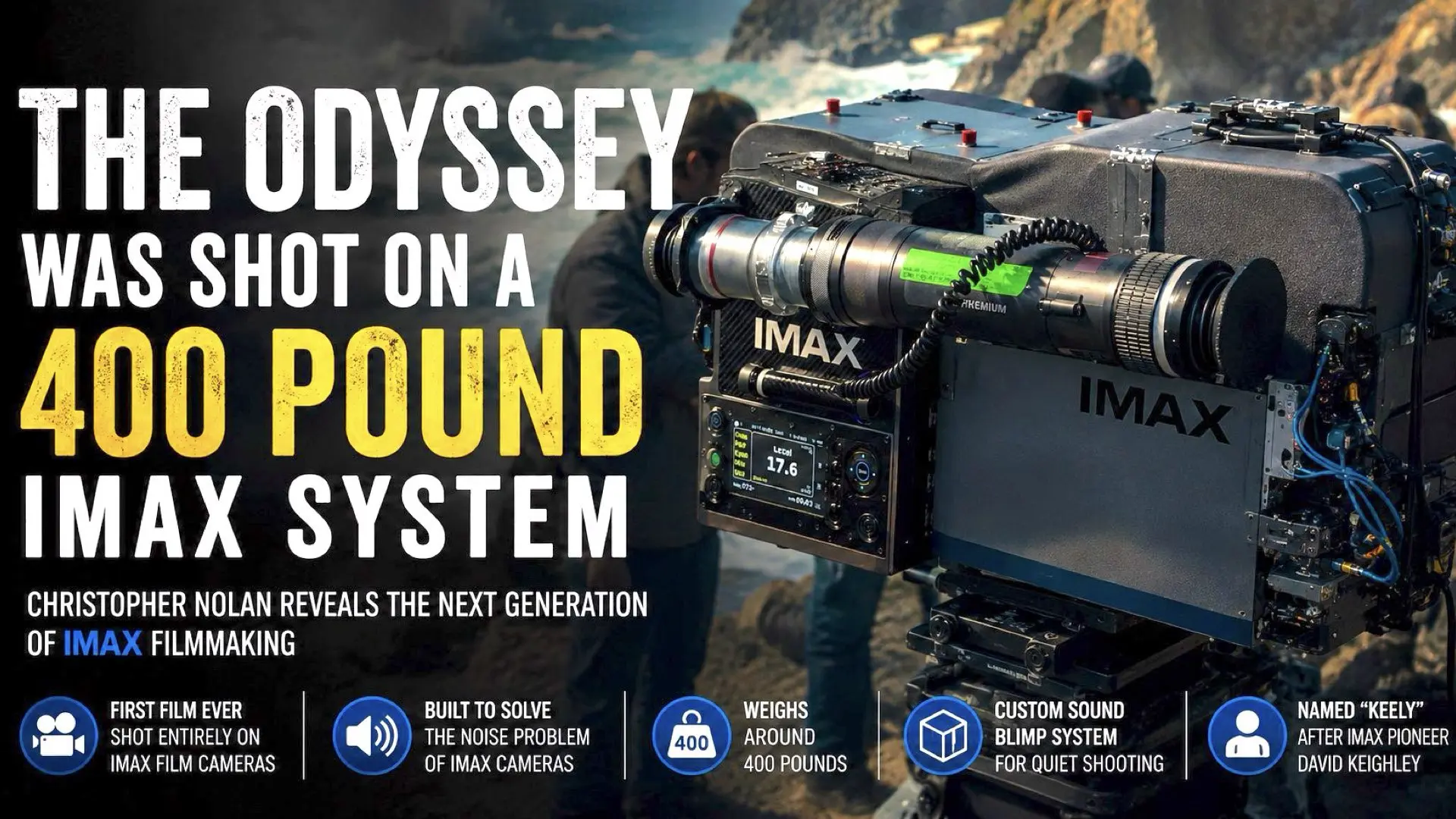
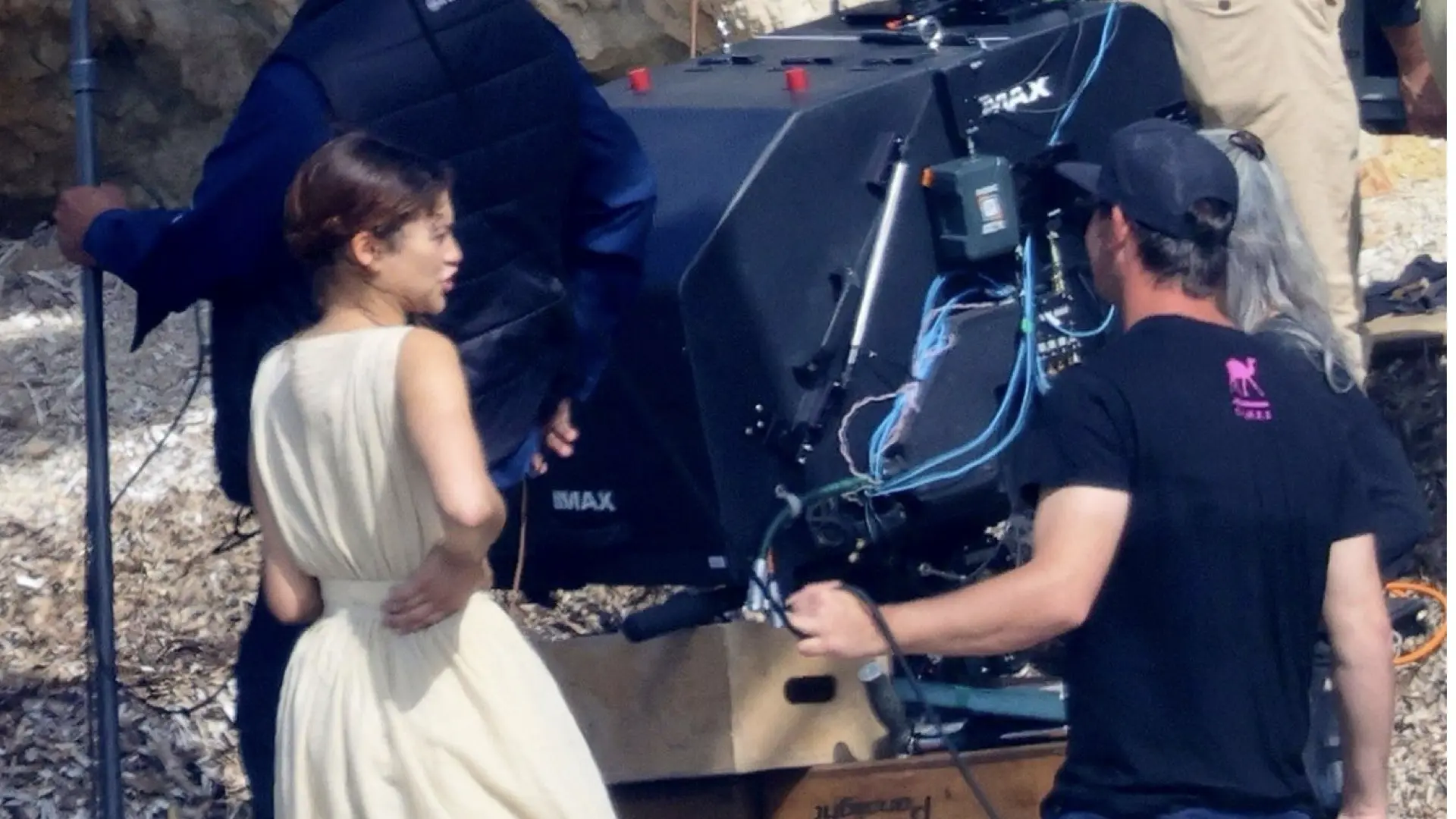
Christopher Nolan has just revealed one of the most fascinating technical details behind The Odyssey, and it may represent a major turning point for large format cinema. During an interview on The Late Show with Stephen Colbert, Nolan explained that The Odyssey became the first feature film ever shot entirely on IMAX film cameras. However, that achievement required the creation of an entirely new IMAX camera system. According to Nolan, the new setup weighs around 400 pounds. More importantly, the system was engineered to solve one of the biggest limitations of IMAX filmmaking: noise.
Nolan explains why full IMAX movies were impossible before
For decades, IMAX film cameras were considered too loud and too impractical for shooting dialogue-heavy scenes. The giant 15 perf 65mm film stock moves horizontally through the camera at extremely high speed, creating enormous mechanical noise. Nolan explained:
“Couldn’t do it because the cameras are so noisy.”
He added that even during the production of Oppenheimer, actors had to push their performances unnaturally during close IMAX shots because the cameras were so loud. According to Nolan:
“We had ADR dialogue but he was shouting over the camera.”
That statement reveals something deeper than simple sound contamination. The camera itself was affecting performance. Actors were unconsciously compensating for the mechanical noise of the IMAX system. For a filmmaker obsessed with realism and emotional authenticity, that became a serious problem to solve.

IMAX reportedly built Nolan an entirely new camera system
Nolan stated that he challenged IMAX directly while preparing The Odyssey.
“We challenged IMAX to do that.”
The result appears to be an entirely new camera platform designed specifically for sync sound dialogue scenes. According to Nolan:
“They build us new cameras. They build us this box that you put the camera in.”
That “box” is likely a massive acoustic enclosure designed to isolate the mechanical sound of the IMAX film movement while still allowing practical operation on set. The surprising detail is the scale of the system. Nolan revealed:
“It weighs about 400 lb.”
That number immediately changes the perspective on how ambitious this production really was. Nolan also explained that the team wanted to shoot practically in real environments, including storms, caves, mountains, and open sea locations. Imagine transporting a 400-pound IMAX film system into those conditions. Suddenly, Matt Damon describing The Odyssey as the hardest shoot of his career makes much more sense.
This is still a true IMAX film, not digital
One of the most important details from the interview is that Nolan repeatedly emphasized the use of actual IMAX film. He described the “massive film” physically moving through the camera and once again defended IMAX film as:
“The highest quality imaging format that’s ever been built.”
That is significant because many assumed the future of IMAX production would eventually move toward large format digital sensors. Instead, Nolan appears fully committed to pushing analog IMAX technology even further. In other words, the “next generation” system behind The Odyssey does not appear to be digital at all. It is a redesigned photochemical IMAX workflow.
The camera system has a name
Nolan also revealed that the new camera platform is called “Keely,” named after David Keighley, Nolan’s longtime IMAX collaborator and mentor, who passed away during post-production. According to Nolan, Keighley approved the final dailies for The Odyssey before his passing. That detail suggests this new system may carry long-term importance inside IMAX itself. The naming feels less like a temporary prototype and more like the introduction of a new generation IMAX architecture.

IMAX may have just entered a new era
Historically, IMAX film cameras were mostly reserved for action sequences, large-scale spectacle, short immersive moments, and documentary filmmaking. Nolan gradually expanded that language across films like The Dark Knight, Interstellar, and Oppenheimer. However, The Odyssey appears to be the first time IMAX film was used for an entire feature narrative, including intimate dramatic scenes. That may be the true breakthrough here. Nolan is no longer using IMAX simply for scale, but he is using it for emotional proximity, performance intimacy, and full narrative immersion. If this new system proves successful, it could permanently change the way premium large-format cinema is produced.
The ultimate IMAX story?
Nolan explained why Homer’s epic finally pushed him to demand a fully IMAX production:
“If ever there were a story where you want to do the whole thing on IMAX, this is it.”
That statement perfectly summarizes Nolan’s philosophy. The Odyssey combines mythology, storms, landscapes, monsters, war, family, and survival into one giant cinematic experience. For Nolan, that apparently justified building a brand new 400-pound IMAX system just to capture it properly. And honestly, that sounds exactly like the kind of filmmaking challenge Christopher Nolan would embrace. That’s filmmaking! BTW, in case you would like to read and learn more about this very ambitious Nolan’s project, head here to our articles, where we wrote a ton of stuff about it. And here’s the full interview below: