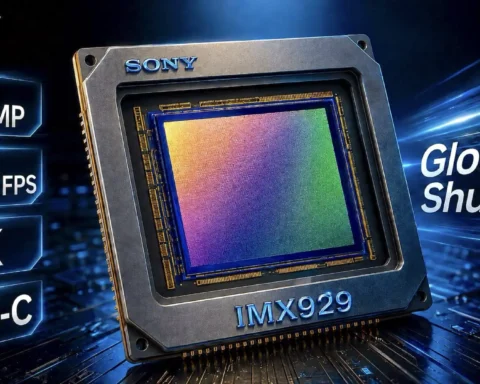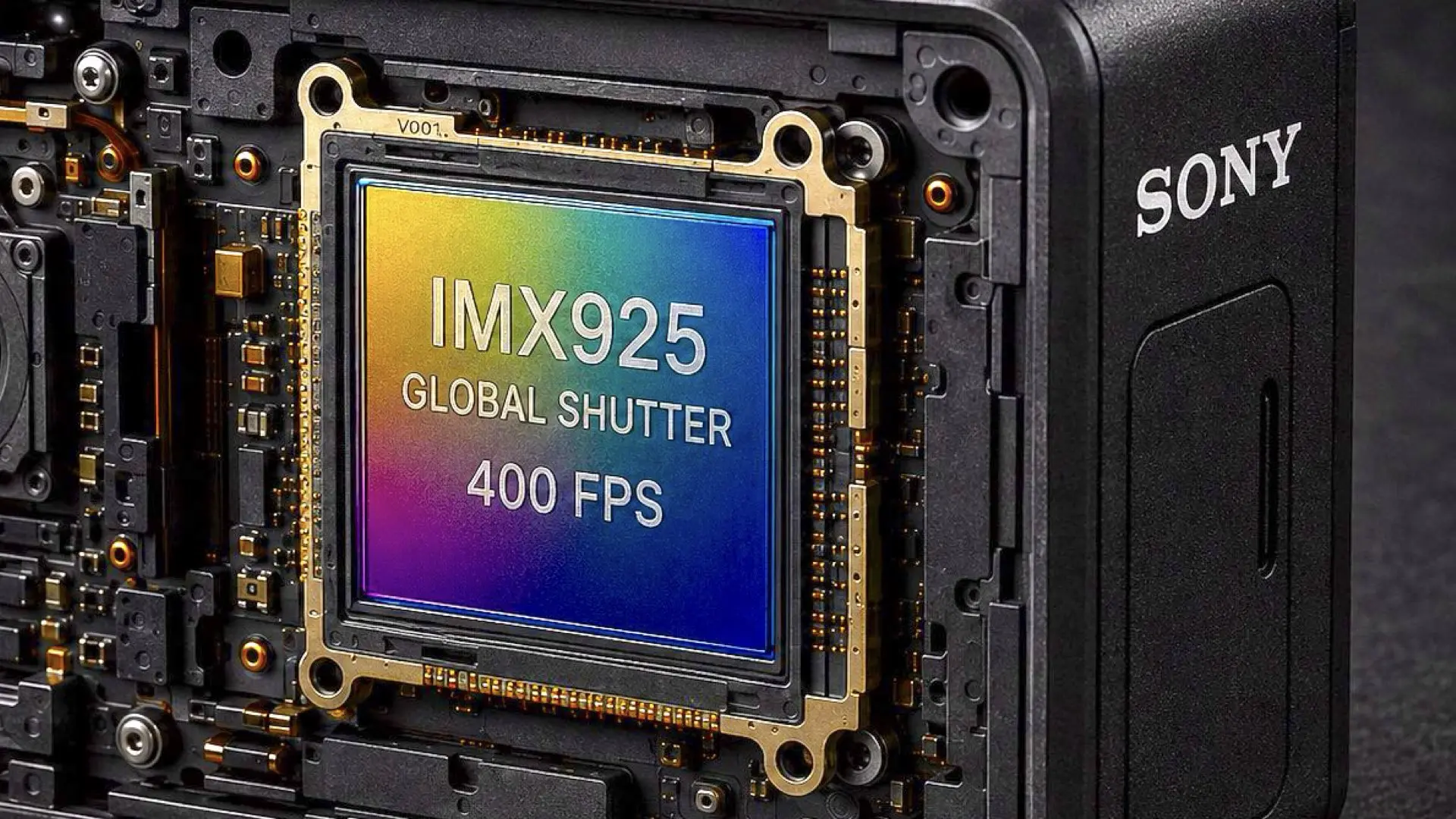
Sony Semiconductor Solutions is now promoting the IMX925 as available, giving high-speed imaging developers access to a Type 1.2 global shutter sensor that combines 24.55MP resolution with an extremely fast full pixel readout. The sensor was already known from Sony’s production roadmap, but the latest availability message turns the IMX925 into a shipping product, with the color version listed for mass shipment in April 2026.
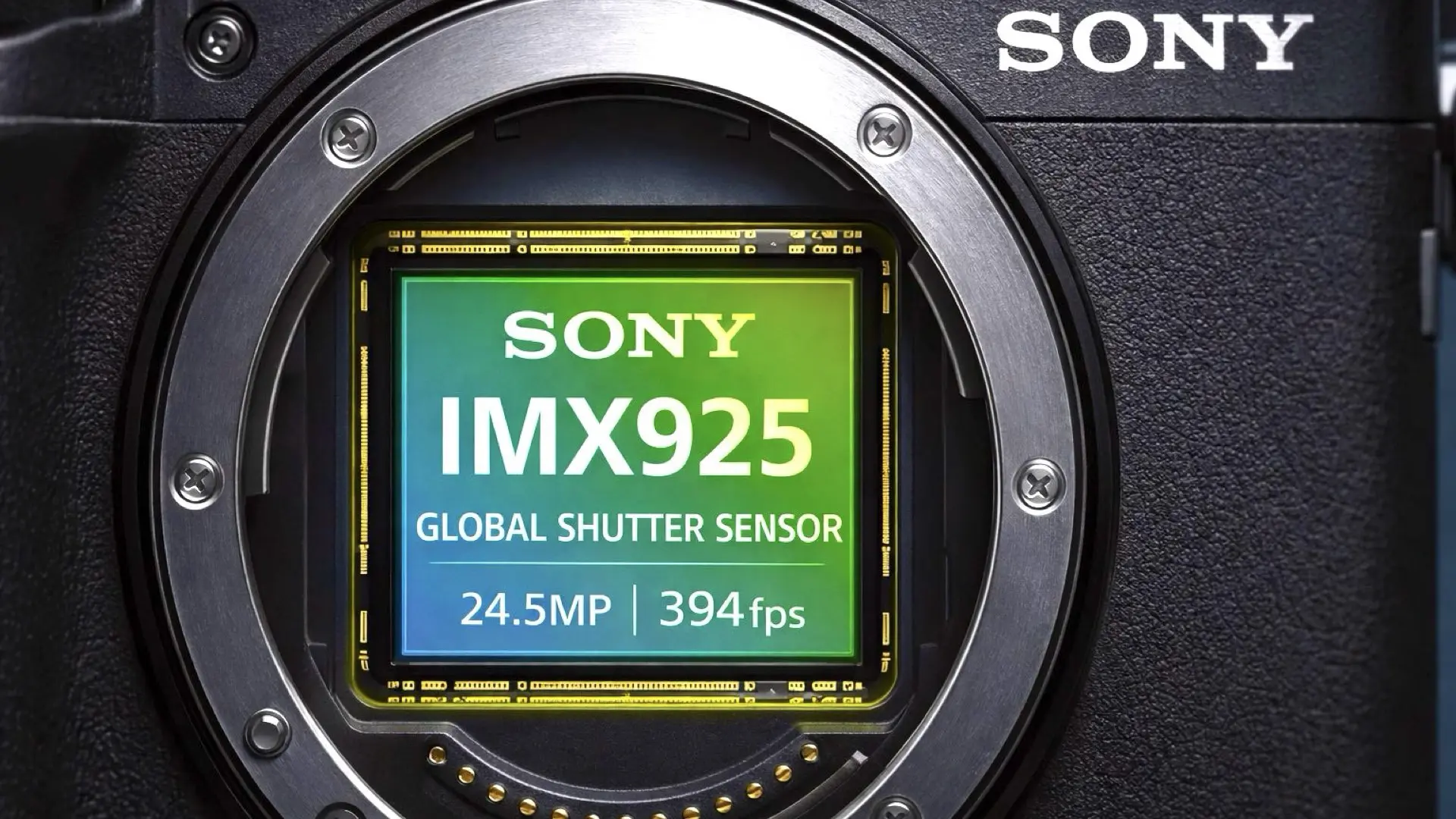
Sony IMX925
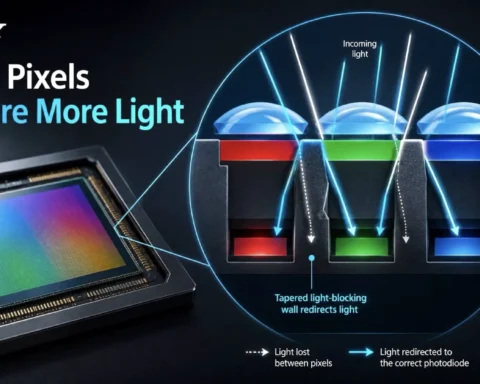
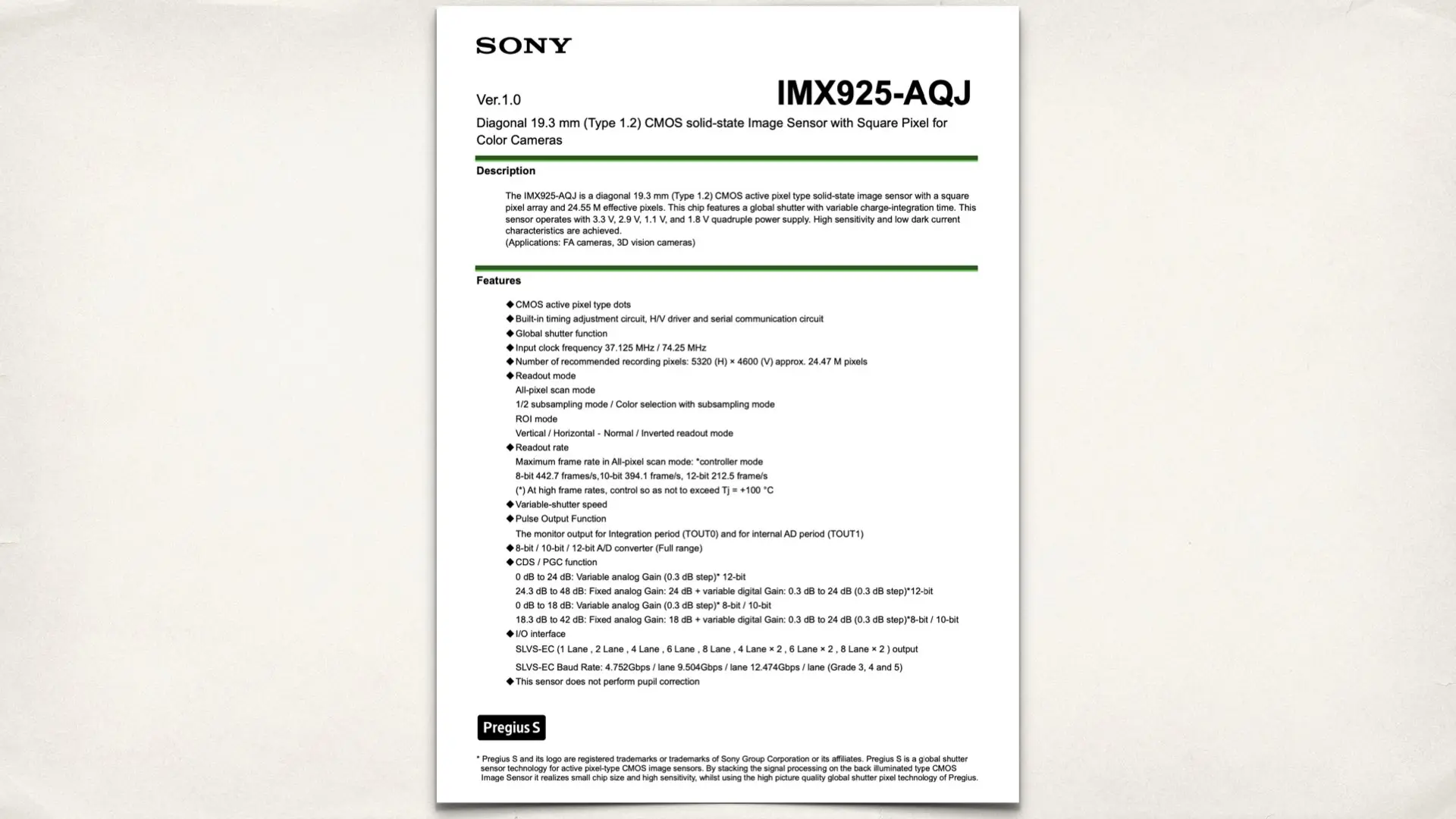
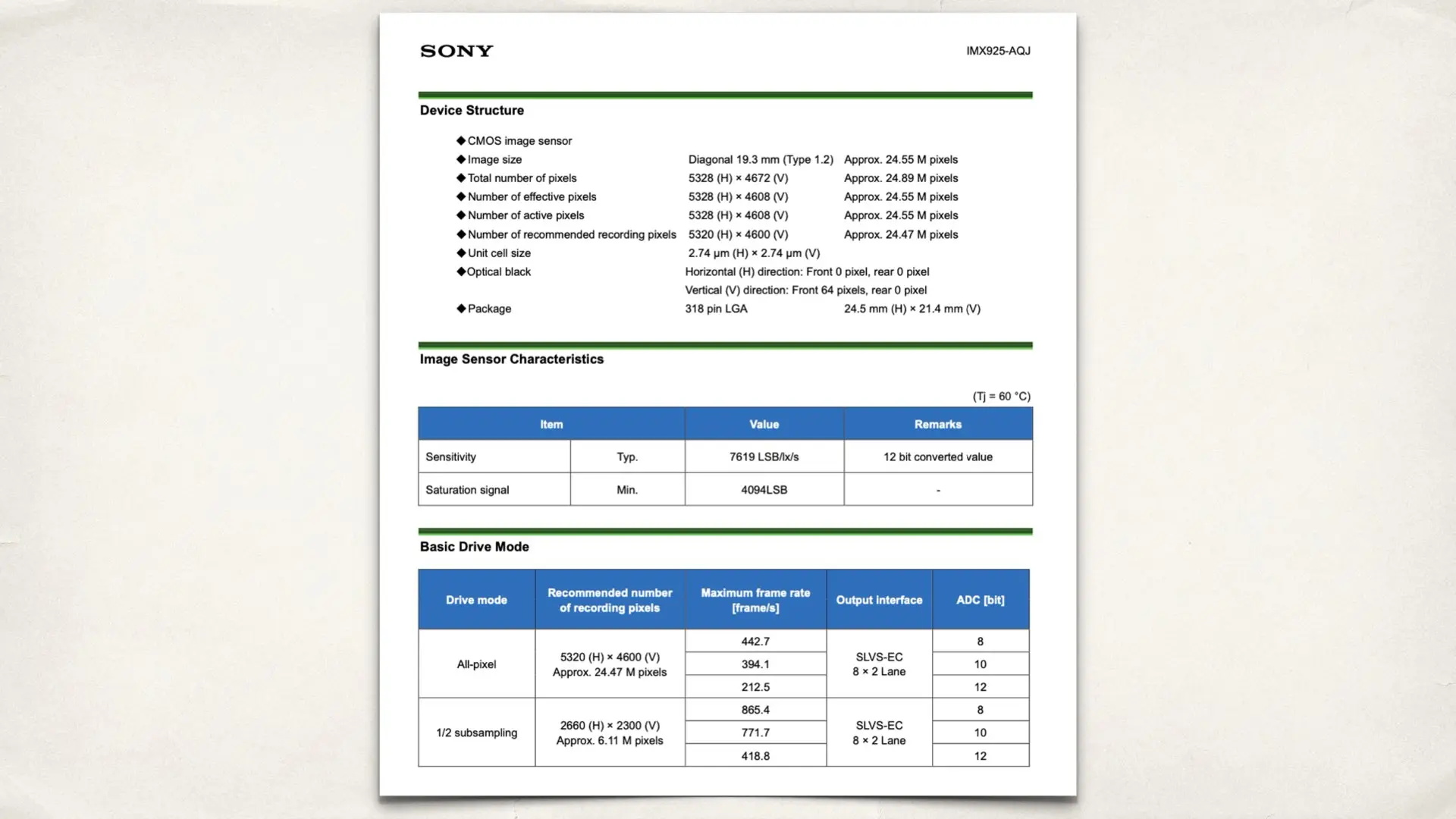
The IMX925 can reach 394.1 frames per second at 10-bit in all pixel scan mode, while maintaining an effective resolution of 5328 × 4608 pixels. In 8-bit mode, the sensor goes even higher, up to 442.7 frames per second. In 12-bit mode, it still reaches 212.5 frames per second. That is a very aggressive performance profile for a sensor with almost 25 million effective pixels. Sony lists the IMX925 as a diagonal 19.3 mm, Type 1.2 CMOS image sensor with square pixels, 24.55 million effective pixels, and a unit cell size of 2.74 µm. The sensor uses Pregius S global shutter technology, Sony’s stacked global shutter architecture designed to combine high image quality, high sensitivity, compact chip design, and fast readout. The active pixel count is 5328 × 4608, while the recommended recording area is 5320 × 4600, equal to approximately 24.47MP.
Speed & resolution
Global shutter sensors are usually judged by 2 major questions. How fast can they read the frame, and how much image quality is sacrificed to achieve that speed? The IMX925 is interesting because it pushes both parameters at the same time. It is a high-resolution sensor, yet it is fast enough to capture motion at hundreds of frames per second without rolling shutter distortion. That makes it very different from many high-resolution CMOS sensors used in consumer cameras, where rolling shutter can become visible during fast pans, vibrations, aerial movement, sports, robotics, or machine-controlled motion. A global shutter captures the entire frame at once, which prevents skew, wobble, and partial exposure artifacts. For industrial imaging, this can be essential. For filmmakers, it is one of the most desired sensor characteristics, especially in action, VFX, virtual production, crash testing, and high-speed motion analysis. However, the IMX925 should be understood accurately. This is not a Sony Cinema Line sensor. Sony’s own documentation lists the applications as FA cameras and 3D vision cameras. In other words, this is aimed at industrial imaging, machine vision, robotics, inspection systems, and high-precision, high-speed capture. It uses an SLVS EC output interface with multiple lane configurations, which further confirms its industrial positioning.
Type 1.2 is large for some visions
The IMX925 is described as a Type 1.2 sensor, with a real diagonal of 19.3 mm. That places it above many smaller industrial sensors and close to the lower edge of compact camera territory. Its active area is roughly 14.6 mm wide by 12.6 mm high, based on the 5328 × 4608 pixel array and 2.74 µm pixel pitch. This size is significant for machine vision because larger sensors require larger optics, stronger thermal design, and higher bandwidth. Sony is clearly targeting applications where the extra sensor area and pixel count are worth the system complexity. The 4:3 aspect ratio also makes sense for machine vision and 3D vision, where vertical information can be as important as horizontal coverage. For cinema, the size is still modest. It is smaller than Micro Four Thirds, much smaller than APS-C, and far below full frame. That is why the IMX925 should not be presented as a direct cinema camera candidate. Its relevance is technological rather than product-specific. It shows how far Sony’s industrial global shutter sensors have progressed in speed, density, and readout efficiency.
Why filmmakers should care
The IMX925 is built for industrial applications, yet its specifications point toward a broader imaging trend. Global shutter technology is becoming faster, denser, and more practical. A sensor that reads almost 25MP at 394 fps demonstrates the direction of the market, even if the first major use cases are outside traditional filmmaking. This has implications for several areas connected to cinema technology. High-speed global shutter sensors can support better motion capture, volumetric imaging, robotics-based cinematography, sports analysis, virtual production scanning, and scientific imaging. These are not conventional cinema camera workflows, but they increasingly intersect with production technology. Filmmakers need larger sensors, high dynamic range, low noise, strong color performance, efficient heat management, and video pipelines built around codecs, monitoring, synchronization, and camera body design. The IMX925 solves a different problem. It prioritizes speed, precision, and industrial reliability. Still, Sony’s progress here is worth watching. Industrial sensors often reveal technology before it migrates into more familiar creative tools. The IMX925 will probably not appear inside a Sony FX or VENICE camera, but it strengthens the broader expectation that global shutter will continue moving into more imaging categories.