
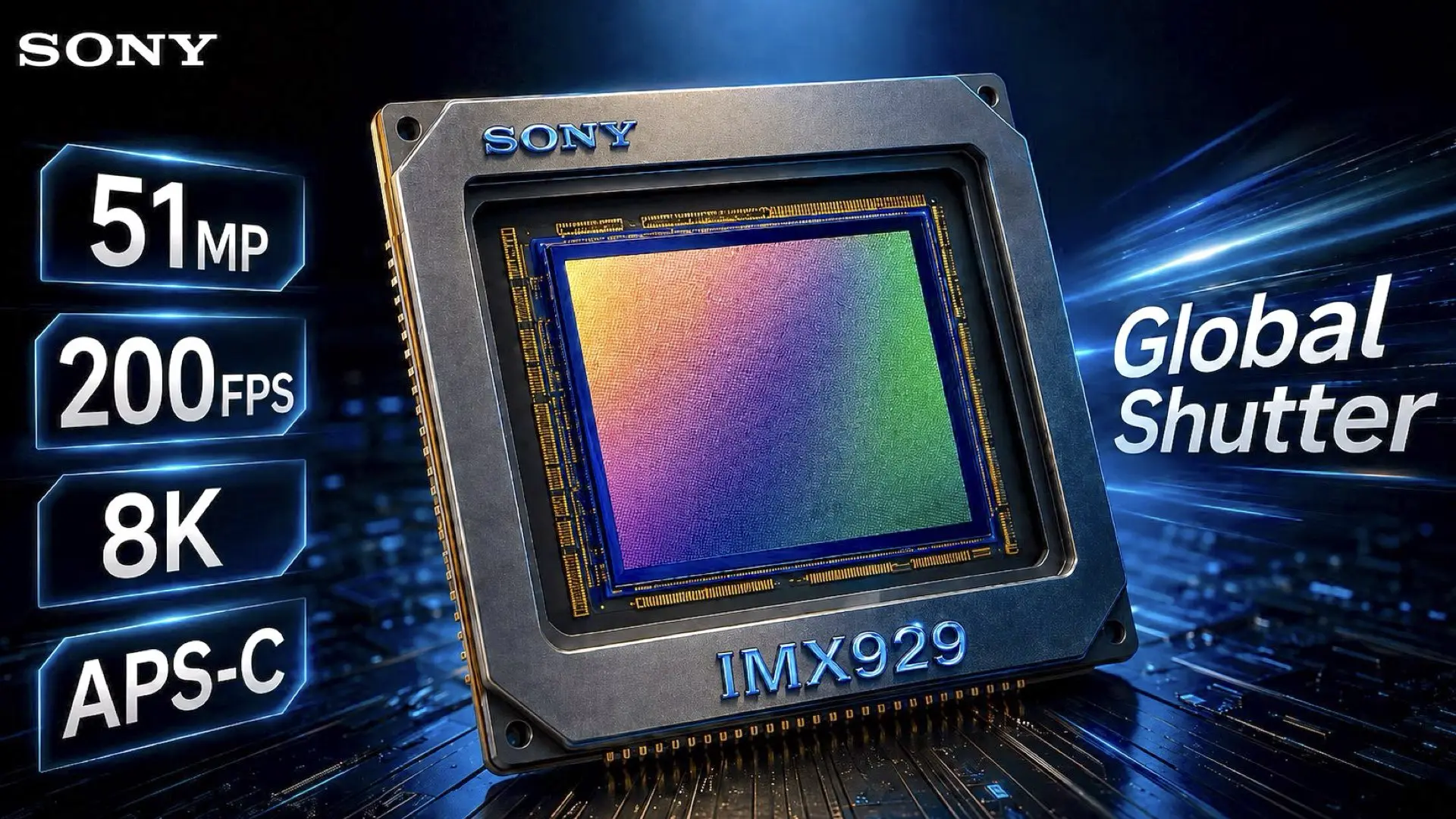
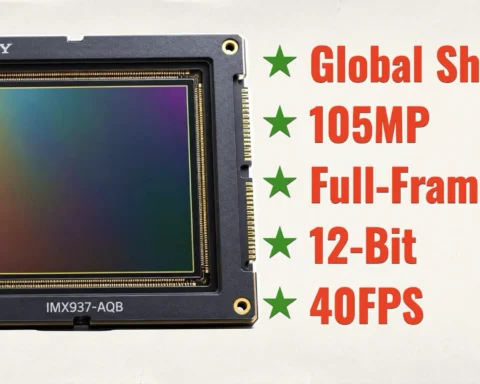
Sony has started sample shipments of the monochrome version of its IMX929, a 50.7MP Type 1.8 global shutter image sensor capable of reaching approximately 201 fps at 10-bit output. The sensor was already on our radar earlier this year, but the transition into sample availability moves the IMX929 from an impressive specification into hardware that camera and imaging manufacturers can now begin evaluating. The IMX929 is roughly Super 35-sized, with a 28.1 mm diagonal and a 4:3 active image area.

50MP global shutter at 201 FPS
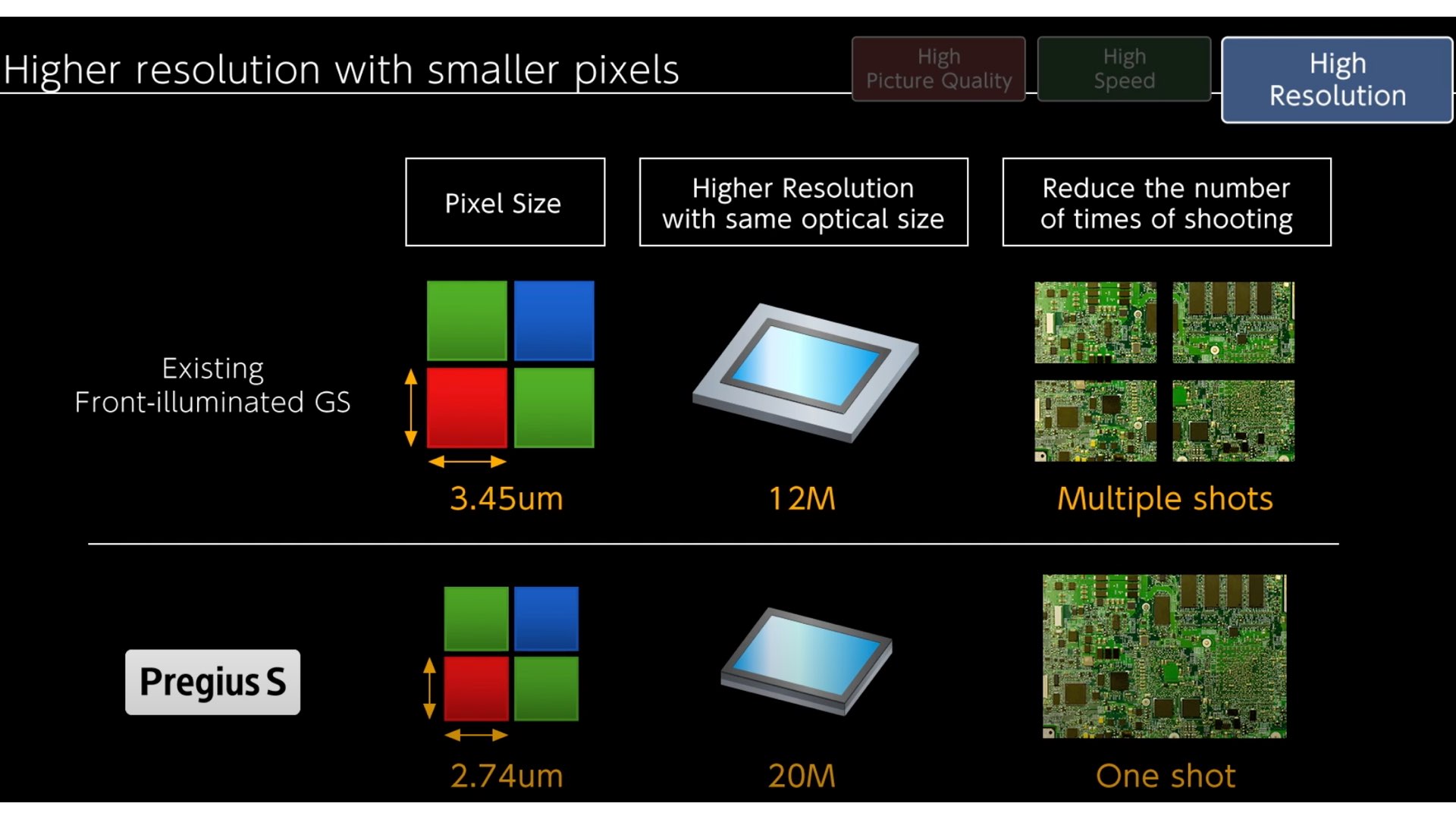
According to Sony, the IMX929 features approximately 50.79 million effective pixels on a 28.1 mm diagonal Type 1.8 sensor. The effective pixel array measures 8224 × 6176, while Sony specifies 8192 × 6144, approximately 50.33MP, as the recommended recording area. Each pixel measures 2.74 μm. The key specification remains its combination of resolution and readout speed. In full-pixel controller mode at 8192 × 6144, Sony specifies:
| Output | Maximum Frame Rate |
|---|---|
| 8-bit | 225.3 fps |
| 10-bit | 201.5 fps |
| 12-bit | 136.4 fps |
The sensor uses a global shutter, meaning all pixels can capture the exposure simultaneously rather than being scanned progressively across the sensor as with a conventional rolling shutter. That makes the 201.5 fps figure at 10-bit particularly notable. This is essentially a 50MP global shutter sensor continuously moving an enormous amount of image data while maintaining full-resolution capture.

Sample shipments begin
Sony Semiconductor Solutions has now informed us that sample shipment of the monochrome IMX929 began in July 2026. That is the new development here. We first covered the IMX929 in January, when we highlighted it as an 8K-class global shutter sensor capable of exceeding 200 fps. At that stage, the story was primarily about what Sony’s latest Pregius technology demonstrated technically. Now, manufacturers can begin evaluating the sensor for actual products and imaging systems. It is worth noting that the flyer supplied by Sony is for the IMX929-AQB, the color-camera version of the sensor, while Sony’s latest sample-release notification specifically refers to the monochrome version. The AQB flyer nevertheless provides the detailed architecture and operating specifications of the IMX929 family. Sony describes the IMX929-AQB as a Type 1.8 CMOS sensor with 50.79MP and a global shutter.
More than 400 FPS with subsampling
The IMX929 can go considerably faster when full 50MP resolution is not required. Using its 1/2 subsampling mode at 4096 × 3072, approximately 12.58MP, Sony specifies:
| Output | Maximum Frame Rate |
|---|---|
| 8-bit | 435.3 fps |
| 10-bit | 390.3 fps |
| 12-bit | 266.5 fps |
That gives the sensor another interesting operating profile: approximately 12.6MP global shutter acquisition approaching 400 fps at 10-bit output. Sony also supports ROI operation, vertical and horizontal normal or inverted readout, variable shutter speed, and multiple subsampling modes.
Handling the data
Moving approximately 50MP at more than 200 frames per second requires massive throughput. The IMX929 uses Sony’s SLVS-EC interface, with configurations extending to dual 8-lane operation. Sony lists per-lane data rates of 4.752 Gbps, 9.504 Gbps, and 12.474 Gbps depending on the operating grade. This is an important part of what makes sensors such as the IMX929 technically interesting. The challenge is no longer simply producing a global shutter pixel. It is moving tens of millions of those pixels off the sensor hundreds of times every second.
Pregius global shutter technology
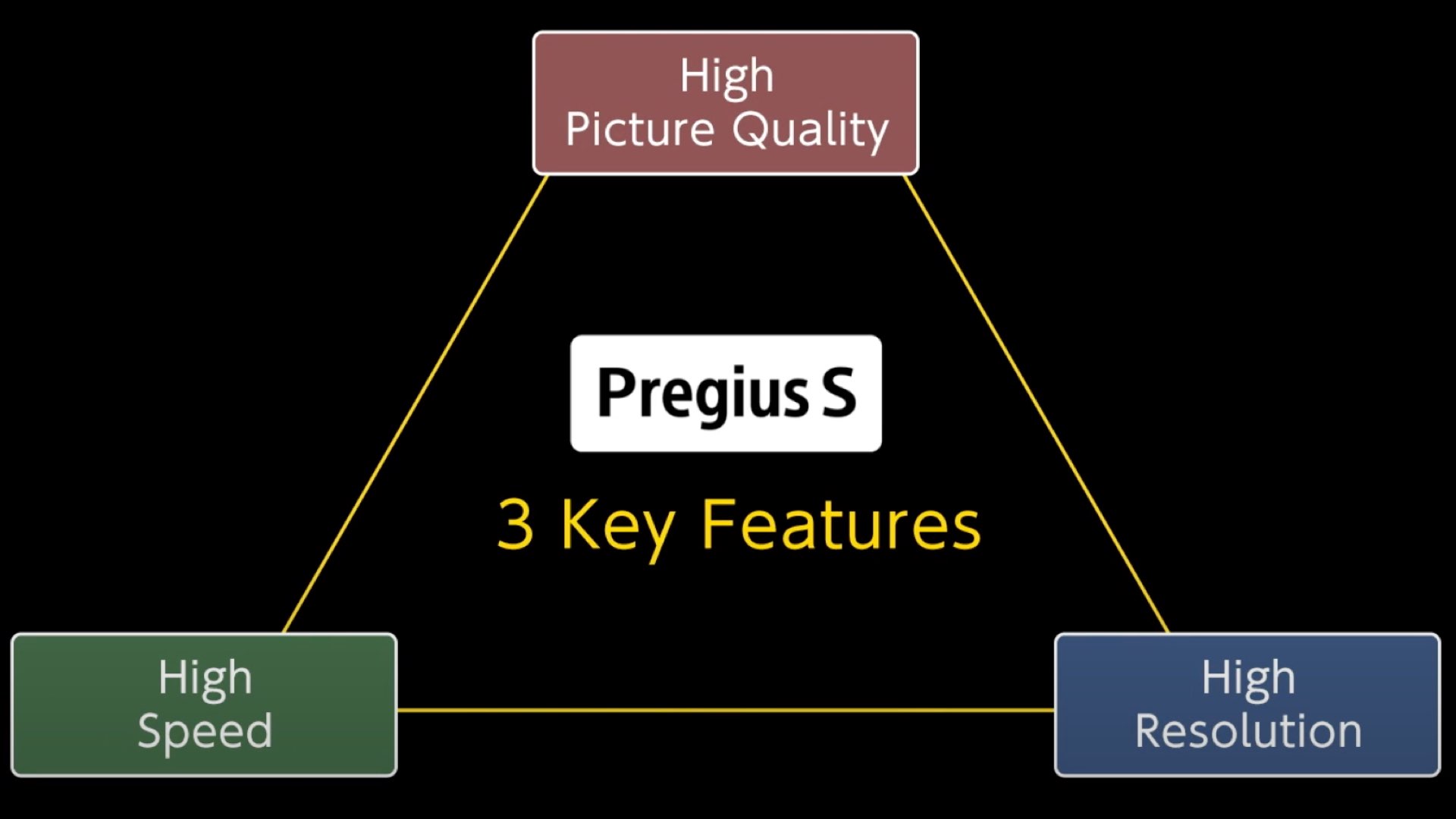
The IMX929 belongs to Sony’s Pregius family. Sony describes Pregius as its global shutter pixel technology for CMOS image sensors, using a low-noise CCD structure to achieve high image quality. The sensor is primarily targeted at industrial imaging. Sony lists applications including FA cameras and 3D vision cameras. So this should not be interpreted as Sony announcing a future cinema camera sensor. However, as we noted when we first examined the IMX929, sensors developed for machine vision can still reveal where imaging technology is heading. The January specifications already showed that global shutter, extremely high resolution, and very high frame rates can coexist in a single CMOS architecture. Sample availability now makes that technology significantly more tangible.
The cinema technology angle
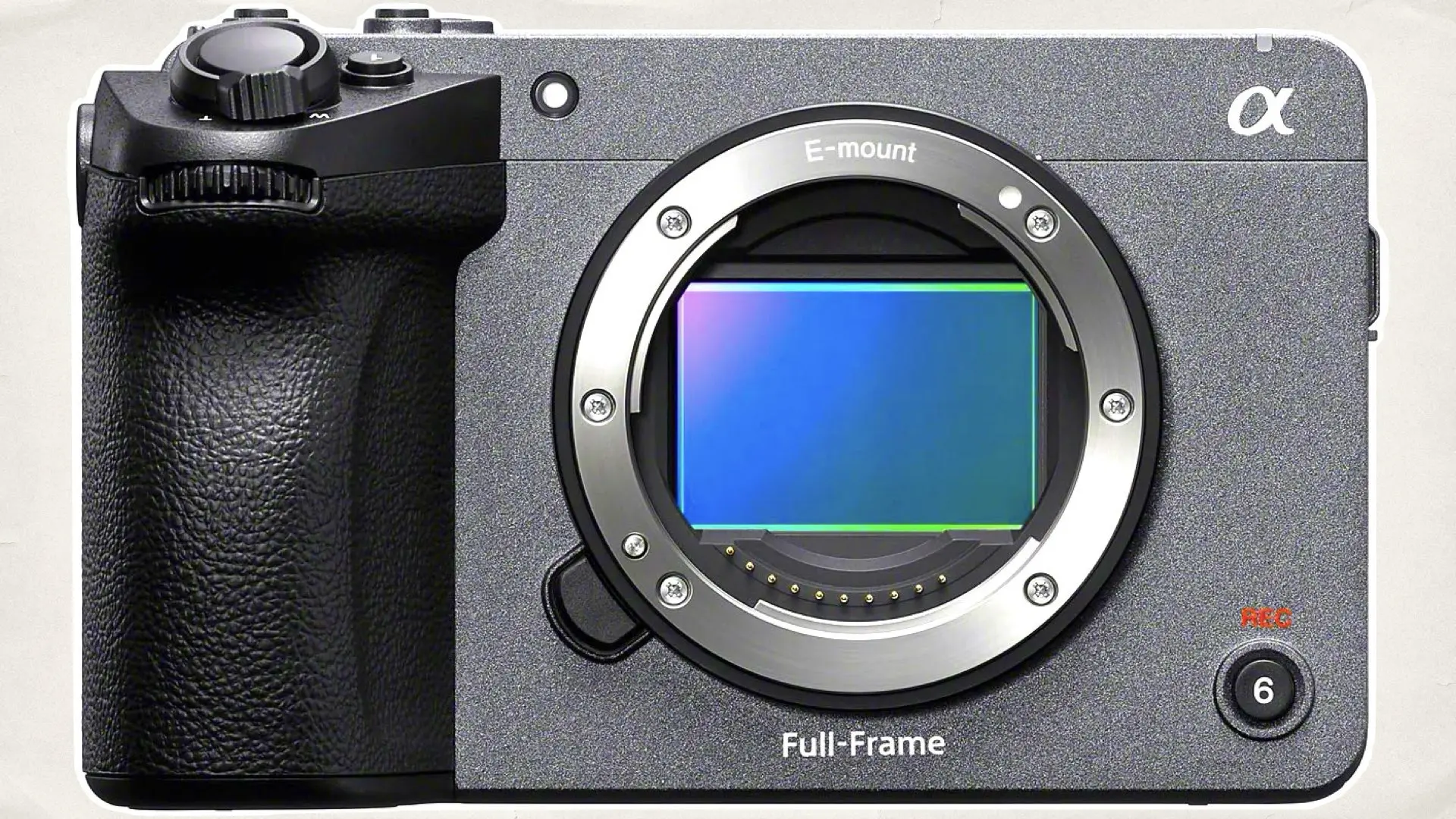
For filmmakers, the IMX929 is interesting less because of its intended market and more because of what it demonstrates. Global shutter has obvious advantages for motion capture. Skew, bending vertical lines, partial-frame exposure differences, and other rolling-shutter artifacts can be eliminated because the entire image is exposed simultaneously. The trade-off has traditionally involved compromises elsewhere, particularly resolution, sensitivity, dynamic range, or readout speed. The IMX929 attacks one part of that equation aggressively: speed. At approximately 50MP and 201.5 fps in 10-bit mode, Sony is demonstrating a level of global-shutter throughput that would have been extraordinary only a few sensor generations ago. It does not mean we should expect a 50MP, 200 fps Sony cinema camera. Industrial sensors operate under very different priorities and system requirements. But technologies developed for industrial imaging frequently show what is becoming technically possible long before similar capabilities appear in products designed for cinematography.
Final thoughts
The IMX929 itself is not new. The important development is that Sony has now moved the monochrome version into sample shipment. With approximately 50.7MP, 2.74 μm pixels, global shutter, 201.5 fps at 10-bit full-resolution output, and up to 390.3 fps at 10-bit using 1/2 subsampling, the IMX929 remains one of Sony’s more extreme demonstrations of high-resolution global shutter performance. One qualification should also be kept in mind: Sony marks the published frame rates as tentative and states that specifications can change without notice. Nevertheless, the sensor has now crossed an important threshold. It is no longer only something to analyze on a specification sheet. Samples are shipping.









I wonder when we might see this new Sony 8K 200 FPS global shutter sensor technology in 2020 color?