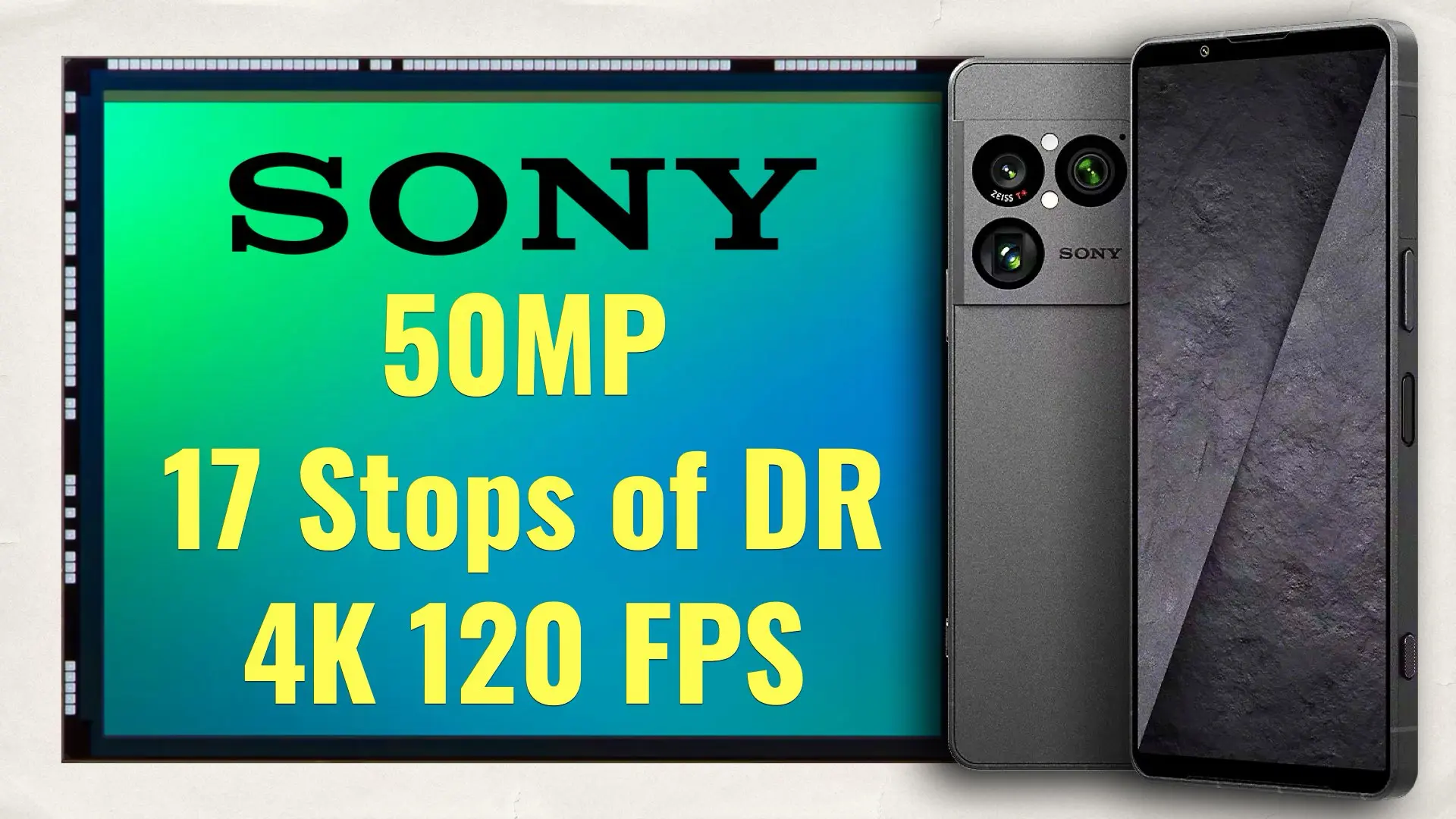
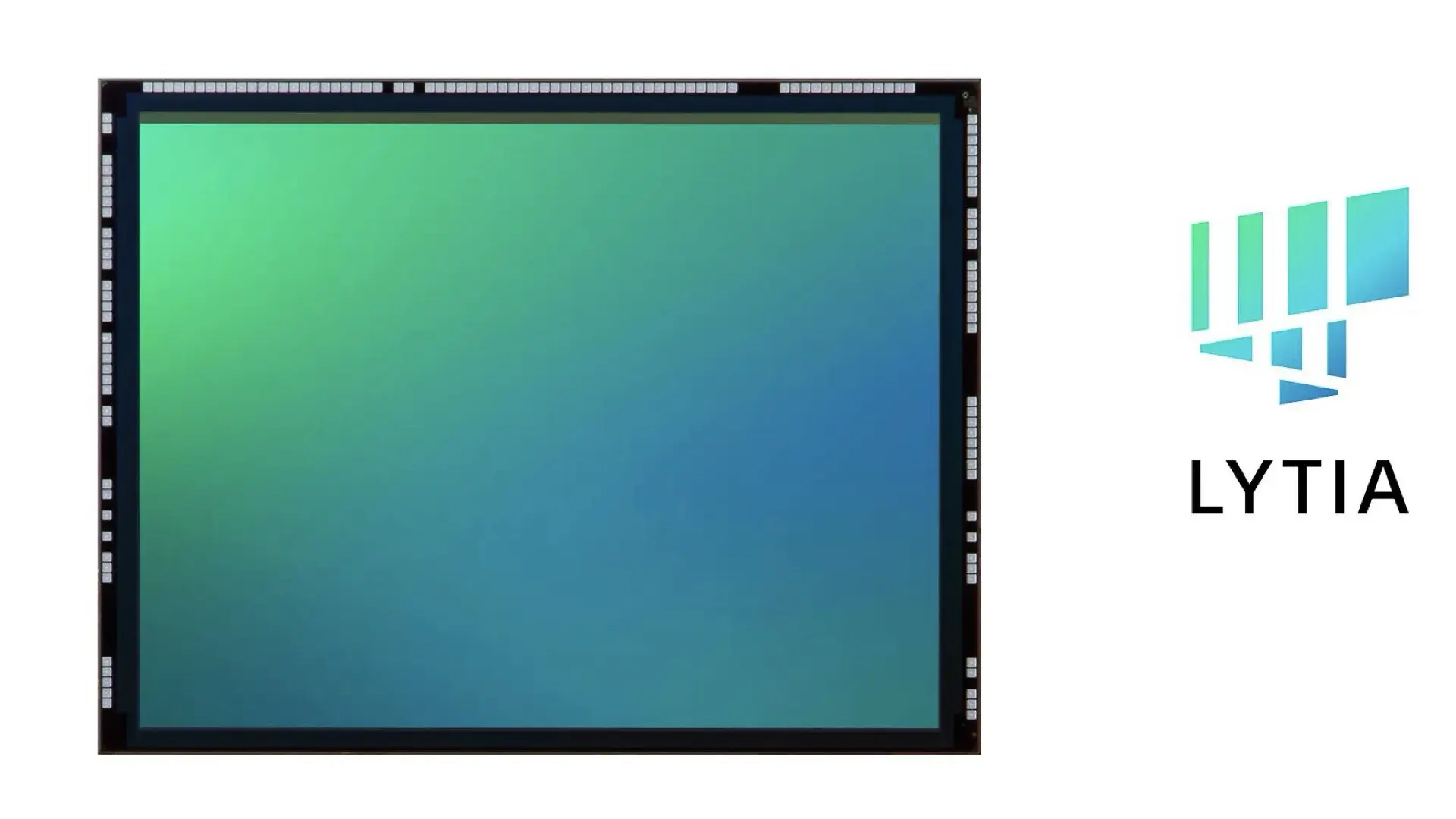
Sony Semiconductor Solutions has announced the LYTIA 720, a new 50-megapixel stacked CMOS image sensor capable of recording 4K video at up to 120 FPS and delivering a claimed 100 dB dynamic range. That translates to approximately 16.6 stops, approaching 17 stops, through Sony’s Hybrid Frame-HDR technology. Although designed primarily for smartphone cameras, the sensor demonstrates how advanced imaging technologies are being integrated into increasingly compact imaging systems. The LYTIA 720 features a 1/1.56-type sensor measuring 10.24 mm diagonally, with 1.0 μm pixels and a Quad Bayer color filter. Sony plans to begin mass-production shipments in early November 2026. This refers to shipments of the sensor to manufacturers, rather than the commercial availability of smartphones equipped with it.
Up to 17 stops of dynamic range
Perhaps the most interesting specification is Sony’s claimed 100 dB dynamic range. The company achieves this through Hybrid Frame-HDR (HF-HDR), combining Dual Conversion Gain HDR (DCG-HDR) with additional short-exposure image data. The technology merges information captured across different brightness ranges, improving highlight retention and shadow detail in challenging lighting conditions. However, the distinction is important: the approximately 17-stop figure represents a calculated equivalent of Sony’s 100 dB HDR claim, not a verified native single-exposure dynamic-range measurement. Furthermore, Sony has not specified that the full 100 dB Hybrid Frame-HDR capability is available during 4K video recording at 60 FPS or 120 FPS.
4K 120 FPS and 4K 60 FPS HDR
The LYTIA 720 supports 4K video recording at up to 120 FPS with all-pixel autofocus. With DCG-HDR enabled, the maximum supported 4K frame rate is 60 FPS. Sony has optimized its analog-to-digital conversion circuits to improve readout performance while reducing power consumption. The 4K 60 FPS HDR mode uses single-frame HDR technology designed to suppress motion artifacts associated with combining exposures captured at different times. The sensor also supports full-resolution 50MP capture at 30 FPS and 12.5MP capture at up to 90 FPS, or 30 FPS with DCG-HDR enabled. These specifications are particularly interesting for smartphone filmmaking, where maintaining image quality, autofocus performance, and dynamic range at higher frame rates remains challenging.
50% less noise in low light
Another important advancement is Sony’s proprietary Ultra High Conversion Gain (UHCG) circuit technology. According to Sony, the new architecture reduces random noise by approximately 50% compared with the previous LYTIA 700 sensor, which shares the same 1/1.56-type format and approximately 50MP resolution. By improving charge-to-voltage conversion efficiency, Sony aims to deliver cleaner images in dark environments without increasing sensor dimensions. This is particularly relevant for mobile cinematography, where small pixels and limited light-gathering capabilities can restrict low-light video performance. The improvement is based on Sony’s comparison with the LYTIA 700, rather than an independently verified comparison against competing sensors.
Sony LYTIA 720: Key specifications
| Specification | Sony LYTIA 720 |
|---|---|
| Sensor architecture | Stacked CMOS |
| Sensor format | 1/1.56-type |
| Sensor diagonal | 10.24 mm |
| Effective resolution | Approx. 50MP |
| Pixel size | 1.0 μm |
| Color filter | Quad Bayer |
| Claimed dynamic range | 100 dB (Hybrid Frame-HDR) |
| 4K video | 120 FPS |
| 4K HDR video | 60 FPS (DCG-HDR) |
| Full-resolution readout | 50MP at 30 FPS |
| 12.5MP readout | 90 FPS |
| Autofocus | All-pixel autofocus |
| Planned mass-production shipments | Early November 2026 |
Is it relevant for cinematography?
Although the LYTIA 720 is designed for smartphones rather than dedicated cinema cameras, its specifications highlight an important direction in sensor development. A relatively compact sensor now combines high-resolution capture, 4K 120 FPS video, sophisticated HDR processing, and improved low-light performance. These capabilities illustrate how semiconductor engineering and sensor-level HDR technologies are becoming increasingly important alongside traditional factors such as sensor size and pixel count. However, Sony’s 100 dB dynamic-range claim should not be directly compared with independently measured native dynamic-range figures from professional cinema cameras. The LYTIA 720 achieves its headline figure through HDR compositing, and its maximum dynamic range and maximum 4K frame rate are not confirmed as simultaneous capabilities. The significance of the LYTIA 720 is therefore not that it replaces larger cinema sensors, but that it brings increasingly sophisticated imaging technology to a much smaller format. Ultimately, Sony’s latest sensor reinforces a broader trend: advanced HDR architectures, faster readout, and improved low-light performance are becoming central to the evolution of digital imaging, even in smartphones.