
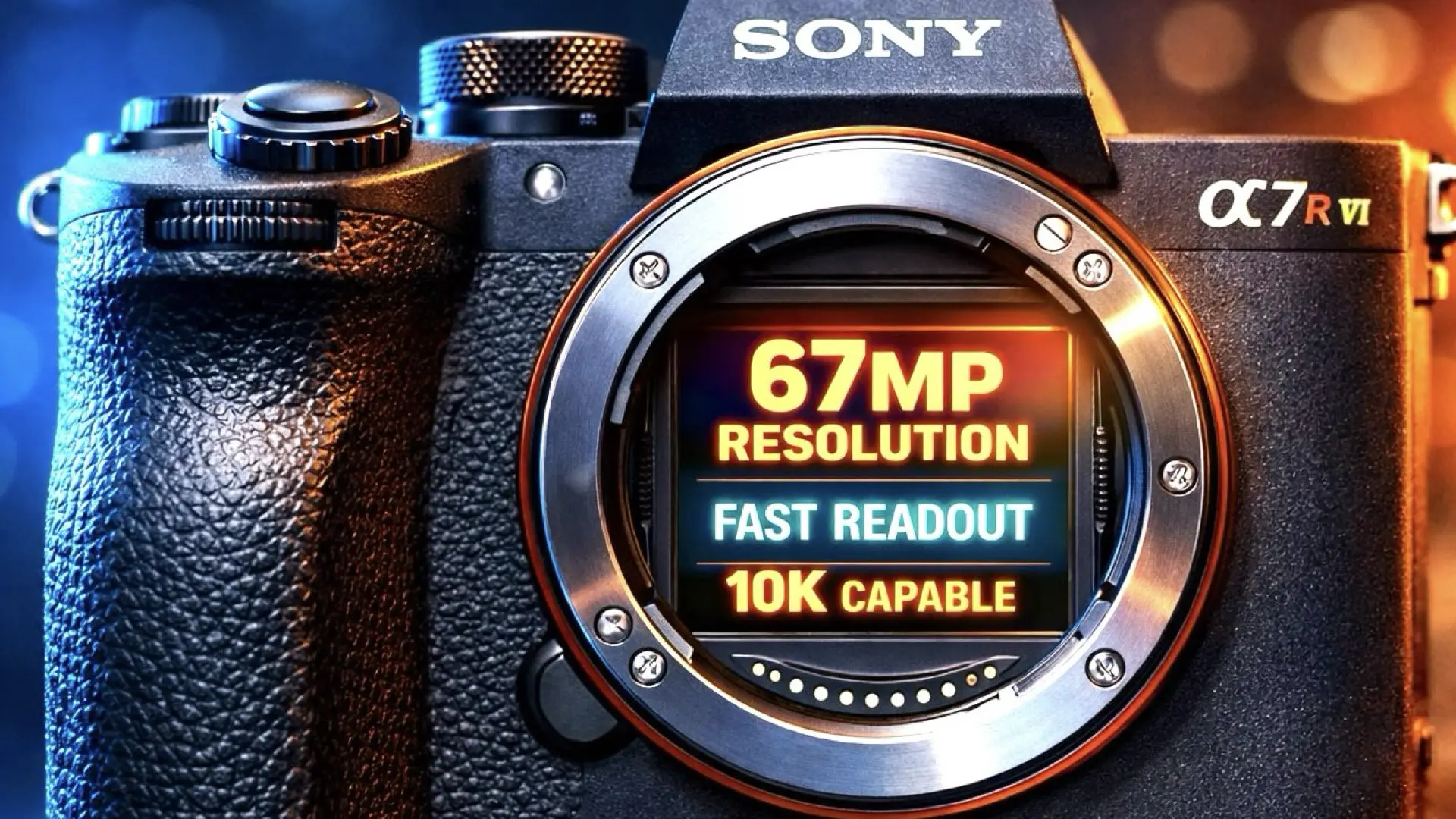
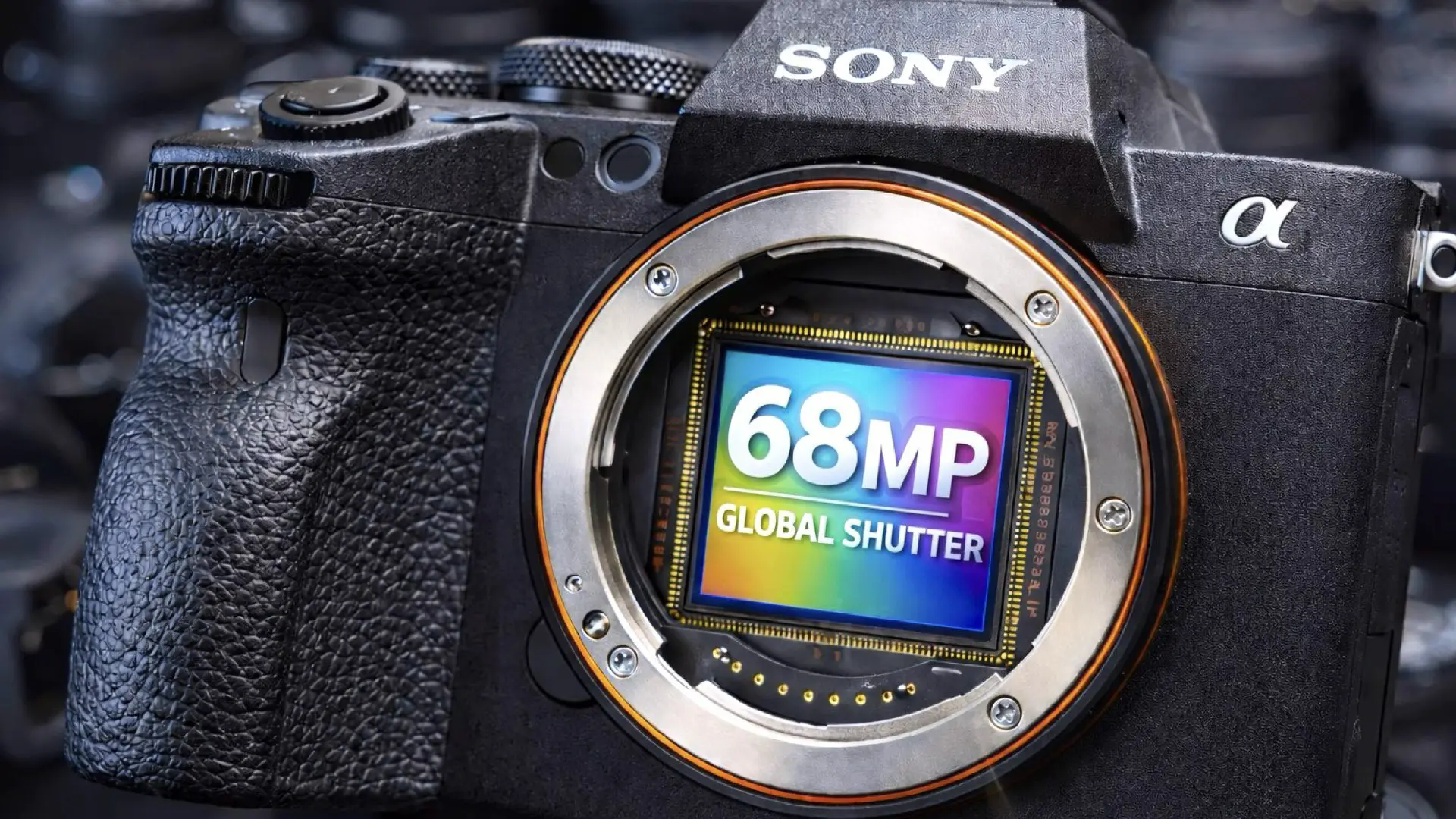
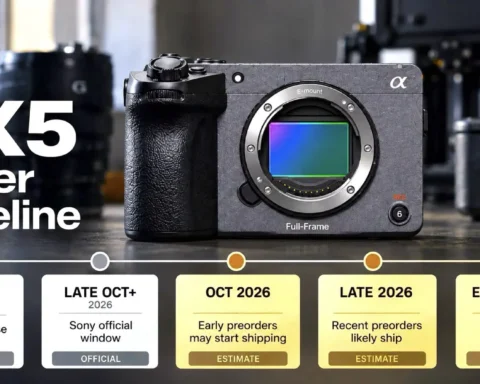
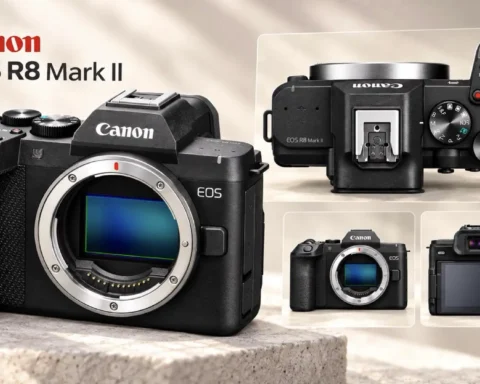
The rumored Sony Alpha A7R V ($3,298 on Amazon) I will probably shape up to be one of the most important mirrorless cameras in recent years. Not because it dramatically increases resolution, but because it may change how Sony defines a high-resolution sensor. Early reports suggest that the Sony Alpha A7R VI ($4,498 on Amazon) will feature a sensor in the 60 to 70MP range, combined with significantly faster readout and even references to 10K capability. At first glance, this sounds like a modest upgrade over the current generation. But when placed in context, it points to a much deeper shift. For years, the A7R line has followed a clear path. Each generation increased megapixel count and reinforced its position as Sony’s resolution-focused system. The Sony Alpha A7R VI does not appear to follow that same path. Instead, it suggests that Sony is shifting focus from resolution alone to how efficiently and how quickly that resolution can be used. This shift becomes more logical when viewed alongside Sony’s recent sensor developments. In Sony Begins Shipping 68MP Global Shutter Sensor IMX928, we examined how Sony is pushing sensor architecture toward higher speed and throughput.

Resolution is stabilizing. Performance is accelerating
If the Sony Alpha A7R VI lands around 67MP, that number is not accidental, but it might represent a deliberate balance. At 61MP, the Sony Alpha a7R V already delivers more detail than most real-world workflows require. Increasing resolution to 80MP or 100MP would create diminishing returns while introducing new limitations. Larger files, slower processing, higher thermal load, and increased demand on lenses would all become more pronounced. By keeping the Sony Alpha A7R VI within the 60 to 70MP range, Sony retains the advantages of high resolution while creating space to improve other aspects of performance. This includes faster sensor readout, improved burst rates, and more efficient video processing. It also allows Sony to maintain strong dynamic range, which becomes increasingly difficult as pixel density rises. The key point is this. The Sony Alpha A7R VI is not designed to win a megapixel race, but to deliver a more balanced sensor.
Why sensor architecture is the real upgrade
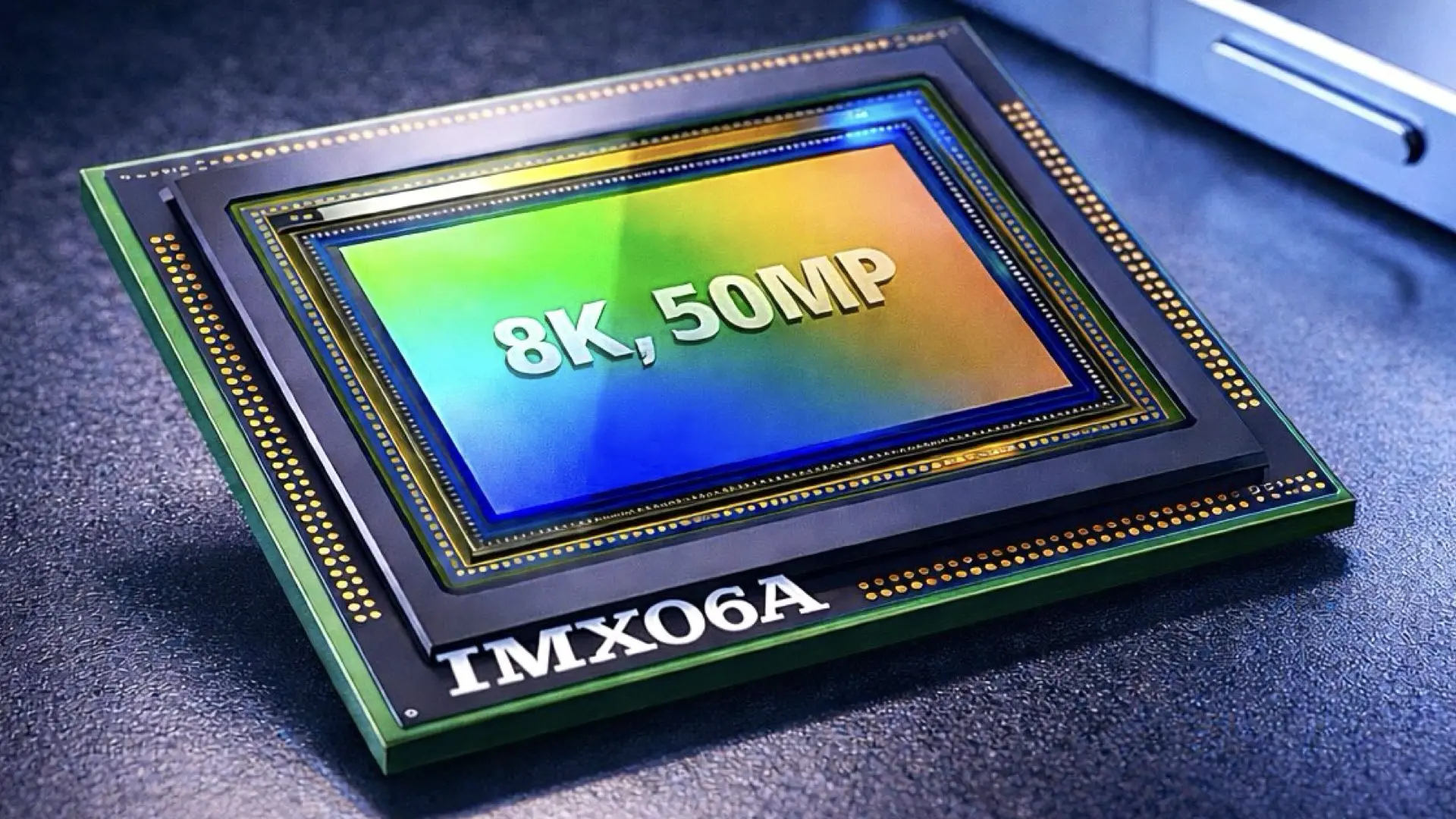
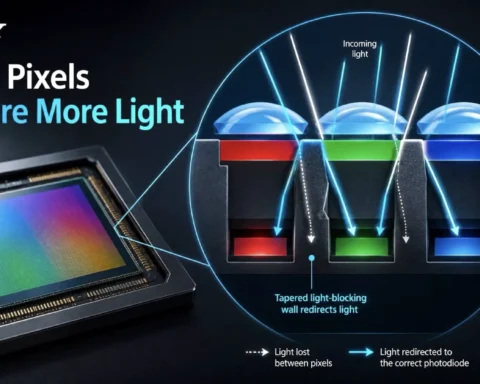
The most important change in the Sony Alpha A7R VI will likely not be visible in a headline specification. It will be found in how the sensor behaves under real-world conditions. Modern sensor performance is defined by readout speed, data throughput, and efficiency. A high-resolution sensor that reads slowly creates rolling shutter artifacts, limits burst performance, and restricts video capabilities. A faster sensor transforms the entire camera. The Sony Alpha A7R VI appears to be built around this principle. Faster parallel readout, improved internal bandwidth, and more efficient processing pipelines will allow the sensor to handle large amounts of data without bottlenecks. This direction is consistent with what we explored in Sony Reveals IMX928 Large Format Global Shutter Sensor, where Sony demonstrated how modern sensor design is shifting toward speed and scalability rather than just resolution.

Why the 10K rumor exists
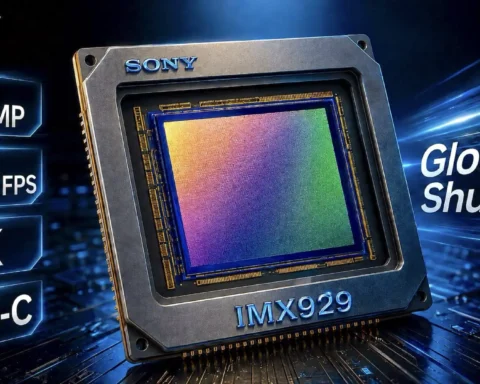
The discussion around the 10K video has added confusion to the conversation. At first glance, 10K implies a massive jump in resolution, potentially toward 100MP sensors. But that interpretation does not align well with the rest of the rumor set. A more coherent explanation is that 10K refers to internal sensor readout rather than output resolution. In other words, the sensor may be capable of reading a very high pixel count internally, which is then downsampled to produce cleaner and more detailed video. This connects directly to what we analyzed in Sony 10K 105MP Global Shutter Sensor Demo. That sensor demonstrates Sony’s ability to push readout resolution far beyond current consumer needs. However, it also highlights that such designs are not yet suitable for mirrorless cameras in their current form.

The shift. A convergence sensor
What Sony appears to be building with the Sony Alpha A7R VI is not simply another high-resolution camera but a convergence platform. Historically, Sony separated its cameras into clear roles. Resolution cameras, speed cameras, hybrid flagships. The Sony Alpha A7R VI may begin to unify these categories. A sensor in the 60 to 70MP range with significantly faster readout changes how the camera behaves. It allows high-resolution stills without sluggish performance. It enables faster bursts. It improves video quality and reduces rolling shutter. This is where convergence happens. The Sony Alpha A7R VI is no longer just a resolution tool but a multi-purpose imaging system capable of handling demanding workflows across photography and video. The rumored 10K readout capability reinforces this idea. It suggests that Sony is designing the sensor around internal data richness, giving the camera more flexibility in how it processes and outputs images.
Takeaway
The Sony Alpha A7R VI might represent a shift in how Sony approaches sensor design. Instead of focusing purely on megapixels, Sony appears to be focusing on how those pixels are used. Faster readout, better efficiency, and improved data handling are becoming more important than raw resolution increases. This approach aligns with the trajectory seen in Sony Begins Shipping 68MP Global Shutter Sensor IMX928 and Sony 10K 105MP Global Shutter Sensor Demo, where Sony is clearly pushing the boundaries of what sensor hardware can achieve. The camera is rumored to be officially introduced this month. Stay tuned.
Gear mentioned in this article
Available on Amazon
| Product | New | Renewed | Used |
|---|---|---|---|
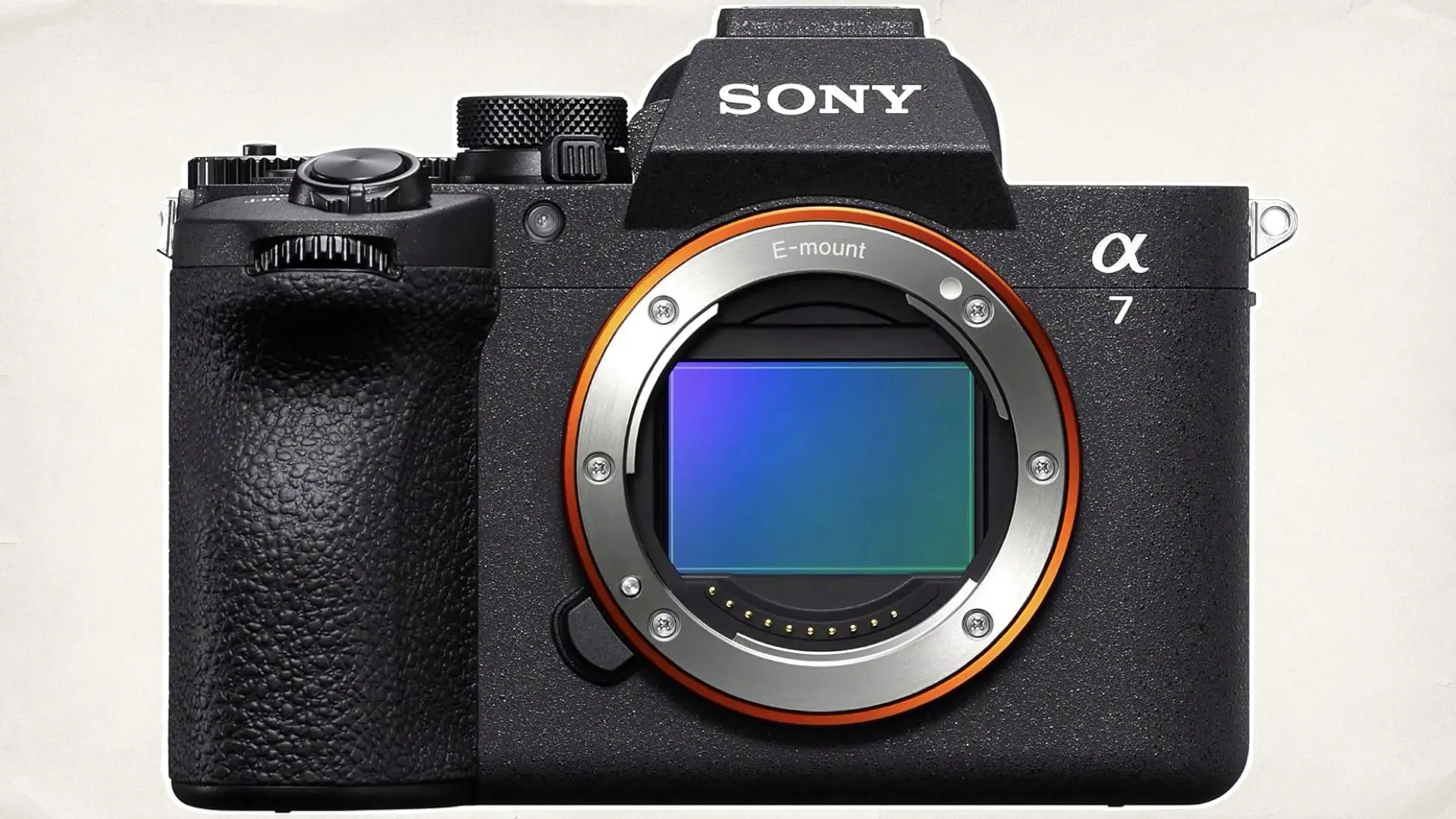
| Sony Alpha A7R VI | $4,498 | — | From $4,175 |
| Sony Alpha 7R V | $3,298 | — | From $2,549.95 |
Prices checked: Sep 23, 2026, 9:29 AM GMT+0000
As an Amazon Associate, Y.M.Cinema earns from qualifying purchases. If you buy through our links, we may earn a small commission at no extra cost to you.
Product prices and availability are accurate as of the date/time indicated and are subject to change. Any price and availability information displayed on Amazon.com at the time of purchase will apply to the purchase of this product.
CERTAIN CONTENT THAT APPEARS ON THIS SITE COMES FROM AMAZON. THIS CONTENT IS PROVIDED “AS IS” AND IS SUBJECT TO CHANGE OR REMOVAL AT ANY TIME.







It is not a software upgrade to applaud for minor changes. Why would anyone buy a new Sony camera for subtle updates?
1. The “R” cameras are not intended for video.
2. 10k??? What computers will process it, and what screen is it to be displayed on?
3. It’s square.
I would bet that the 10k sensor that you reference will be for specialty imaging, not a consumer camera.
ITS ALL ABOUT #’s OF PIXELS!!! I own a Sony a7r4&5. I have been eagerly awaiting the relief of the a7R6. Your article was insightful, and I must say I am disappointed in Sony. IT IS ABOUT PIXEL SIZE! The whole reason I bought Sony was because of their large pixel size. Yes, the camera needs to process the images that are taken but Sony passed up a great opportunity to lead instead they punted. And I will be passing on this camera. No amount of rationalization or bragging about a new direction in sensor development is going to hide the fact that they could have produced a larger number of pixels and chose not to. Now we have to look elsewhere. You just saw the start of Sony‘s loss of the market.