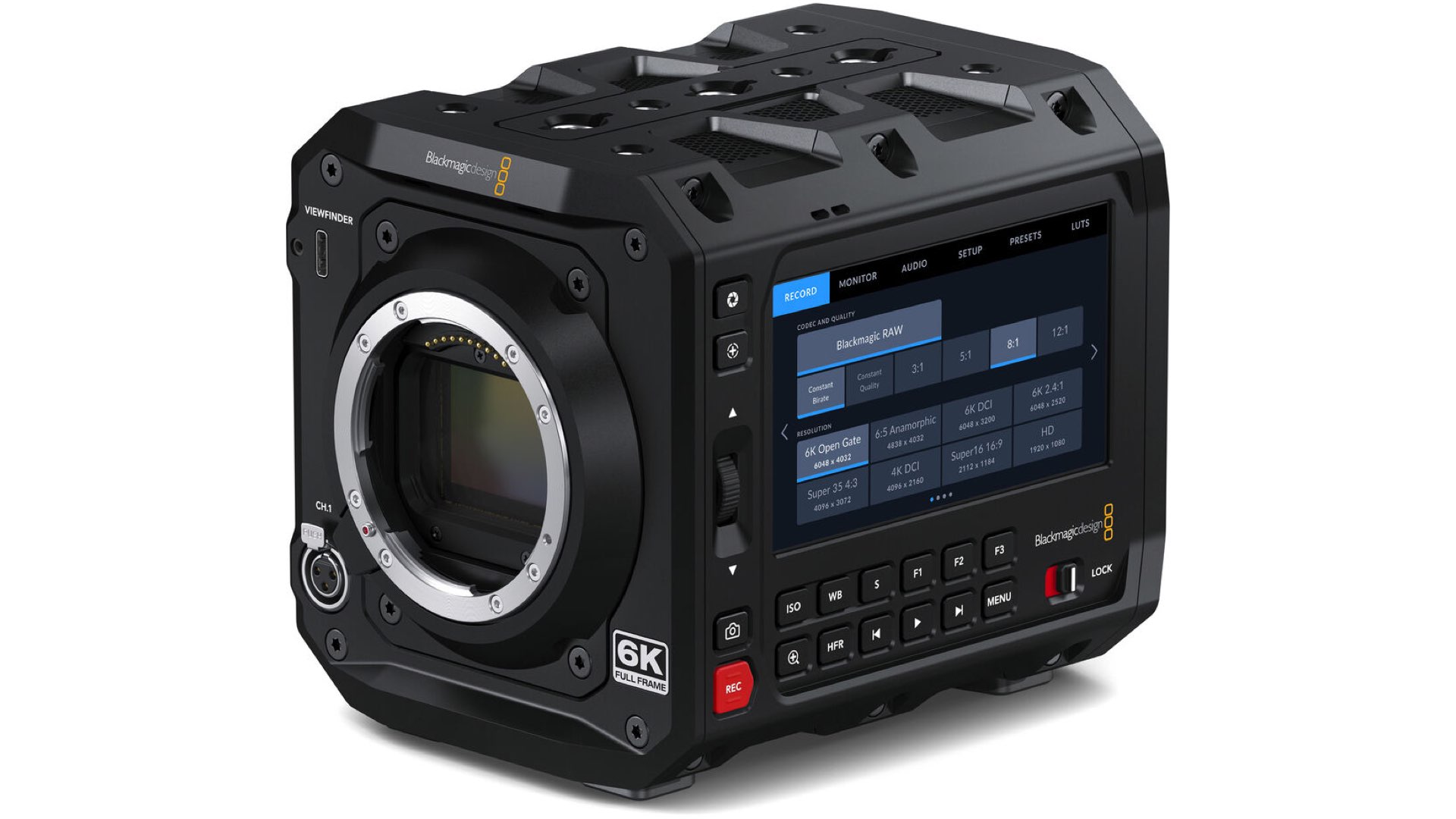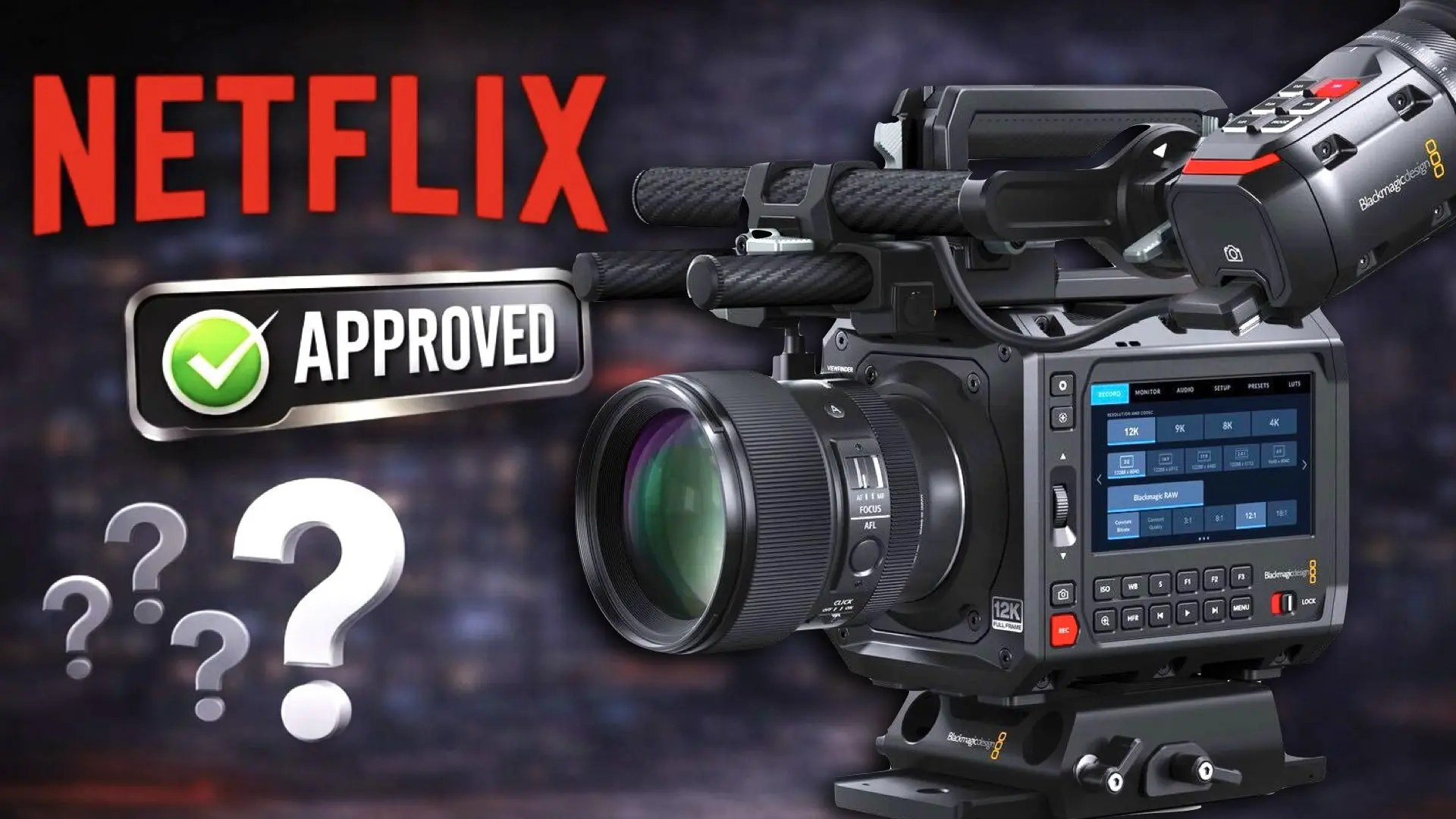
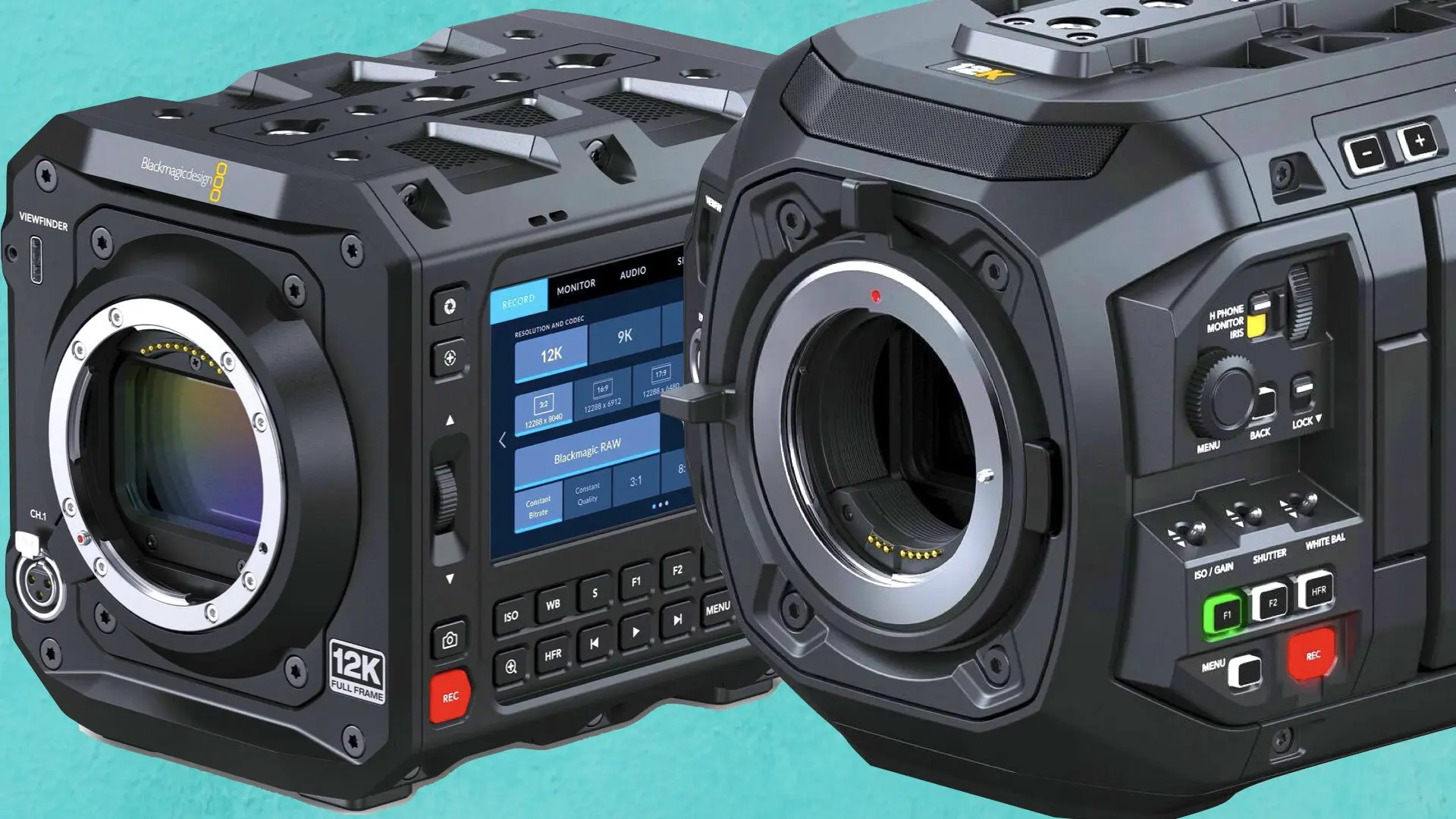
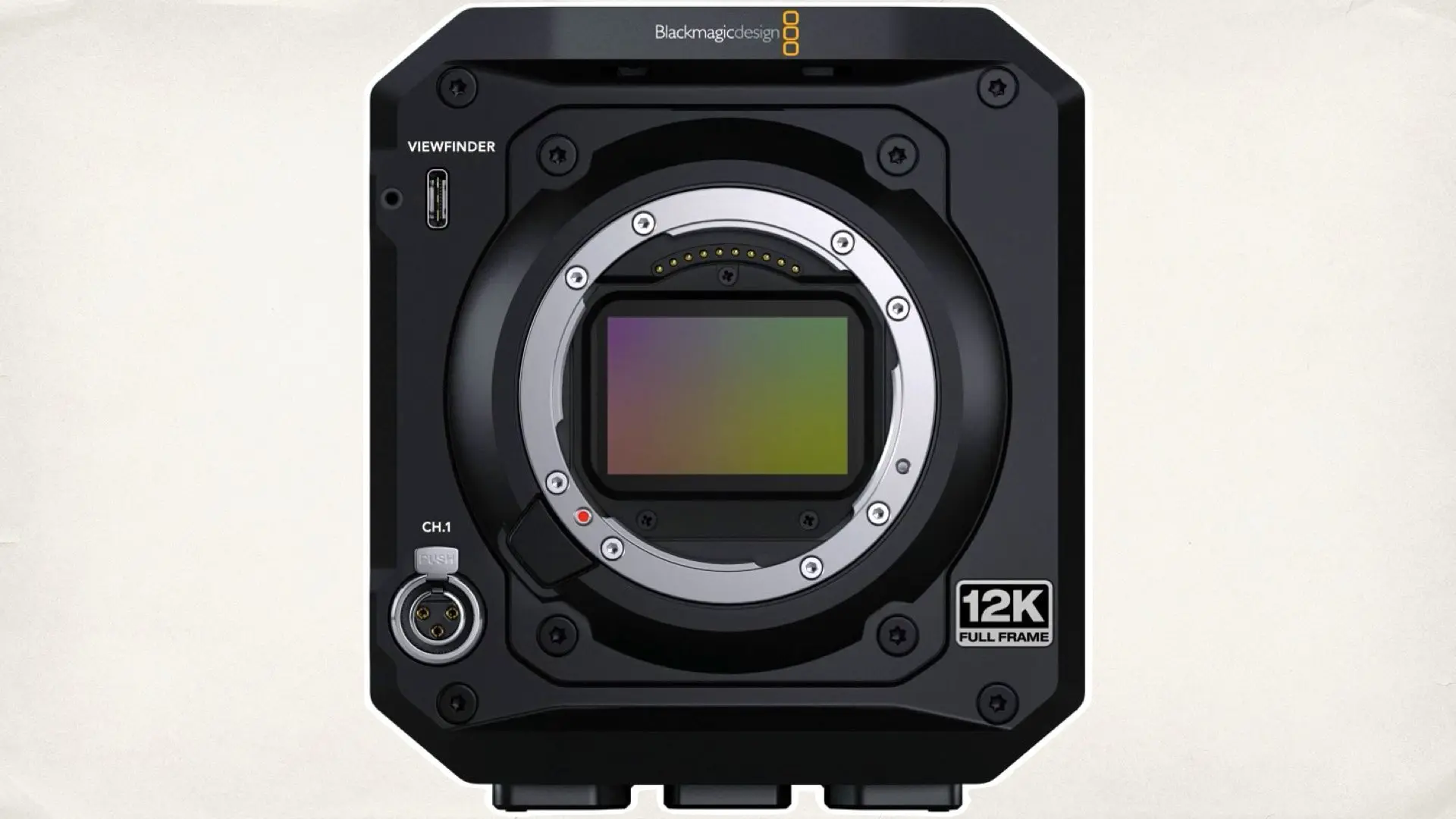
The Blackmagic PYXIS 12K enters the market with serious expectations. It carries the same imaging DNA as one of Blackmagic’s most advanced cinema cameras, delivers extreme resolution, and targets high-end production workflows. Yet, despite all that, it is still missing from Netflix’s approved camera list. That absence raises a simple question. If the technology is already validated, what is holding the PYXIS 12K back?
Netflix already trusts Blackmagic
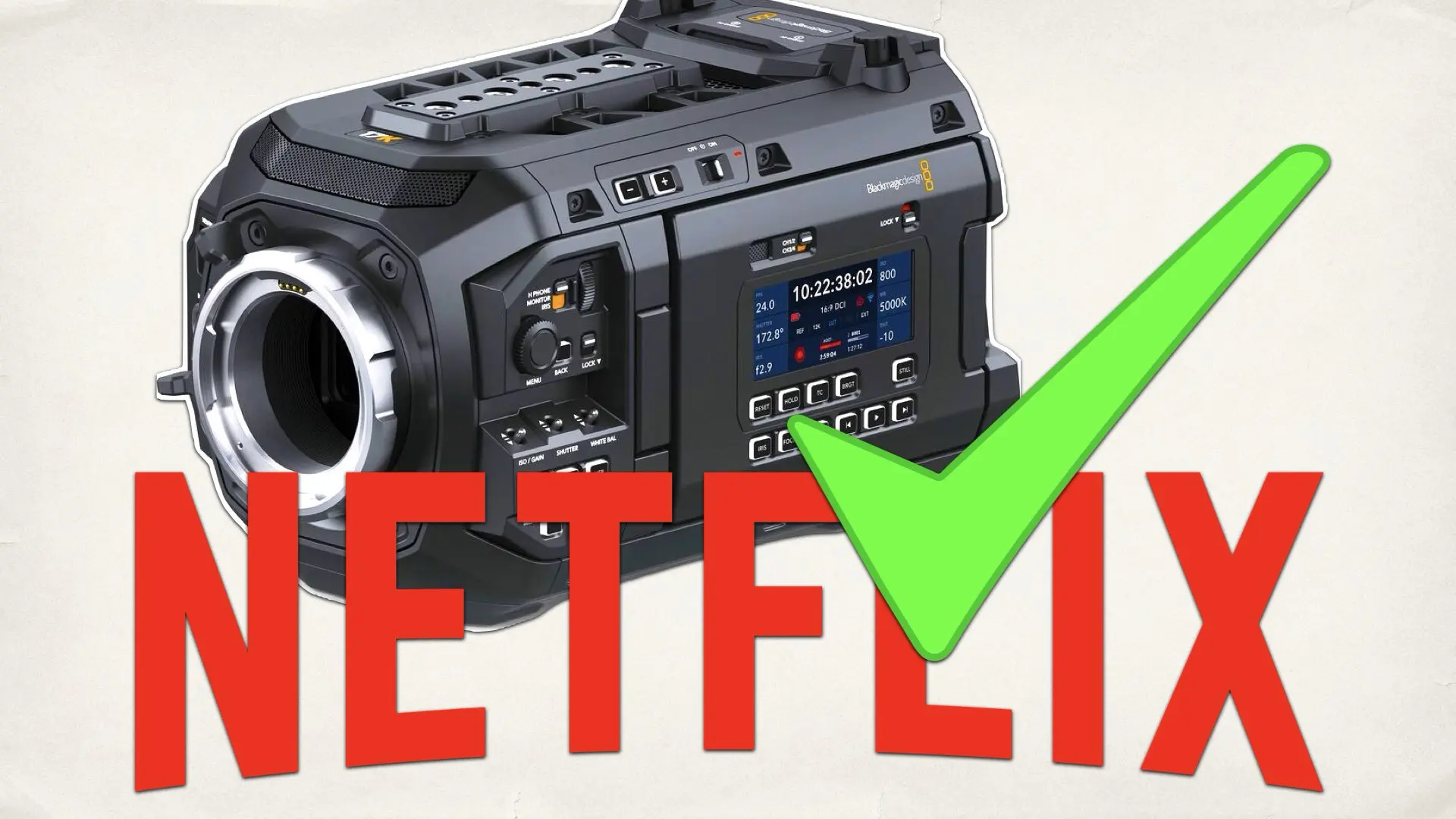
Netflix has approved multiple Blackmagic cameras over the years. The list includes the URSA Mini 4.6K line, the URSA Mini Pro 4.6K variants, the URSA Mini Pro 12K, and more recently the URSA Cine 12K LF. Some of these cameras are not new. Some are significantly less advanced than the PYXIS 12K on paper. This is where the contradiction begins to take shape. The PYXIS 12K shares the same core sensor philosophy as the URSA Cine 12K LF, a camera that already meets Netflix’s requirements for original productions. On a purely technical level, the PYXIS appears more than capable of delivering the image quality Netflix demands. So why is it not on the list?
Approval is about systems, not sensors
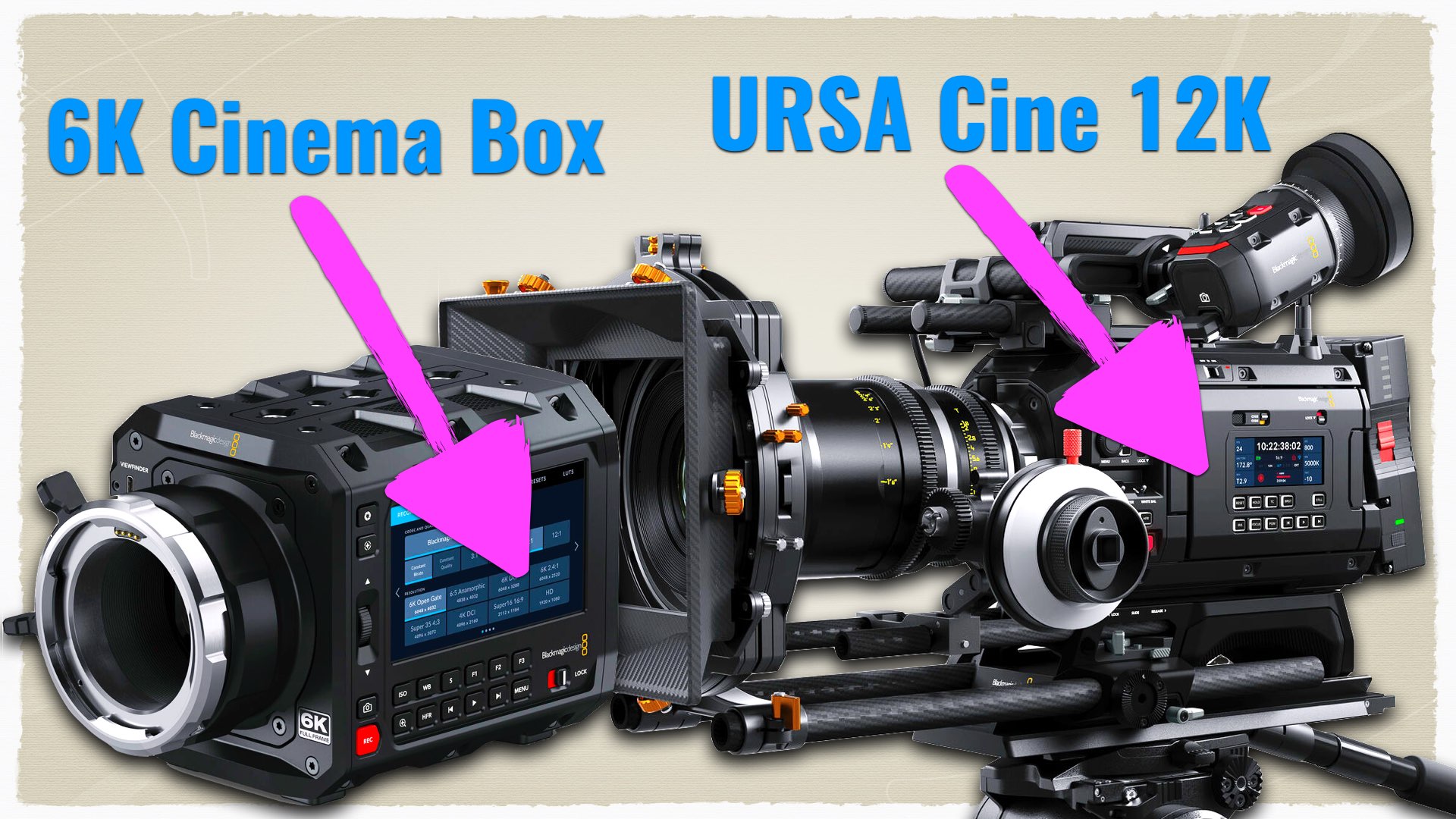
The key misunderstanding lies in how Netflix evaluates cameras. Netflix does not approve sensors. It approves complete camera systems. That distinction is critical. Even if two cameras share the same sensor architecture, they can behave very differently in production. The PYXIS 12K is built around a compact, modular box design. The URSA Cine 12K LF is a fully integrated cinema platform designed for large-scale productions. From Netflix’s perspective, that difference carries weight. A production camera is expected to deliver consistent performance across long shooting days, maintain stable thermal behavior, provide reliable power management, and integrate cleanly into complex workflows. These factors go far beyond resolution and dynamic range. However, there are many smaller and boxier cameras that were approved.
The URSA advantage
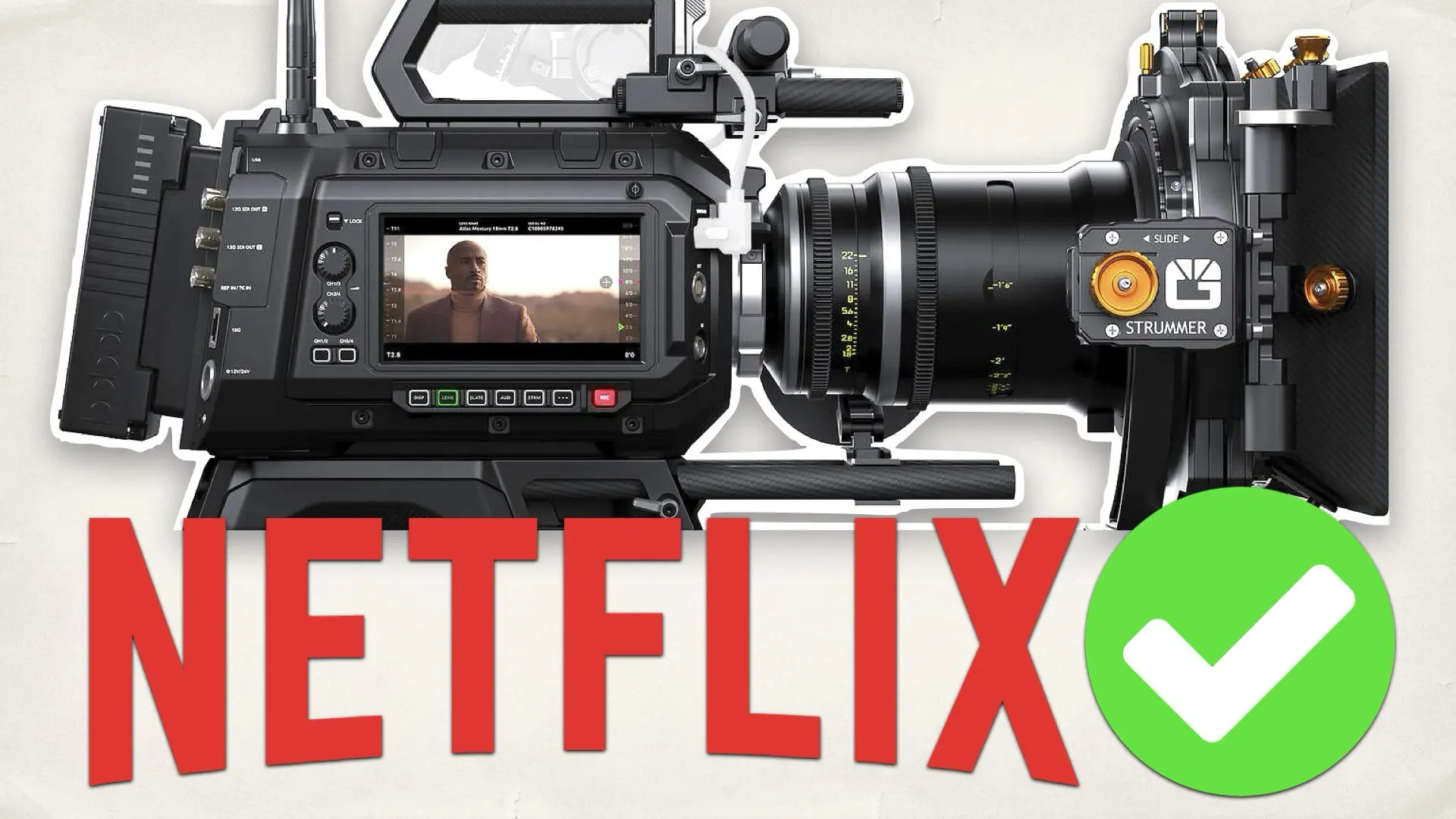
All approved Blackmagic cameras share a common characteristic. They are traditional cinema systems. They include built-in professional I O, standardized ergonomics, and a form factor that aligns with established production pipelines. Crews know how to rig them, power them, monitor them, and move them quickly between setups. That predictability is a must. The PYXIS 12K, by contrast, is more flexible. It can be configured in multiple ways depending on the production. That flexibility is part of its appeal, but it also introduces variability. Different rigs can lead to different thermal conditions, power setups, and operational behaviors. For a platform like Netflix, variability is a risk (?)

Blackmagic RAW is not the issue
The codec itself is not the limiting factor. Blackmagic RAW is already accepted within Netflix workflows, as seen across multiple approved URSA models. The ability to record high-resolution RAW with controlled compression is clearly not a barrier. However, implementation still matters. Netflix evaluates how codecs behave in real production environments, including data rates, reliability during long takes, metadata consistency, and post-production integration. Even with the same codec, different camera systems can produce different results in practice.
Timing also plays a role
Another factor is simply time. Camera approval is not immediate. It often follows real-world usage, testing, and validation across productions. Even strong candidates can take months or longer before appearing on the approved list. The PYXIS 12K is still relatively new. It has not yet built the same track record in high-end productions as the URSA Cine line. That alone can delay approval.
Will the PYXIS 12K be approved?
Based on the current landscape, the answer is likely yes. The sensor technology is already validated. Blackmagic has an established presence on the Netflix list. The industry is also moving toward smaller and more cost-efficient camera systems. At the same time, approval is not automatic. Netflix tends to be conservative when defining its primary production tools. The URSA Cine 12K LF fits neatly into that role. The PYXIS 12K challenges that definition with a more modular and flexible approach. This situation highlights something more interesting than a single camera. It exposes the gap between technological capability and industry approval. The PYXIS 12K is fully capable of delivering cinema-grade images. That is not in question. What remains under evaluation is whether it fits the operational standards that Netflix expects from its approved cameras. The Blackmagic PYXIS 12K sits in a unique position. It shares the imaging power of a Netflix-approved system, yet it represents a different philosophy of camera design. If and when it joins the approved list, time will tell. We bet it will.
As an Amazon Associate, Y.M.Cinema earns from qualifying purchases. If you purchase through the Amazon links above, Y.M.Cinema may earn a small commission at no additional cost to you. This helps support our work.