
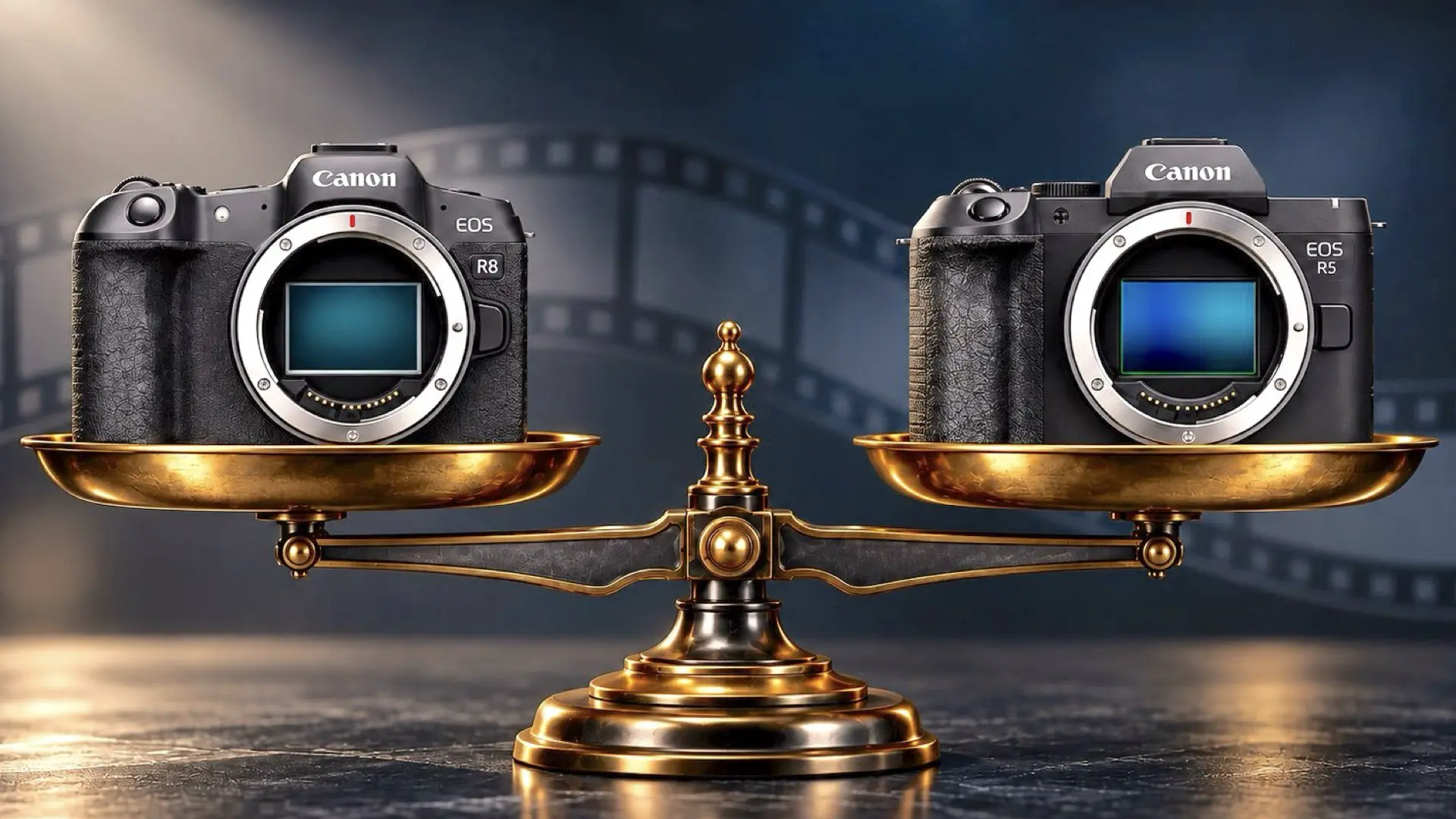
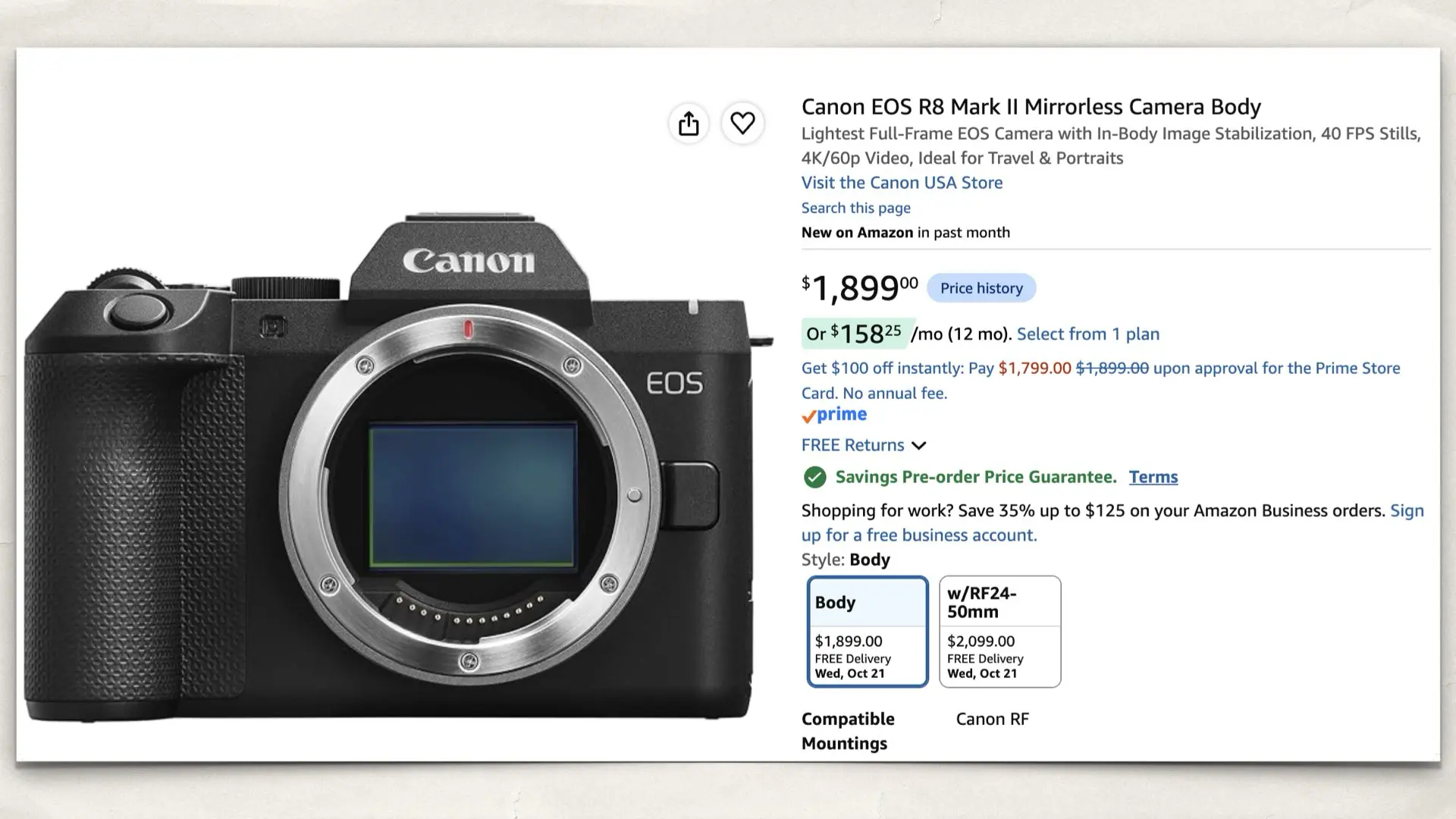
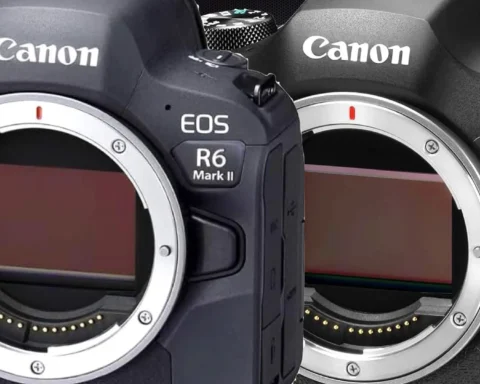
Canon has published an official comparison of the EOS R8 Mark II ($1,899 on Amazon) and the original EOS R8, acknowledging that the two full-frame cameras offer similar video capabilities. That’s an interesting statement considering their current Amazon prices: $1,899 for the EOS R8 Mark II versus $1,399 for the original EOS R8. For filmmakers, the question is whether the newer camera’s improvements justify spending an additional $500.
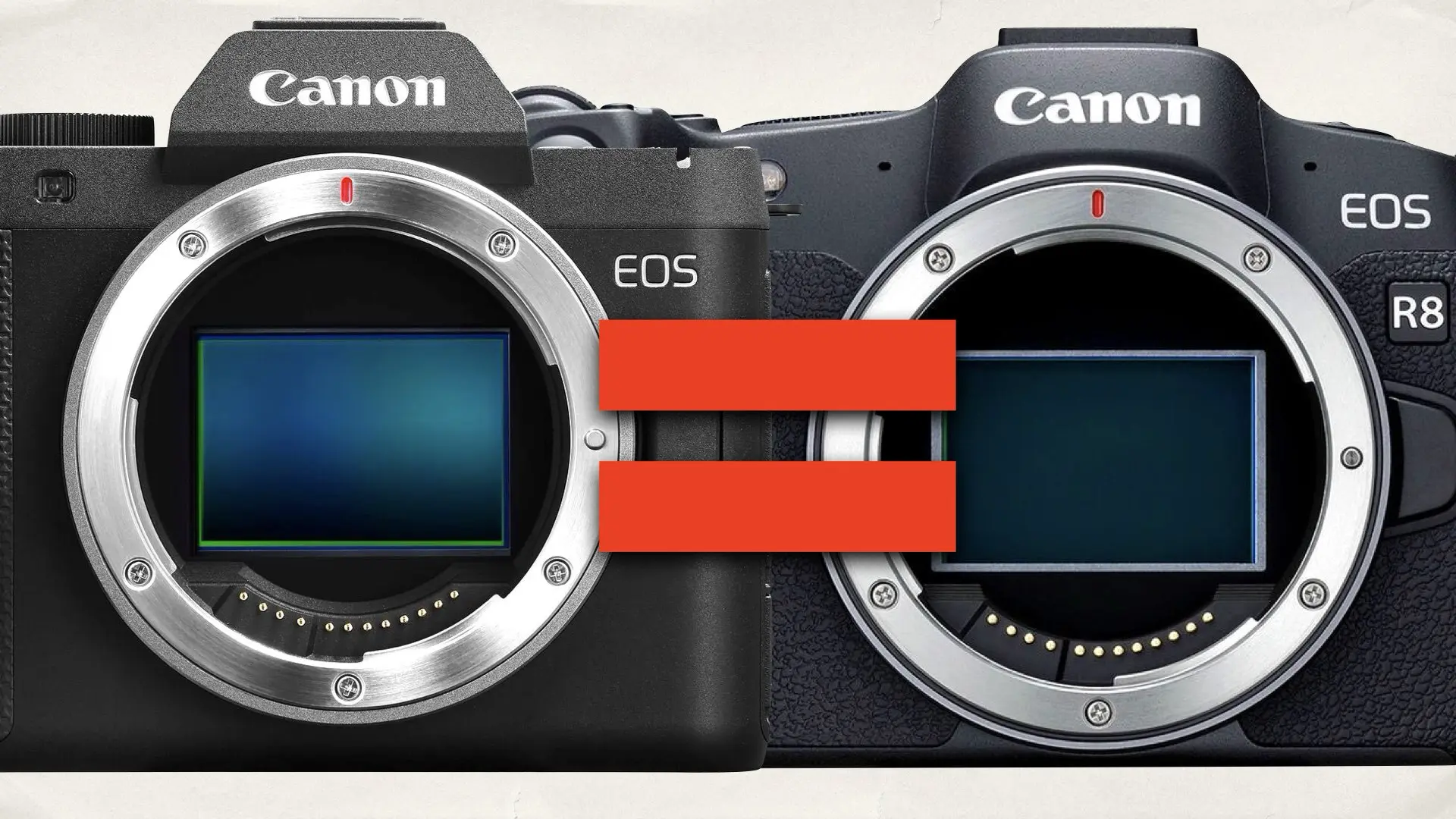
Canon acknowledges the similarities
In an official comparison published by Canon Europe, the company examines the EOS R8 Mark II alongside the EOS R8 and EOS R7 ($1,649 on Amazon). Canon Europe Product Marketing Specialist Tibor Szövetes explains that the newer full-frame model offers similar video capabilities to its predecessor, while introducing several improvements. The statement is notable because the original EOS R8 already offers impressive recording specifications for its class. Both cameras feature 24.2MP full-frame sensors, oversampled 4K recording at up to 60fps using 6K sensor data, and Full HD recording at up to 180fps. Neither has a conventional 30-minute recording limit. For filmmakers primarily concerned with resolution, frame rates, and full-frame capture, the EOS R8 Mark II therefore doesn’t represent a dramatic departure from the original model. The most substantial changes concern stabilization, autofocus, camera handling, and additional production features.
The $500 difference on Amazon
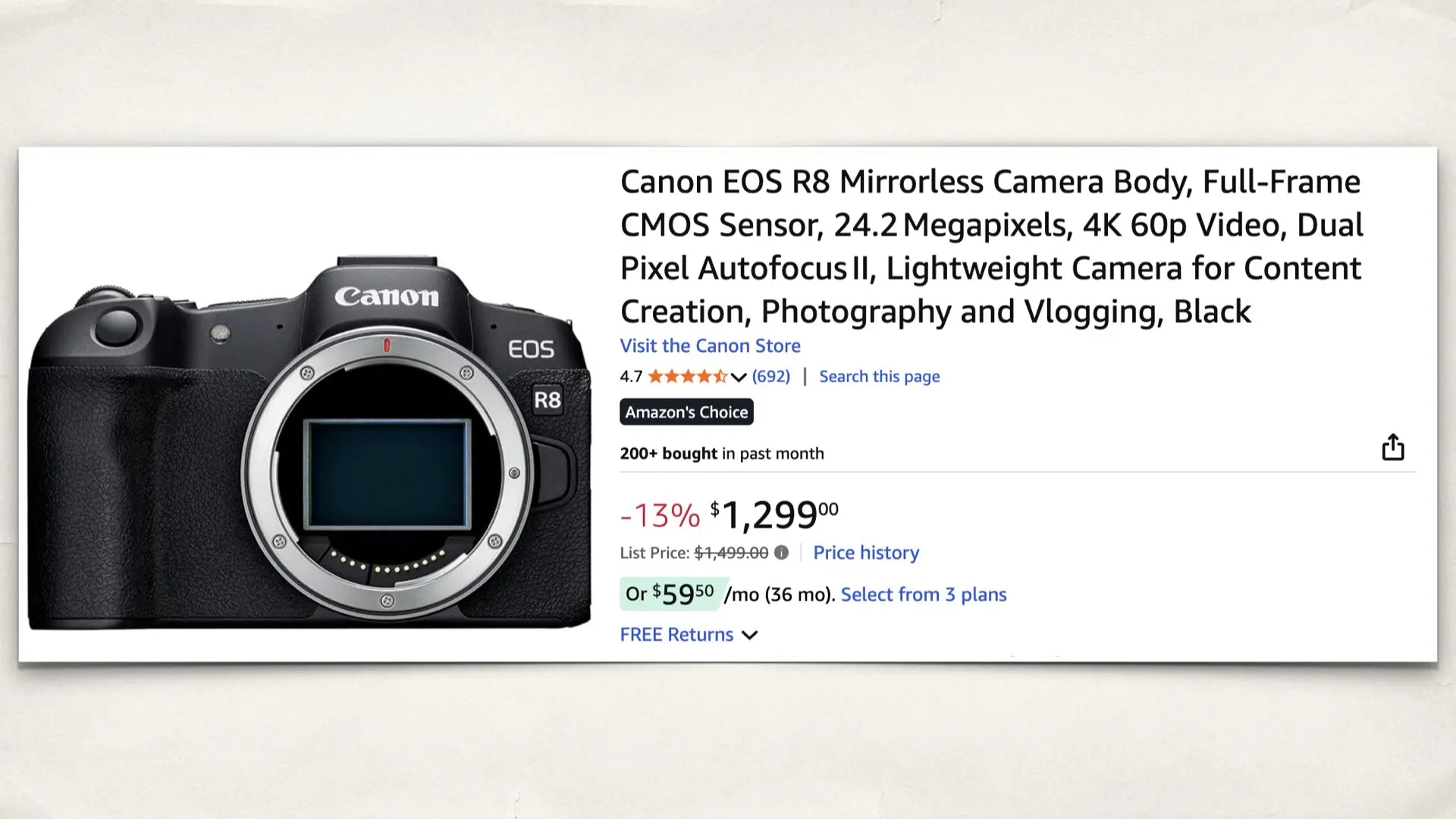
Current Amazon listings, checked on October 14, 2026, put the Canon EOS R8 body at $1,399, while the EOS R8 Mark II is listed for $1,899. Both prices are for body-only configurations. The newer camera is listed with a pre-order price guarantee.
| Camera | Amazon price | Video recording |
|---|---|---|
| Canon EOS R8 | $1,399 | Oversampled 4K/60p |
| Canon EOS R8 Mark II | $1,899 | Oversampled 4K/60p |
| Price difference | $500 | Same headline resolution and frame rate |
That makes the newer camera approximately 36% more expensive than the original EOS R8 at these prices. For independent filmmakers, $500 is a meaningful difference. It could go toward an additional RF lens, a wireless microphone system, lighting equipment, filters, or other accessories that may have a more noticeable impact on the finished production. The original EOS R8 is particularly attractive for filmmakers who already use tripods, gimbals, or stabilized lenses. In these situations, some of the EOS R8 Mark II’s most important advantages become less essential.
Where the EOS R8 Mark II is better
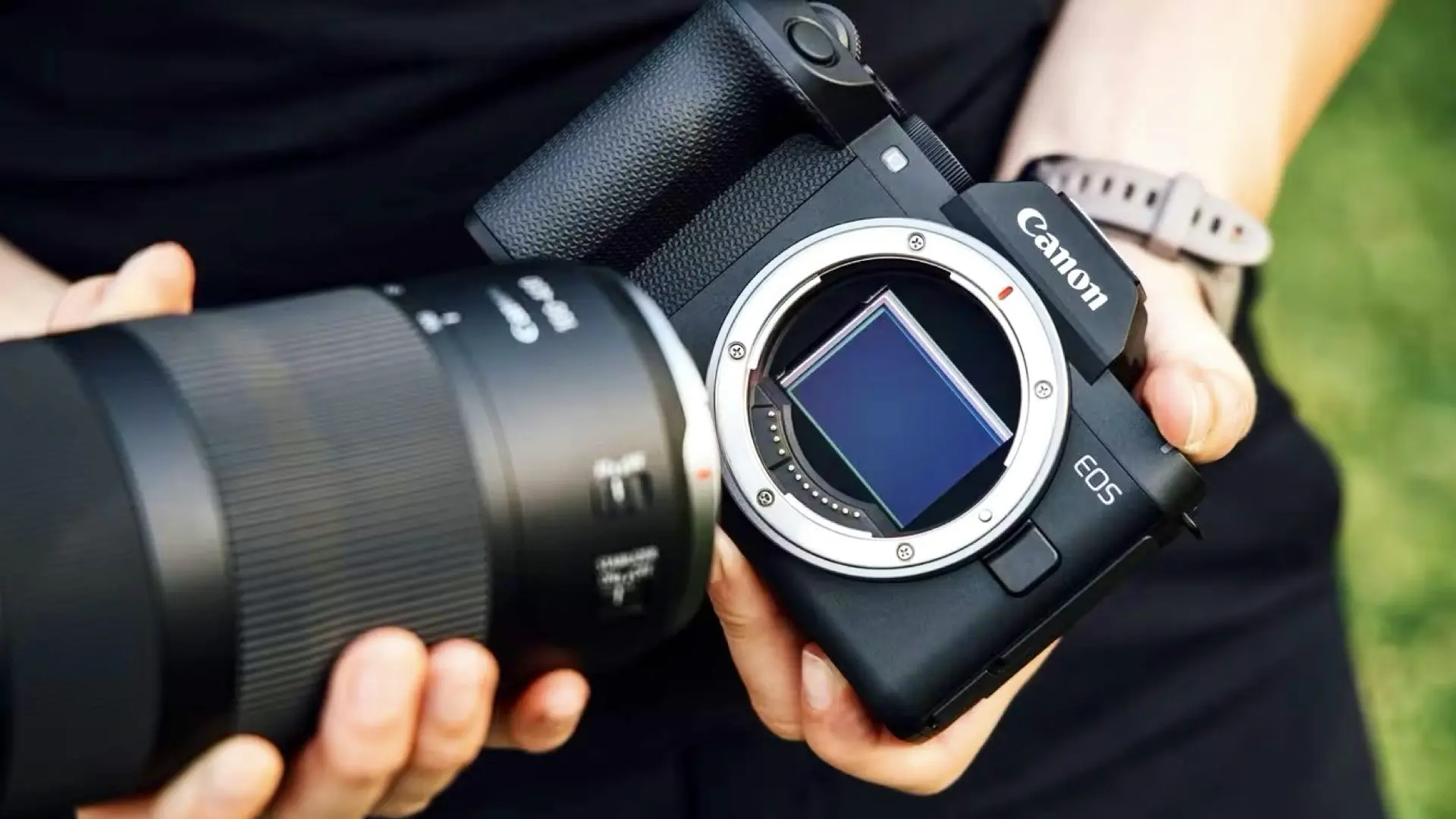
The most important improvement is in-body image stabilization. The original EOS R8 does not have IBIS, relying instead on optical lens stabilization and Movie Digital IS. The EOS R8 Mark II introduces sensor-shift stabilization rated at up to 7.5 stops at the center of the frame. It also supports Enhanced+ Movie Digital IS, allowing the camera to combine stabilization technologies for smoother handheld footage, including while walking. This mode applies an additional crop. For documentary filmmakers, event videographers, and solo operators who frequently work without a gimbal, this could justify the extra investment. The newer camera also introduces more advanced autofocus tracking, including Register People Priority, which can help maintain focus on selected subjects in crowded scenes. Other improvements include a dedicated Slow/Fast recording option, in-camera Look File support, four-channel audio recording, a joystick, and improved ergonomics. These are useful production improvements, particularly for filmmakers who depend on fast operation and autofocus. However, they don’t fundamentally change the camera’s maximum recording resolution or frame rate.
Which camera should filmmakers buy?
At $1,399, the original EOS R8 appears to offer stronger value for filmmakers whose priorities are full-frame image capture, oversampled 4K recording, compact size, and affordability. Its core recording capabilities remain competitive with those of the newer model, leaving $500 available for other production equipment. At $1,899, the EOS R8 Mark II makes more sense for filmmakers who regularly shoot handheld, depend on sophisticated autofocus tracking, or require its additional audio and operational features. In these cases, the improvements are practical rather than merely cosmetic. Importantly, Canon’s comparison does not establish that both cameras produce identical image quality. Differences in sensor processing, rolling shutter, dynamic range, and noise performance would require direct testing. What Canon confirms is that the overall video capabilities remain similar.
Gear mentioned in this article
Available on Amazon
| Product | New | Renewed | Used |
|---|---|---|---|
| Canon EOS R8 Mark II | $1,899 | — | — |
| Canon EOS R7 | $1,649 | — | From $1,379 |
Prices checked: Oct 14, 2026, 1:36 PM GMT+0000
As an Amazon Associate, Y.M.Cinema earns from qualifying purchases. If you buy through our links, we may earn a small commission at no extra cost to you.
Product prices and availability are accurate as of the date/time indicated and are subject to change. Any price and availability information displayed on Amazon.com at the time of purchase will apply to the purchase of this product.
CERTAIN CONTENT THAT APPEARS ON THIS SITE COMES FROM AMAZON. THIS CONTENT IS PROVIDED “AS IS” AND IS SUBJECT TO CHANGE OR REMOVAL AT ANY TIME.



“Admits” . Where is the news?