Introduction
Nikon has long been a pillar of still photography. The company built a reputation on optical fidelity, robust bodies, and a culture of consistency that professionals trust. Cinema was a different arena. For decades that space belonged to ARRI at the prestige tier, with Sony and Canon competing across broadcast, documentary, and high end digital production. When Nikon acquired RED, it was a statement that Nikon intends to participate in cinema at a serious level. A year into this new chapter we can observe the first outcomes. RED has introduced V RAPTOR X and KOMODO X variants with native Z mount. These bodies carry the familiar RED image pipeline and compression, now joined to Nikon’s large diameter Z mount and a broad Nikkor Z lens library. That pairing raises an important question for filmmakers. Is this the start of a real Nikon presence in cinema, or is it a niche move that will stay close to RED’s existing base This article examines Nikon in the cinema world from four angles. First, the strategic logic behind the acquisition and the role of culture in product making. Second, the Z Cinema hardware itself and what native Z mount means for image science and workflow. Third, the market dynamics and adoption hurdles in a very mature ecosystem. Fourth, plausible scenarios for the next few years and what Nikon must deliver to make the partnership truly matter.
A note on sources and method
This analysis is grounded in Nikon’s most recent Investor Relations materials for the quarter ended June 30, 2025, including the FY2026 Q1 results presentation and script. These documents clarify segment performance, margin drivers, and management commentary that frame Nikon’s cinema direction after the RED acquisition. We also cross-checked claims against newly published Nikon patents that touch cinema-relevant mechanics and data paths. Let’s dive in!

Why Nikon bought RED. A strategic view
There is a simple reason to acquire RED. Nikon gains credibility in segments where it did not operate with authority. RED brings a deep cinema lineage, a community of working cinematographers, and a living system of codecs, color science, and modular workflows. Nikon contributes optics, manufacturing discipline, supply chain maturity, and access to a very large base of hybrid shooters. This is the right kind of complementarity. Each side owns strengths that the other side values. There is also a cultural reason that matters in practice. Nikon is careful and process driven. RED is iterative and experimental. When those cultures meet, two outcomes are possible. The partnership can dampen risk and slow invention, which would be a loss for RED’s audience. Or it can stabilize RED’s product cycles while preserving the parts of RED that creators love, such as bold sensor choices, fast cadence updates, and direct dialog with users. The balance is not theoretical, but shows up in the pace of firmware, in how adapters and mounts are supported, and in how service is handled after launch. Finally, the acquisition opens a door to long term platform play. If the RED codec roadmap informs future Nikon mirrorless bodies, and if Nikon optics evolve in a direction that better supports cinema focus and mechanics, Nikon can offer a continuum. A creator can shoot with a Nikon Z camera on a small documentary job, then step into RED Z mount bodies on episodic or commercial work, and carry over lenses and even color pipeline preferences. If that continuity exists, switching costs fall. This is exactly how Sony and Canon built their cross segment position during the last decade.
Z mount in cinema. Why the mount matters
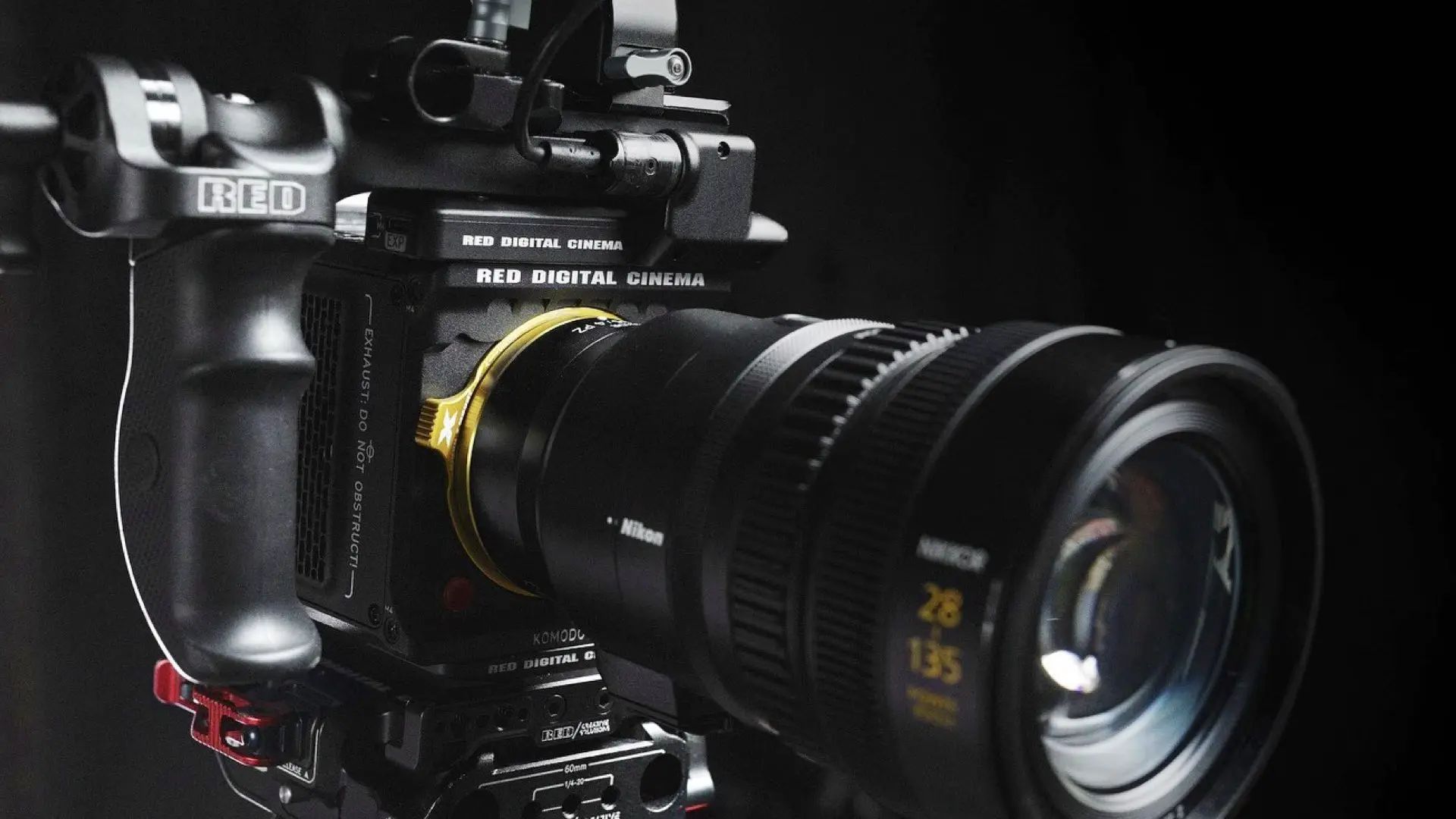
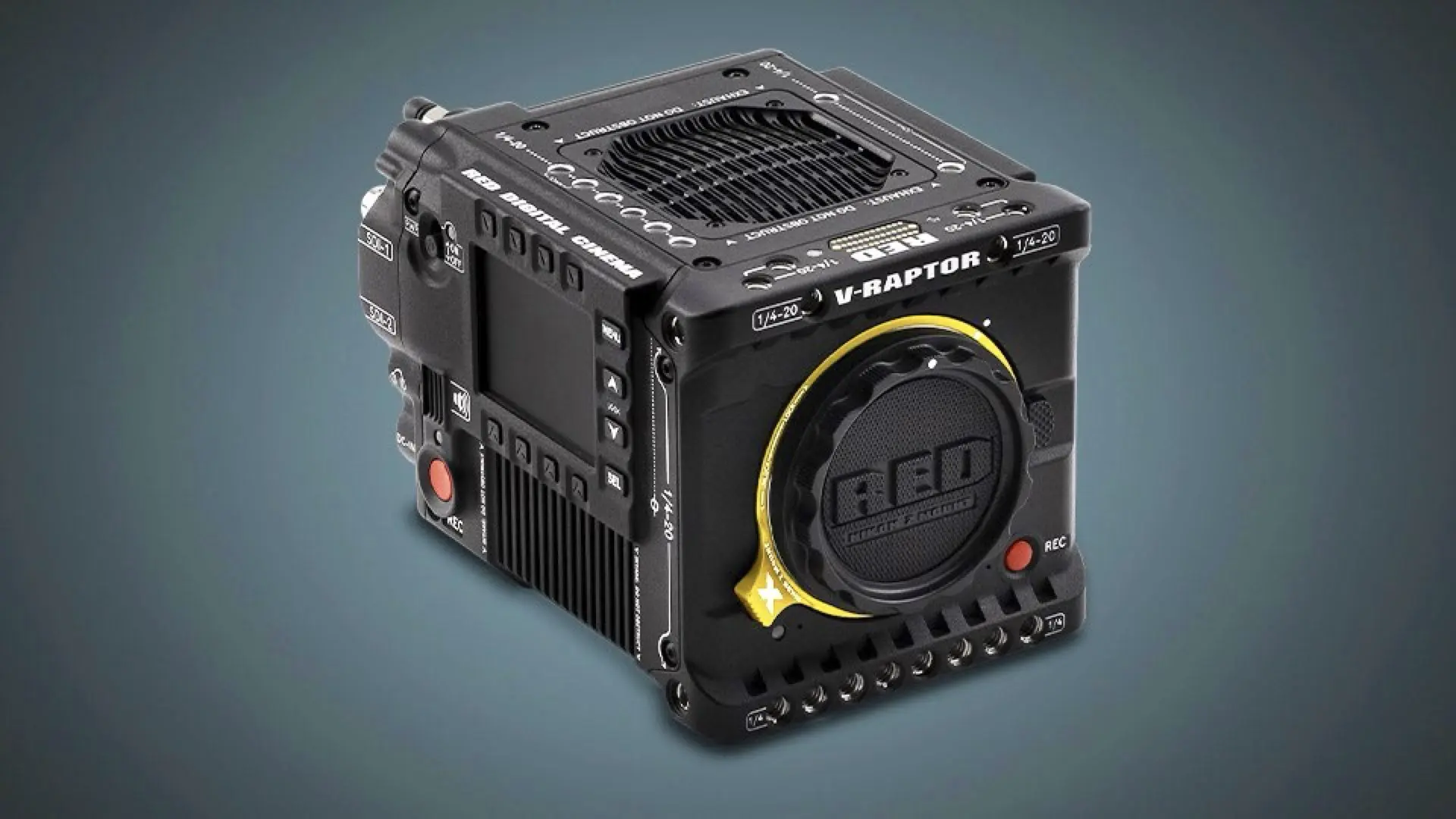
Mount geometry is not a marketing detail. It drives optical design, adapter possibilities, and mechanical stability. The Nikon Z mount uses an inner diameter of 55 millimeters and a flange distance of 16 millimeters. The large throat allows generous rear element designs and more freedom for lens engineers to control aberrations and maintain image quality into the corners. The short flange distance allows clean adaptation to many other mounts with simple mechanics rather than complex optical elements. In practice this means two things for cinema. First, native Z lenses can resolve strongly across the frame and maintain contrast at wide apertures. Modern Nikkor Z primes and zooms routinely show good performance in the outer image circle, which is helpful for large format capture and for post processes like stabilization and reframing. Second, a Z to PL adapter can preserve flexibility for sets that live inside a PL ecosystem, including larger cinema lenses with robust focus scales and consistent front diameters. That balance is attractive to owner operators who sometimes shoot with nimble mirrorless style Z lenses and sometimes want a full PL kit. There is also the question of communication and control. With native Z mount on V RAPTOR X and KOMODO X, the camera can speak fluently to the lens for aperture control, metadata, and in some cases autofocus behaviors. Electronic aperture control can feel smoother than traditional mechanical stepless iris solutions because the camera can command precise increments consistently. Autofocus in cinema remains a creative choice rather than a default, yet there are times when reliable subject tracking saves a shot. Having that option natively, without relying on third party adapters, makes the body more versatile.
![Z-Mount Versions of RED V-RAPTOR [X] and KOMODO [X] Cinema Cameras](https://ymcinema.com/wp-content/uploads/2025/02/RED-Digital-Cinema-Introduces-V-RAPTOR-X-Z-Mount-A-Groundbreaking-Move-Following-Nikons-Acquisition-more.005.webp)
Sensors, shutter behavior, and dynamic range
RED has invested in global shutter sensors that remove the temporal skew of rolling shutter readout. For cinema work this has clear benefits. Fast pans remain clean, lightning bursts and muzzle flashes do not produce partially exposed frames, and VFX tracking enjoys a more stable plate. The trade has historically been dynamic range and noise performance. Modern global shutter designs have improved enough that the compromise is less visible in the final image, especially when exposure is managed for the highlights and when the grading pipeline is tuned for gentle roll off. Dynamic range claims are often marketed with large numbers. The practical way to think about it is this. If the sensor and color pipeline preserve soft transitions in the upper stops, and if shadow structure stays cohesive without salt and pepper noise, the camera grades with confidence. RED’s extended highlight handling aims for this outcome. When paired with Nikon optics that hold micro contrast, the rendering can feel calm and flexible. That is the quality filmmakers care about because it gives room to shape the image to the story rather than fight baked in edges. Frame rate support completes the picture. High frame rate 8K or 6K modes allow slow motion that still resolves detail for large screens. Super thirty five capture on a camera like KOMODO X makes lensing affordable and light weight, while full frame capture on a body like V RAPTOR X enables shallow depth and a broader field of view without compromising sharpness. Both modes matter on real productions, which is why having Z mount across formats is useful. It keeps the lens conversation simple even as the sensor mode changes.
Codecs, color, and the workflow question
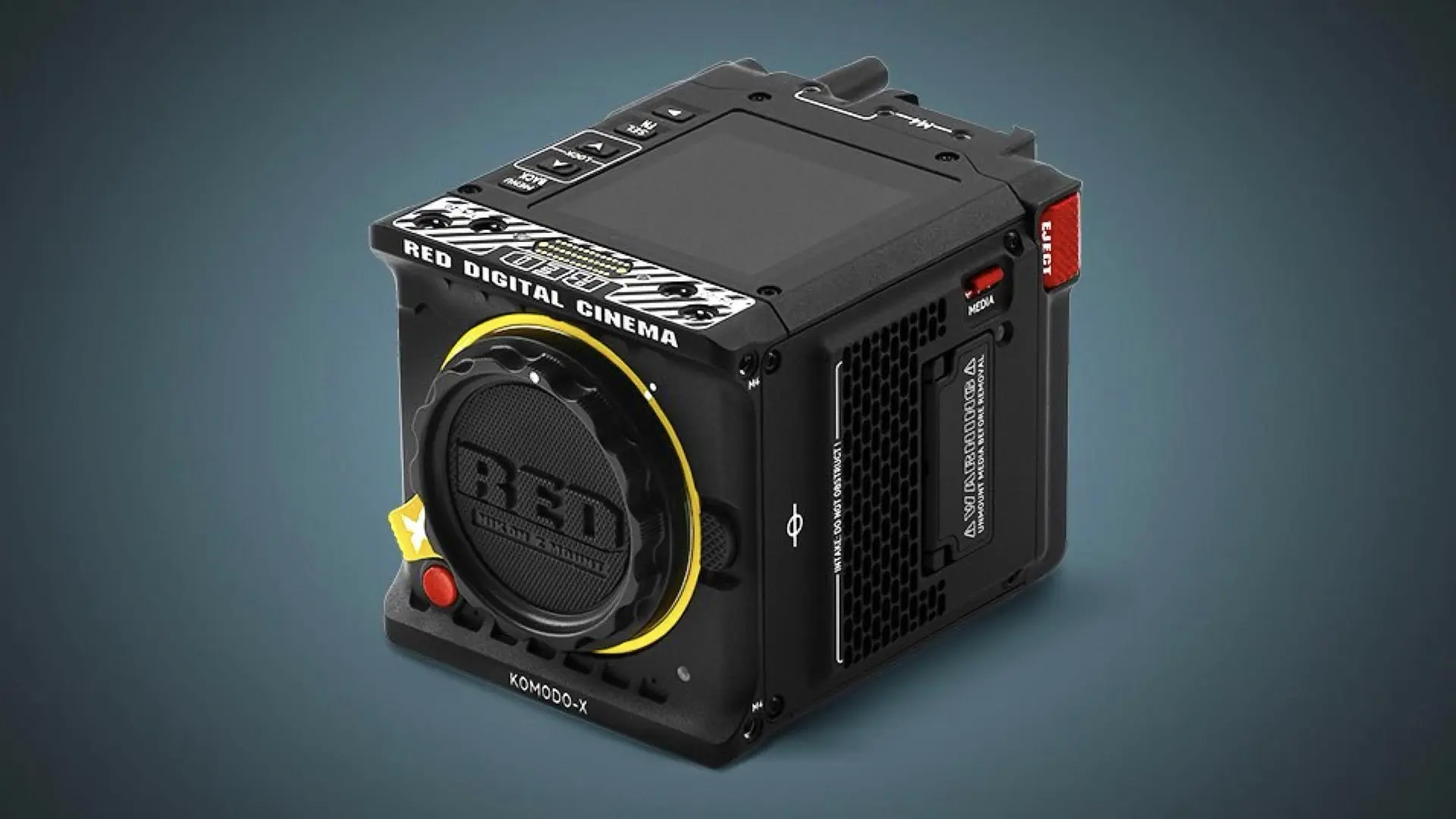
Workflows win careers. Cinematographers and post supervisors pick tools that do not break the day. REDCODE RAW offers a known balance of compression efficiency and grading latitude. Many finishing houses and independent colorists have built muscle memory around RED files. This is a major asset for Nikon as the company enters cinema. It means the capture side can feel familiar to crews that already own a RED pipeline. The interesting question is how far Nikon will go in bringing pieces of that pipeline into Nikon mirrorless cameras. This does not require making a stills body into a cinema camera. It means thoughtful touches that bridge the gap. Consistent color transforms that echo RED’s look. External recording paths that preserve high bit depth. Robust timecode and genlock solutions. Clean monitoring outputs with the right overlays for a focus puller. If Nikon adds these layers, documentary and corporate teams could carry a two body kit that speaks the same grading language, one body being a Z camera and the other a RED Z mount camera. Metadata also matters. Lens data, focus distance, and camera orientation inform modern post. They accelerate match moves, aid virtual production, and enable precise effects work. A native mount with full communication makes this feasible at scale. Nikon has an opportunity to publish and support a predictable metadata scheme that post teams can trust. That would remove friction and build loyalty.
Optics and the lens roadmap
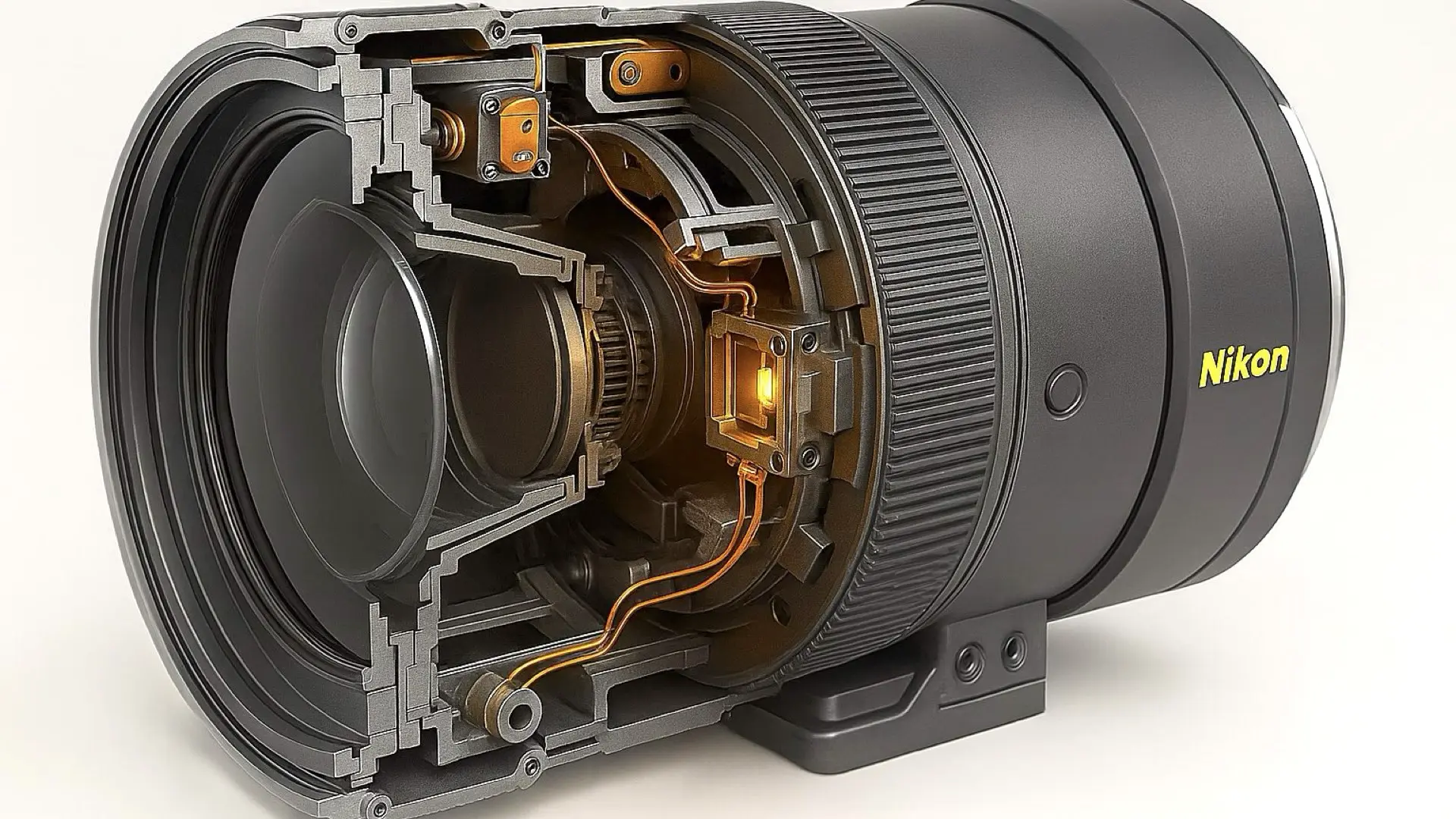
Nikon’s immediate advantage is the existing Nikkor Z catalogue. Many lenses in that line are optically excellent and very light. They are not built as cinema lenses. Focus throws are short. Markings are sparse. Breathing is controlled in some designs and more visible in others. For single operator and documentary work, this is acceptable or even ideal. For a controlled set with a first assistant and a follow focus, it is a compromise. There are two viable paths. The first path is accessory support that gives Z stills lenses a better cinema experience. Decent gear rings, consistent front diameters through smart hoods or sleeves, and mechanical aids that simulate longer focus throws can help. The second path is a proper Z mount cinema line. This would be a family of primes and a few zooms designed around cinema mechanics, with strong breathing control, repeatable focus scales, and standardized fronts. If Nikon moves in that direction, the Z Cinema story gains immediate credibility because the lens kit becomes set ready out of the box. A bridge approach could also work. Nikon could collaborate with an established cinema lens maker for rehoused versions of top Nikkor Z designs. This has precedent in the industry and can arrive faster than a clean sheet cine line. What matters is consistency across the set. Matching color and contrast, shared gear positions, and reliable back focus are what crews value when decisions move quickly on set.
Market reality. Who Nikon must persuade
Cameras do not sell themselves. Rental houses and veteran crews act as gatekeepers. If a rental manager sees demand, they will stock. If a first assistant and a gaffer enjoy working with a camera, they will recommend it to a director of photography on the next job. That social adoption process is as important as the spec sheet. Nikon must therefore do the unglamorous work of seeding kits, listening to feedback, and iterating on the small details that crews notice. Menu logic. Mount strength under heavy zooms. Battery plate options. Cable anchoring. All the points that never make a glossy brochure. At the same time, owner operators keep a different score. They want an image that lands, a body that travels well, a lens kit that does not break the bank, and post that does not punish them. If Nikon and RED deliver a nimble KOMODO X Z mount package that feels like a real upgrade from a mirrorless rig, many small studios will join the system. That tier can move quickly and does not wait for committee decisions. The broadcast and live event world is another vector. Tools that straddle cinematic depth of field and broadcast discipline are gaining ground. If RED’s accessories for live control and monitoring mature inside a Nikon ecosystem, there is room to place Z Cinema on live stages where the look matters and the pace is relentless.
Competitive landscape. Where Nikon stands today
ARRI remains the prestige choice for narrative features and high end episodic work. The ALEXA 35 and large format solutions have a color response and a reliability record that leaders trust. Sony holds hybrid dominance and offers a clean path up to VENICE for high end cinema. Canon owns a coherent Cinema EOS line and a strong presence in documentaries and commercials. Panasonic keeps a foothold in broadcast and specialty niches and partners through the L mount alliance. Blackmagic exerts pressure from below with compelling price to performance and a tightly integrated Resolve pipeline. Against that field, Nikon’s realistic near term target is not the top of the pyramid. It is the broad middle where a mix of commercials, streaming series, branded work, and premium corporate productions live. In that space, clients demand a polished image and a capable crew, yet budgets still reward thoughtful efficiency. RED with Z mount fits well here if Nikon provides the right lenses, accessories, and service.

Three plausible futures for the next few years
Optimistic case
Nikon and RED execute with focus. Z Cinema gains traction through clear kits and responsive updates. Nikon introduces a compact set of Z mount cinema primes with proper focus scales and minimal breathing, plus one power zoom that feels right in the hand. Firmware starts to show a through line across Nikon Z bodies and RED Z mount bodies. Color transforms align. Monitoring tools align. Timecode and metadata remain predictable. Rental houses adopt the kits because crews ask for them. Owner operators move up from mirrorless to KOMODO X Z mount and deliver clean results without pain. By the end of the period Nikon and RED hold a visible position in the middle of the market and start to show up on select prestige projects where the director wants global shutter behavior or a specific highlight handling.
Middle case
Z Cinema finds a loyal base but does not break out. Nikon keeps investing, yet lens mechanics and accessory depth lag behind Sony and Canon ecosystems. Workflows are good but not notably simpler. Rental houses carry a few kits in major cities. Owner operators use the bodies with stills lenses and work around the mechanics. The image is respected, the bodies are trusted, yet momentum remains modest. Nikon benefits from brand halo and learns a great deal, which influences future mirrorless cameras, but the cinema market share number moves slowly.
Pessimistic case
The integration blunts RED’s agility and the product cadence slows. Firmware arrives less frequently. The lens story never evolves into a true cine path. Crews sense the gap and keep choosing the familiar. Nikon then reallocates energy back to stills and hybrid work where it remains strong. RED remains relevant to its community, yet the broader cinema field does not shift.
Looking ahead. Nikon developments on the horizon
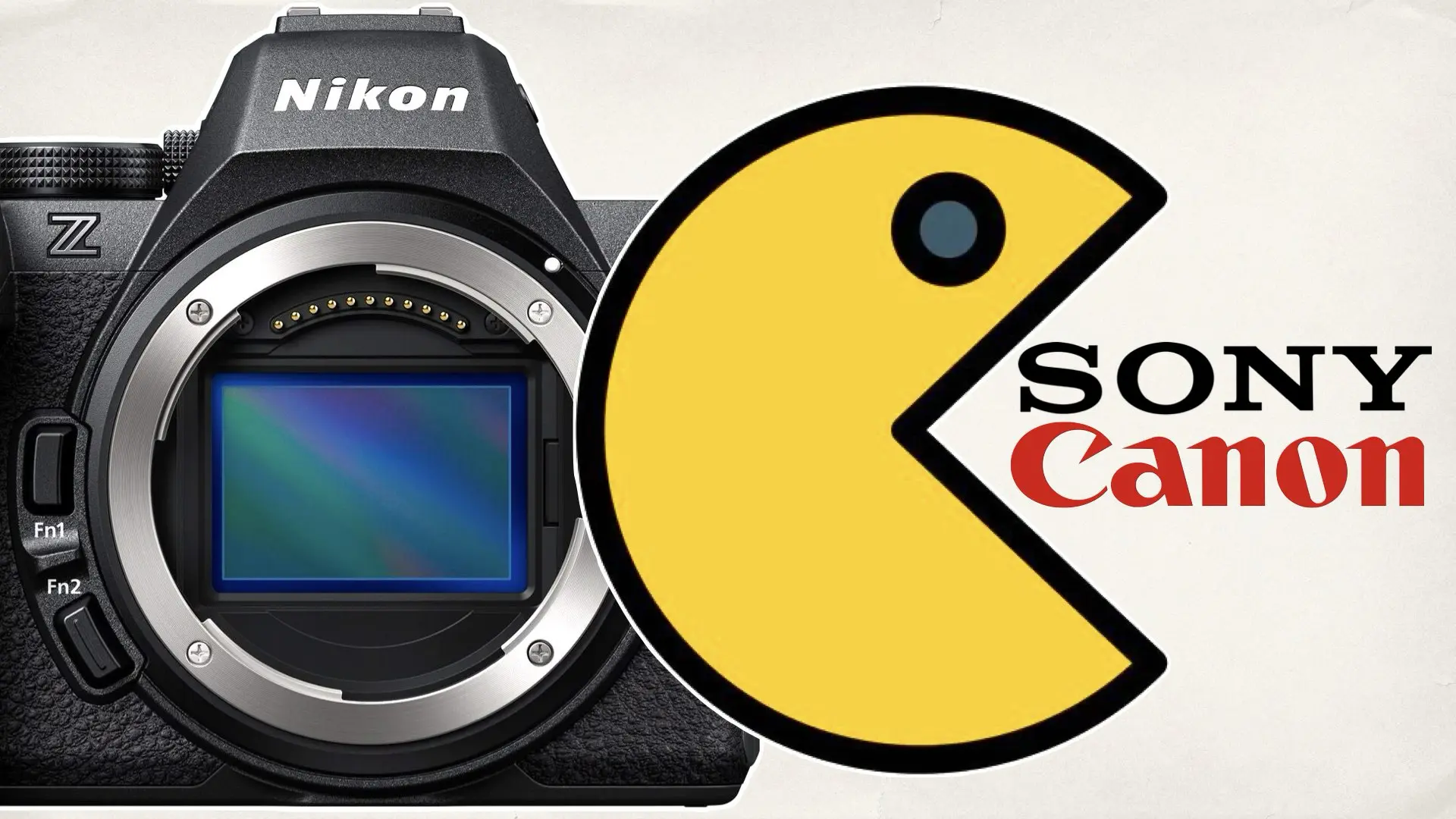
Nikon’s near term roadmap comes into sharper focus when you line up recent research and reporting. A potential move to larger formats and new readout strategies is outlined in Nikon Large Sensor Cinema Camera Technology, which frames why sensor size and pixel architecture could matter for cinema latitude and highlight control. Autofocus reliability during dynamic moves is addressed in Nikon’s New Patent Could Give Autofocus a Massive Boost Even During Movement, pointing to control schemes that keep focus stable when the camera or subject accelerates. On the pipeline side, Is Nikon Building a New RAW Workflow With RED’s Tech. A Closer Look at a Quiet Patent Move explores how Nikon could align capture and post with RED style compression and metadata, which would simplify mixed camera sets. Sensor versatility under challenging spectra is hinted by Nikon’s New Patent Hints at Cinema Ready IR Sensor Innovation, with implications for night work, skin tone management, and filtration. For the strategic context around all of this, Nikon Z Cinema. A New Era or a Risky Bet Against Sony and Canon lays out the competitive stakes and what Nikon must deliver for these technologies to translate into adoption.
What Nikon must do next
First, finish the lens story. A minimal yet complete Z mount cinema set would change the conversation. Think a wide, a normal, and a portrait length that match behavior and weight, plus a compact power zoom that does not fight the operator. Clear markings, controlled breathing, and shared fronts would demonstrate intent. Second, publish a workflow playbook. Color management, transforms for common grading setups, best practices for mixed Nikon and RED shoots, net storage budgets at different compression ratios, and known good settings for live monitoring and on set DIT work. Remove ambiguity. When crews feel prepared, they are more willing to try a new system. Third, invest in accessories that crews touch every minute. Smart top plates, side plates with secure cabling, reliable power options, and quick release systems that play well with gimbals and drones. Many choices on set are about friction. If a camera is easy to rig and re-rig, it gets used. Fourth, continue direct dialog with the community. RED has always benefited from open lines to working cinematographers via its CEO, Jarred Land. Nikon can preserve that tone while adding its own service stability. Fast responses to small bugs build trust. Clear roadmaps for features matter more than surprise announcements. Fifth, deepen training. Short, precise videos that explain real production moves. How to balance global shutter advantages with exposure strategy. How to build a travel friendly two body kit that covers gimbal and tripod work. How to record for tight timelines with safe proxies. Education shortens the gap between intent and result.
Risks and counterpoints
It is fair to ask whether the market even wants another deep ecosystem. Many productions have locked in their lens libraries, their cages, their post templates, and their crew habits. Switching costs are real. Nikon must win on experience, not just on technical merit. There is also the risk of internal dilution. If cinema remains a small slice of Nikon revenue, internal priorities may drift. That is why clear product cadence and a visible lens roadmap are important signals. They say we are committed and we are planning. Another risk is the halo of the RED brand itself. A portion of the market holds strong opinions. Some love the RED look and the culture of the company. Others prefer the steadiness of ARRI or the practical spread of Sony. Nikon must avoid turning debates into identity. The better approach is to make the filming day easier and the grading day calmer. Results convince, not slogans.

Conclusion
Nikon entered cinema through the right door. The company now owns a respected image pipeline and can connect it to one of the most flexible modern mounts. The first products show a thoughtful direction. Global shutter sensors with gentle highlight behavior. Native Z mount with electronic control. Compact bodies that travel and scale. The foundation is sound. The outcome will depend on execution in details that crews feel every hour. Lenses that behave like cinema tools. Accessories that do not fail. Firmware that solves pain points. Workflows that save time. Direct dialog that respects the craft. If Nikon and RED deliver those pieces, they can establish a credible third force between the prestige of ARRI and the broad reach of Sony and Canon. If they do not, the Z Cinema story will remain a compelling experiment that never became a habit. For filmmakers, the advice is simple. Test the cameras with your lenses and your post pipeline. Judge the image with your eyes and your grade. Evaluate the handling with your crew. If the kit speeds your day and delivers the look you want, it deserves a place on your shortlist. The combination of RED image science and Nikon optics is a serious attempt to make cinema tools that respect both tradition and progress.
Here are the featured products and where you can buy them:


![Nikon Is Developing Nine NIKKOR Z CINEMA T1.9 VV Lenses for RED V RAPTOR [X]](https://ymcinema.com/wp-content/uploads/2026/09/Nikon-Is-Developing-Nine-NIKKOR-Z-CINEMA-T1.9-VV-Lenses-for-RED-V-RAPTOR-X.001-480x384.webp)