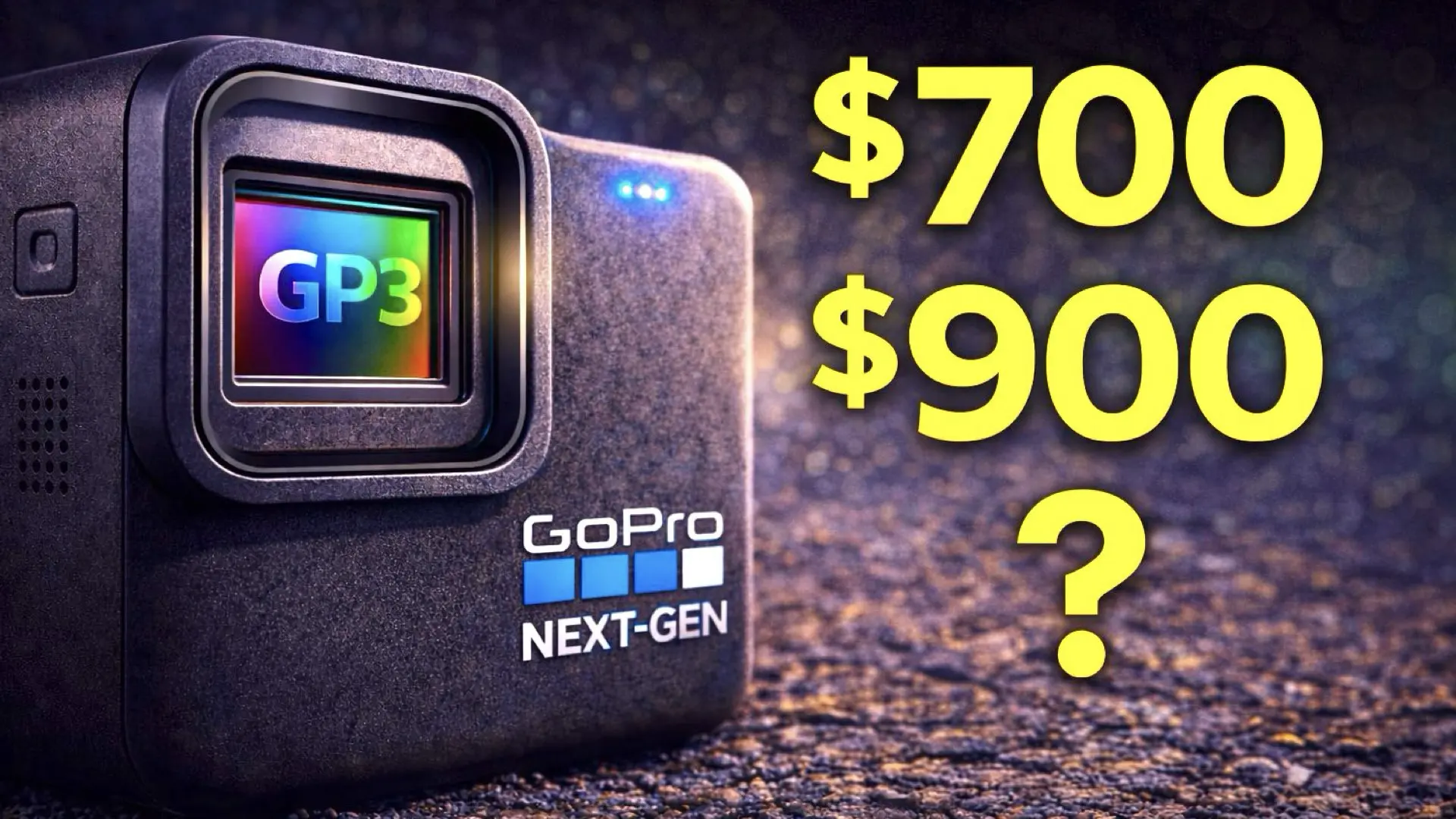
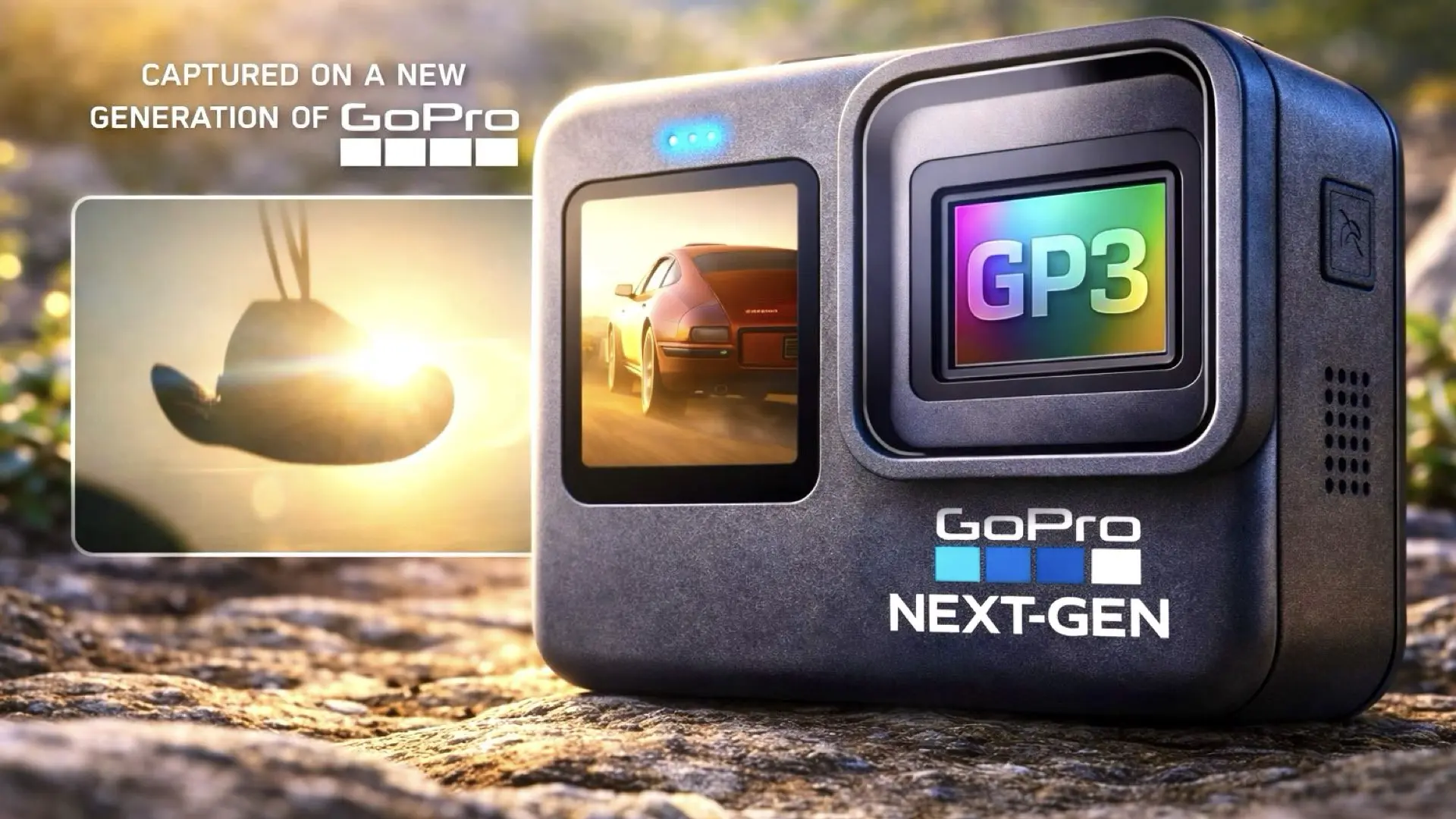
GoPro has made one thing clear. Its next-generation cameras are not being positioned as routine updates. Between the teaser footage, the confirmed move toward larger sensors, and the company calling the lineup a “Gamechanger,” the direction is obvious. What is still missing from the conversation is the most practical question. Price. While most coverage has focused on image quality and technology, almost nobody is talking about where GoPro will position this new camera financially. Our prediction: $700 to $900. Read on.
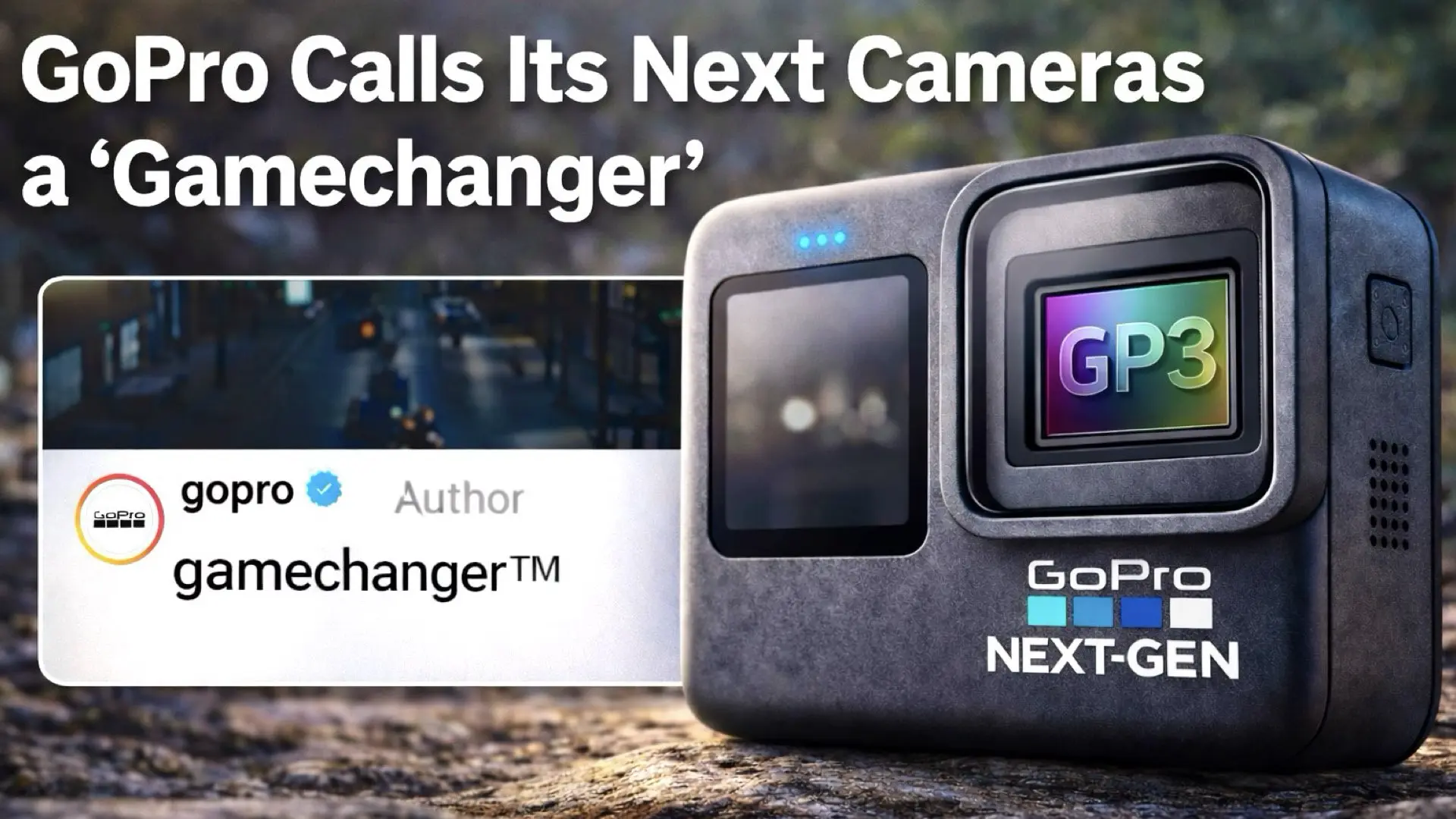
This time, the positioning is different. GoPro is explicitly talking about professional cameras, larger sensors, and a new imaging direction. That immediately moves the product out of its traditional pricing comfort zone.
Why price matters more than specs this time
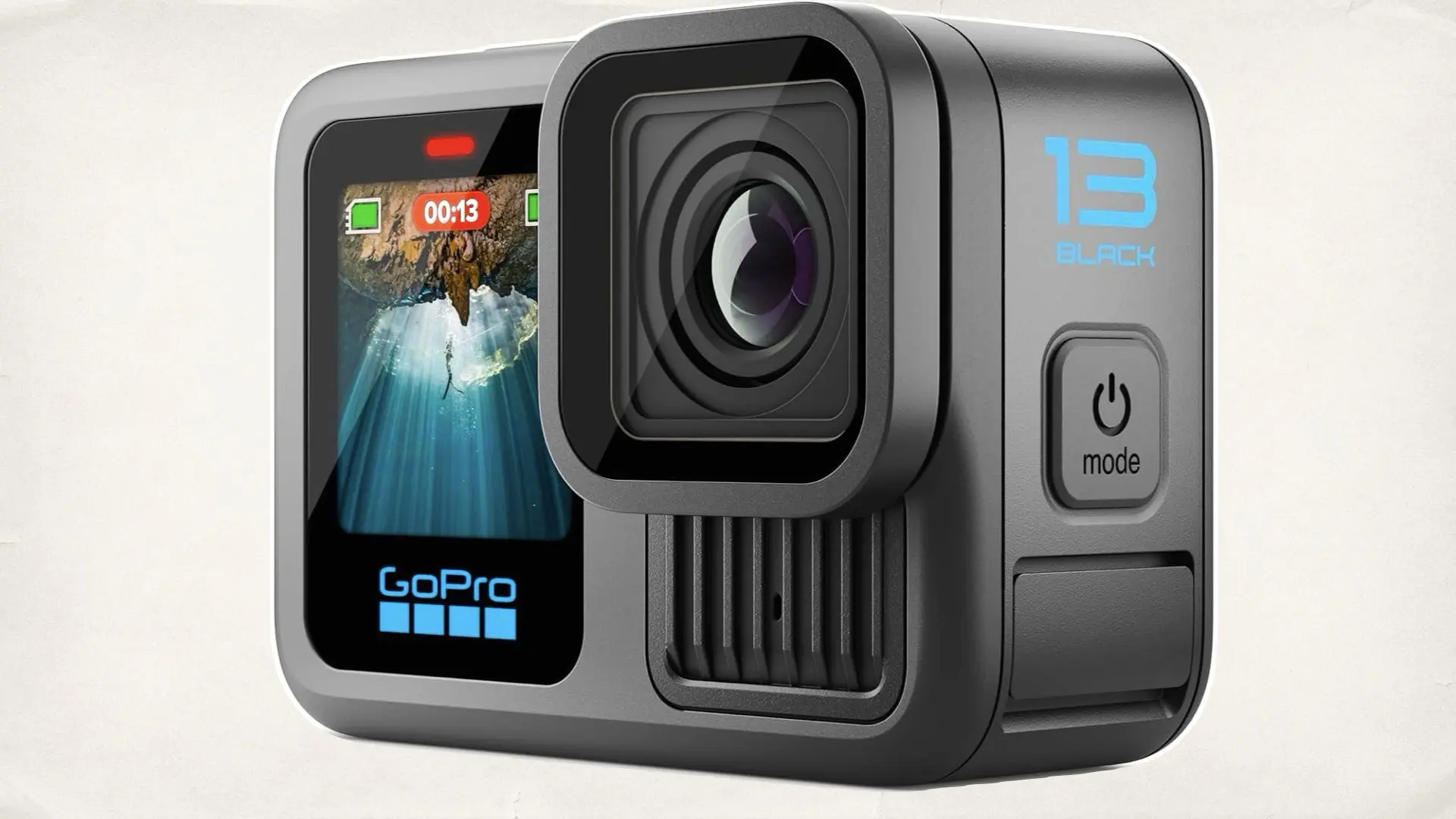
In previous launches, pricing was predictable. HERO cameras ($189 on Amazon) lived in a defined range, typically around 400 dollars, sometimes slightly higher at launch. The value proposition was clear. Rugged design, excellent stabilization, and solid image quality at an accessible price. This time, the positioning is different. GoPro is explicitly talking about professional cameras, larger sensors, and a new imaging direction. That immediately moves the product out of its traditional pricing comfort zone. You cannot introduce larger sensors, new optics, and a more advanced processing pipeline while staying in the same price bracket. The economics do not support it. More importantly, the market does not support it either. If GoPro is truly entering a creator-focused segment, it will need to position this camera against a different set of competitors.
The new competitive landscape
The upcoming GoPro camera will not be compared only to action cameras. It will be evaluated against:
- DJI Pocket series
- High-end compact cameras
- Even entry-level mirrorless systems
That changes pricing expectations dramatically. A product that delivers cinematic rendering, improved low light, and potential focus control enters a space where users are already paying more for image quality and flexibility. This is why the price is not just a number. It defines the category.
The realistic price floor
Let’s start with what is unlikely. GoPro will not price this camera at the traditional HERO level. A 399 dollar price point would contradict everything the company has communicated so far. Larger sensors alone would push costs higher. Add a new processor, improved optics, and potential new features, and the margin simply does not exist at that level. A realistic floor is closer to 599 dollars. That is the minimum required to signal a step above the HERO line while still remaining accessible to a broader audience. The strongest prediction, based on positioning and market alignment, sits between 599 and 899 dollars. At around 599 dollars, GoPro would be introducing a premium tier without fully committing to a new category. This would still feel like an extension of the existing lineup. At around 799 dollars, the message becomes clearer. This is no longer an action camera upgrade. It is a different class of product. This price would align with advanced compact cameras and entry-level creator tools. At around 899 dollars, GoPro would be making a bold statement. It would be signaling that this camera is designed for serious creators, not casual users. That level would also reflect confidence in the product’s imaging capabilities.
Why GoPro might choose a higher price
There are strategic reasons to move higher rather than lower. First, differentiation. If this camera is too close in price to HERO models, it risks confusing the lineup. A clear price gap reinforces the idea that this is a new category. Second, perception. Higher pricing can signal higher value, especially when paired with messaging around professional use and cinematic quality. Third, margin. New technology requires room for profitability, especially if GoPro is investing heavily in sensor development, optics, and processing. One important factor is that the HERO lineup is not going away. It will likely continue to serve as the entry point. That gives GoPro flexibility. It can introduce a higher-priced product without alienating its core audience. This creates a two-tier system:
- HERO as the accessible action camera
- The new model as a creator-focused imaging device
This structure mirrors what we see in other segments of the camera industry. For a higher price to make sense, the new Next-Gen camera needs to deliver:
- Noticeably better low-light performance
- More natural dynamic range
- Improved motion rendering
- Some level of depth of field control
- A more refined image pipeline overall
The teaser footage suggests that GoPro is aiming in this direction. The question is how far they will go.
The risk of getting it wrong
Pricing is where this launch could succeed or fail. If the camera is priced too low, it may not communicate its value. It could be seen as just another action camera with incremental improvements. If it is priced too high without delivering a clear advantage, it risks losing relevance to established creator tools. GoPro needs to find a balance. High enough to signal a change. Low enough to remain compelling. Based on everything we know, the most realistic expectation is that GoPro will introduce its new camera in the 699 to 799 dollar range, with a possibility of reaching 899 dollars depending on configuration. This would place it firmly above the HERO line while positioning it as a serious tool for creators. More importantly, it would confirm what the company is already suggesting through its teasers and messaging. This is not just a better GoPro. It is a different kind of camera. The official announcement will answer the question definitively. But for now, the price range already tells us something important. GoPro is preparing to move up.
Gear mentioned in this article
Available on Amazon
| Product | New | Renewed | Used |
|---|---|---|---|
| GoPro Hero | $189 | — | — |
| DJI Osmo Pocket | $395 | — | From $363.89 |
Prices checked: Oct 7, 2026, 1:30 PM GMT+0000
As an Amazon Associate, Y.M.Cinema earns from qualifying purchases. If you buy through our links, we may earn a small commission at no extra cost to you.
Product prices and availability are accurate as of the date/time indicated and are subject to change. Any price and availability information displayed on Amazon.com at the time of purchase will apply to the purchase of this product.
CERTAIN CONTENT THAT APPEARS ON THIS SITE COMES FROM AMAZON. THIS CONTENT IS PROVIDED “AS IS” AND IS SUBJECT TO CHANGE OR REMOVAL AT ANY TIME.