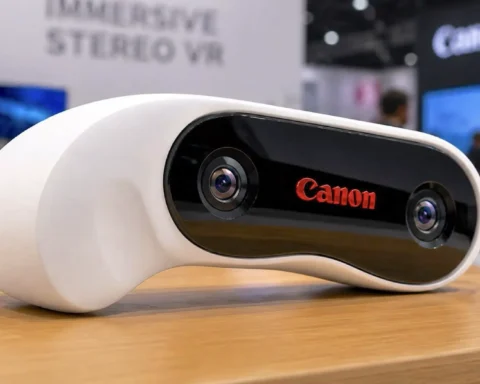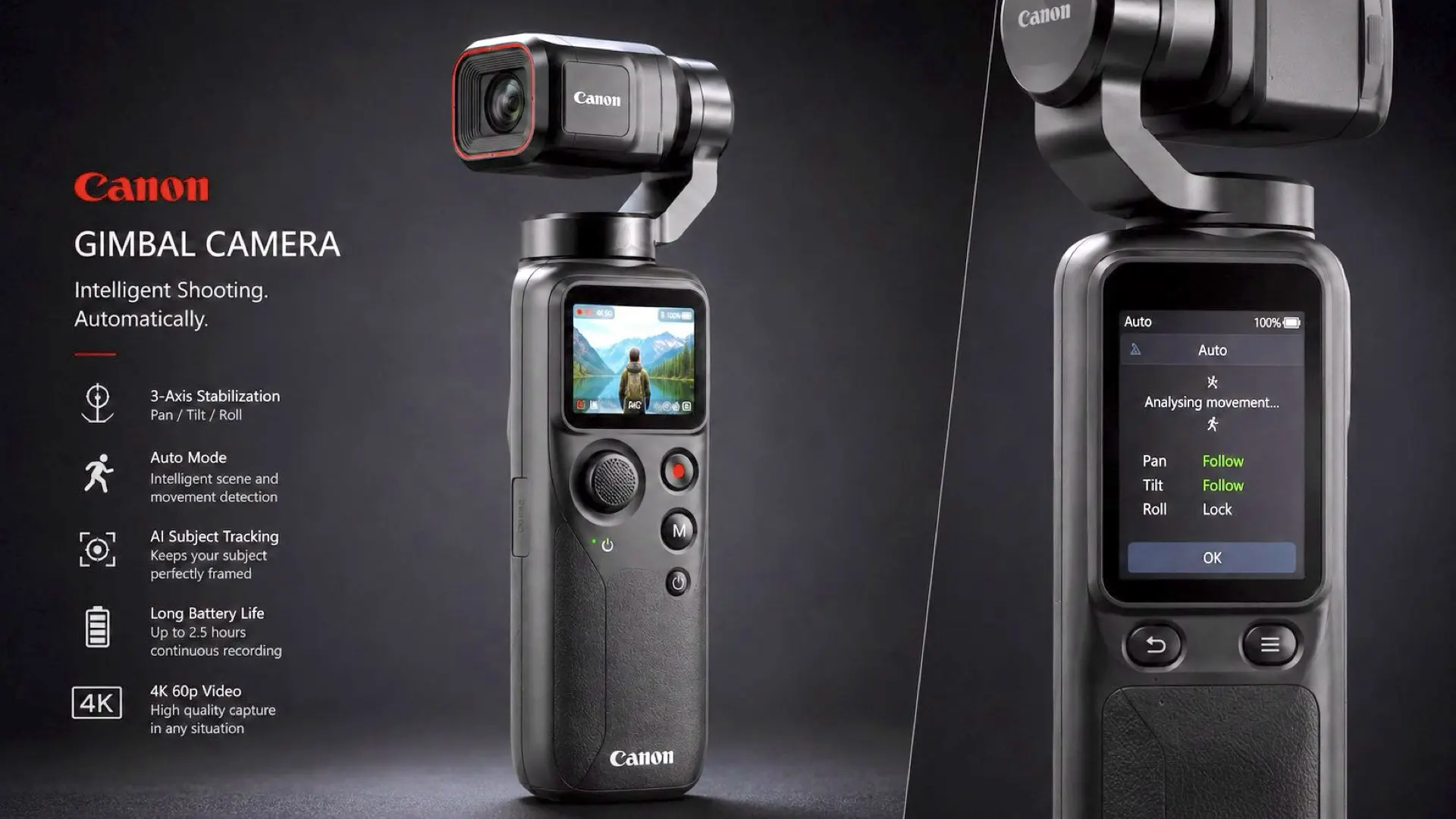
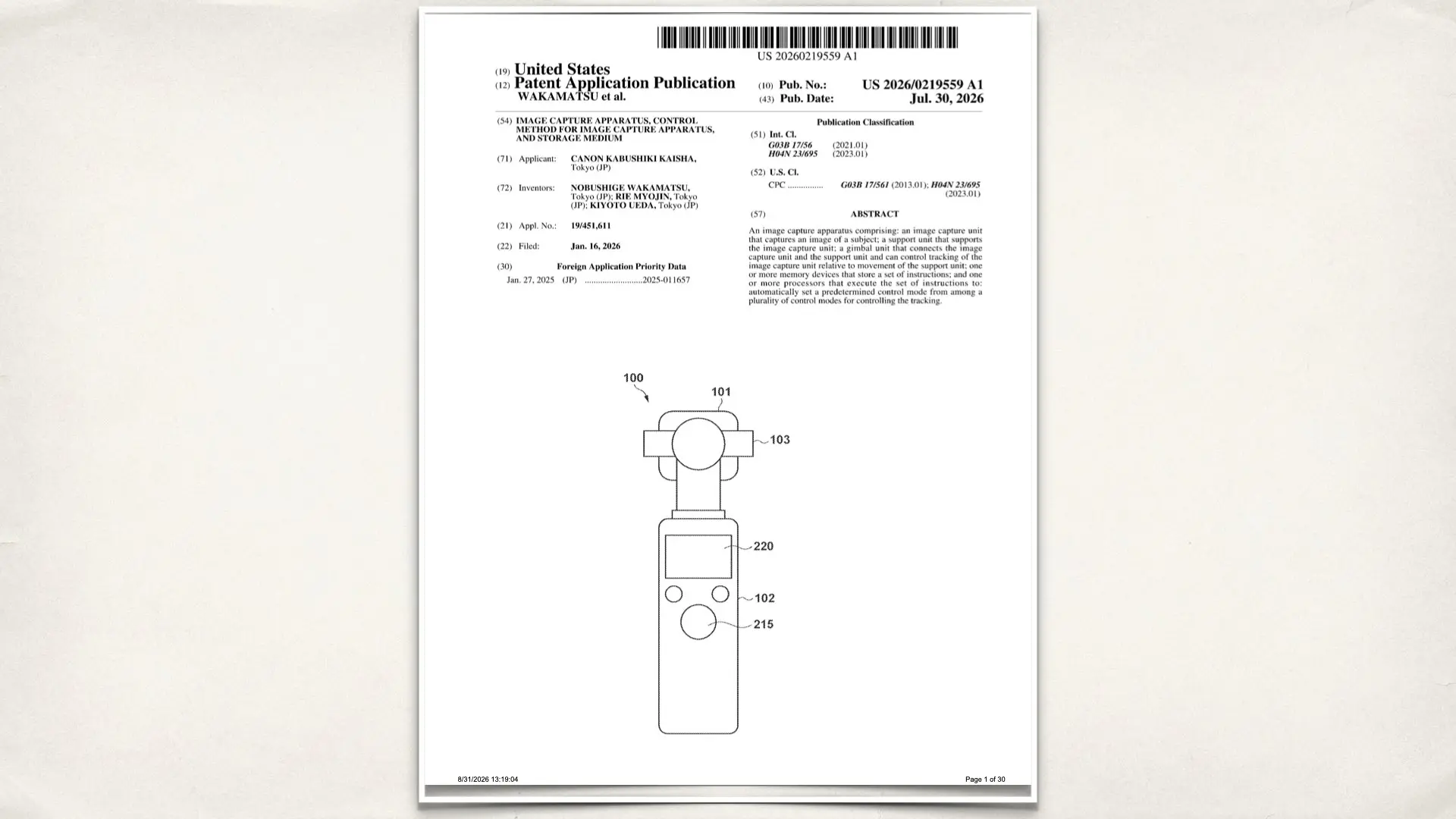
Canon continues to develop the idea of a compact camera built around an integrated motorized gimbal. A new patent reveals another layer of that development, and this time the focus is not on folding mechanisms, power management, or protecting the camera when it is switched off. Canon is working on something much more interesting: making the gimbal understand how the camera is being used and automatically adjust its behavior while shooting.
Another piece of Canon’s gimbal camera puzzle
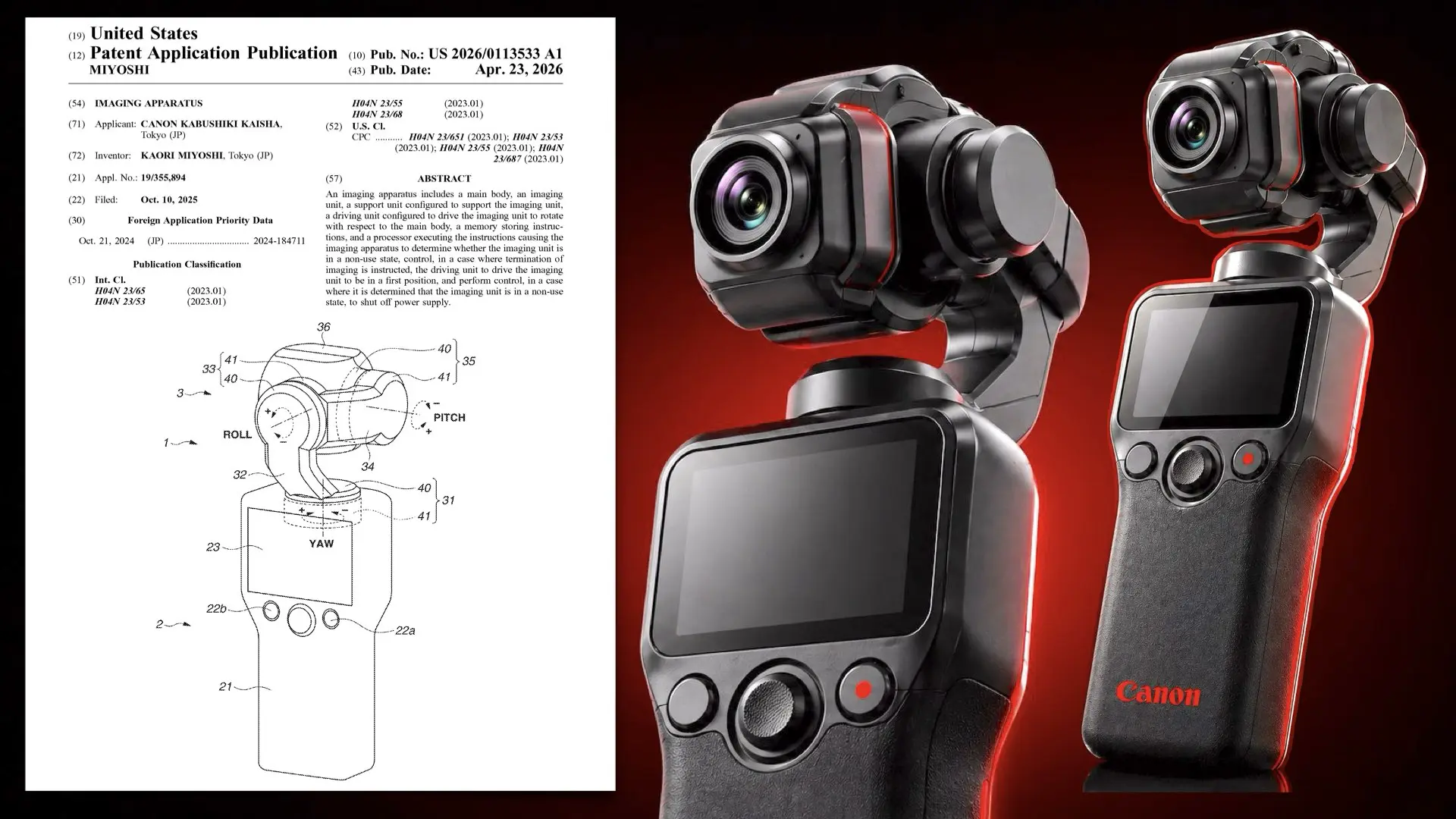
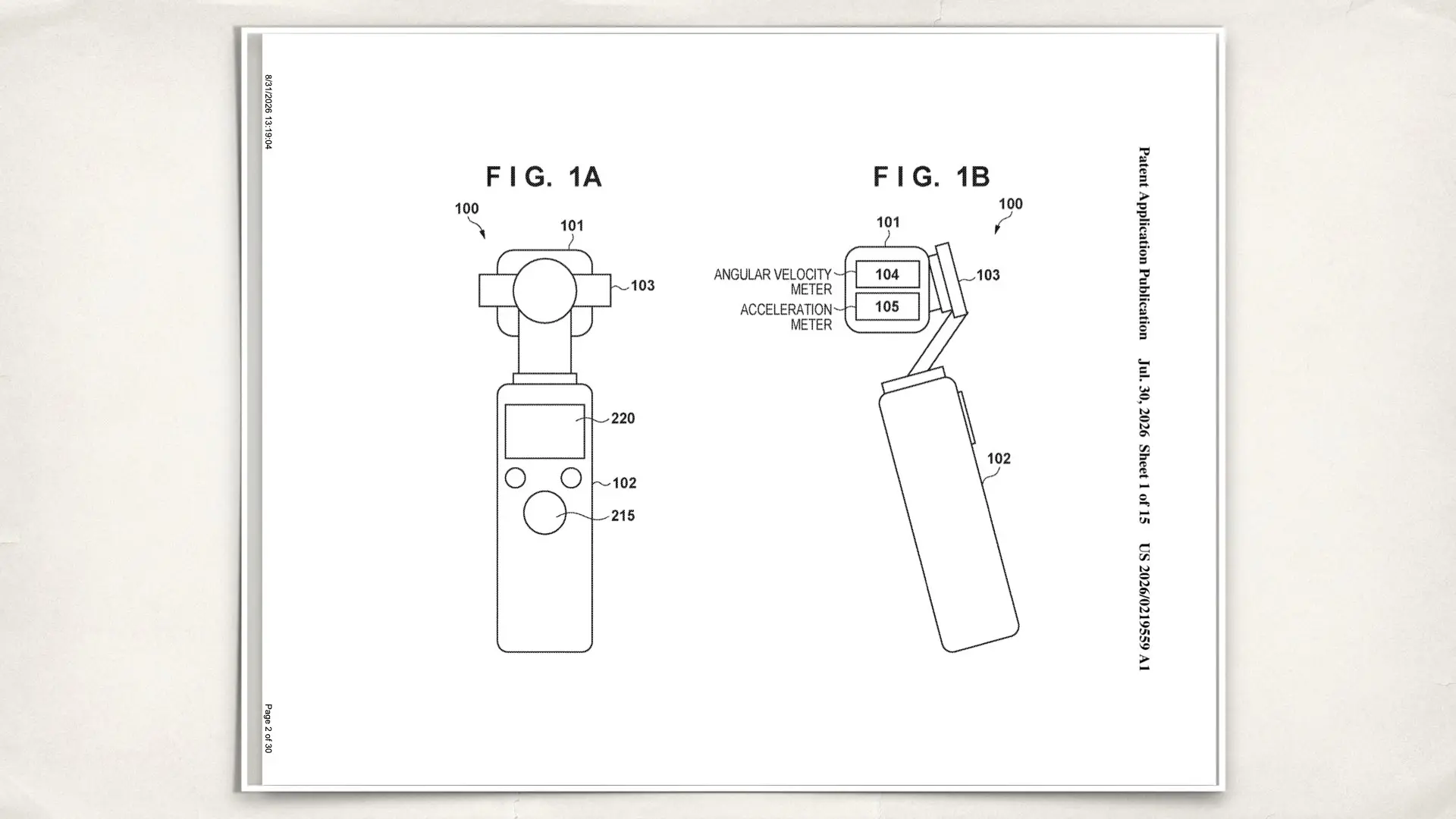
Back in April, we reported on another Canon patent describing a compact handheld camera built around a fully integrated three-axis gimbal. That design included a camera head, grip, display, and motorized pan, tilt, and roll mechanisms, making the concept look much closer to something like a DJI Osmo Pocket than a conventional EOS camera mounted on an external stabilizer. Canon’s previous filing concentrated heavily on usability, including how the gimbal folds into a protected position and how the system determines when it is safe to shut down its motors. The newly published patent, titled “IMAGE CAPTURE APPARATUS, CONTROL METHOD FOR IMAGE CAPTURE APPARATUS, AND STORAGE MEDIUM,” appears to attack a different problem. Instead of asking how the camera should be stored or powered down, Canon asks how the gimbal should behave during an actual shot. And Canon’s answer is essentially: let the camera decide.
An automatic gimbal mode
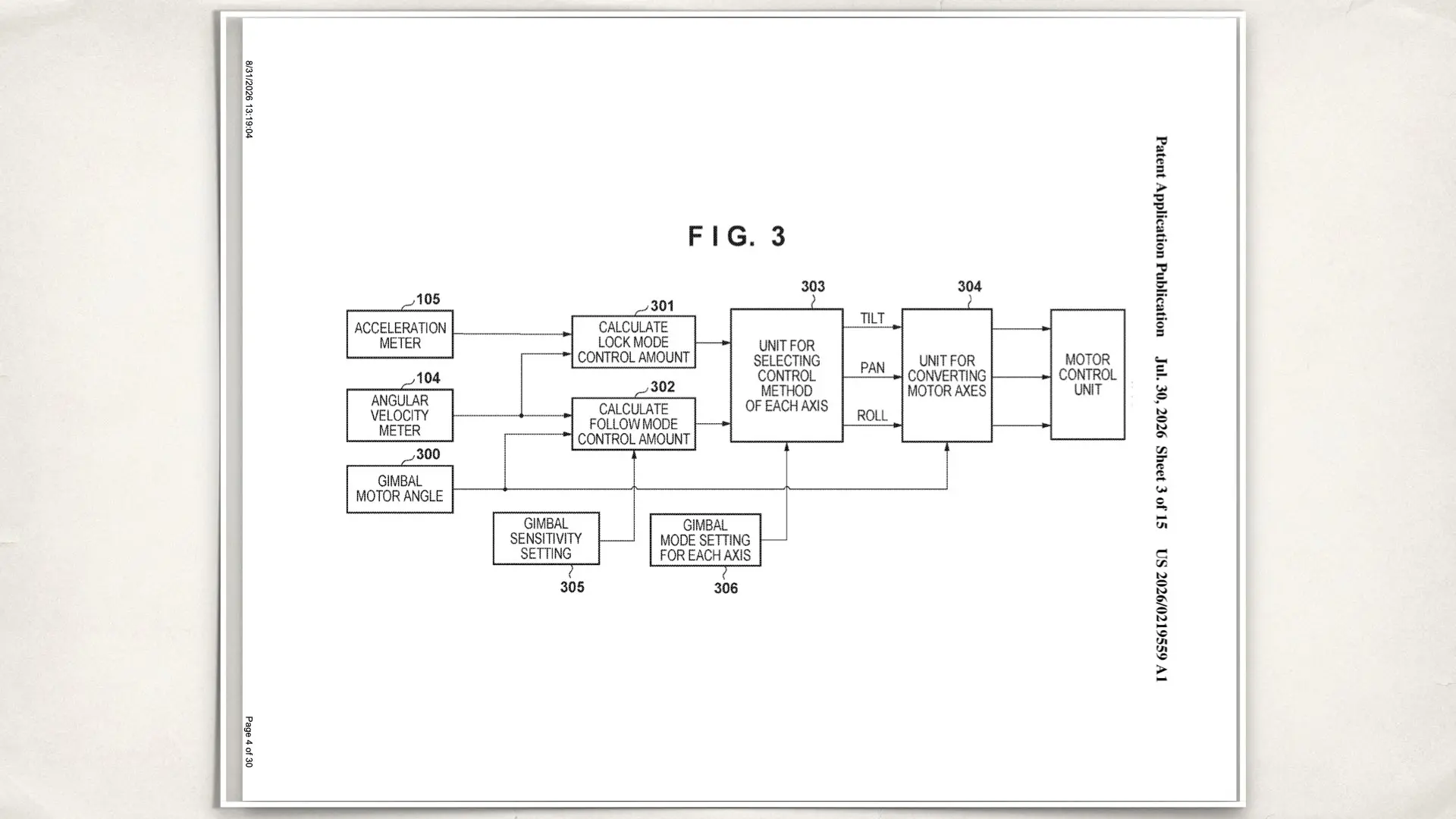
Traditional gimbals give the operator considerable control over how the camera reacts to movement. Pan can follow while tilt remains locked. Tracking sensitivity can be increased or reduced. Different modes can favor smooth stabilization or faster response. That flexibility is useful, but it also requires the operator to understand what every setting does and change those settings when the shooting situation changes. Canon specifically identifies this as a problem. According to the patent, selecting the appropriate gimbal mode, sensitivity, and tracking parameters can become burdensome and may even cause the operator to miss a shot. Canon therefore proposes an Auto mode in which the camera automatically selects the appropriate gimbal behavior. The system can independently control the pan, tilt, and roll axes, switching them between Follow and Lock modes while also changing gimbal sensitivity depending on what the camera believes the operator is trying to do.
Walking forward? One behavior. Moving sideways? Another
Imagine walking behind a person while filming them. Canon’s system can detect the forward movement and determine that a subject is actively being tracked. In that situation, the patent proposes placing both pan and tilt into Follow mode while keeping roll locked. Tilt sensitivity can remain relatively low to prioritize smooth stabilization, while pan receives a different response level to make following the subject easier. Move sideways and the parameters can change again. If no subject is being tracked, Canon can lock the tilt axis while allowing slow pan movement, prioritizing stability. If a subject is being tracked, both pan and tilt can follow while using lower sensitivity to produce smoother movement. Stop moving completely and the behavior changes once more. Canon proposes locking pan, tilt, and roll because the camera assumes the operator is trying to maintain a static composition and therefore wants maximum stabilization. In other words, the gimbal is no longer operating according to one fixed preset. It is reacting to the camera work.
Canon keeps refining the same concept
This patent becomes more significant when considered together with Canon’s previous gimbal-camera filings. The April patent showed Canon refining practical aspects of an integrated handheld gimbal camera, including storage, power management, and determining when the device is actually no longer being used. Our previous conclusion was that Canon appeared to be moving away from a purely experimental mechanical concept toward something that looked increasingly product-oriented. Now Canon is adding another layer: automated camera behavior. The hardware described here is again an integrated gimbal camera consisting of a camera unit, grip, and three-axis motorized gimbal rather than simply a conventional interchangeable-lens camera communicating with an external stabilizer. One patent can be an experiment. Multiple patents addressing different operational problems around a similar product architecture begin to show a much broader development effort.
The interesting part is the intelligence
DJI already proved that there is a substantial market for extremely compact stabilized cameras, particularly with the Osmo Pocket line. Canon entering that category would therefore be interesting on its own. But this patent suggests Canon may not simply be thinking about building another small camera on a gimbal. The more interesting idea is a camera that understands the relationship between operator movement, subject movement, stabilization, and composition, and then changes its mechanical behavior accordingly. Canon summarizes the benefit rather clearly: automatically setting the gimbal mode and sensitivity reduces the need for the user to configure the system manually and can help prevent missed shooting opportunities while maintaining smooth video capture. Of course, a patent does not mean that Canon will release such a camera. Companies routinely protect technologies that never become commercial products. Still, Canon has now spent multiple filings solving different problems around what appears to be the same fundamental concept. The unreleased Canon gimbal camera keeps getting more sophisticated. And this time, Canon is not just improving the gimbal. It is trying to teach the camera how to understand the shot.