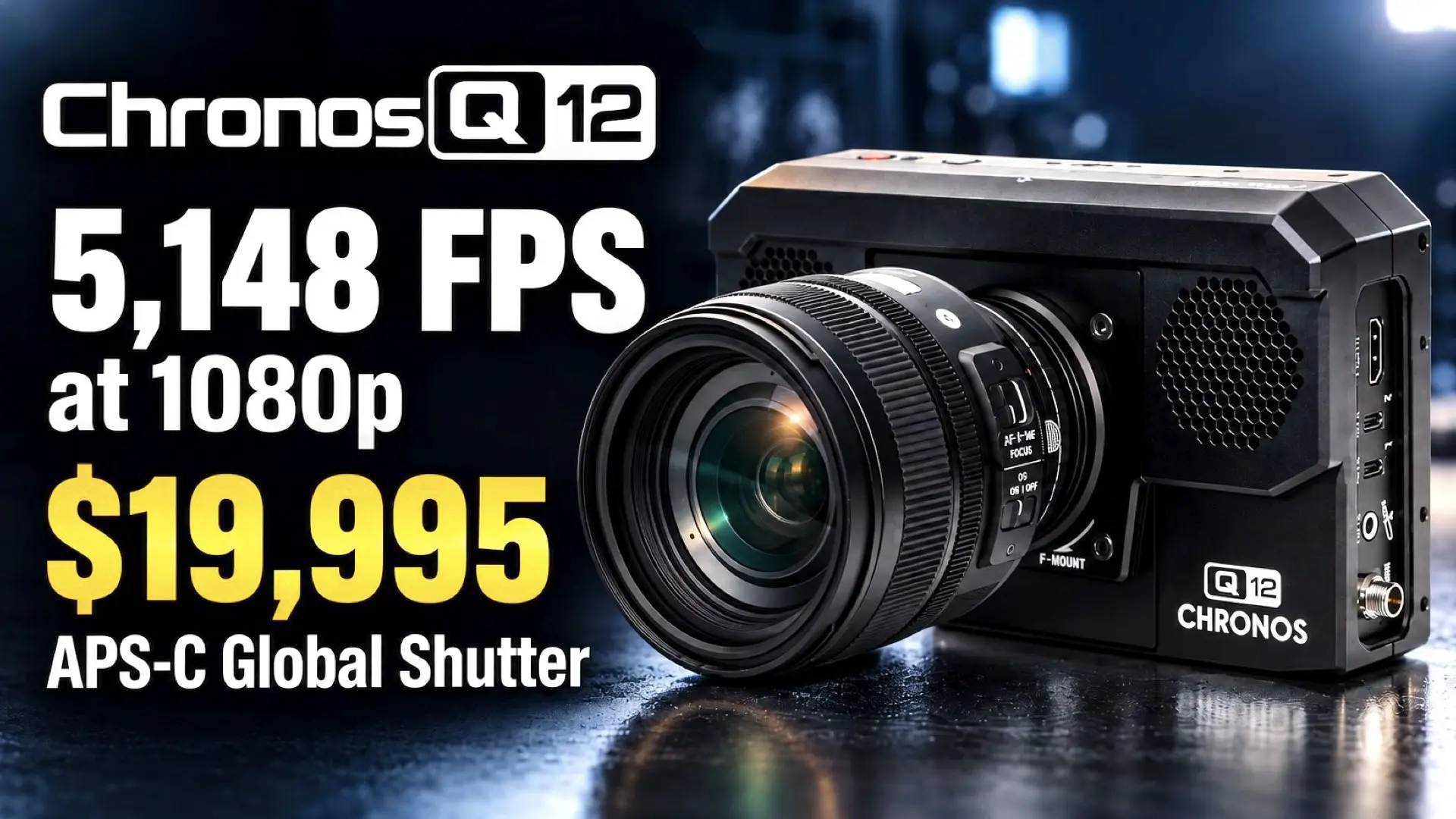
Kron Technologies has officially announced the Chronos Q12, a high-speed camera capable of recording 5,148 frames per second at 1920 × 1080. The camera uses an APS-C global-shutter sensor and starts at $19,995. The Q12 is not about shooting 4K or 5K slow motion. Its main purpose is different: pushing frame rates extremely high while maintaining usable resolutions. And at Full HD, more than 5,000 FPS is a serious number. We first covered the Q12 back in 2023 in our article 2K, 2,800FPS, for $20,000: Meet the New Chronos High Speed Cameras. Now Kron has formally launched the camera with its finalized specifications.
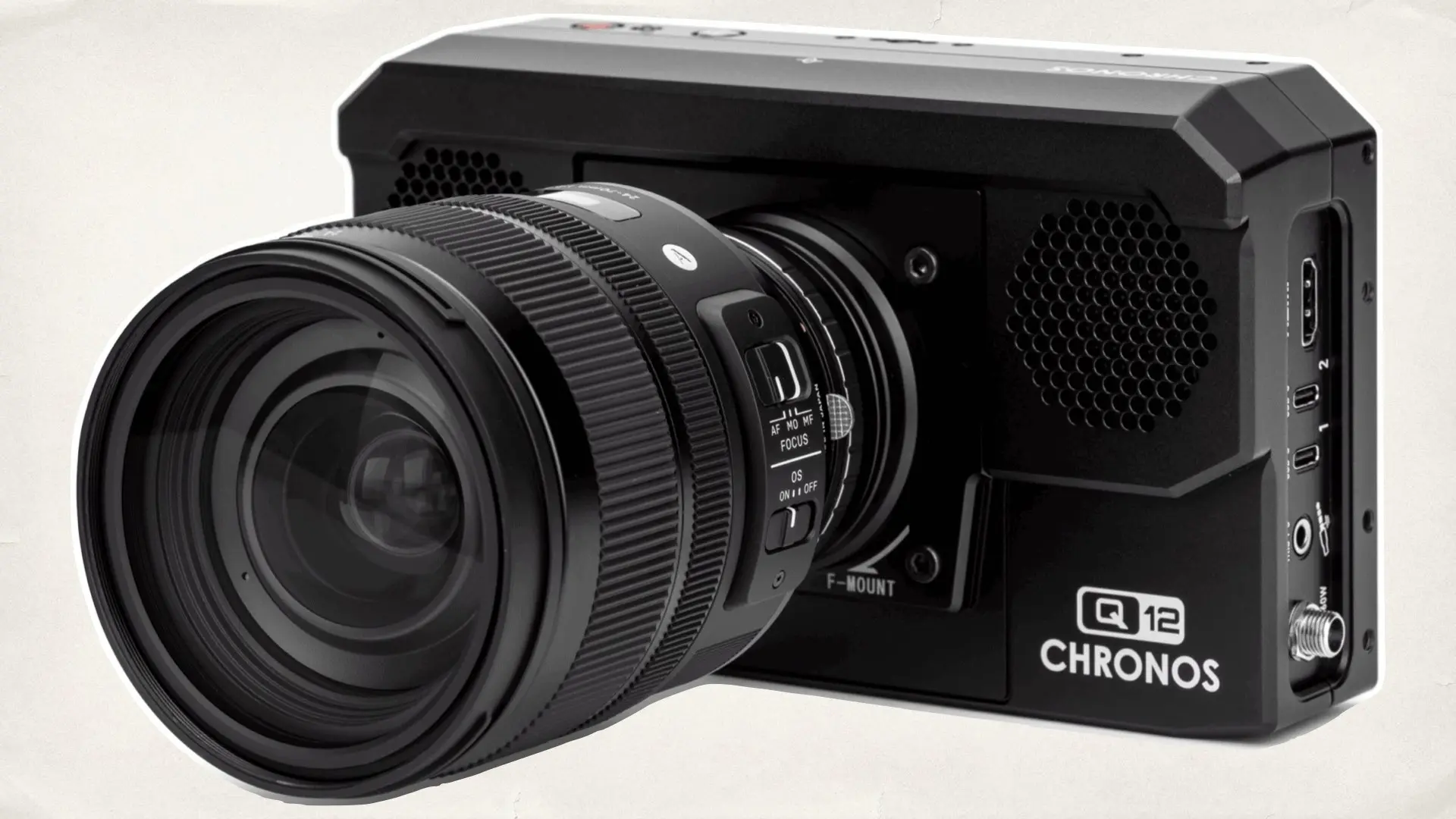
More than 5,000 FPS at Full HD
The Chronos Q12 has a native resolution of 2560 × 2016, where it can record up to 2,313 FPS in 8-bit mode. Reducing the vertical resolution allows the camera to go significantly faster:
- 2560 × 2016: 2,313 FPS
- 2560 × 1440: 3,116 FPS
- 1920 × 1080: 5,148 FPS
- 1536 × 864: 7,471 FPS
- Maximum frame rate at heavily reduced resolution: 29,515 FPS
The maximum 29,515 FPS figure sounds impressive, but it requires reducing the image to a very small resolution. For filmmakers and many technical users, 5,148 FPS at actual 1080p is arguably the more interesting specification. The Q12 uses an APS-C CMOS sensor measuring 23.04 × 18.14 mm, with a global electronic shutter. Global shutter is especially important for this kind of camera because extremely fast motion can be captured without the geometric distortion associated with rolling shutters.
From 1,000 FPS to more than 5,000 FPS
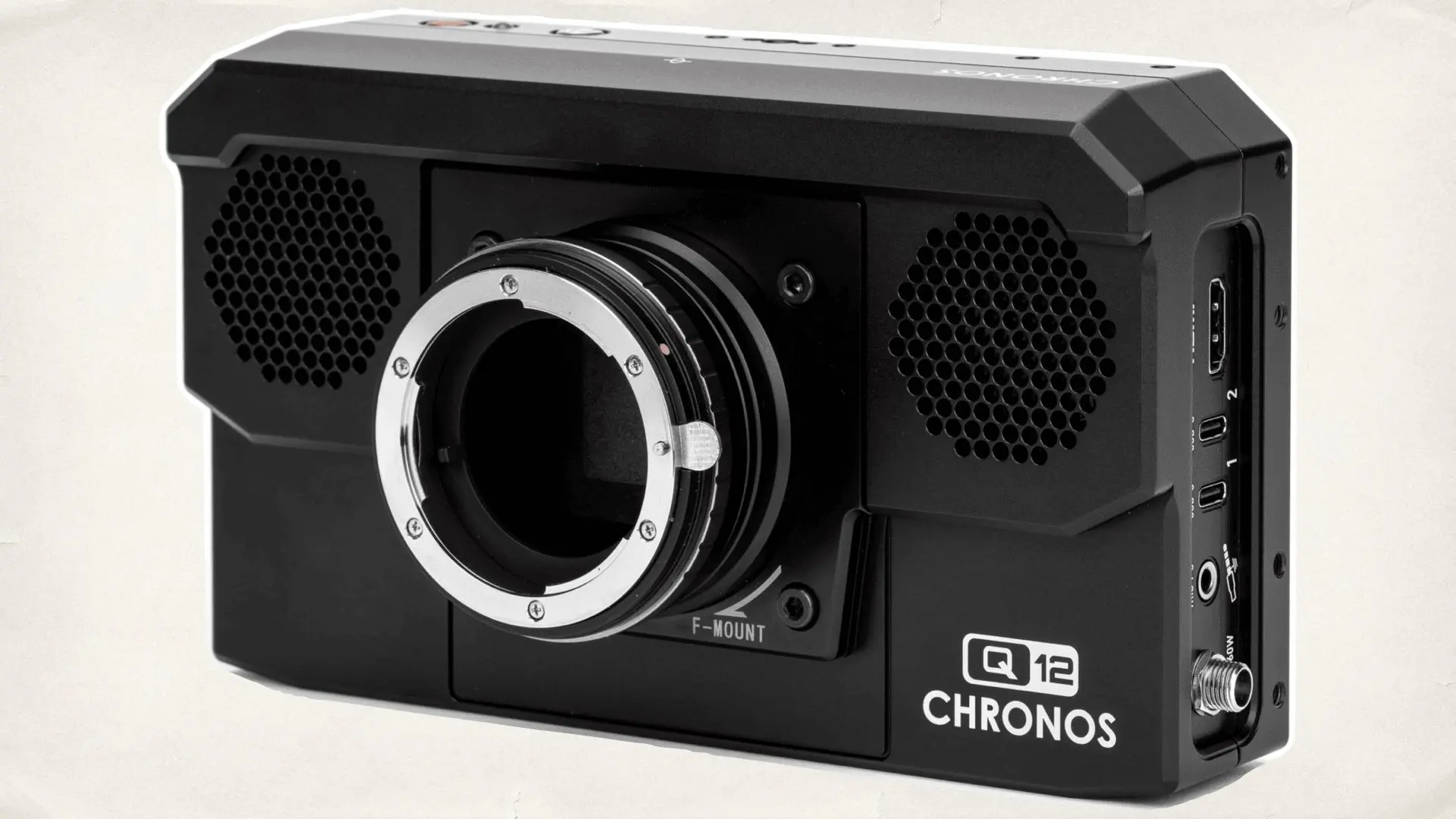
Kron Technologies has been working in this area for years. Back in 2019, we covered the Meet the Chronos 2.1-HD: An Affordable Ultra High-Speed (1000 FPS) Camera. That camera offered 1920 × 1080 at 1,000 FPS and cost around $5,000 at launch. It was an interesting alternative to much more expensive high-speed systems, particularly the Phantom cameras normally associated with professional ultra-high-speed cinematography. The Q12 shows how far Kron’s platform has progressed. At the same 1920 × 1080 resolution, the new camera reaches 5,148 FPS. In other words, Full HD capture is now more than five times faster than the Chronos 2.1-HD. Of course, the price has also increased substantially. The Q12 starts at $19,995 with 64GB of RAM, while the 128GB version costs $21,995.
Q12 vs. Freefly Wave
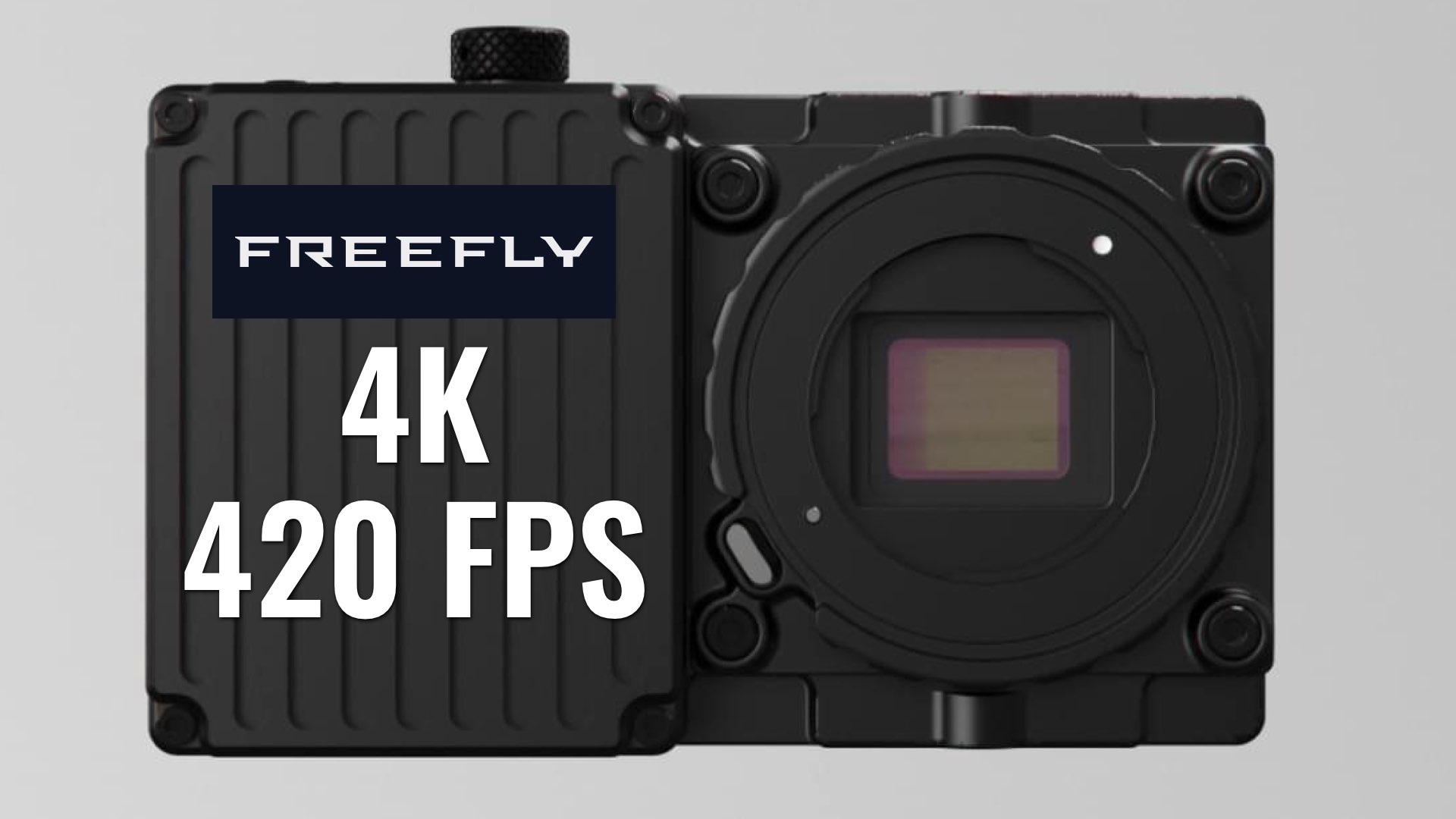
Another important camera in this category is the Freefly Wave. We followed its development in Freefly Wave: New Stock, Mac Player, and More Dynamic Range. Wave takes a somewhat different approach. Its Super 35 global-shutter sensor can record 4096 × 2176 at 422 FPS and 2048 × 1088 at 1,461 FPS. Wave can also reach 9,259 FPS when the image is cropped down to 2048 × 128. The major advantage is workflow. Wave records continuously to its internal 2TB SSD instead of relying on a short RAM buffer. Freefly currently lists Wave at $7,995, making it substantially less expensive than the Q12. So the difference is fairly simple: Wave gives you more resolution and continuous recording at lower frame rates. Q12 gives you significantly more frames per second. At around 2K, Wave reaches approximately 1,461 FPS, while Q12 goes well beyond 2,000 FPS at its native resolution and reaches more than 5,000 FPS at 1080p.
The real competitor: Freefly Ember
At roughly $20,000, the more direct comparison is Freefly Ember S5K. We previously examined the camera in Freefly Ember Compact high-Speed Camera: An Update. Ember S5K currently starts at $18,795, although commonly configured versions with a lens mount are around $19,500 to $20,000. That puts Ember and Q12 in essentially the same price category. But their specifications reveal two very different philosophies.
Freefly Ember S5K:
- 5K at 600 FPS
- 4K at 800 FPS
- Up to 936 FPS at 4K with newer firmware
- 2K cropped at 1,487 FPS
- Super 35 global-shutter sensor
- 10-bit Apple ProRes
- Continuous recording directly to SSD
Chronos Q12:
- 2560 × 2016 at 2,313 FPS
- 2560 × 1440 at 3,116 FPS
- 1920 × 1080 at 5,148 FPS
- APS-C global-shutter sensor
- 8-bit, 10-bit and 12-bit modes
- CinemaDNG RAW, TIFF RAW, H.264 and H.265
The choice between the two becomes easy to understand. Ember prioritizes resolution and filmmaking workflow. Q12 prioritizes frame rate. Ember can give you 5K slow motion at 600 FPS or 4K at around 800 FPS while continuously recording to SSD. The Q12 cannot shoot 4K at all, but at 1080p it reaches more than 5,000 FPS.

The Q12 uses a RAM buffer
There is another major difference. Unlike Ember and Wave, which can record continuously to SSD, the Q12 captures its high-speed footage into RAM first. The 64GB Q12 provides around 5.7 seconds of recording at maximum resolution, while the 128GB configuration extends this to approximately 11.5 seconds. After the event has been captured, the footage can then be saved to the camera’s built-in 1TB NVMe SSD. This is a traditional high-speed-camera workflow. It works very well when the event can be triggered or anticipated, but it is very different from using Ember, where the operator can simply start recording and keep shooting.
Multiple lens mounts
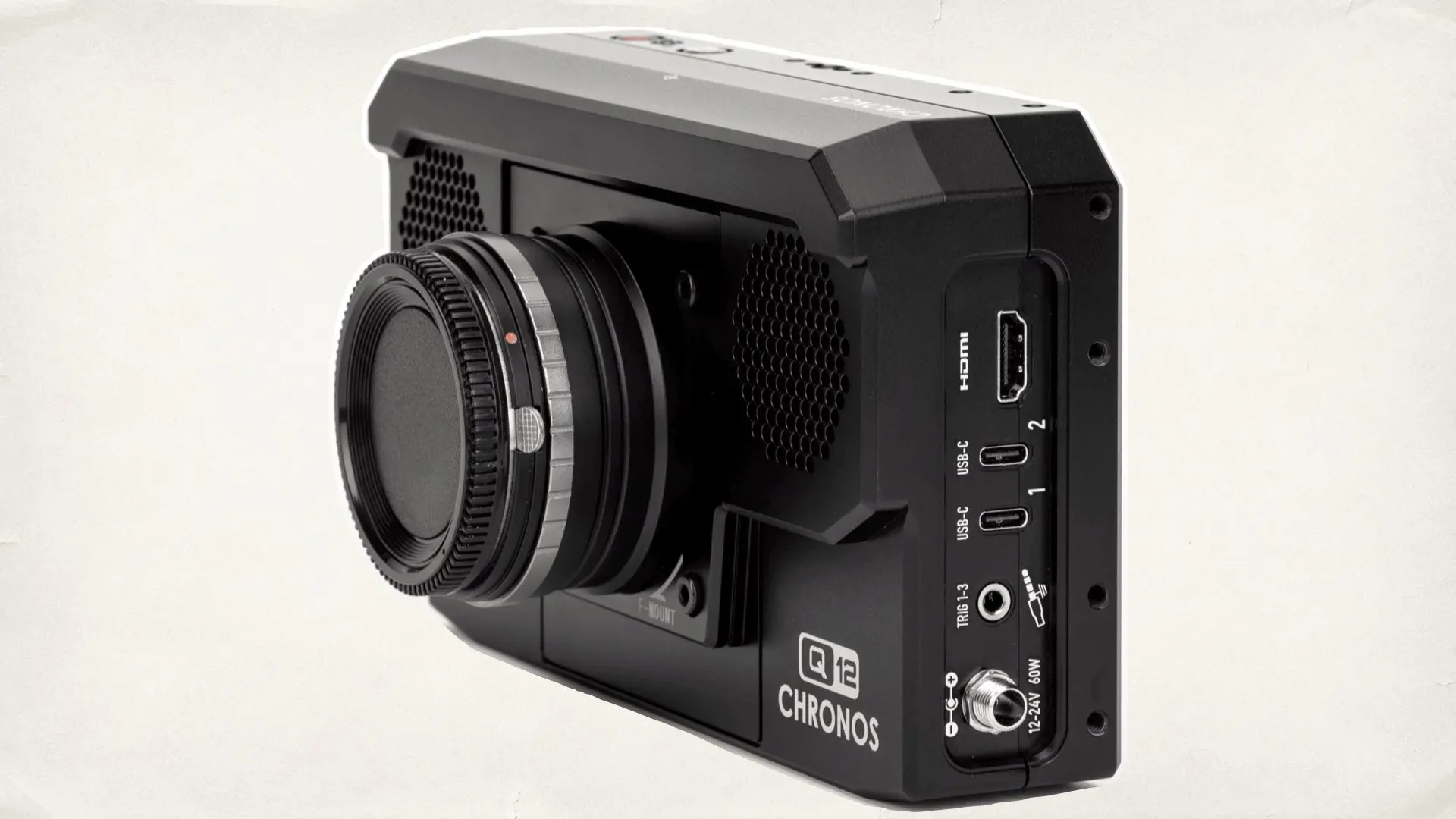
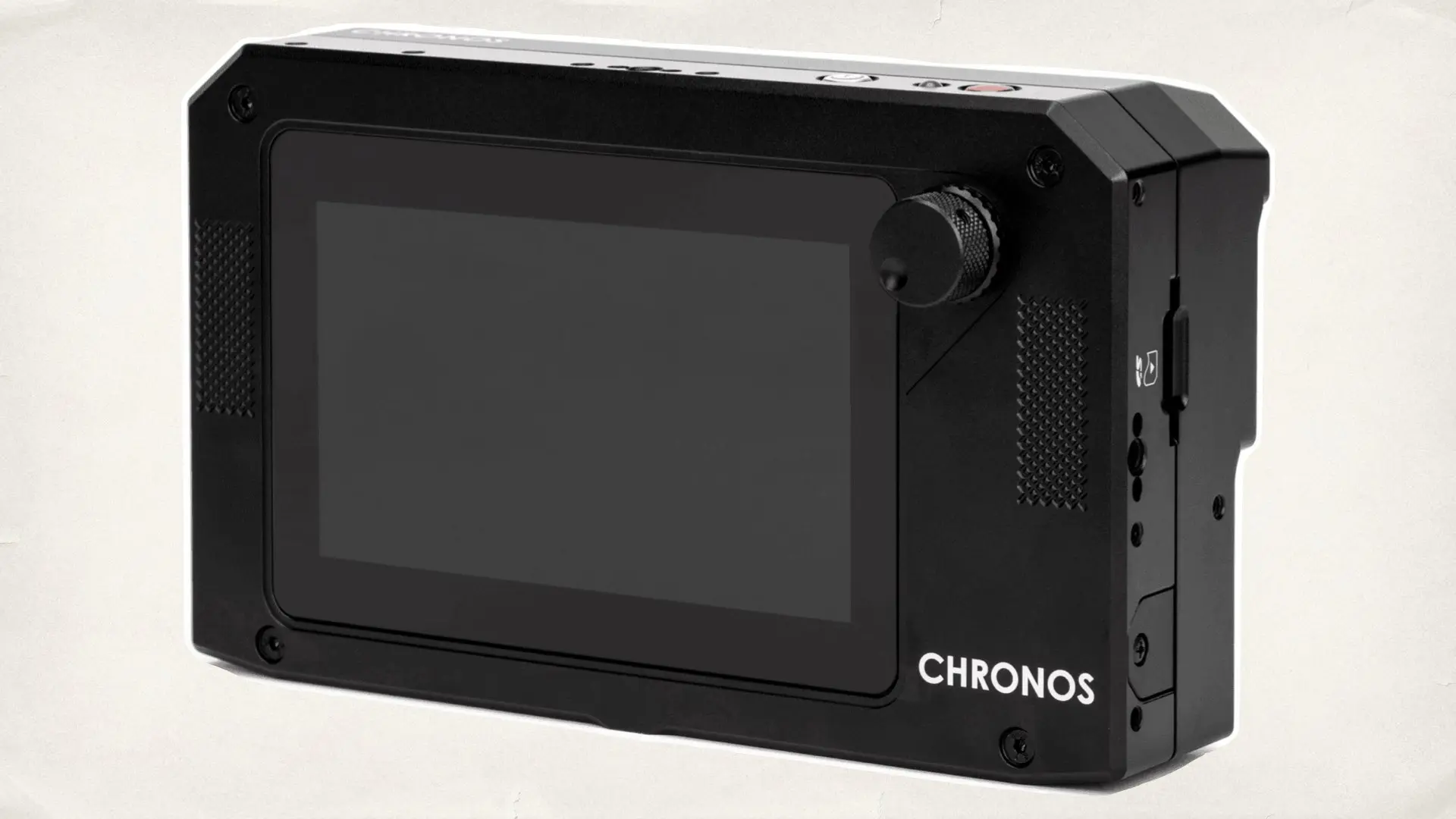
Kron is also offering considerable flexibility regarding lenses. The Q12 supports passive C, E, F, EF, Micro Four Thirds, and PL mounts. That makes it possible to use everything from scientific and industrial optics to conventional photography and cinema lenses. The camera itself weighs 1.32 kg without a lens and incorporates a 5-inch 1000-nit touchscreen.
Two different approaches to a $20,000 high-speed camera
The high-speed camera market has changed significantly since we first covered the Chronos 2.1-HD in 2019. Today, approximately $20,000 buys two very different kinds of high-speed camera. Freefly Ember S5K offers 5K at 600 FPS and 4K at around 800 FPS, together with ProRes and continuous SSD recording. It is clearly designed around a straightforward cinema-production workflow. The Chronos Q12 gives up that resolution in exchange for much more temporal resolution: 2,313 FPS at its full 2560 × 2016 resolution and an impressive 5,148 FPS at Full HD. That’s ultimately what makes the Q12 interesting. It is not trying to be a 4K cinema camera that can also shoot slow motion. It is a dedicated high-speed camera designed for situations where capturing substantially more frames is more important than capturing more pixels. For $19,995, 5,148 FPS at 1080p is the specification that defines it.