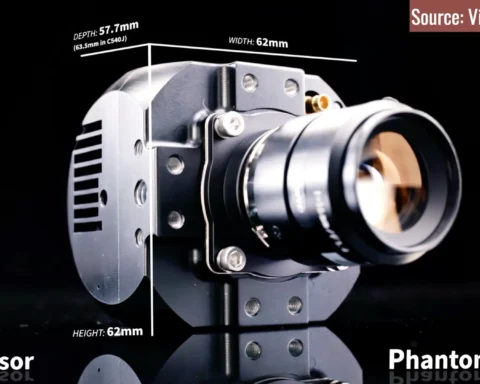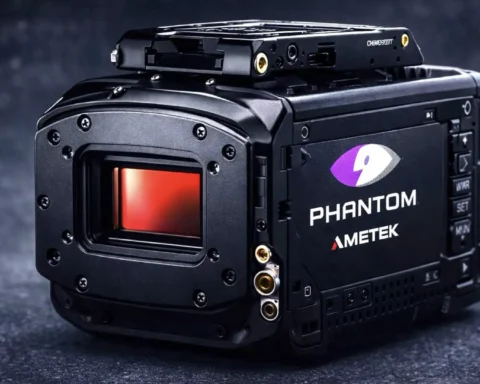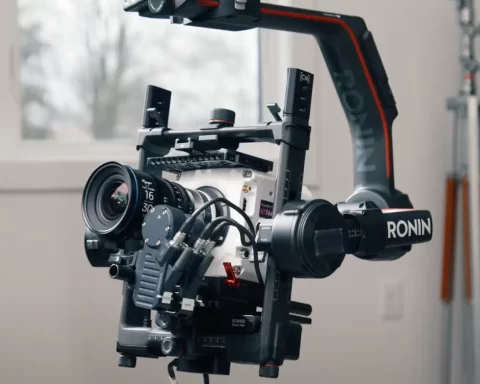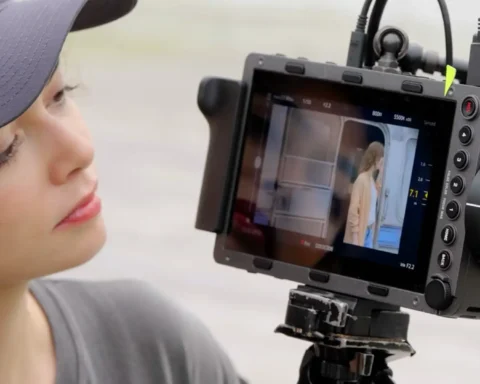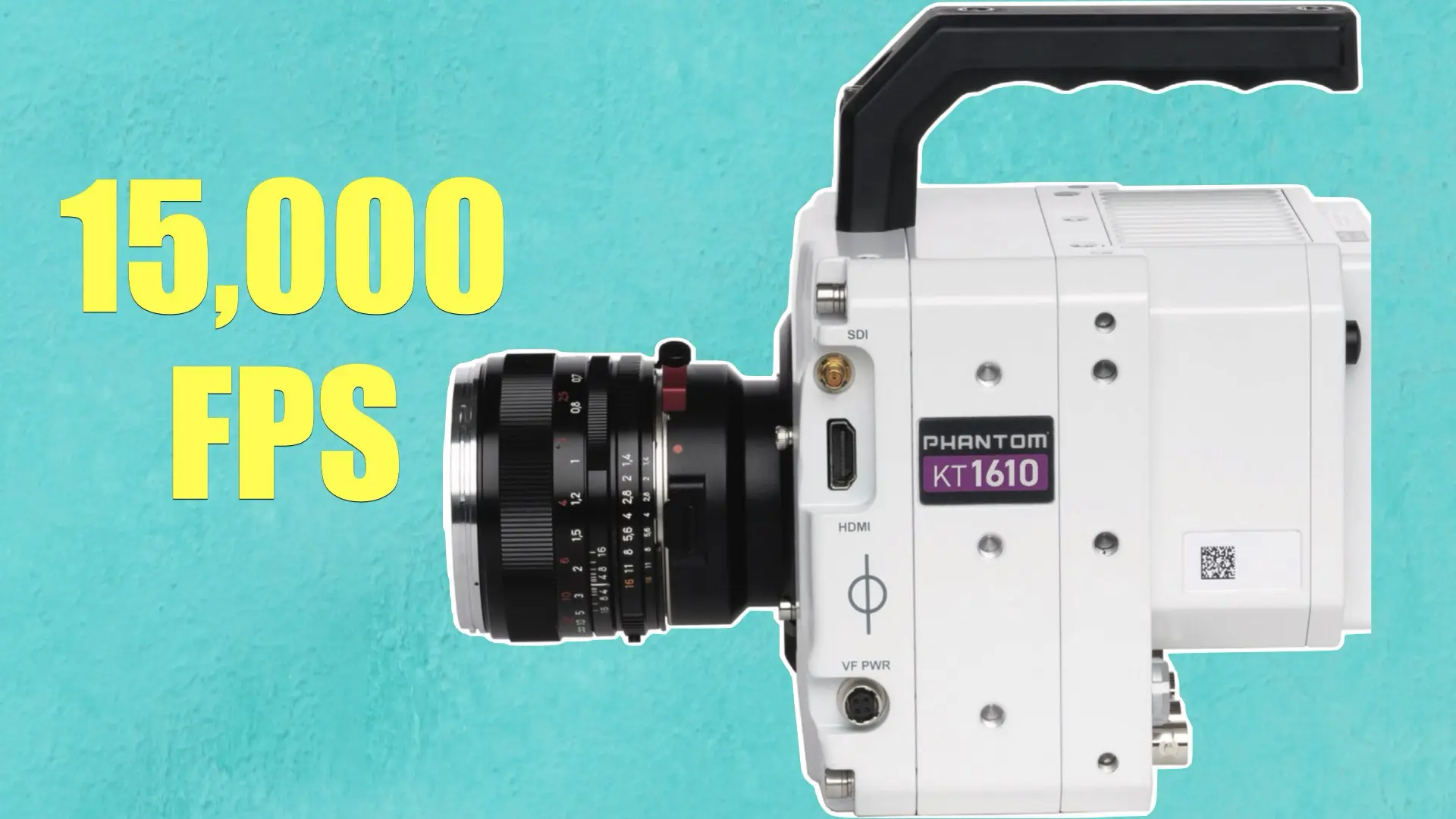
High-speed imaging has always been at the forefront of technological advancements, but the Phantom KT810 raises the bar to an entirely new level. Vision Research’s latest addition to the Phantom series offers something truly remarkable: HD at 15,000 frames per second (FPS). While its design may not be intended for traditional filmmaking, this camera is engineered for industrial applications, research, and scientific analysis, making it a game-changer for those looking to study high-speed phenomena with unprecedented clarity.

The Phantom KT810: Setting a New Standard for High-Speed Cameras
When Vision Research introduced the Phantom KT Series, it marked a significant shift in compact, ultra-high-speed imaging. The KT810 continues that legacy, built for applications like stress analysis, drop testing, and materials science research. For more on the development of the Phantom KT Series, check out our article “Vision Research Unveils the Phantom KT Series: Compact Ultra-High-Speed Action Cameras“. What makes the KT810 unique is its back-side illuminated (BSI) sensor, which delivers clear, precise images even in the most light-starved environments. This innovation, introduced in Phantom TMX cameras, allows for high-speed captures at 190 nanoseconds exposure time – perfect for observing phenomena that occur in the blink of an eye. For more on the groundbreaking technology behind Phantom’s sensors, see our article “Phantom TMX: The First Ultra-High-Speed Cameras with BSI Sensor”.

A Leap Forward for Industrial and Scientific Use
While ARRI has recently made headlines with their ALEXA 35 Xtreme high-speed camera (which you can read about in “ARRI ALEXA 35 Xtreme: A Step Forward in High-Speed Filmmaking“), the Phantom KT810 is not about cinematic beauty, but capturing incredibly fast movements for research and industrial applications. The KT810 can shoot up to 916,660 FPS, a speed that’s well beyond what standard cameras can achieve. Whether it’s testing materials under stress or capturing the physics of high-speed motions, this camera is built to serve the scientific community. The camera’s Extreme Dynamic Range (EDR) ensures images are captured clearly, even when exposed to intense flashes or bright lighting. This makes it ideal for drop testing, where extreme lighting contrasts often complicate imaging. Learn more about this advanced sensor in “This Is the Sensor of the New Phantom High-Speed TMX Cameras”.

Ultra-High-Speed Cameras: Not Just for Filmmaking
While the Phantom 65 set a precedent as the world’s first 65mm digital cinema camera, the KT810 operates in an entirely different realm. The Phantom 65 was designed for high-end cinema production, but the KT810’s core focus is on precision, speed, and data accuracy rather than artistic film composition. In our article “A Tribute to the Phantom 65: World’s First 65mm Digital Cinema Camera”, we explore the historical significance of the Phantom 65, showcasing the evolution of the Phantom cameras over time.

The Evolution of High-Speed Filming: Beyond 1,000 FPS
The Phantom KT810 fits neatly into a legacy of continuous innovation in high-speed capture. From its earlier models, like the Phantom TMX, which broke new ground in 4K ultra-high-speed imaging, to the KT810’s extreme frame rates, the Phantom series has been at the forefront of advancing the boundaries of high-speed imaging. If you’re curious about practical tips for shooting ultra-high-speed footage, check out our article “Shooting Ultra High-Speed: 1000 FPS and Beyond – Tips & Tricks”. This guide offers a wealth of information on how filmmakers and researchers alike can maximize the potential of these high-tech cameras.

Why the Phantom KT810 Matters
For industries involved in material science, automotive testing, and aerospace engineering, the Phantom KT810 is a breakthrough in data capture. Its ability to shoot HD at 15,000 FPS and over 900,000 FPS in specialized modes allows for a level of detail previously unattainable by traditional high-speed cameras. It’s about capturing real-world events that happen too quickly for the human eye to follow. The KT810’s ability to capture high-speed phenomena with exceptional image quality makes it invaluable for research and development in areas like stress and strain analysis and DIC (Digital Image Correlation). It helps engineers and researchers study the smallest details of materials and processes with speed and accuracy, offering them a tool that can illuminate areas that would otherwise be impossible to analyze. Check out its test footage below here and here!
Final Thoughts
The Phantom KT810 is a perfect example of how technology continues to evolve to meet the needs of industries far beyond filmmaking. Its high-speed capabilities provide a unique tool for scientific research, industrial applications, and materials testing, offering precision that opens doors to new possibilities in fields like physics, engineering, and biology. As the world of high-speed imaging continues to advance, we’re likely to see even more breakthroughs that shape the way we study fast phenomena.