

Nikon surprised the industry with the ZR, the first entry in its new Z Cinema line. That compact 6K RAW camera introduced a new workflow with RED’s R3D NE codec, dual base ISO, and even 32-bit float audio. Yet the ZR is just the beginning. Nikon has confirmed that dedicated Nikkor Z Cinema lenses are under development. What might that lineup look like and how soon will filmmakers see it?
Nikon’s official direction
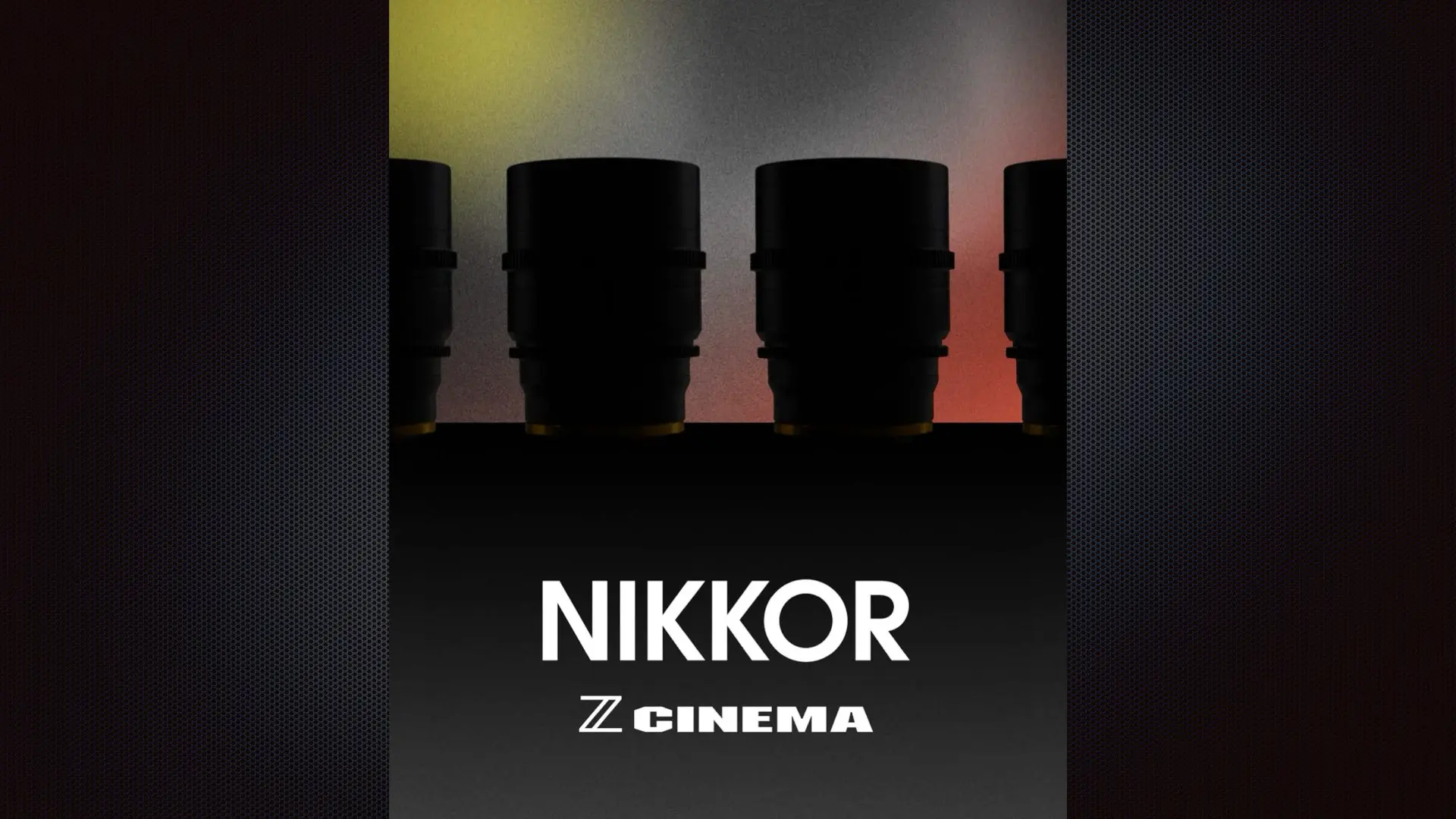
The ZR arrived with specs that clearly target filmmakers. It weighs just over 600 g, records internal 6K RAW, and integrates Nokia’s OZO audio. Nikon also teased new Z Cinema lenses, promising geared focus rings, T-stop markings, and consistent build for professional use. Early images show 0.8 MOD gears, hinting at true cine mechanics. Check out the teaser below:
Why lenses matter for the Z Cinema push
Right now the closest option is the Nikkor Z 28–135mm f/4 PZ ($2,596.95 on Amazon) , a hybrid power-zoom lens. It covers documentary and event work but lacks cinema-specific features. To truly compete, Nikon must deliver primes and zooms that match the ZR’s RAW output and satisfy rental houses, independent filmmakers, and commercial crews. Nikon’s recent moves show that the Z Cinema initiative is part of a broader race to reclaim territory in the cinema and video-production world. Several YMCinema articles illuminate how Nikon has been building momentum, responding to competitors, and positioning itself carefully.
-
In Cine Nikkor Lenses Revived, YMCinema noted that Nikon had quietly revived interest in cinema-grade glass even before the ZR was revealed. Early patents and R&D suggested a push for true cine optics rather than reworked still lenses.
-
Nikon ZR ($2,196.95 on Amazon) Amazon Best Seller highlighted how the ZR quickly climbed into top Amazon sales rankings, proving strong demand for Nikon’s cinema-ready approach.
-
In Nikon ZR, Canon C50, Sony FX3/FX2 Readout Speed, the ZR’s fast sensor pipeline and RED codec integration were compared directly against key rivals, emphasizing Nikon’s competitive pace in workflow speed.
-
Nikon ZR: RED Future Of Cinema examined Nikon’s collaboration with RED, signaling that the Z Cinema line is meant to compete not only with hybrid shooters but also within professional cinema workflows.
-
Finally, Nikon In The Cinema World explored Nikon’s long history with motion-picture glass and its renewed determination to re-establish itself in cinema, setting the stage for the ZR and dedicated cine lenses.

Historical context: Cine-Nikkor heritage
Nikon is not entering cinema optics from scratch. The company produced Cine-Nikkor lenses in the 1960s through the 1980s, compact optics designed for 8mm and 16mm film cameras. These lenses were widely used on Bolex and other small-format systems, valued for their sharpness and reliability. Nikon eventually shifted its focus entirely toward still photography, leaving cinema-specific glass behind. That is why the Cine Nikkor Lenses Revived article resonated strongly; it reminded filmmakers that Nikon has a dormant but authentic cine lineage. The new Z Cinema lenses are less a beginning than a return, aiming to reconnect Nikon with its own motion-picture roots. Together, these articles show that Nikon has been quietly preparing, studying gaps in the market, and positioning itself for a serious return to cinema. The new Nikkor Z Cinema lenses will be judged not only by optical performance but also by how seamlessly they integrate into workflows dominated by RED, ARRI, Canon, and Sony.

A speculative Z Cinema kit
Here is a realistic speculative roadmap of what Nikon could release over the next 12–24 months. These lenses reflect common cinema sets, Nikon’s public statements, and industry expectations.
-
24mm T1.9 (wide prime) — 850–950 g, $1,999–2,499, complements 28–135 PZ, wide coverage
-
35mm T1.9 (standard prime) — 900–1,000 g, $2,199–2,699, core doc and narrative focal length
-
50mm T1.5 (fast normal prime) — 1.0–1.2 kg, $2,499–2,999, flagship look lens, likely first announced
-
85mm T1.5 (portrait prime) — 1.1–1.3 kg, $2,799–3,299, perfect for interviews and low-light
-
135mm T2.2 (tele prime) — 1.2–1.5 kg, $2,999–3,499, long reach for narrative and fashion
-
20–55mm T2.9 (wide cine zoom) — 1.7–2.1 kg, $3,999–5,499, compact zoom for handheld and gimbal
-
50–125mm T2.9 (mid cine zoom) — 1.9–2.3 kg, $4,999–6,499, covers mid-range to short tele work
-
28–135mm T4 PZ (hybrid bridge zoom) — 1.2 kg, $1,299–1,599, possible cine-styled variant of existing PZ
Rollout timing
-
Next 6–9 months: first primes, likely 35mm and 85mm, with an early cine zoom teaser
-
9–18 months: 24mm, 50mm, and one of the cine zooms
-
18–24 months: 135mm prime and the second zoom
Pricing matrix snapshot
-
Two-prime starter — 35mm + 85mm, $5,000–6,000, solo shooters and indie film
-
Three-prime core — 35mm + 50mm + 85mm, $7,000–8,500, commercial and doc crews
-
Full prime five — 24mm + 35mm + 50mm + 85mm + 135mm, $12,000–15,000, narrative and rental houses
-
Two-zoom cine kit — 20–55mm + 50–125mm, $9,000–12,000, documentary and corporate productions
-
Bridge hybrid — 28–135mm PZ, ~$1,500, entry-level run-and-gun solution

Takeaway
The ZR camera is real, and dedicated cinema lenses are in development. The only questions now are which focal lengths will arrive first and how aggressively Nikon will price them. If the company delivers a consistent set of T-stop primes and zooms, it could finally carve out a space alongside Canon, Sony, and RED in professional cinema workflows.
As an Amazon Associate, Y.M.Cinema earns from qualifying purchases. If you purchase through the Amazon links above, Y.M.Cinema may earn a small commission at no additional cost to you. This helps support our work.

Gear mentioned in this article
Available on Amazon
| Product | New | Renewed | Used |
|---|---|---|---|
| Nikon ZR | $2,196.95 | — | — |
| NIKKOR Power Zoom 28-135 | $2,596.95 | — | From $2,189.99 |
Prices checked: Oct 7, 2026, 1:31 PM GMT+0000
As an Amazon Associate, Y.M.Cinema earns from qualifying purchases. If you buy through our links, we may earn a small commission at no extra cost to you.
Product prices and availability are accurate as of the date/time indicated and are subject to change. Any price and availability information displayed on Amazon.com at the time of purchase will apply to the purchase of this product.
CERTAIN CONTENT THAT APPEARS ON THIS SITE COMES FROM AMAZON. THIS CONTENT IS PROVIDED “AS IS” AND IS SUBJECT TO CHANGE OR REMOVAL AT ANY TIME.


![Nikon Is Developing Nine NIKKOR Z CINEMA T1.9 VV Lenses for RED V RAPTOR [X]](https://ymcinema.com/wp-content/uploads/2026/09/Nikon-Is-Developing-Nine-NIKKOR-Z-CINEMA-T1.9-VV-Lenses-for-RED-V-RAPTOR-X.001-480x384.webp)








I owned a couple of the Nikkor Large Format lenses in the 1980’s, a 90mm ƒ4.5 and a 210mm ƒ5.6.
Sharpest lenses in the industry for LF at the time, so I would expect that Nikon would pursue the same qualities in their Cine lenses: sharpness exceeding industry norms, with excellent contrast and color.
Makes me think it would be a reasonable investment for any cinematographer.
Nikon’s track record with optics like the LF 90mm f/4.5 and 210mm f/5.6 proves they’ve always prioritized sharpness and contrast. If they bring the same DNA into the Z Cinema line, we could see lenses that rival or even surpass today’s cine standards. n It will be interesting to see whether Nikon leans into that “beyond-industry-norm” sharpness, or if they aim for a more cinematic rendering to match RED workflows. Either way, it definitely feels like a serious investment direction for cinematographers.
If they don’t make lenses that take advantage of the Z mount’s short flange and give us some ultra compact super speeds, (think Thypoch Simera-C but better) they’re gonna miss out big time.