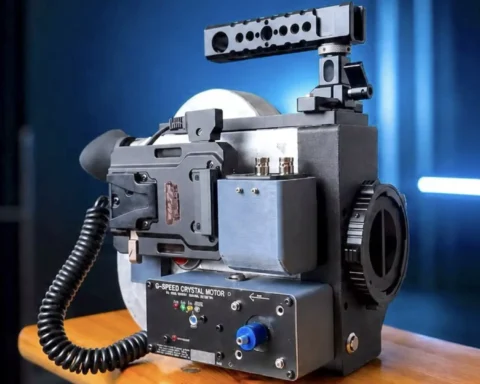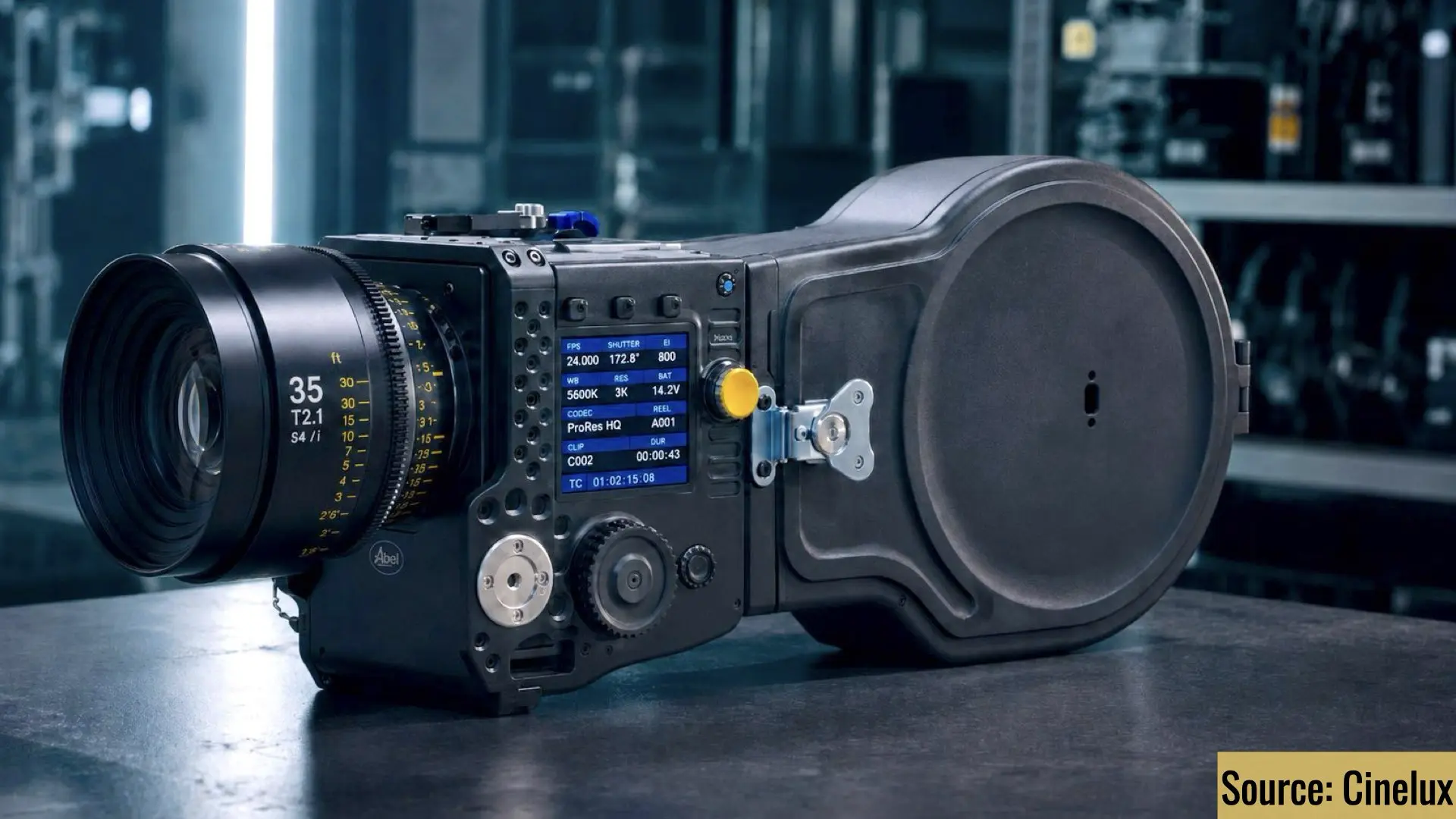
Cinelux SIXTEEN is one of the more interesting film camera concepts we have seen in years because it attacks the exact weakness that keeps 16mm film away from many modern productions. The camera is designed to expose real Super 16 film through the gate while simultaneously capturing a separate digital image from the mirror path. In plain English, this means the negative remains real film, while the production gets a digital feed, digital proxy, and modern monitoring pipeline at the same time.
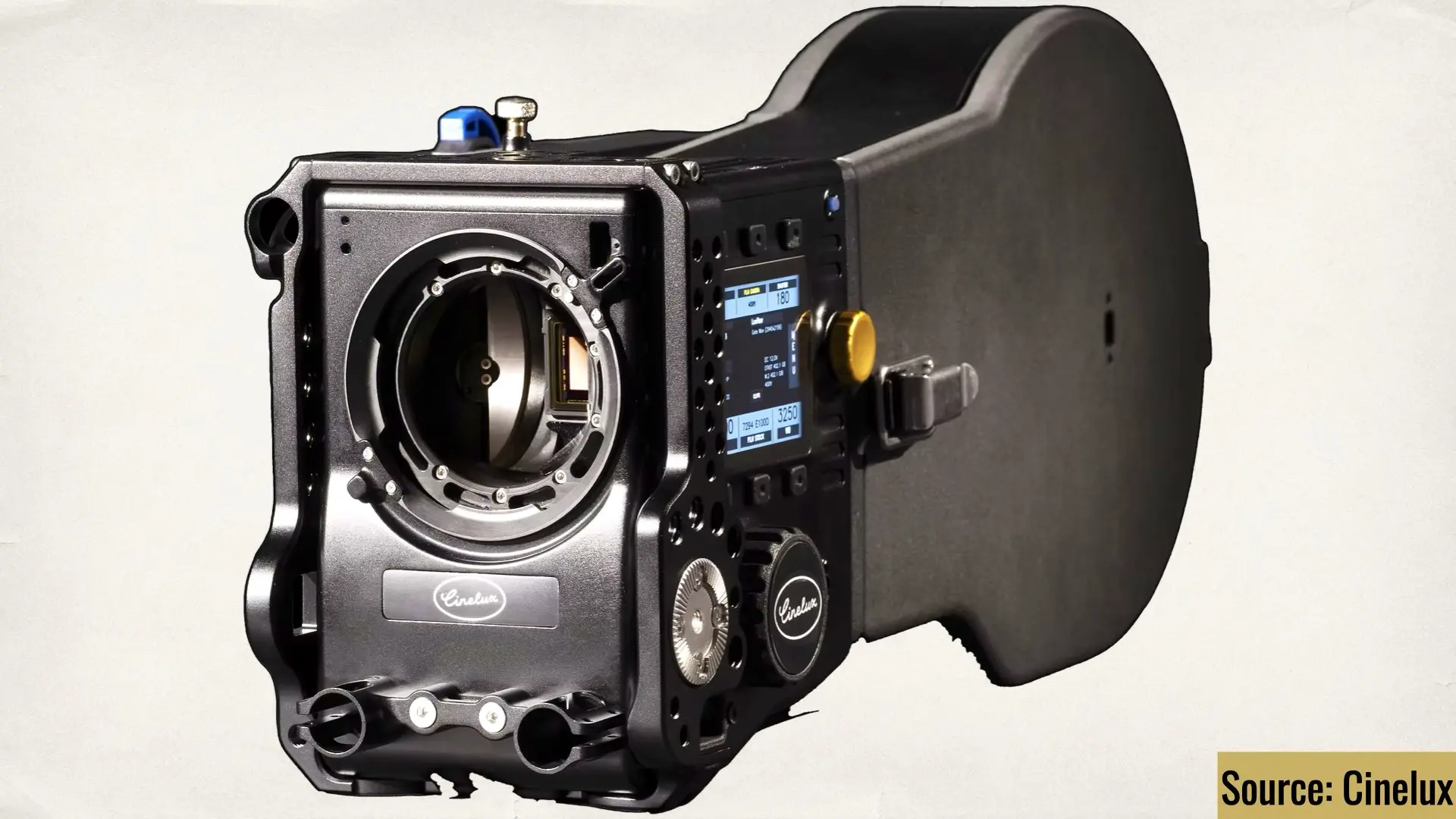
What is the Cinelux SIXTEEN?
Cinelux describes the SIXTEEN as a hybrid film camera system and a prototype of a new film camera platform for modern production workflows. The company frames it as part of an “analog cinema re evolution,” which is an ambitious way of saying that film has returned culturally, while the hardware around it has largely remained frozen in an older era. The core technical idea is direct and clever. During 1 shutter revolution, the camera creates 2 exposures. One exposure goes through the gate onto a frame of film. The other goes onto a digital cinema sensor. The result is a camera that can produce a real film negative while also giving the crew a digital image pipeline on set and in post. That solves a practical problem. Shooting film today can still be beautiful, prestigious, and creatively powerful, yet it can slow down the production process. Modern crews expect reliable monitoring, fast editorial turnover, immediate reference images, metadata, timecode, and a digital path that can move quickly through the chain. Traditional film cameras were never designed around those expectations. Cinelux SIXTEEN tries to close that gap without replacing the film negative. That is why the product is interesting.
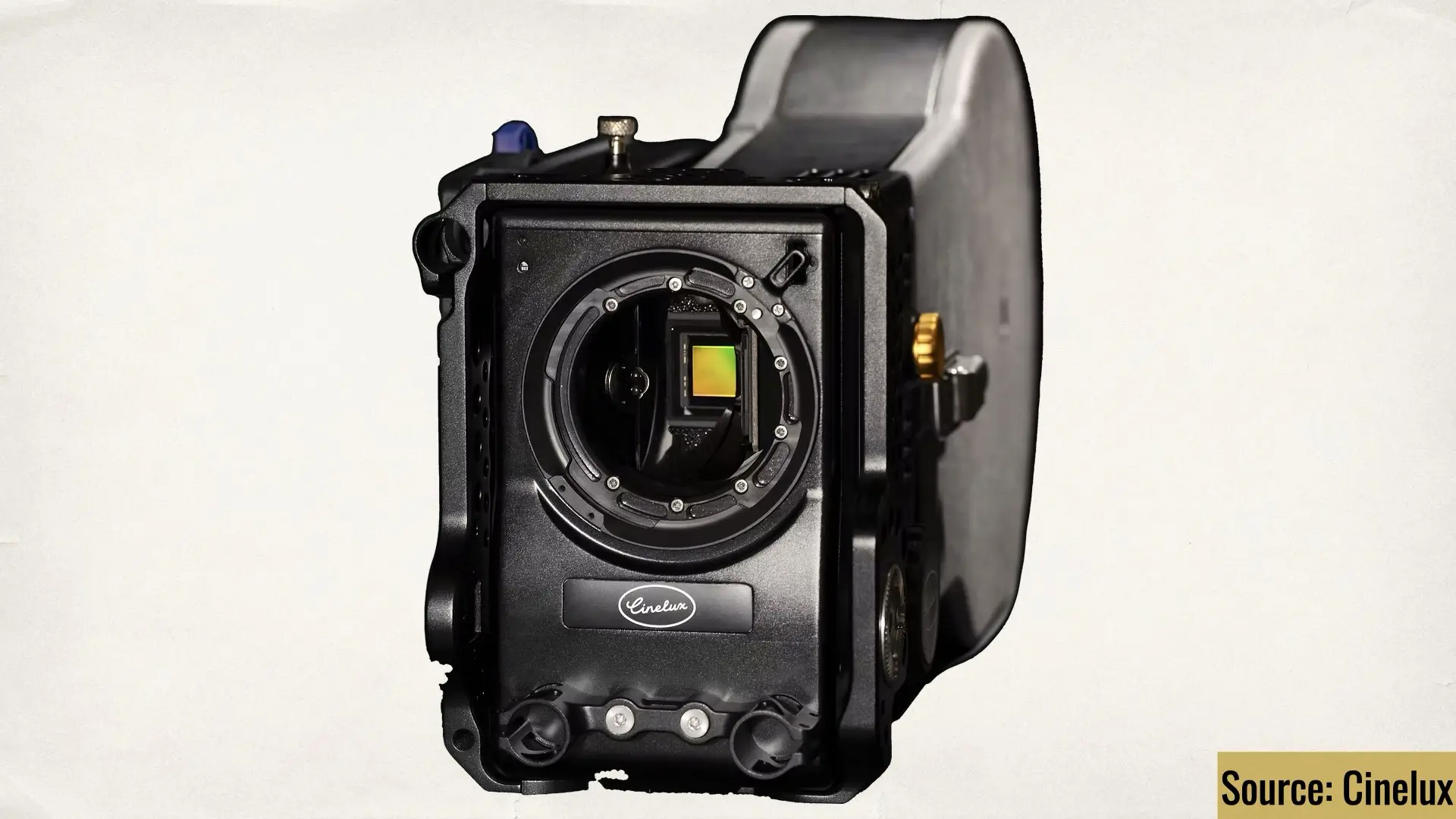
Cinelux SIXTEEN is exactly the kind of product that deserves attention because it does not treat analog and digital as enemies. It treats them as different parts of the same production chain. That is a mature idea.
The core facts explained
According to Cinelux, the SIXTEEN is designed to shoot film and digital simultaneously. The company says the direct impact is a film output with a true digital pipeline, both on set and in post. The digital image is also intended to provide a more accurate way to view and expose film while shooting. Cinelux also discusses live film emulation. The goal is to make the digital feed behave as close as possible to the developed film scan. That includes the way shadows, clipped highlights, dynamic range, and color respond on film. In production language, this means the digital image should become more than a generic video tap. It should help cinematographers judge exposure and image behavior in relation to the final film scan. The prototype specs are notable. Cinelux lists a 13.35 mm by 7.42 mm open gate film size, 3K digital image resolution, and a digital imager frame size matching that same 13.35 mm by 7.42 mm area. The prototype is listed with 48 fps at 3K and 90 fps at 2K for digital capture, with film running up to 90 fps. The projected production model raises film frame rate to 120 fps and digital frame rate to 120 fps plus. The camera also lists 4 SDI outputs, USB-C, WiFi, Bluetooth, Ethernet, timecode sync, internal mic, touchscreen camera control with physical buttons, 0 to 360 degree shutter speed or angle, and recording codecs including Cinelux RAW, CinemaDNG, ProRes 444 HQ, and H.265. The projected production version adds timecode genlock sync, sound sync, 400 ft and 1000 ft mags, preset special effects, ramping, time shift, shutter blur, and real-time film stock emulation. Those are serious workflow claims for a Super 16 film camera, even if the product is still in prototype form.
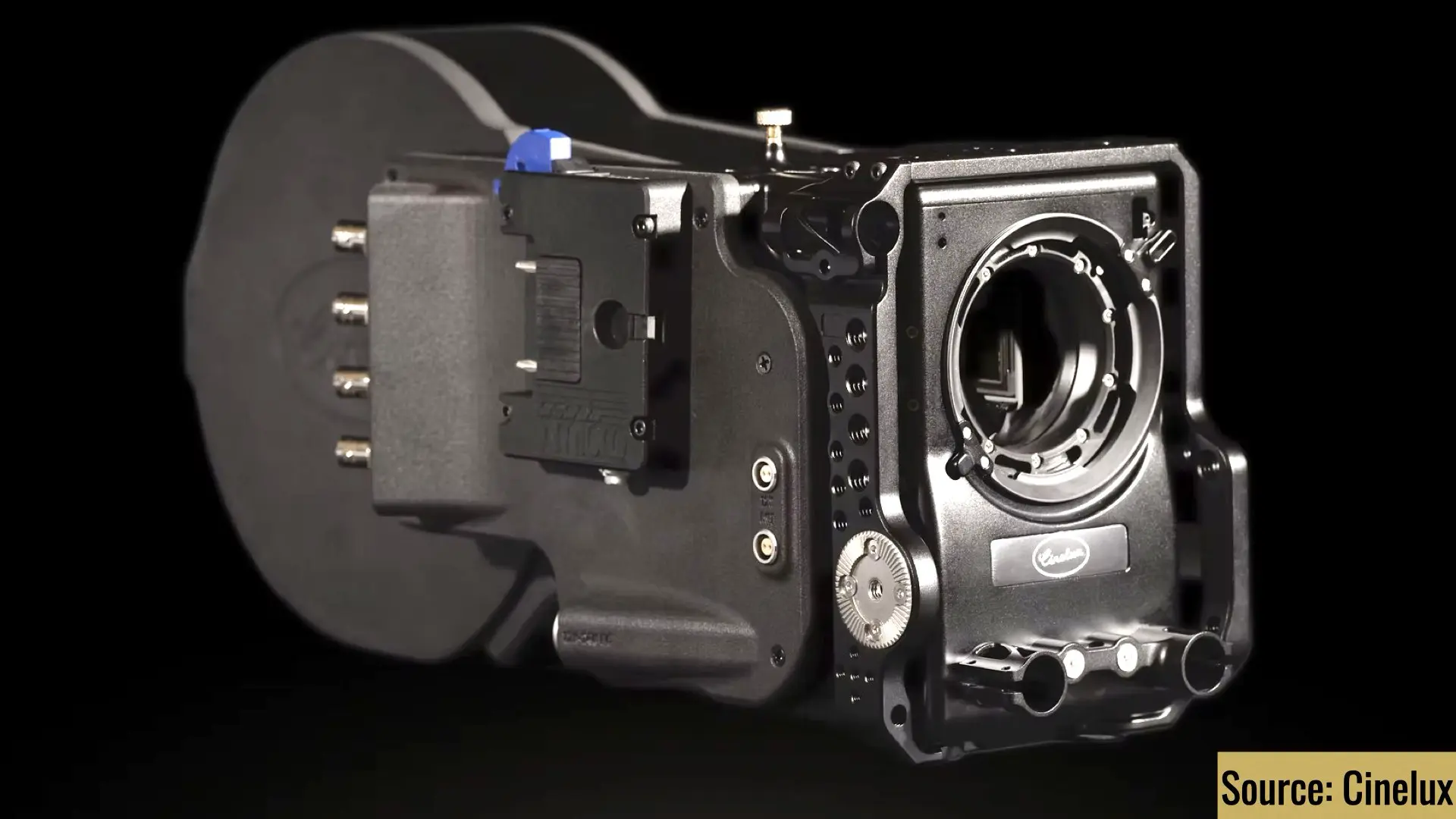
What this means in plain English
For a cinematographer, the appeal is simple. You can shoot real film while giving the set a digital image that is useful immediately. For a director, that means a more familiar monitoring experience. For a producer, it means reduced anxiety around film capture. For an editor, it means faster access to material that can function as proxy or reference. For camera departments, it means a film camera that speaks more of the language of modern digital cinema systems. This does not make film cheaper by itself. Stock, processing, scanning, lab logistics, and camera support still matter. Yet it can make film more practical. That may be the biggest value of the SIXTEEN concept. The camera is not trying to make Super 16 look digital. It is trying to make Super 16 work better inside digital production culture. That is a very different proposition from film emulation LUTs, grain overlays, or plugins. Those tools imitate the surface characteristics of film. Cinelux SIXTEEN starts with real film capture, then builds a digital pipeline around it. The negative is still the source of truth.
Cinelux SIXTEEN vs ARRI 416 context
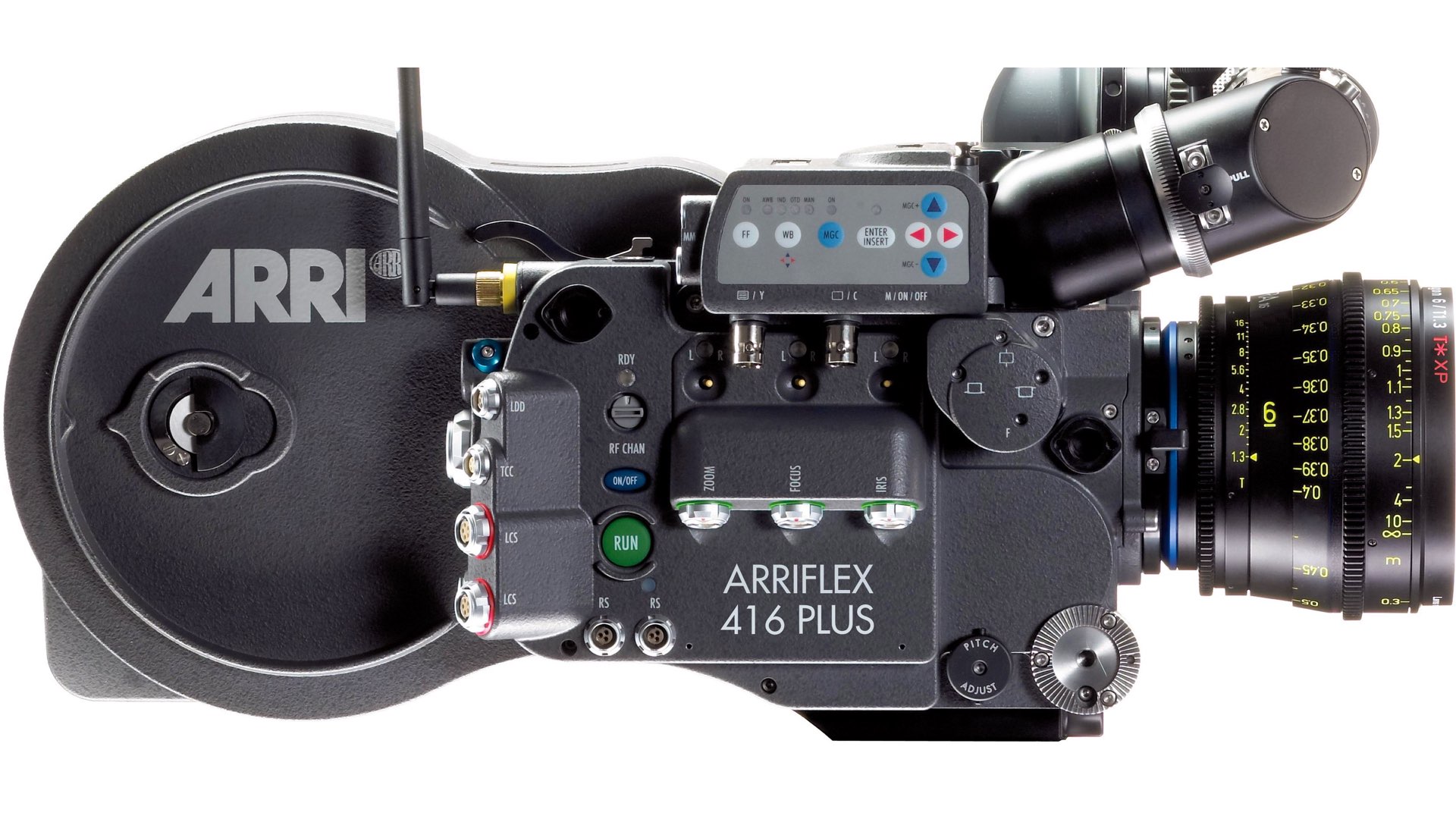
The ARRI 416 remains one of the great reference points for modern Super 16 production. It is compact, refined, respected, and closely associated with high-end 16mm work. That is why Cinelux positioning the SIXTEEN below the price of a used 416 is meaningful. ARRI 416 is a proven cinema camera. Cinelux SIXTEEN is a prototype with projected production specs. The 416 has history, rental infrastructure, trust, and a known image making ecosystem. Cinelux has a new idea, a modern workflow pitch, and the possibility of lower access cost. A serious film camera lives or dies by mechanical reliability, registration stability, noise level, serviceability, lens mount options, magazine performance, sync accuracy, real-world ergonomics, and long-term support. The hybrid digital side adds more questions: latency, image quality, color accuracy, sensor behavior, codec implementation, storage, heat, monitoring stability, and how close the digital feed can truly get to a developed scan.
Why the mirror path idea is smart
The mirror path concept is the clever part. Film cameras already use a rotating mirror shutter system for optical viewing. Cinelux appears to be using that logic as part of a hybrid capture architecture. The film receives its exposure through the gate. The digital sensor receives a separate image from the mirror path. This avoids the basic problem of simply attaching a video tap and calling it a modern digital workflow. A video tap can help with framing, but it rarely becomes a serious image pipeline. Cinelux is aiming higher. The company wants the digital output to become a usable exposure reference, live film emulation tool, producer confidence tool, and editorial asset. If the digital image is accurate enough, that can change how Super 16 is used on set. Crews would be able to maintain a film-first approach without forcing every department to operate blind until scans arrive. That is especially valuable for smaller productions, commercials, music videos, and creator-driven projects where film is desired, but delay and uncertainty can be hard to justify.
Our two cents
Cinelux SIXTEEN is exactly the kind of product that deserves attention because it does not treat analog and digital as enemies. It treats them as different parts of the same production chain. That is a mature idea. The strongest part of the concept is the workflow logic. Real film capture remains the creative foundation. Digital capture supports the production around it. This fits the way many filmmakers actually think today. They want the texture and discipline of film, yet they also want practical monitoring, fast editorial movement, and a production experience that does not feel like stepping back 25 years. The weak point, for now, is that everything depends on execution. A film camera cannot survive on concept alone. Registration, movement, transport, magazine design, shutter precision, sound sync, durability, heat management, service, and post integration will determine whether SIXTEEN becomes a real tool or a beautiful prototype. Still, the idea is strong. If Cinelux can deliver a reliable camera at a price genuinely below used ARRI 416 territory, it may open Super 16 to more filmmakers who currently admire film from a distance. That would be good for cinematography. It would also prove that analog cinema still has room for new engineering.