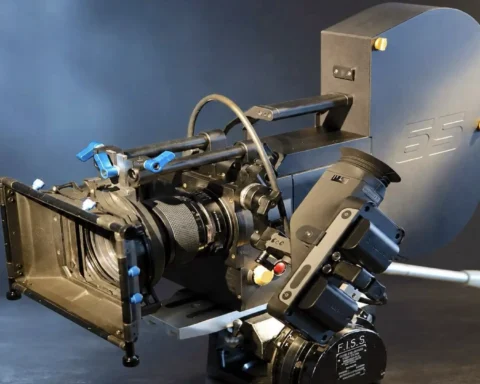
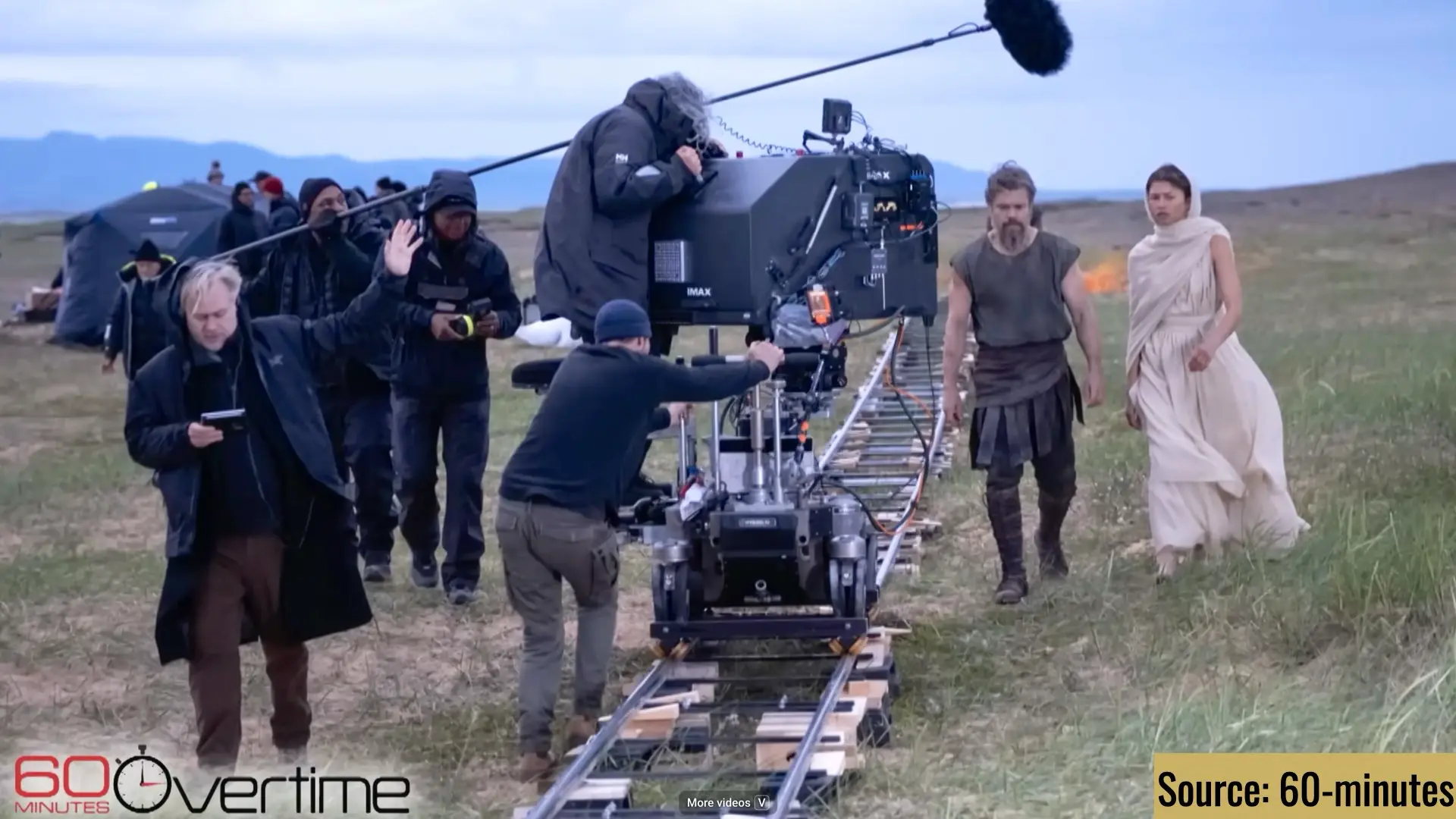
Rare behind-the-scenes photos from the production of The Odyssey show Christopher Nolan and cinematographer Hoyte van Hoytema shooting with one of the most unusual IMAX rigs ever built. It is massive, black, industrial, and almost absurd in scale. According to the 60 Minutes interview with Nolan, this soundproof IMAX enclosure was engineered specifically to solve one of the biggest limitations of IMAX film cameras: noise. The result is what crew members described as a coffin-sized soundproof housing weighing more than 300 lb, built so Nolan could shoot intimate dialogue scenes on full IMAX film.
The rare photos show the real scale of the IMAX enclosure
The 2 rare production photos are the core of the story. In 1 image, Nolan appears to be working directly with the huge soundproof IMAX enclosure on an interior set. The frame shows the enormous black housing surrounded by crew, with Nolan positioned close to the optical path of the rig. The setup looks more like a piece of heavy industrial machinery than a traditional motion picture camera. In the second image, Hoyte van Hoytema is seen shooting with the same kind of enclosure, revealing the boxy form, the cable routing, the external accessories, and the physical awkwardness of operating such a large system. Nolan’s The Odyssey has been described as the first feature film shot entirely with IMAX film, which already makes it a historic production. However, these photos show what that claim actually required on set. This was not a normal IMAX camera placed on a normal dolly. It was a custom-built soundproof system designed to make full IMAX dialogue recording possible.
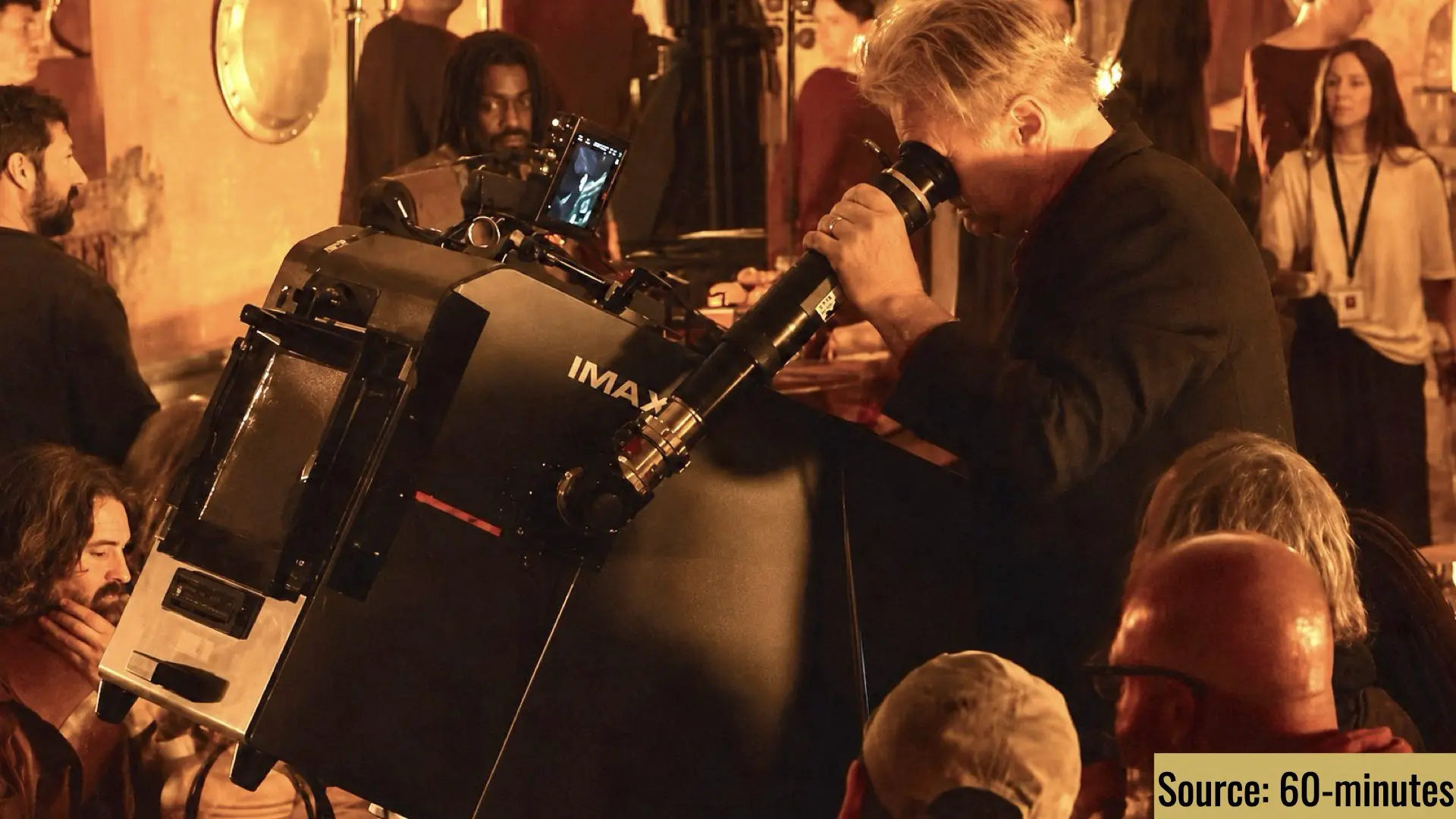
Why IMAX needed a soundproof coffin
IMAX film cameras are famous for their image quality, but they are also famously loud. In the 60 Minutes interview, the sound of the camera is described in extreme terms because the heavy mechanical movement required to pull large format film through the gate creates substantial noise. Nolan explained that intimate scenes would have been impossible to shoot on IMAX before this new enclosure, because the camera was simply too loud for usable production audio. That is the key technical breakthrough here. The enclosure was built for dialogue, performance, and proximity. In other words, it allowed Nolan to treat IMAX as a dramatic format, rather than a format reserved mainly for large action scenes, landscapes, aerials, and set pieces. The enclosure was huge and cumbersome. The interview states that the device weighed more than 300 lb and required special steel plating on dollies to support it. That detail explains why the photos look so unusual. This was not a simple blimp around a camera. It was a heavy soundproof chamber wrapped around one of the loudest, largest, and most demanding motion picture cameras still in active use.
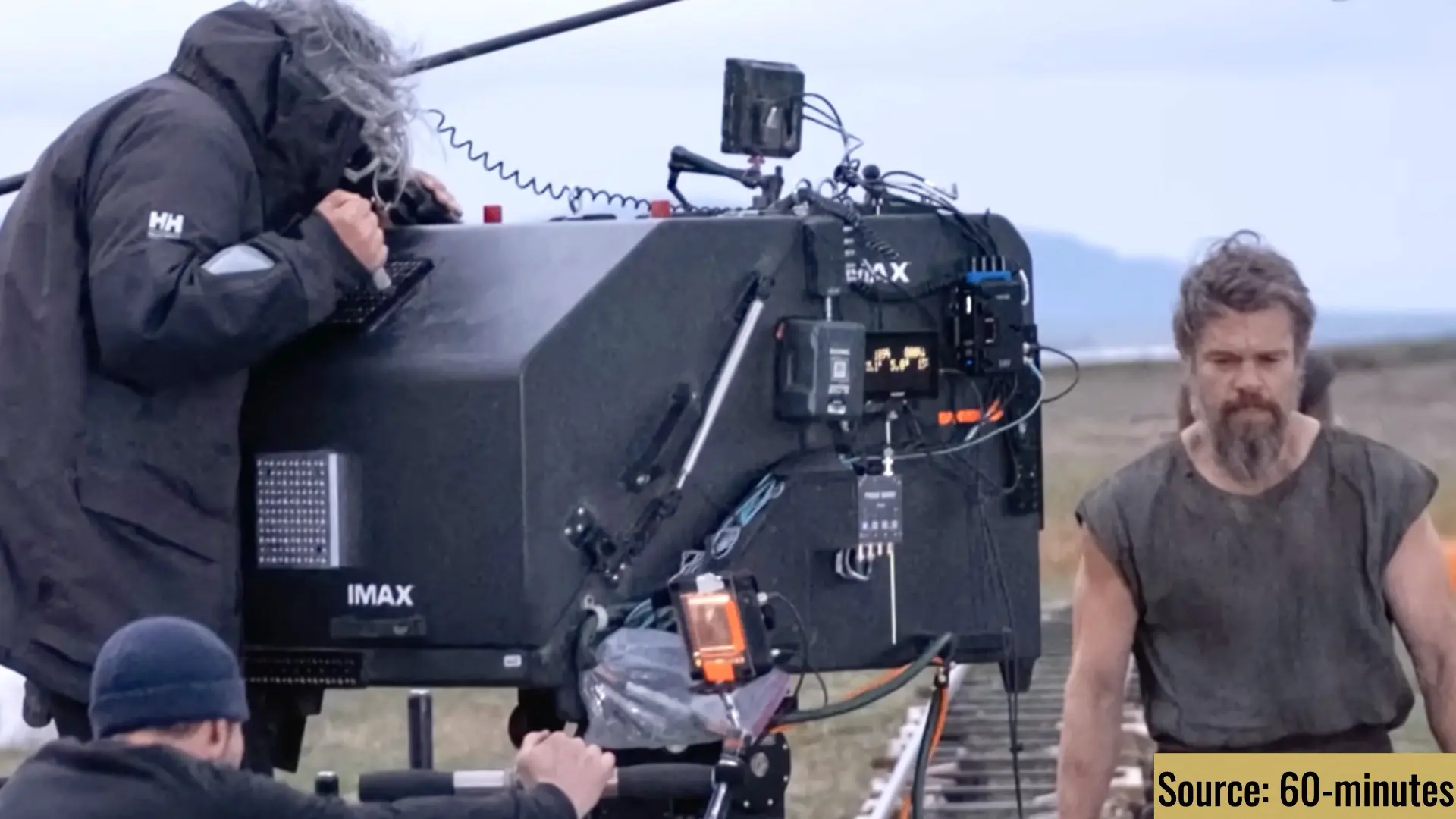
The Odyssey pushed IMAX into new territory
Matt Damon, who plays King Odysseus in the film, said in the interview that Nolan wanted to shoot The Odyssey 100% in IMAX, something that had never been done before. He added that the team did not announce it at first because they did not know if they could actually accomplish it. By engineering a soundproof enclosure around the IMAX film camera, Nolan and IMAX effectively expanded the format’s usefulness. Suddenly, IMAX could be used for dramatic scenes where dialogue, silence, and subtle performance are critical.
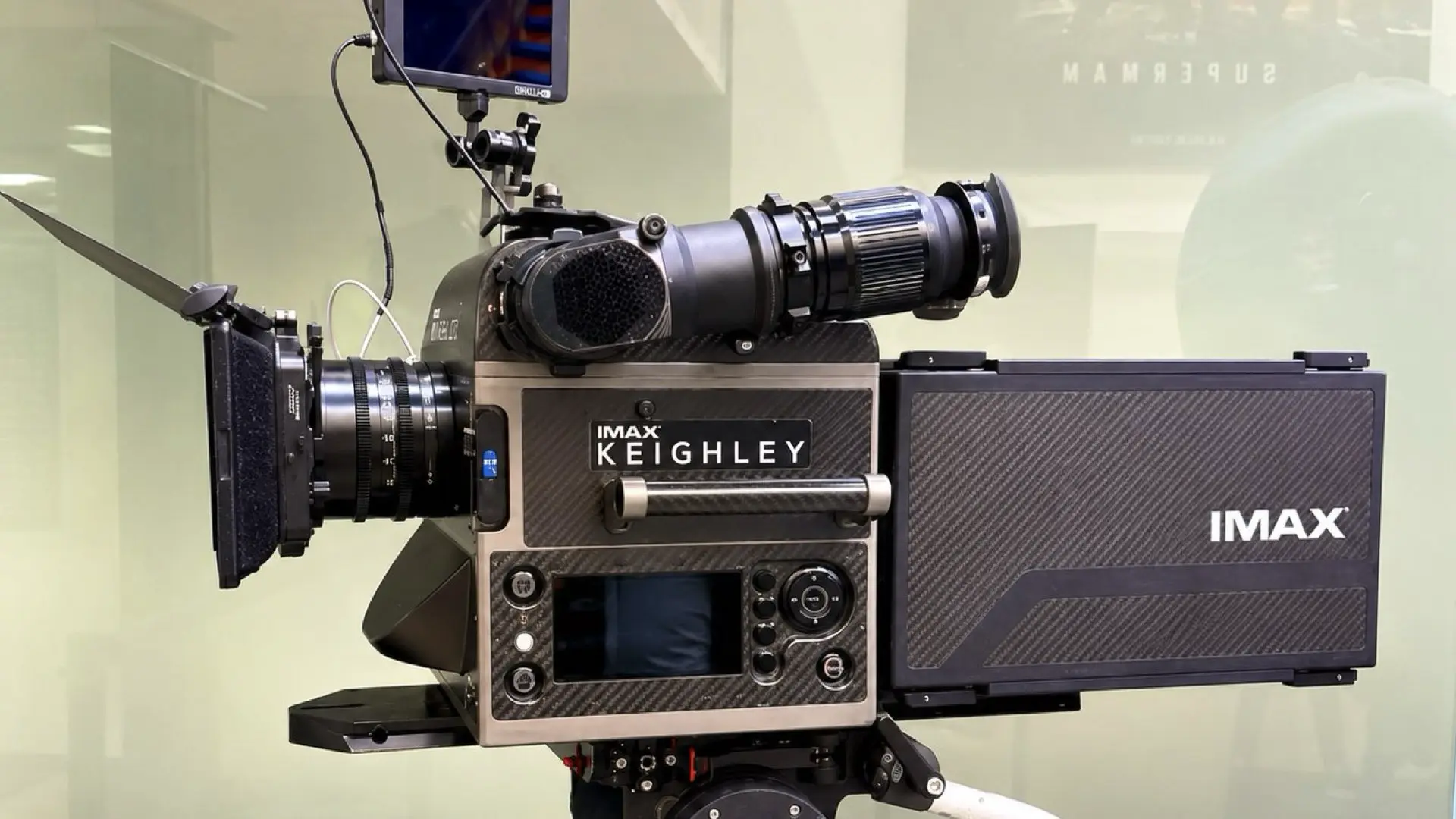
The 2.5-minute reload problem remains
The soundproof coffin solved the noise issue, but it did not solve every challenge. The IMAX camera still needs to stop and be reloaded roughly every 2.5 minutes, because the film format is so large that the magazine can only hold a limited amount of stock. That means shooting The Odyssey entirely on IMAX required extreme discipline. Every take had to be planned around short magazines, reloads, camera noise, heavy equipment, and the sheer difficulty of moving such a large system around a set. The format delivers unmatched image quality, but it demands a different production rhythm.
Nolan’s analog pipeline continues after the shoot
The 60 Minutes interview also visits FotoKem in Burbank, California, described as the only motion picture film lab in the world that still produces 70 mm prints. The segment shows the film being physically handled, cut, spliced, color timed, and printed through photochemical methods. Nolan emphasizes that his team does not use standard digital color correction for this process. Instead, they rely on analog color timing to preserve the full information stored in the original negative. Check out the full interview below: