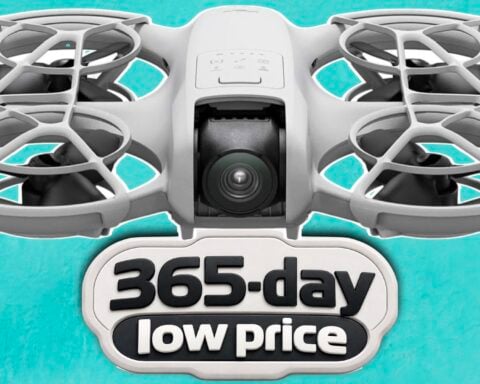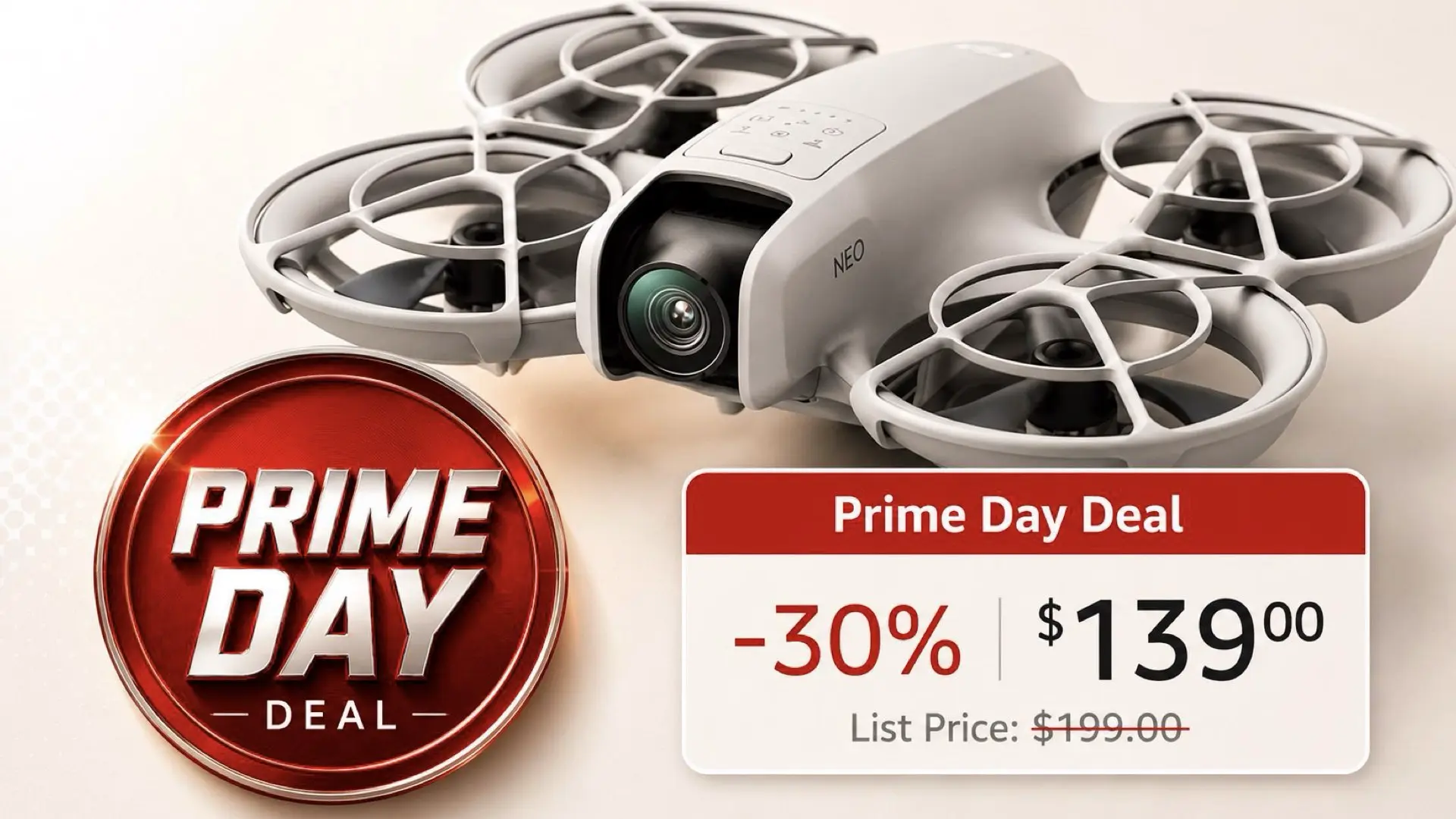
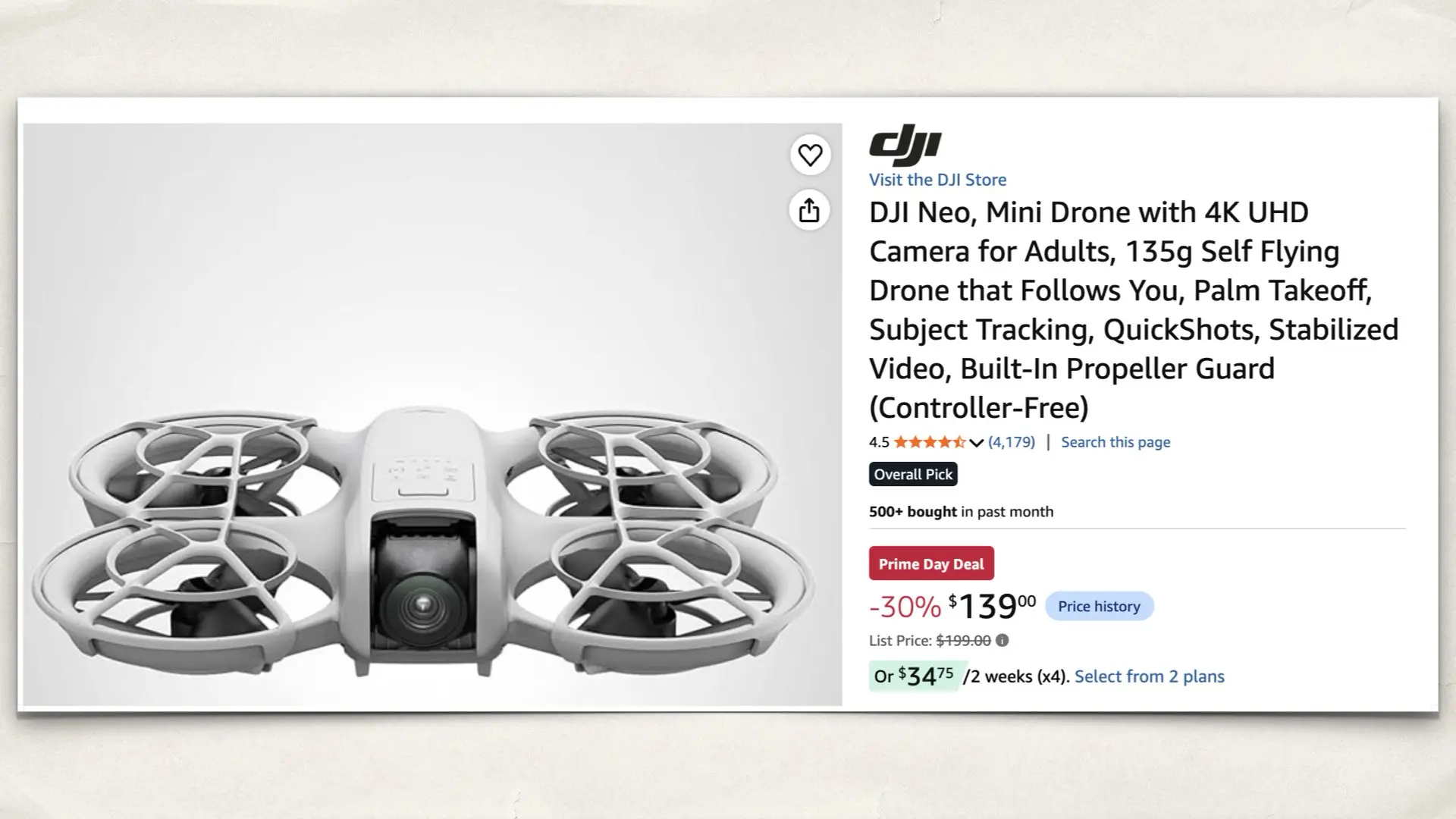
The DJI Neo ($169 on Amazon) Prime Day deal places DJI’s tiny 135 g 4K drone at $139 on Amazon. That is a 30 percent saving from the listed $199 price, with Amazon showing a Prime Day Deal badge, a 4.5-star rating, more than 4,000 reviews, and more than 500 units bought in the past month. As always with Amazon, pricing, availability, badges, ratings, and retail labels can change quickly. DJI Neo is positioned as a self-flying drone with 4K UHD video, palm takeoff, subject tracking, QuickShots, stabilized video, and built-in propeller guards. This is a DJI aerial camera that asks far less from the operator than traditional drones did. It also shows how fast automated camera movement is moving into the lowest price tier of the creator market.
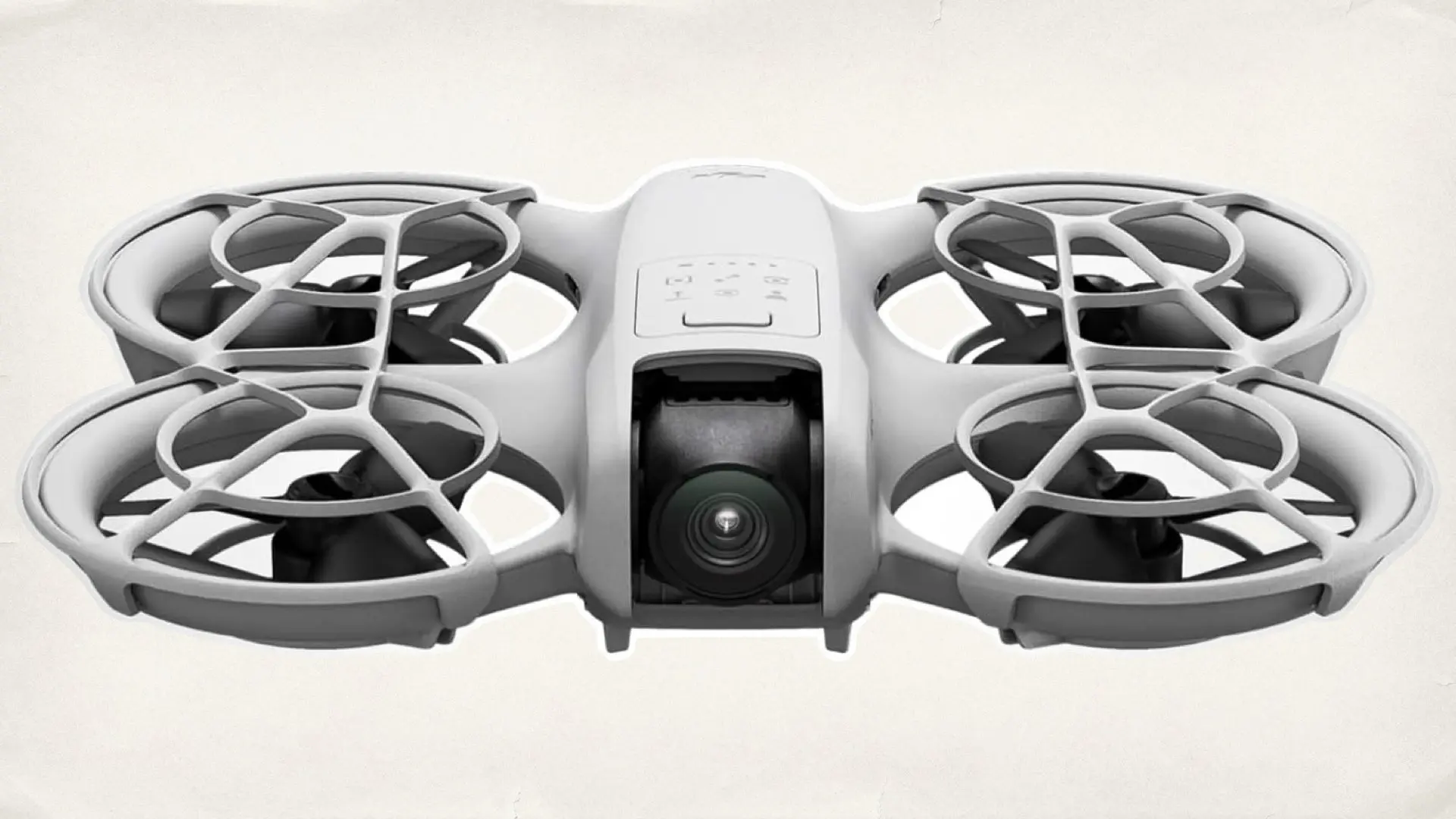
DJI’s lightest aerial videographer
DJI Neo is DJI’s lightest and most compact aerial videographer, according to DJI’s official positioning. The drone weighs about 135 g and is designed around palm takeoff and landing, subject tracking, QuickShots, and simplified operation. The current Amazon Prime Day listing prices the DJI Neo at $139, down from a listed $199. That puts the product into a very different buying category than DJI’s more advanced consumer drones. A DJI Mini series aircraft is still the more logical choice for users who want stronger image quality, longer range, more serious flight control, and a more conventional drone shooting experience. The Neo is clearly aimed at a different job. That job is fast automated capture. A creator wants a walking shot. A runner wants a tracking angle. A family wants a floating group shot. A YouTuber wants a quick establishing shot without bringing a full drone workflow into the day. Neo is built for that kind of image.
📦See DJI Neo on Amazon
What is DJI Neo?
DJI Neo is a compact DJI drone designed for easy autonomous shooting rather than advanced aerial cinematography. It is not trying to be an Inspire, a Mavic 3 Cine, or a Mini 4 Pro ($1,389 on Amazon) . The product is built around a different user behavior: take it out, launch from the palm, track a subject, record a short 4K clip, and get back to the ground with minimal friction. That makes it closer in spirit to a flying action camera than a traditional drone. The built-in propeller guards are part of that positioning. The small weight is part of that positioning. The controller-free concept is part of that positioning. The camera is important, but the core product is automation. The Neo is not the drone you choose when dynamic range, bit depth, lens control, ProRes recording, interchangeable optics, or precise pilot-operated composition are the priority. It is the drone you consider when the priority is getting a usable moving aerial perspective with very little setup.
Self-tracking aerial shot is not a premium feature anymore
A few years ago, a self-tracking aerial shot felt like a premium feature. It belonged to drones that required more money, more confidence, and more flight awareness. Now, Amazon is presenting a DJI-branded 4K self-flying drone for $139 during Prime Day. That does not mean every creator will suddenly make better videos. It does mean the barrier to trying aerial movement has become extremely low. Moreover, bigger drones require planning. Bigger gimbals require balancing. Cinema rigs require time. Neo moves in the opposite direction. It is built to reduce the gap between wanting a motion shot and capturing one. The tradeoff is obvious. Simpler tools come with limitations. A tiny drone will not deliver the image control, wind resistance, endurance, or professional codec options of larger systems. For serious commercial aerial work, this is not the tool. For quick creator shots, BTS clips, social video, travel angles, and casual establishing footage, the equation changes.
As an Amazon Associate, Y.M.Cinema earns from qualifying purchases. If you purchase through the Amazon links above, Y.M.Cinema may earn a small commission at no additional cost to you. This helps support our work.
Gear mentioned in this article
Available on Amazon
Prices checked: Oct 25, 2026, 1:34 AM GMT+0000
As an Amazon Associate, Y.M.Cinema earns from qualifying purchases. If you buy through our links, we may earn a small commission at no extra cost to you.
Product prices and availability are accurate as of the date/time indicated and are subject to change. Any price and availability information displayed on Amazon.com at the time of purchase will apply to the purchase of this product.
CERTAIN CONTENT THAT APPEARS ON THIS SITE COMES FROM AMAZON. THIS CONTENT IS PROVIDED “AS IS” AND IS SUBJECT TO CHANGE OR REMOVAL AT ANY TIME.