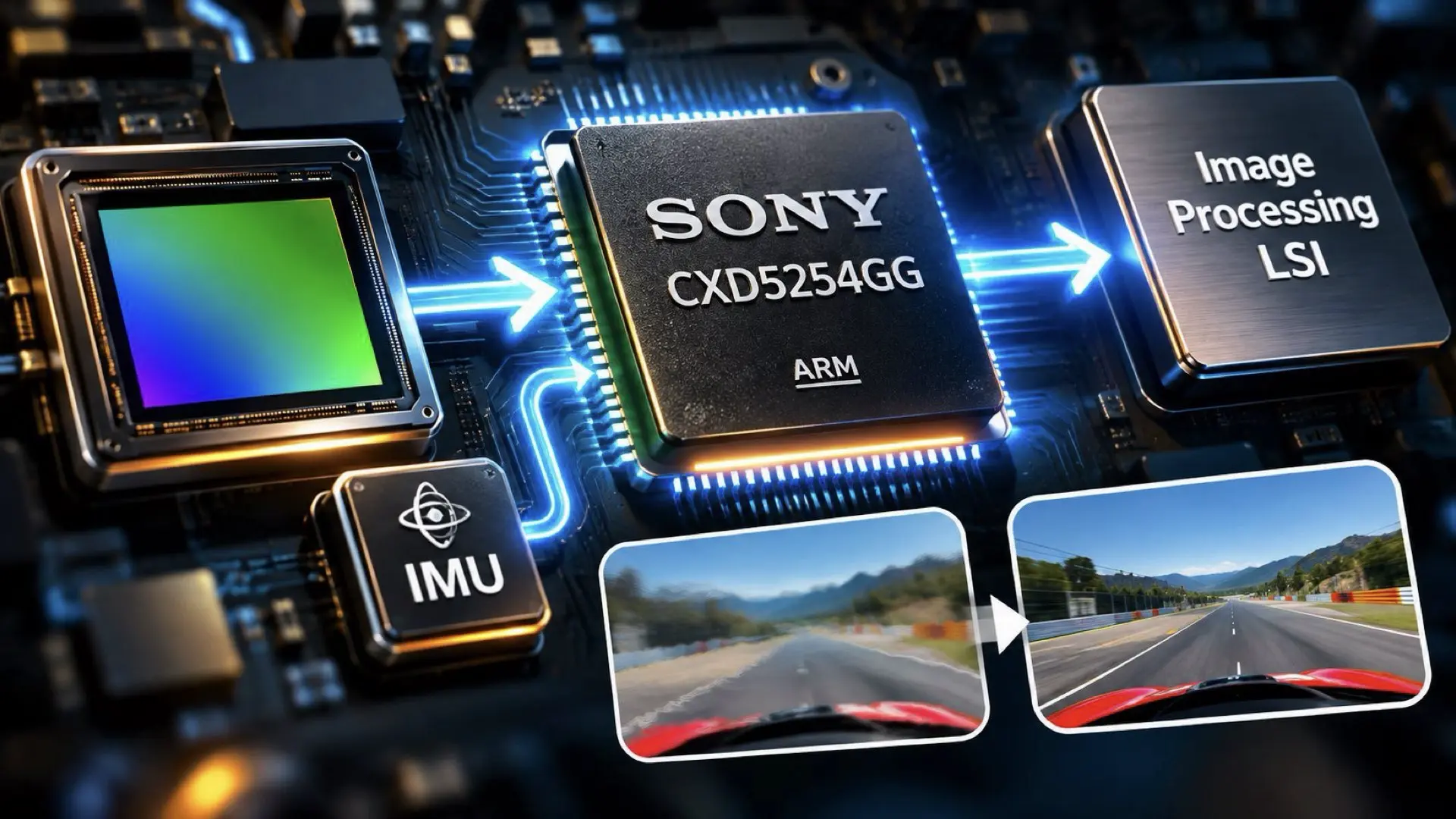
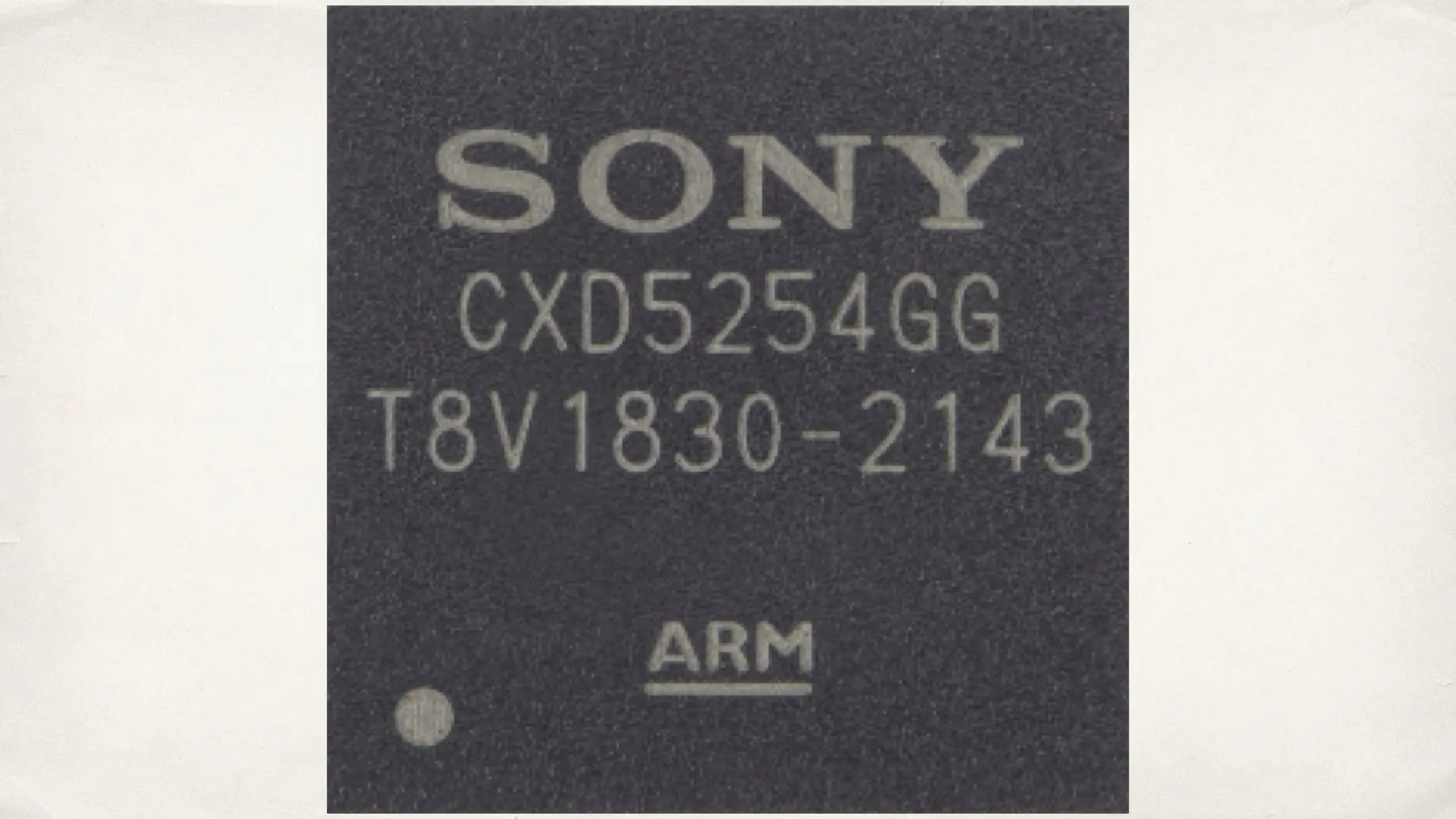
Sony Semiconductor Solutions has released a new demonstration of its dedicated image stabilization technology, showing how real-time vibration correction, horizon stabilization, and jello effect suppression can improve footage captured under extreme conditions. The latest demonstration focuses on motorsports, where intense vibrations, sudden directional changes, and high-speed movement create significant challenges for conventional camera stabilization systems. At the center of the demonstration is Sony’s CXD5254GG Stabilizer LSI, a specialized image-processing chip designed to stabilize video directly in the camera’s imaging pipeline. Rather than relying exclusively on mechanical stabilization or post-production correction, the system combines image sensor data with motion measurements to compensate for camera movement in real time. The demonstration highlights a technology with particular relevance to professional cinematography, live broadcasting, onboard cameras, and compact imaging systems operating in environments where traditional stabilization solutions may be impractical.
Tackling the jello effect in motorsports
One of the central challenges addressed by Sony is the familiar jello effect, a form of image distortion commonly associated with rolling-shutter sensors subjected to intense vibration. When cameras are mounted on racing vehicles, motorcycles, or other high-speed platforms, continuous vibration can cause straight lines to appear distorted and objects to wobble unnaturally. Unlike ordinary camera shake, these distortions are not always resolved by conventional stabilization techniques. Sony’s latest demonstration illustrates how its Stabilizer LSI can suppress these artifacts while simultaneously maintaining a stable horizon, even when the camera is subjected to aggressive movement. According to Sony, the technology is particularly suited to onboard motorsports cameras, where maintaining a consistent perspective is essential for producing usable footage during sharp cornering, acceleration, and encounters with curbs or uneven surfaces. The ability to correct multiple types of image instability simultaneously is particularly relevant to professional applications where footage must be delivered live rather than processed afterward.
A dedicated stabilization chip operating on RAW sensor data
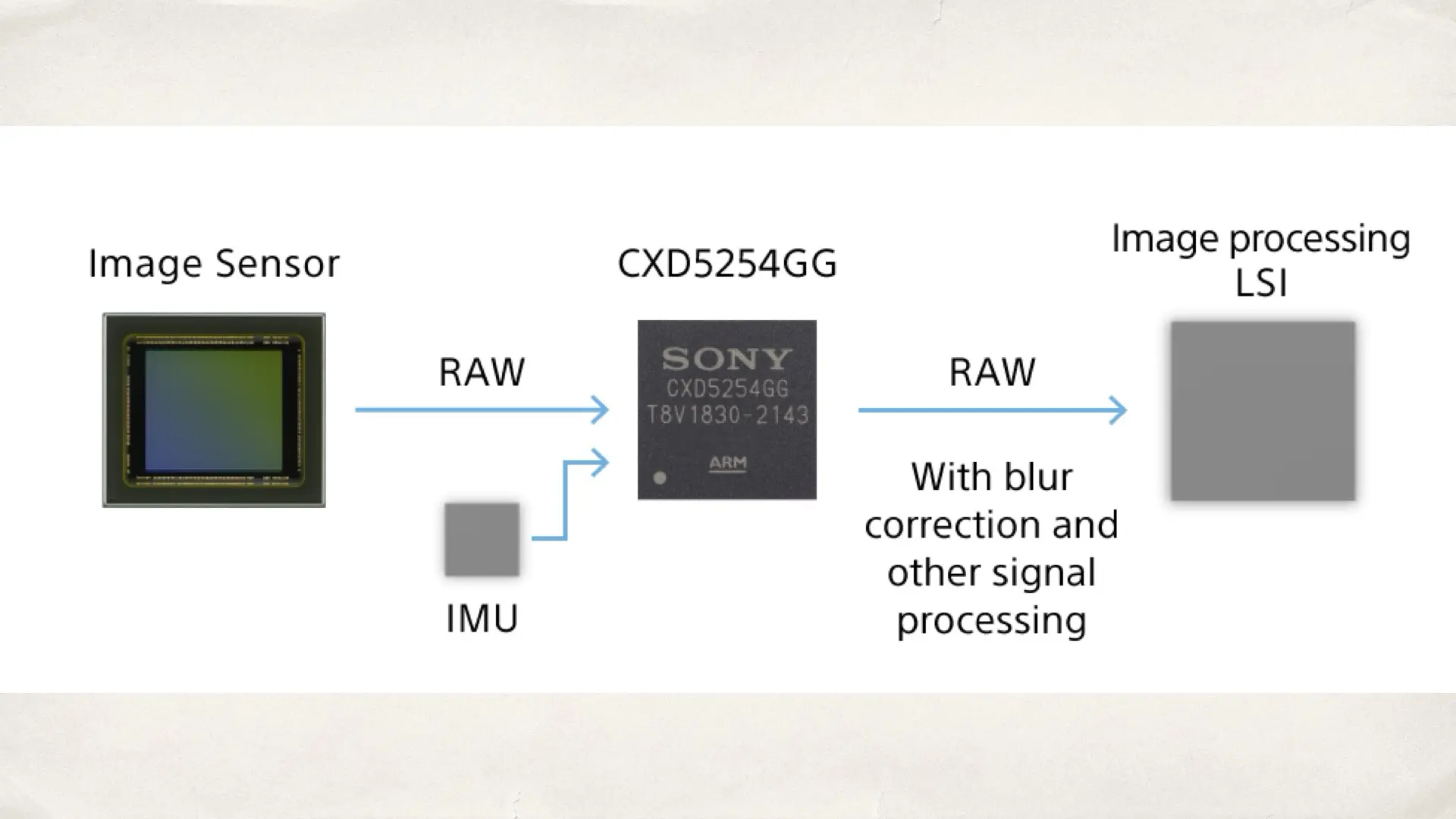
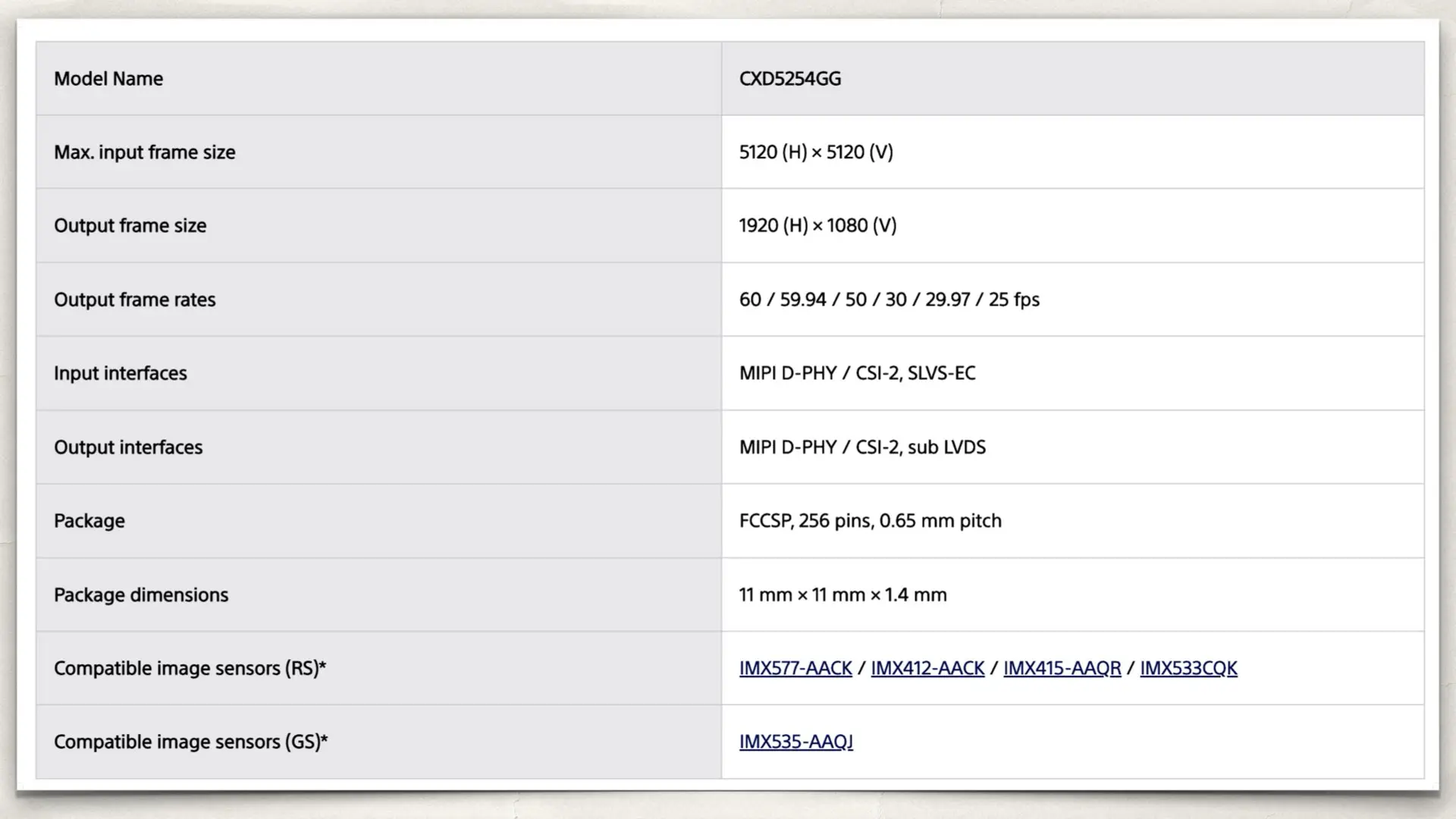
The CXD5254GG operates as a companion processor positioned between a compatible Sony image sensor and the camera’s main image-processing LSI. The chip receives RAW image data directly from the sensor and combines it with acceleration and gyroscopic information provided by a six-axis inertial measurement unit (IMU). Using this information, the processor performs several corrections, including electronic image stabilization (EIS), horizon maintenance, jello effect suppression, and lens distortion correction. The processed signal is then passed to the camera’s image processor as RAW data. This architecture allows stabilization to occur early in the imaging pipeline, before the main image processor completes its conventional processing operations. Sony specifies processing latency as low as 1.5 frames, making the system suitable for applications requiring near-immediate image correction. For live production, this low-latency approach is especially significant. Onboard racing cameras, remote-operated systems, and wearable broadcast cameras cannot always rely on computationally intensive stabilization performed after recording.
Beyond motorsports: Applications in professional production
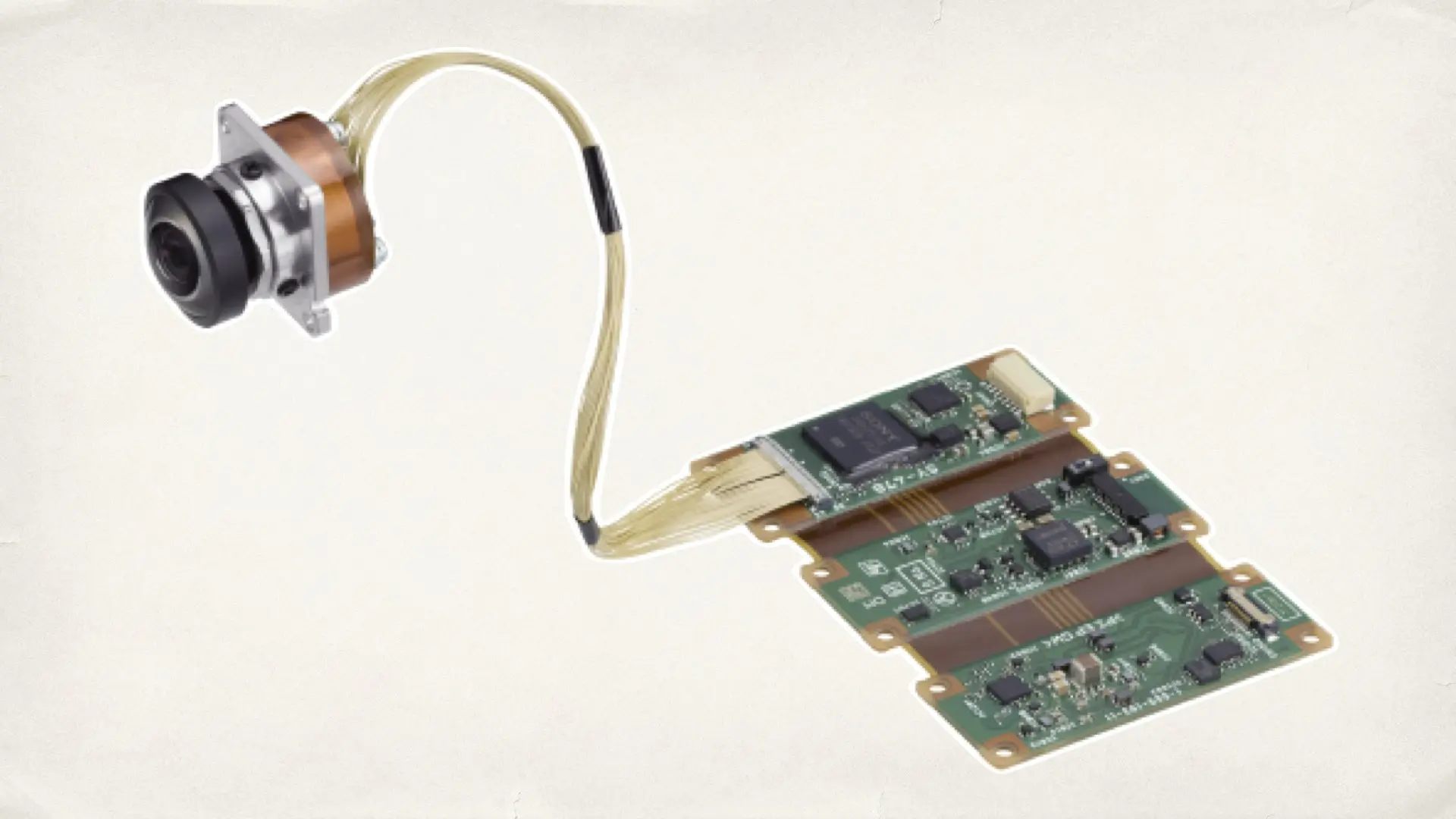
Although Sony’s latest demonstration centers on racing applications, the technology has broader implications for professional camera design. Sony already offers the ESC-A series of compact camera modules, which integrate the CXD5254GG with the company’s IMX577 image sensor. Developed for broadcasting and video production, the modules are available in three configurations with different fields of view. They support professional video interfaces, including SDI output, along with S-Log3, HLG, and SDR imaging modes. The modules also provide remote-control functionality and frame synchronization for up to four cameras. These capabilities make the technology particularly relevant to specialized production environments, including motorsports broadcasting, remote camera installations, wearable imaging systems, and compact cameras mounted in locations where conventional cinema equipment would be difficult to deploy. Sony also identifies FPV drones and robotics among the applications that could benefit from the dedicated stabilization processor. Importantly, the current technology should not be confused with a new stabilization system announced for Sony’s existing Cinema Line cameras. The CXD5254GG is a component-level solution intended for integration into compatible camera systems.
The complications for future professional cameras
The stabilization chip itself is not a new announcement. Y.M.Cinema previously covered Sony’s stabilization technology in January 2026, when the company presented an earlier application involving the filming of a trail-running competition. The latest motorsports demonstration represents another practical showcase of the technology rather than the introduction of a new generation of hardware. Nevertheless, it illustrates a potentially important direction in camera engineering: moving sophisticated stabilization processing closer to the image sensor and handling multiple forms of image distortion through a dedicated processor. For professional cinematographers, the most interesting aspect is not simply smoother footage. It is the possibility of achieving stable, horizon-corrected images in situations where mechanical stabilization equipment is too large, heavy, or otherwise unsuitable. Whether this particular architecture will eventually influence Sony’s larger professional cinema cameras remains unknown. For now, Sony’s latest demonstration shows how dedicated stabilization hardware can address the demanding conditions encountered in motorsports filmmaking and other specialized production environments.