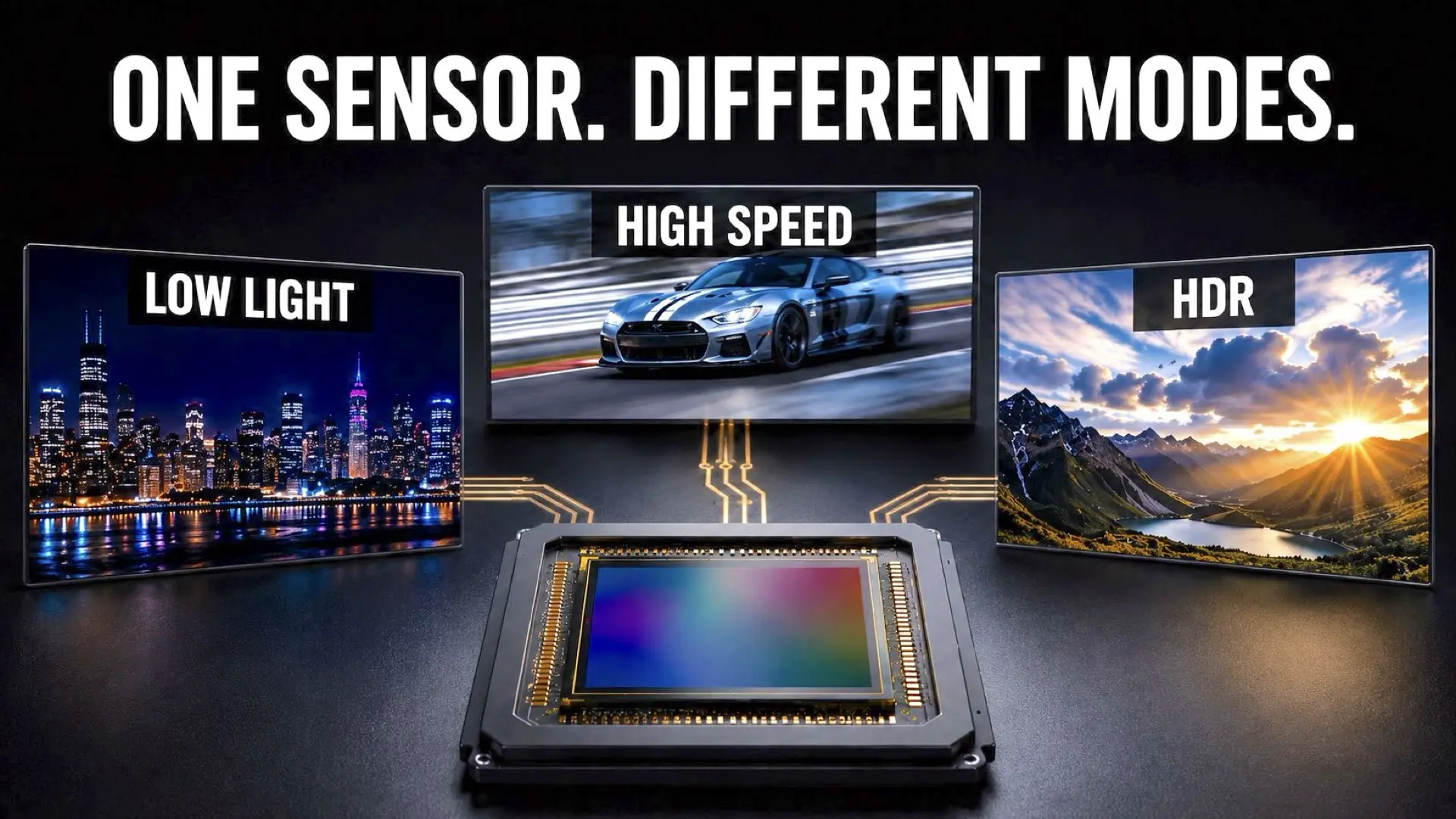
Camera sensors are usually designed around compromise. A sensor optimized for very low noise may not be the fastest. A sensor designed for high frame rates may sacrifice other characteristics. High dynamic range introduces another set of engineering tradeoffs. Researchers at Dartmouth College are now exploring a different approach: a sensor pixel that can change how it reads captured light depending on what the camera needs at that moment. The research paper, published in Sensors in August 2026, introduces what the team calls a Programmable Readout, or PRO, pixel. The concept is designed to let a single image sensor prioritize different characteristics such as low noise, high speed, or high dynamic range instead of being permanently optimized for only one type of performance.
One pixel, different ways to read the image
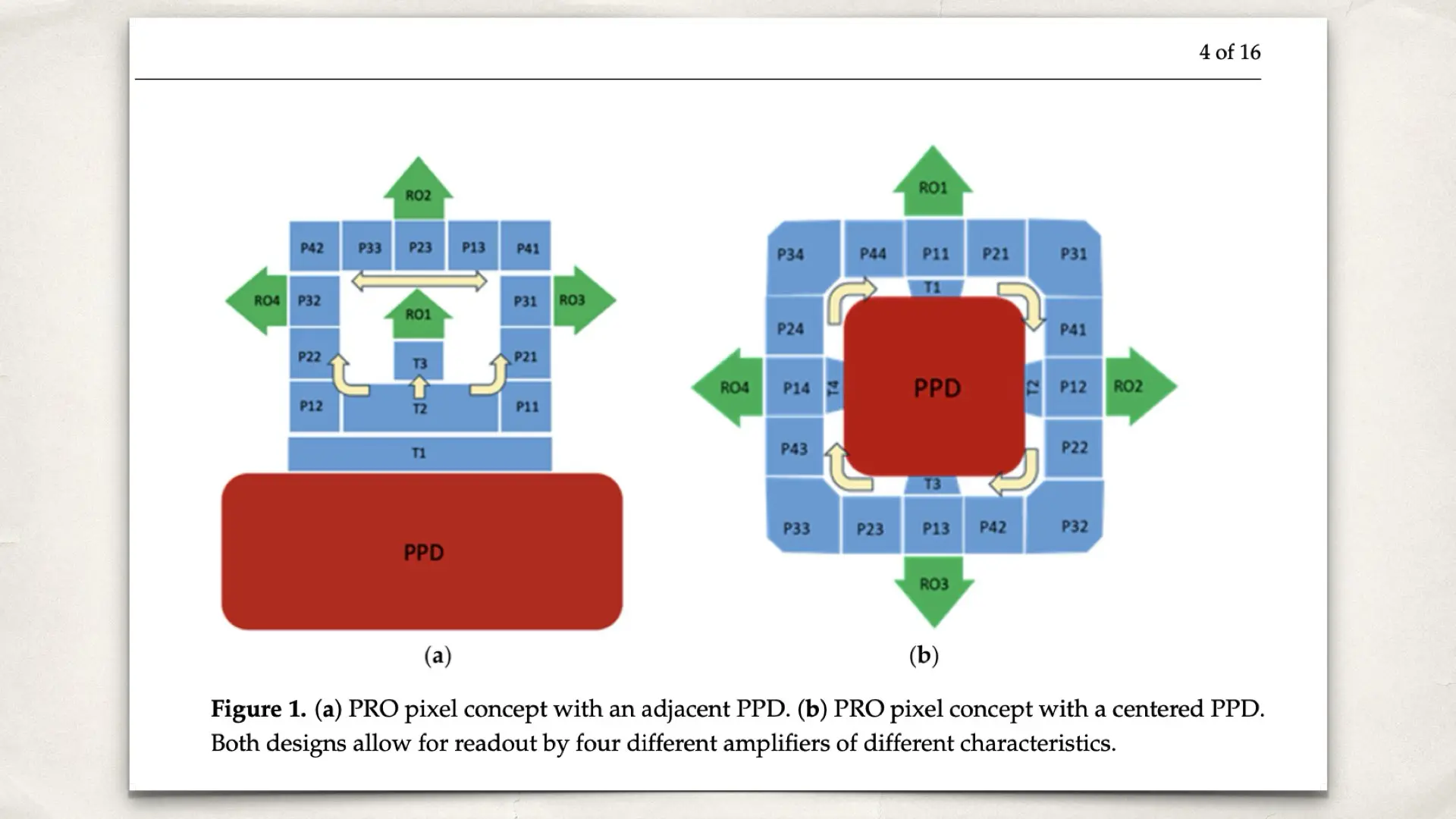
In a conventional CMOS sensor, the basic way each pixel collects and reads its electrical charge is largely determined when the sensor is designed. The PRO pixel introduces several possible readout paths inside the pixel. Instead of sending the captured charge through only one fixed route, the sensor can electronically steer it toward different readout amplifiers depending on the required mode. One path can favor fast readout. Another can favor lower noise. Other configurations could be used to increase dynamic range. The researchers describe this as a way to adjust the usual tradeoff between noise, speed, and dynamic range during operation rather than locking those characteristics into the sensor design from the beginning.
Why this could be important for cameras
This idea is easy to understand if we compare it with shooting modes. Imagine that instead of only changing camera settings, the sensor itself could change the way it handles the electrical charge created by incoming light. For a bright scene or fast action, the camera could prioritize faster readout. For a very dark scene, it could use a slower but much lower-noise readout method. For difficult lighting with bright highlights and deep shadows, another readout configuration could prioritize dynamic range. The researchers specifically demonstrate operating concepts for high-frame-rate imaging, low-light imaging, and high-dynamic-range imaging using the same programmable pixel architecture.
A different approach to low-light imaging
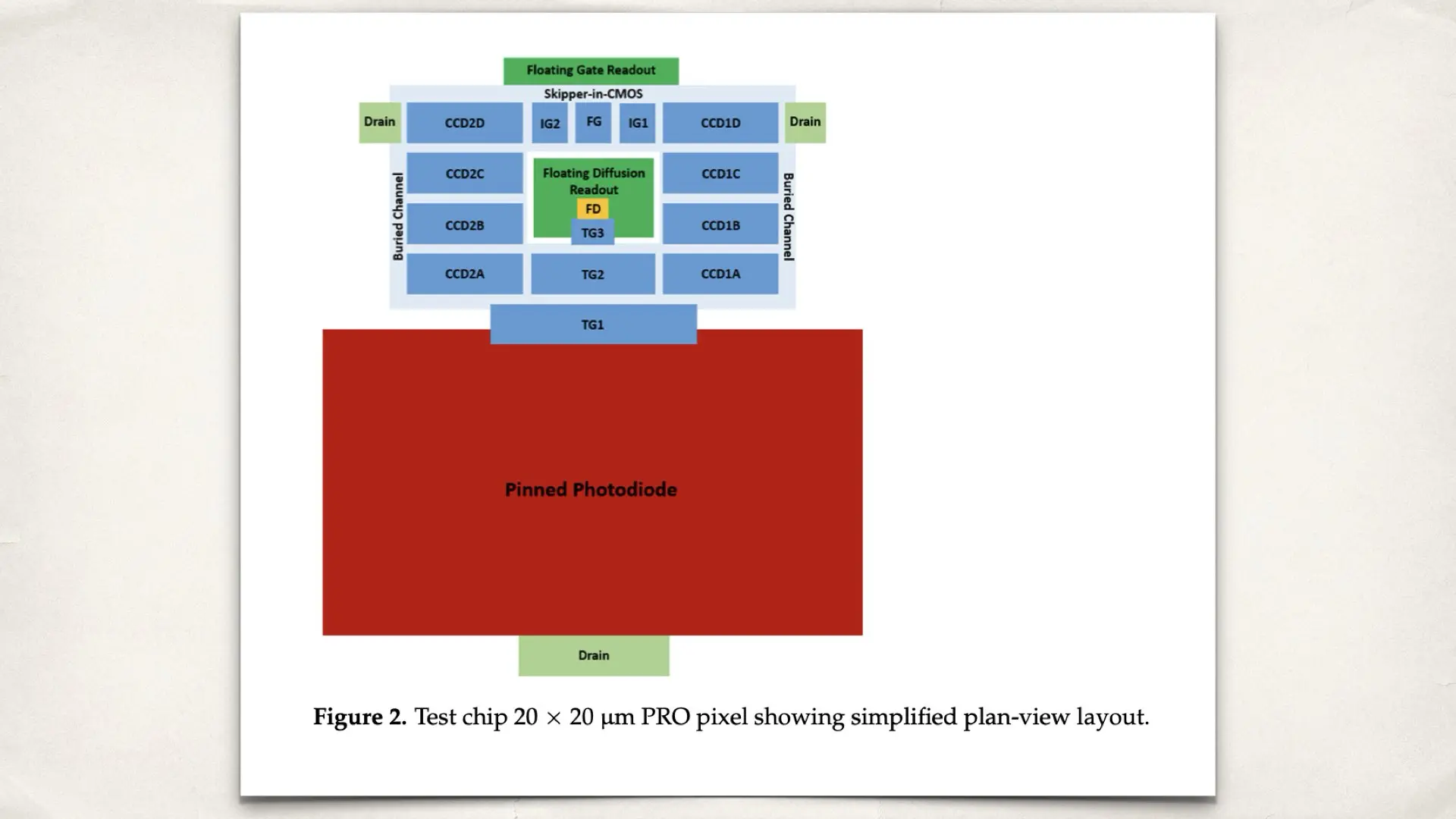
One of the most interesting parts of the design is its use of a technology called Skipper-in-CMOS. The basic principle is surprisingly simple. Normally, reading the signal from a pixel introduces a small amount of electronic noise. With Skipper-style readout, the sensor can measure the same stored electrical charge multiple times without immediately destroying it. These measurements can then be averaged together, reducing read noise. The downside is speed. More measurements require more time. That is exactly where the programmable architecture becomes interesting: the sensor does not necessarily need to use this slow, ultra-low-noise method all the time. It can potentially use it only when the shooting situation benefits from it.
High speed when needed
For high-frame-rate imaging, the sensor can take a more direct route. The PRO design includes a conventional floating-diffusion readout intended for faster operation. The researchers also designed charge-transfer gates specifically to support very fast movement of the electrical charge inside the pixel. This means the same basic pixel architecture could theoretically behave very differently depending on whether the priority is speed or image quality in low light.
HDR is part of the concept too
The researchers also describe a high-dynamic-range operating mode. In this configuration, captured charge can be divided and temporarily stored in different sections of the pixel before being read and combined. The goal is to increase the amount of signal the pixel can handle while still maintaining low-noise readout. The architecture also includes elements that can support global shutter operation and anti-blooming, although the current paper is primarily focused on proving the programmable readout concept.
This is already working silicon
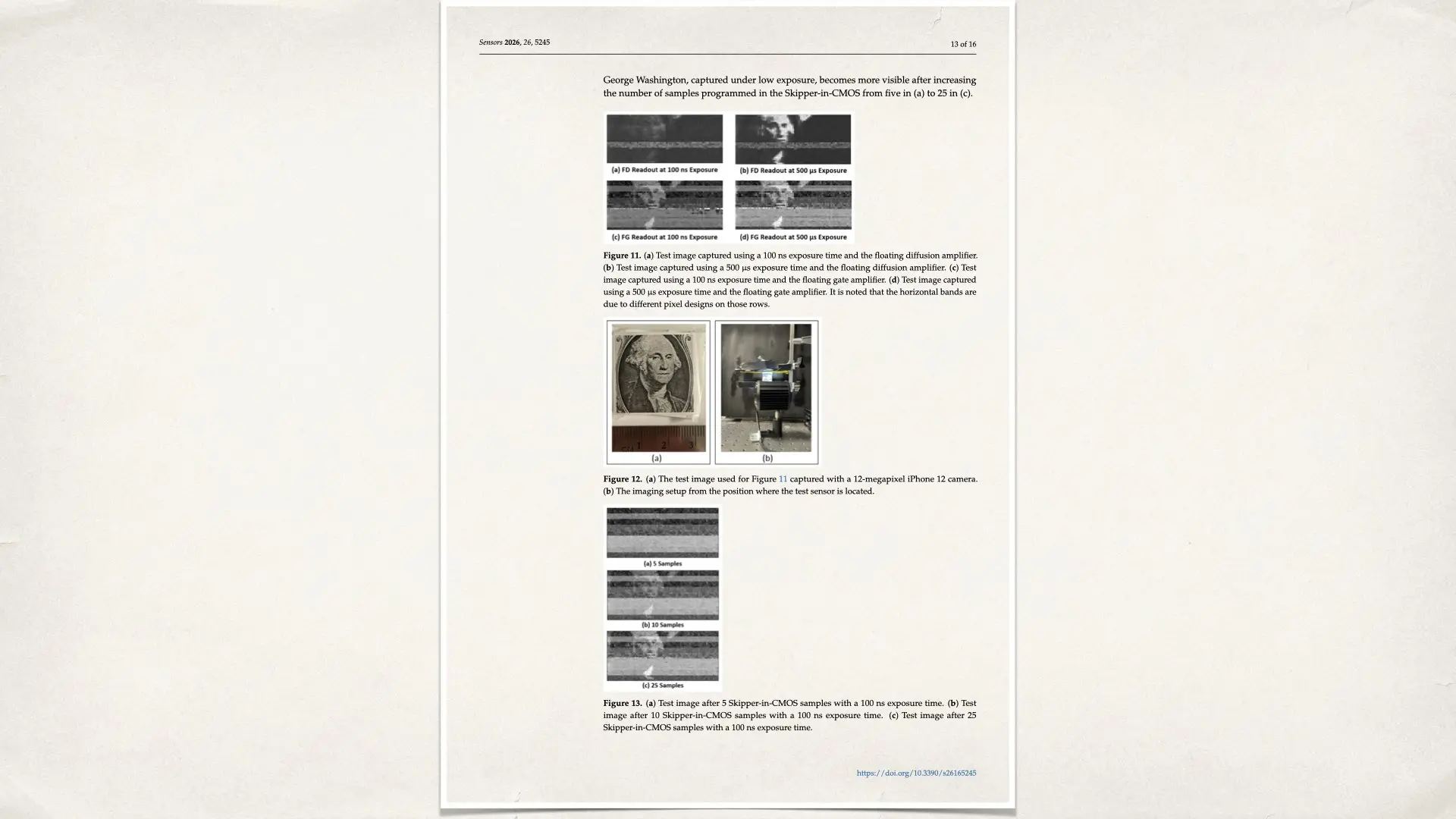
This is not only a computer simulation. The researchers fabricated an experimental sensor chip using a 180 nm manufacturing process. The prototype contains a 36 × 94 pixel array, with relatively large 20-micrometer pixels, and several experimental pixel variations. Early tests showed that captured electrical charge could successfully be routed to different readout circuits simply by changing the electronic control sequence. Images captured by the prototype also showed that increasing the number of repeated low-noise measurements made a very weak image progressively more visible.
Still very early
There is an important limitation. This is a research prototype, not a sensor ready for a cinema camera. The pixels are extremely large compared with modern production image sensors, and the prototype achieves only about a 33% fill factor, meaning a significant portion of each pixel is occupied by the additional electronics and charge-routing structures. The researchers acknowledge pixel size as one of the main disadvantages of the current design. The team also states that full characterization of the test chip is still underway and that future versions are expected to include additional readout amplifiers.
A sensor that changes with the shot
Modern cameras already allow filmmakers to change ISO, shutter speed, frame rate, dynamic-range modes, and many other parameters. But underneath those settings, the physical sensor architecture remains largely fixed. The PRO pixel research explores something different: changing the way the sensor itself reads captured light depending on the shooting requirement. It is still far from a production cinema sensor. But the concept points toward an interesting possibility: future image sensors that are not optimized around one permanent compromise, but can instead adapt their internal readout behavior to the scene being captured.