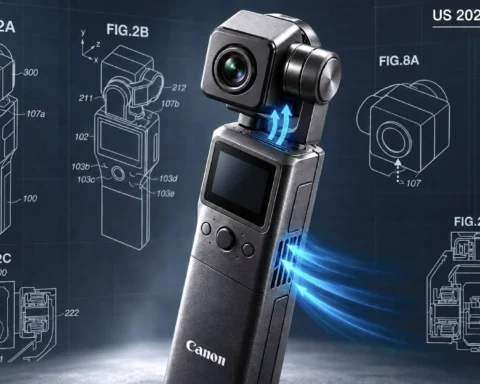
Imagine you’re filming a sweeping cinematic roll with a handheld gimbal, your camera glides, you press record, and suddenly you tip the rig too far. On most gimbals, the internal arm or motor housing can sneak into the lens view, ruining the move. According to the newly filed US patent US 2025/0341762 A1, however, Canon has engineered a system where the move never has to stop. The gimbal detects the limit, flips axes internally, deletes the transitional mess, and keeps filming, all without the operator ever realizing. When paired with the earlier “forgotten gimbal camera” concept, this may be the missing piece in Canon’s stabiliser puzzle.
How it works (in detail)
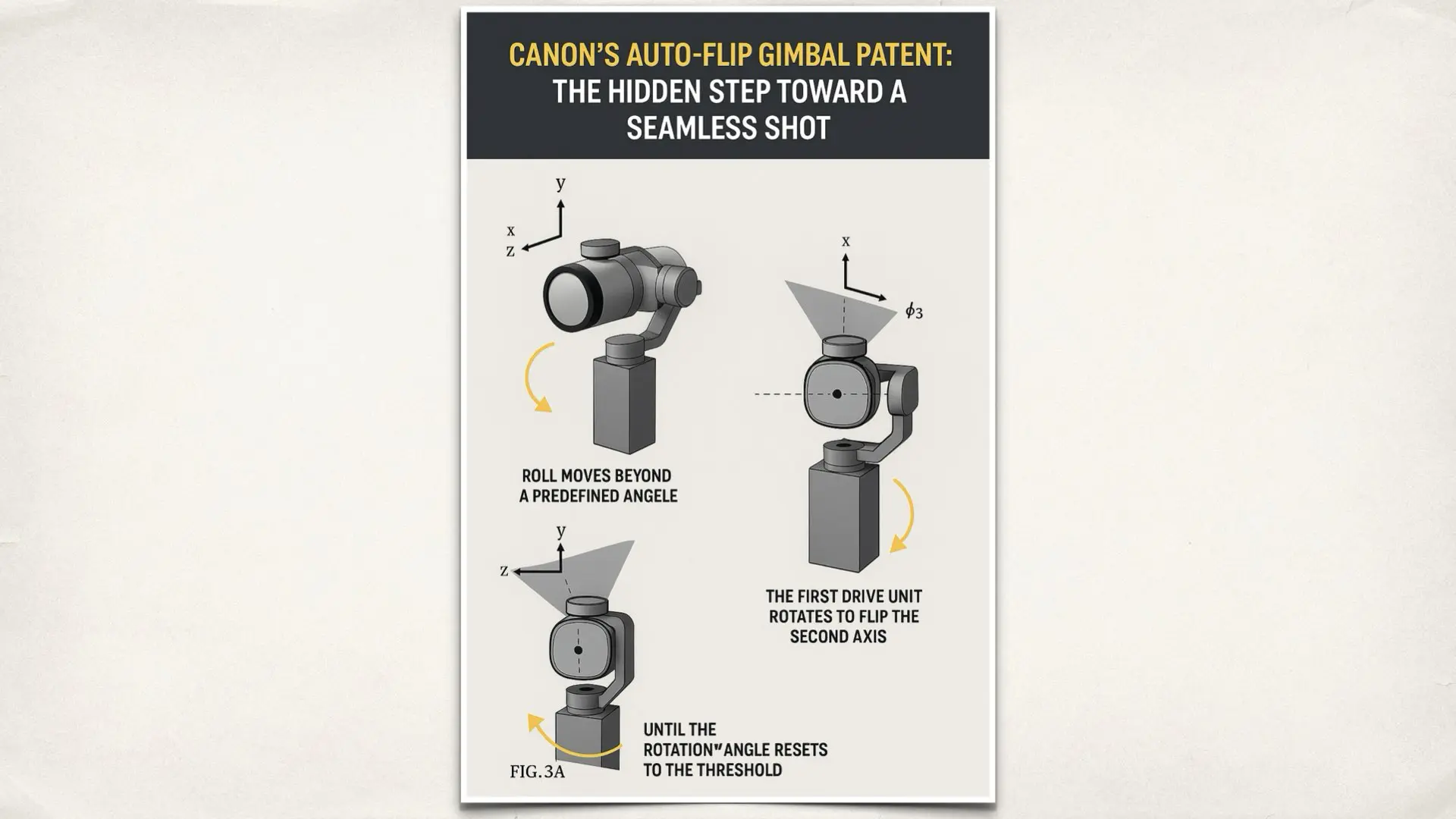
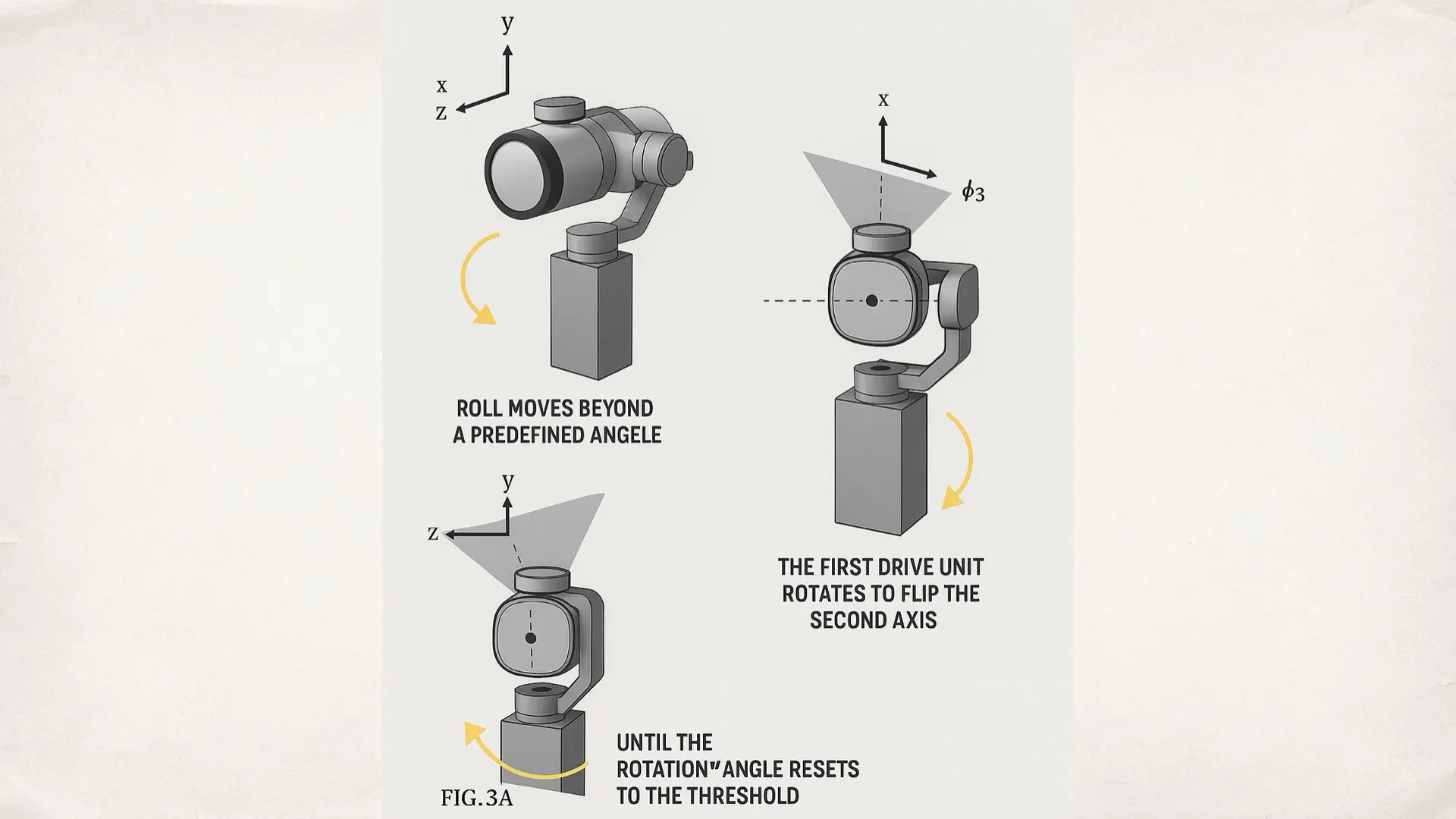
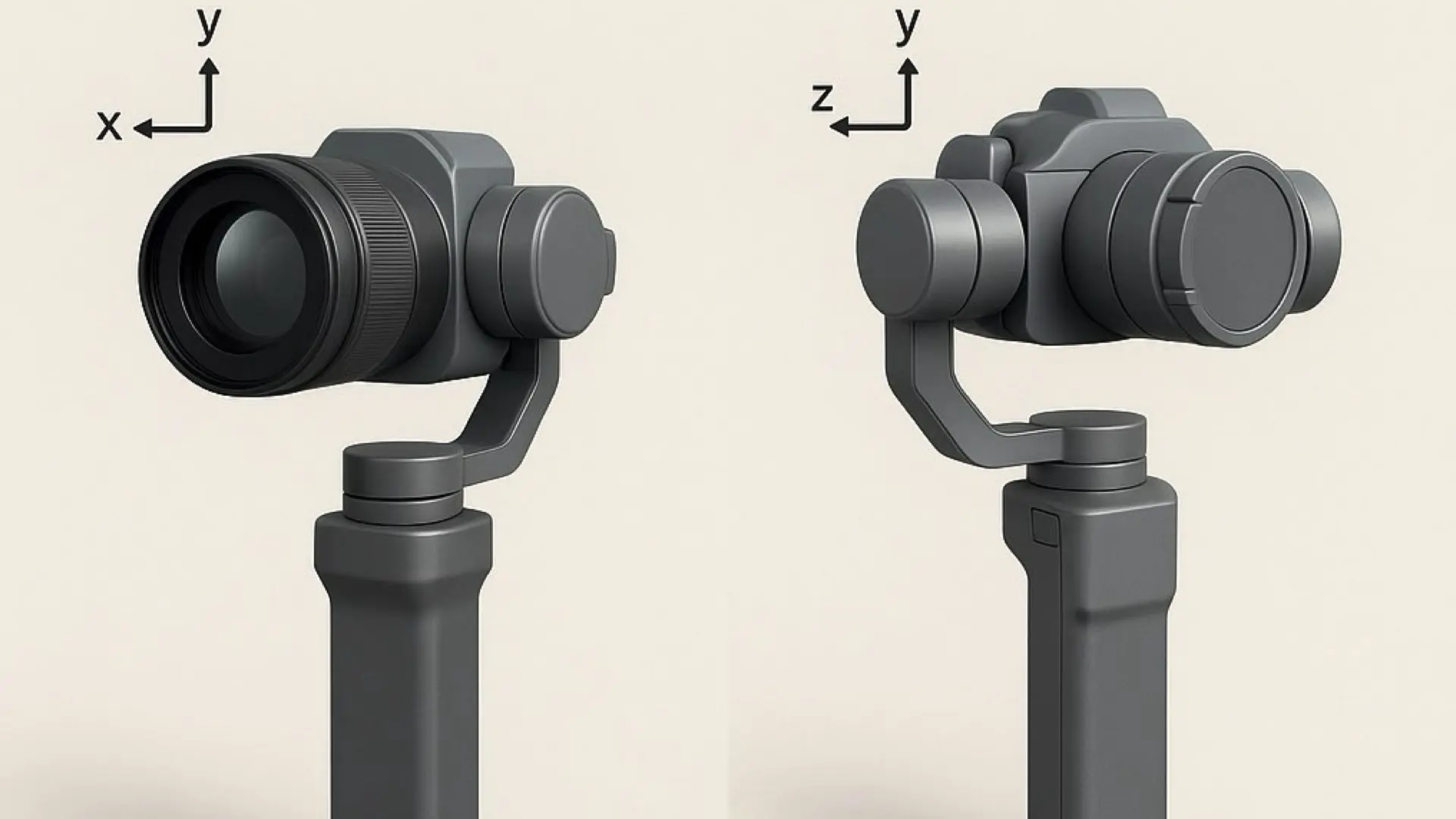
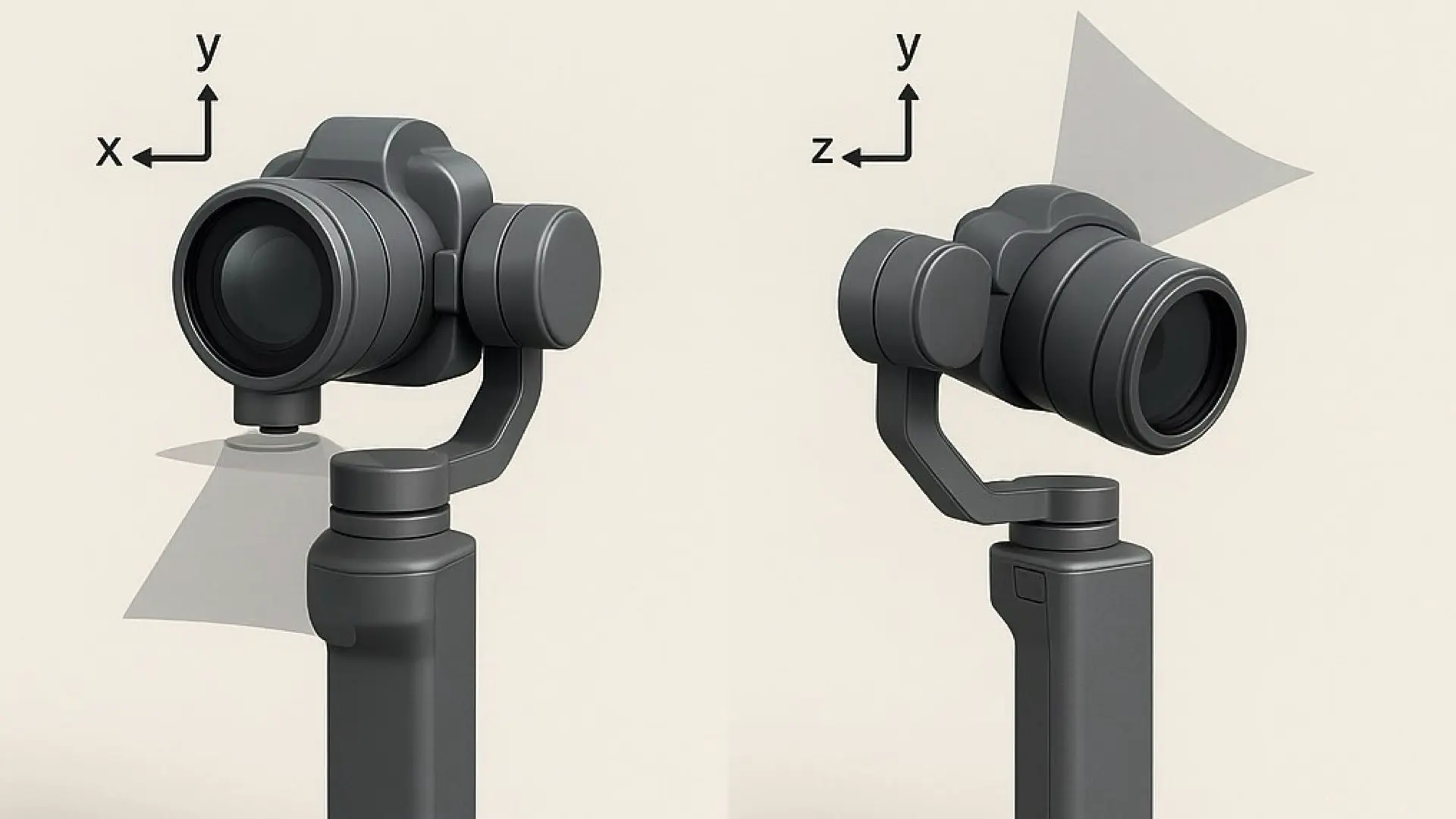
At the heart of this patent is a trio of axes: pan (first axis), tilt (second axis), and roll (third axis). The “problem moment” happens when the roll axis (third axis) approaches a predefined angle. When the optical axis of the camera moves beyond this threshold relative to the “second-axis orthogonal plane,” two things happen simultaneously:
-
The first drive unit rotates so that the second drive unit flips to the opposite side of that orthogonal plane.
-
The third drive unit then drives the imaging unit until the rotation angle is reset to that threshold on the opposite side.
In simpler terms: when the roll gets too far, the gimbal quietly flips its internal geometry so you stay filming straight ahead, without the arm intruding into the lens.
What’s clever:
-
The trigger threshold isn’t fixed. It adjusts based on the lens’s angle of view. A zoomed-in lens gets more “roll margin,” a wide lens triggers sooner.
-
The system also deletes the frames taken while the flip happens, then stitches the “before” and “after” frames to appear as one fluid clip.
-
If your rig ends up upside down, the system detects it (via the shake detector) and flips the video output right-side up for you.
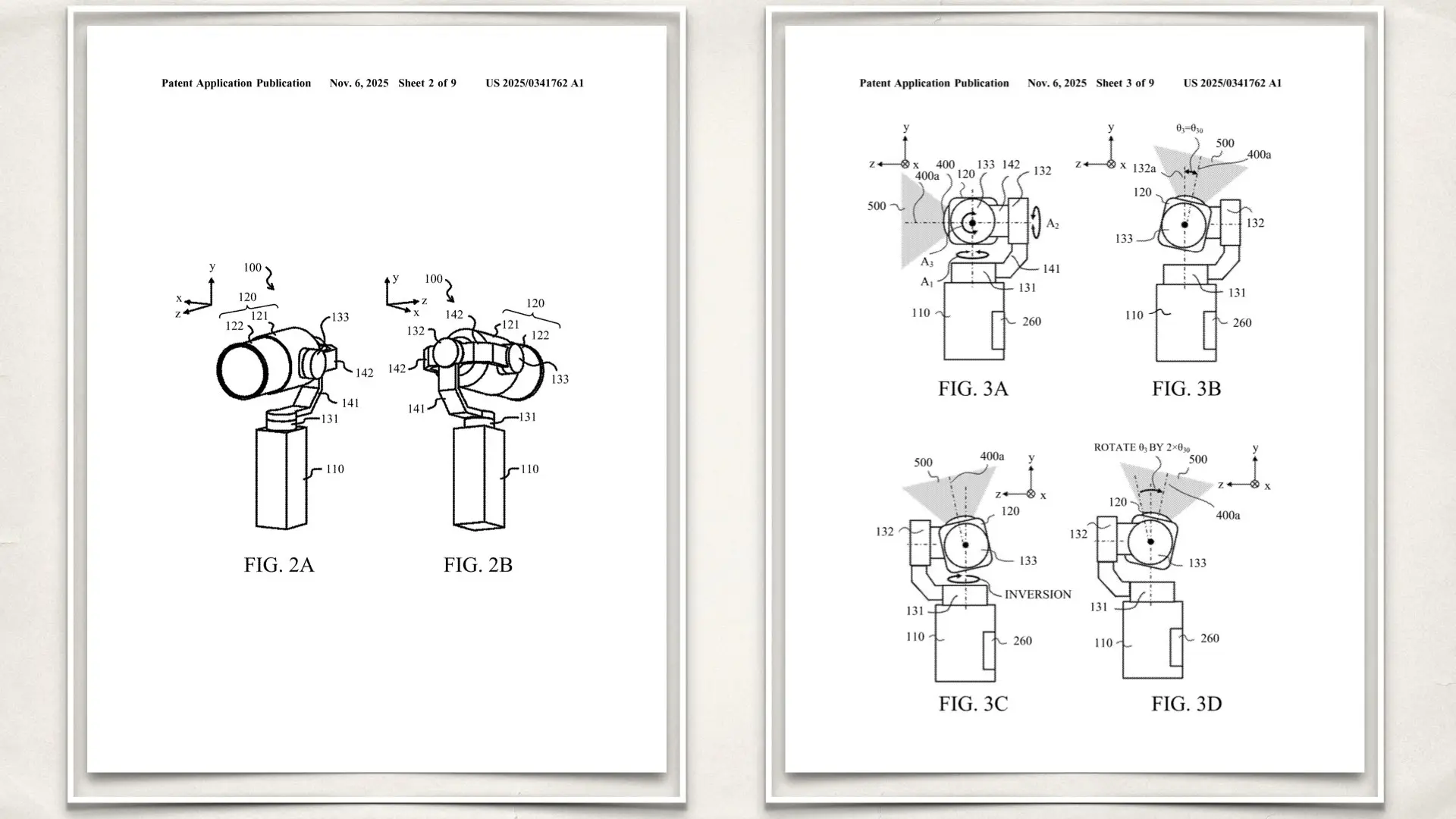
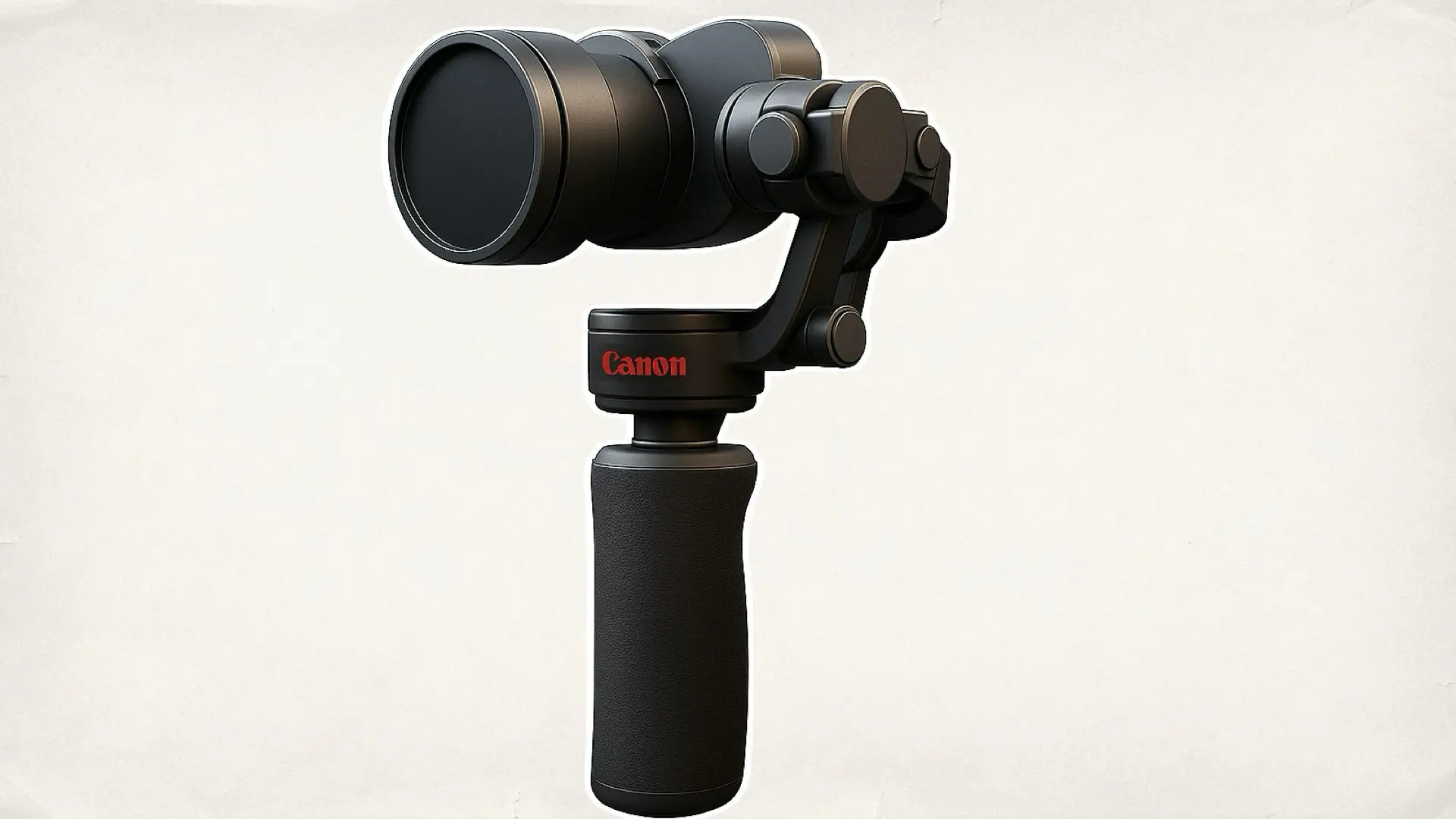
These details show more than a simple stabiliser—they show a system orchestrating hardware, optics, control logic and post-shot cleanup.Check out the 3d rendered images below:
Smarter than an ordinary gimbal
Today’s advanced gimbals already let you pan, tilt, and roll with fluidity, and some even offer “Sport” or “360” modes. What sets this patent apart: it anticipates the mechanical failure mode (arm in frame) and bypasses it automatically, mid-shot. Here’s how it layers smarter behaviour:
-
Dynamic thresholding: The system uses the lens’s angle of view to decide when to flip. Wide angle: less tolerance; telephoto: more tolerance.
-
Continuous recording: Instead of stopping, alerting the user, and needing manual correction (as the background current tech requires), this system flips while you keep recording.
-
Frame trimming and stitching: The messy transition frames are removed, meaning your final output is smoother and ready for editing.
-
Upside-down correction: With the shake detector, it auto-detects orientation inversion and outputs a correctly oriented video. In practice, this means: No more hitting the “roll limit” and having to either pan slowly or stop, no more mid-shot motor arm creeping into the frame, and no more manual fix-ups in post. For vloggers, action filmmakers, and solo creators on gimbals, this is a real relief.
Why this matters
For creators, the difference between a crisp, smooth move and a ruined shot often comes down to one bad moment, the roll that tips too far and suddenly your rig’s arm is in the lens or the horizon flips. Canon’s patent confronts exactly that.
Here are a few real-world scenarios where it could shine:
-
360-degree sweeps: You want a camera to roll continuously over your head for a drone-like move but a motor arm limits your roll. This auto-flip gets around that.
-
Run-and-gun B-roll: You’re handheld, moving fast, maybe with a smartphone or mirrorless camera on the gimbal; you tip the camera, you don’t stop recording, the system corrects for you.
-
Vertical/horizontal shift-shooting: If you flip orientation during filming, the system takes care of inversion and orientation without you needing to change settings.
By tackling a subtle but common failure mode, the patent moves stabilisation tech from “nice to have” toward “invisible.” That’s the kind of upgrade that doesn’t show up in headline left-right specs but matters in real shooting.
What this could mean for Canon
Back in the July article, “Canon’s Forgotten Gimbal Camera – Why Didn’t This Patent Become a Product?”, YMCinema looked at Canon’s earlier gimbal-camera concept that never fully materialised. Now, see this new patent as possibly the control-logic backbone that makes such a product viable.
A few potential implications:
-
Canon-branded gimbal body: Instead of just making lenses or cameras, Canon could produce a dedicated handheld gimbal with full RF-mount support and this flip-logic baked in.
-
Lens-body-gimbal integration: Since the patent references angle-of-view information from the lens, future Canon lenses and cameras might talk to gimbals directly, forming a tightly integrated system.
-
Firmware update for existing rigs: If Canon offers compatible hardware, some of this logic might roll out as firmware for current gimbals, though the flipping mechanism hints at specialized motor architecture.
-
Delayed product launch explained: The earlier concept may have been postponed because Canon was waiting for this control logic to mature. That could explain why the “forgotten gimbal camera” still hasn’t appeared.
In short: while this is just a patent filing (not a product announcement), it aligns neatly with Canon’s past push in stabilisation tech and suggests that the company hasn’t abandoned the gimbal space—it may very well be gearing up for something more sophisticated.

Takeaway
This new Canon gimbal patent is about making gimbals invisible. By dealing with the practical problem of mechanical limits and interruption mid-shot, the system promises to keep you rolling, uninterrupted. For creators tired of hitting the “gimbal horizon limit,” this is promising. Whether it becomes a Canon-branded device next year or an embedded system in the camera-lens ecosystem, it’s worth keeping on your radar. Because when you don’t notice the gimbal, that’s when your story stays uninterrupted, and that’s what creators really care about.