
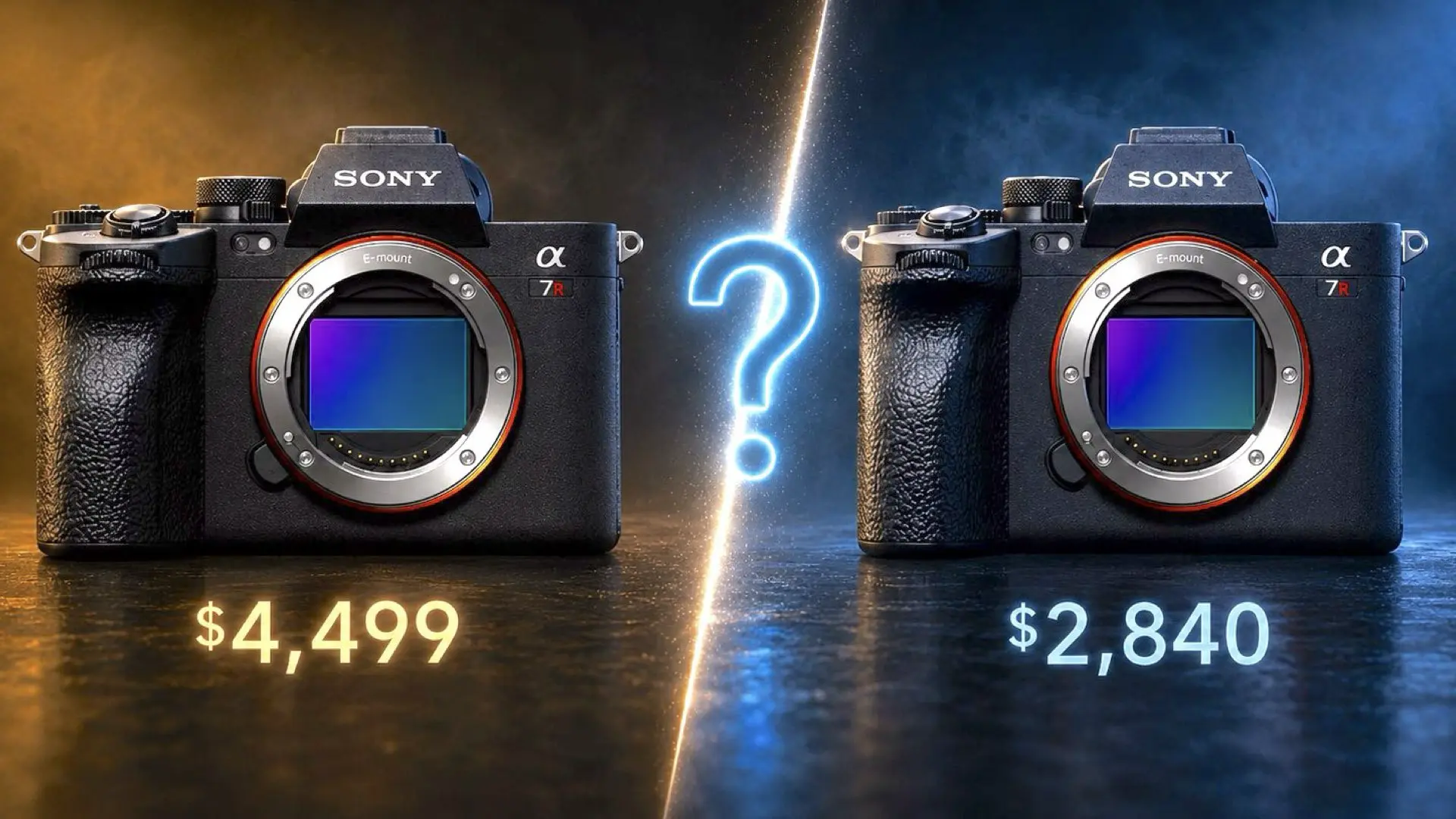
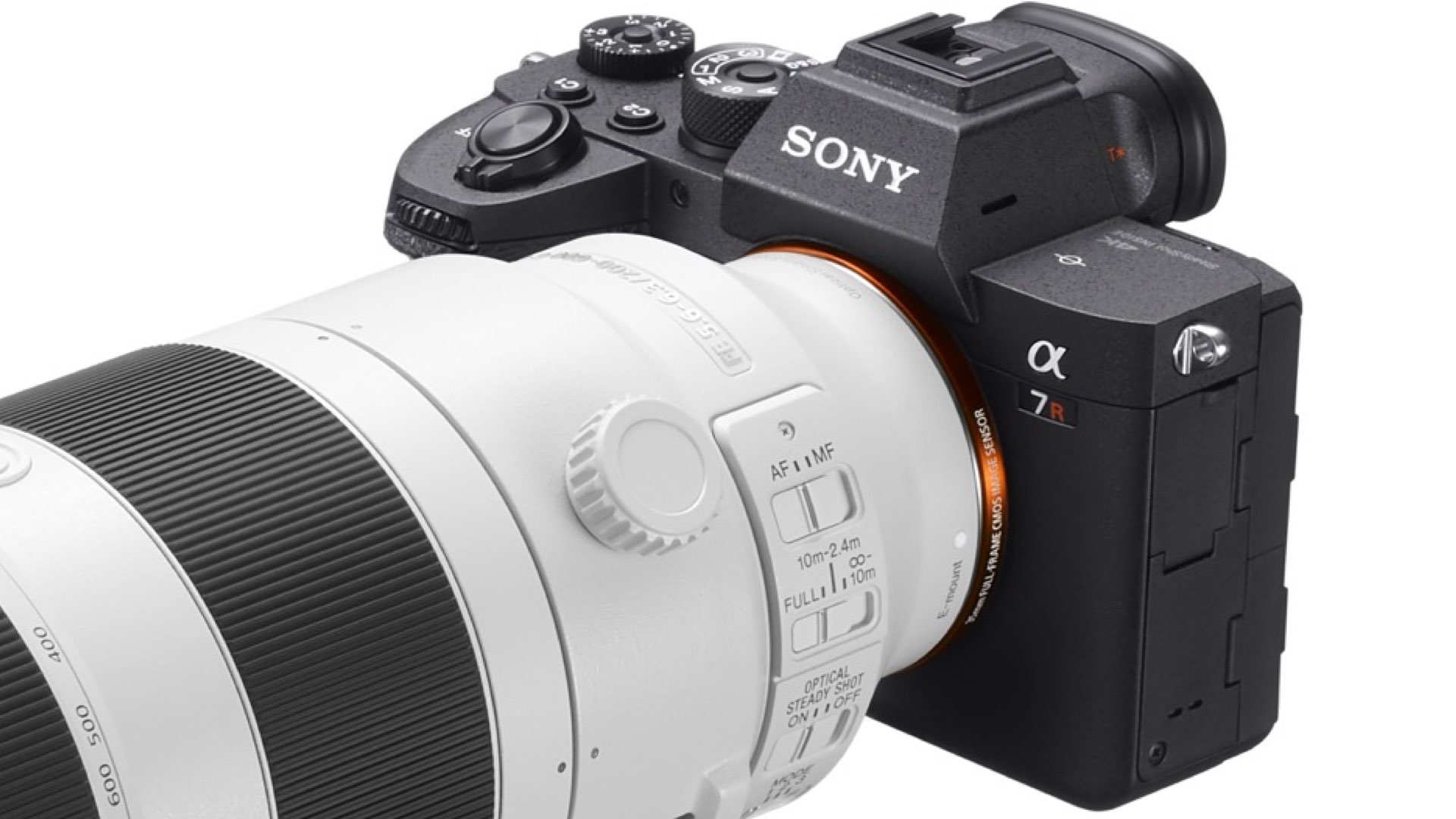
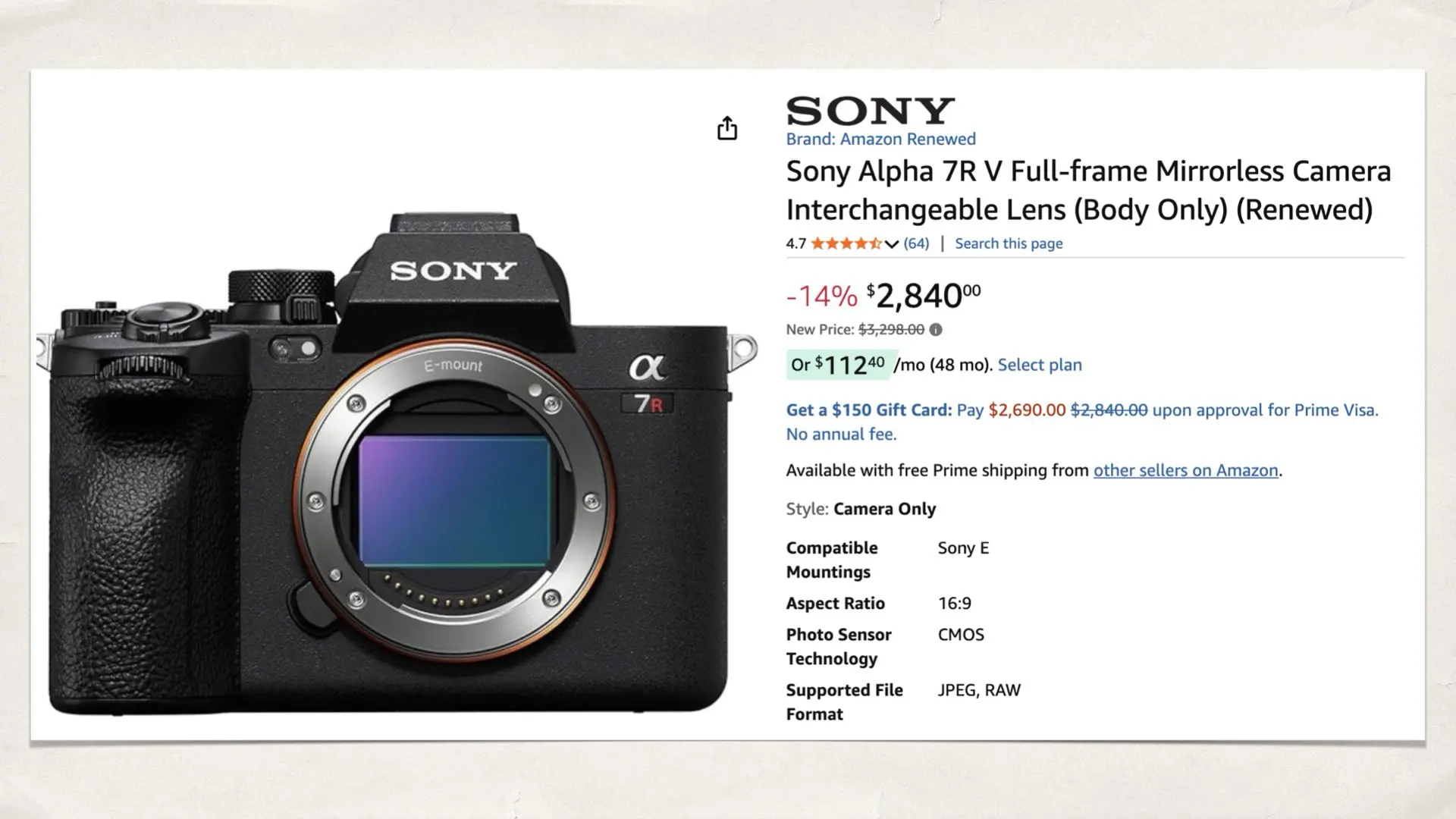
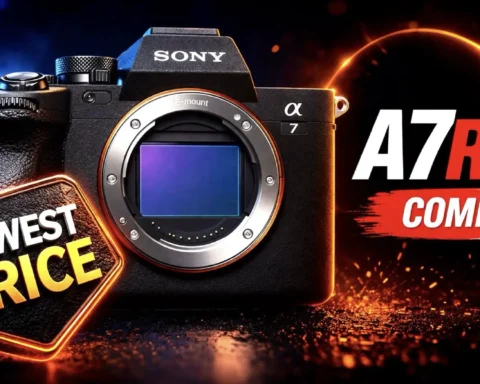
Sony has introduced the Alpha 7R VI ($4,498 on Amazon) , and on paper, it looks like one of the most technically advanced high-resolution mirrorless cameras Sony has ever made. A 66.8MP fully stacked Exmor RS sensor, 30 fps blackout-free continuous shooting, 8K 30p recording, full frame 4K up to 120p, improved stabilization, faster readout, dual USB-C ports, and support for Sony’s Camera Authenticity Solution turn the A7R VI into a very serious hybrid camera. However, there is now another side to the story. Amazon is showing a renewed Sony Alpha 7R V ($3,498 on Amazon) in Excellent condition for $2,840. That creates a real dilemma for filmmakers, hybrid creators, and production-oriented photographers. Should you pay around $4,499 for the new A7R VI, or save roughly $1,660 and buy the predecessor?
The real upgrade is speed, not resolution
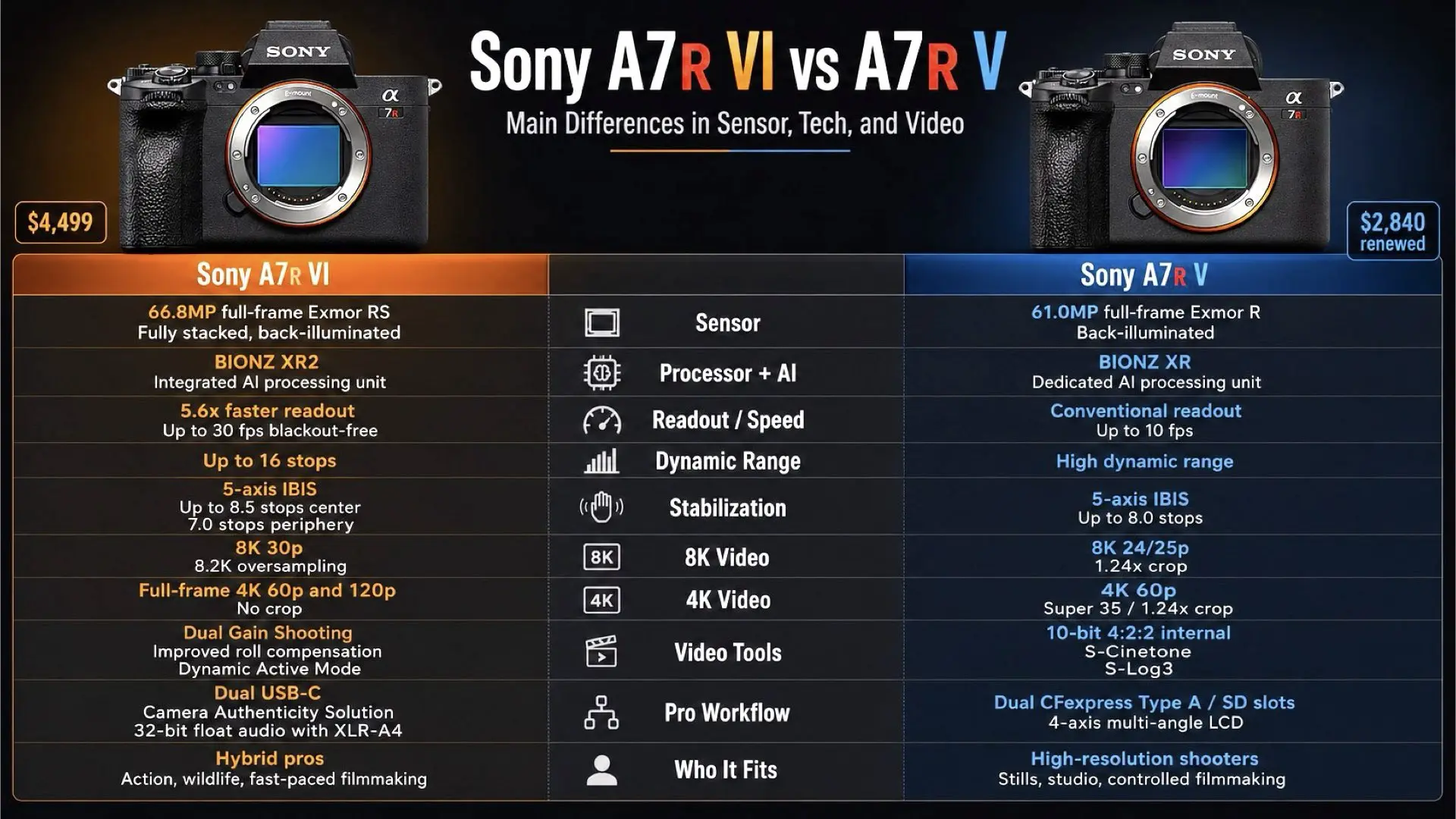
The jump from 61MP on the A7R V to 66.8MP on the A7R VI sounds impressive, although from a filmmaking perspective, that number alone should not drive the buying decision. For video, both cameras already sit far above what is needed for 4K delivery, 8K acquisition, social media crops, reframing, documentary stills, and hybrid production workflows. The extra megapixels are useful, especially for commercial photographers who print large or crop aggressively, but they are not the main reason to choose the A7R VI. The real upgrade is the fully stacked sensor. That is the component that changes the behavior of the camera. A stacked sensor allows much faster readout, and faster readout affects several filmmaking-relevant areas: rolling shutter, autofocus responsiveness, burst speed, silent shooting reliability, and how the camera handles fast movement. The A7R VI is less about adding 5.8MP and more about making a high-resolution camera behave like a speed camera.
Why filmmakers should look beyond the stills specs
For filmmakers, the A7R VI has several upgrades that are more important than resolution. Full frame 4K up to 120p is a major one. Slow motion without giving up the full frame look is a serious advantage for creators who shoot commercial clips, branded content, outdoor films, weddings, music videos, sports, and cinematic social media content. If Sony delivers this with improved readout and better stabilization, the A7R VI becomes much more attractive as a hybrid production tool. The 8K 30p mode with 8.2K oversampling is also valuable, although this depends on workflow. Many creators do not deliver in 8K, but 8K capture gives room for reframing, stabilizing, cropping, vertical extraction, and sharper 4K masters. For solo shooters, that flexibility can replace a second camera angle in some controlled setups. For documentary shooters, it can rescue framing when working fast. Then there is Dual Gain Shooting, which Sony says is a first in the Alpha series. This is one of the more interesting cinema-oriented features in the announcement. If implemented well, it can help preserve cleaner shadow detail and smoother tonal transitions. For filmmakers, dynamic range behavior is often more important than headline resolution. Clean shadows, highlight handling, and gradation determine whether the image feels robust in grading.
The A7R V is still a very strong production camera
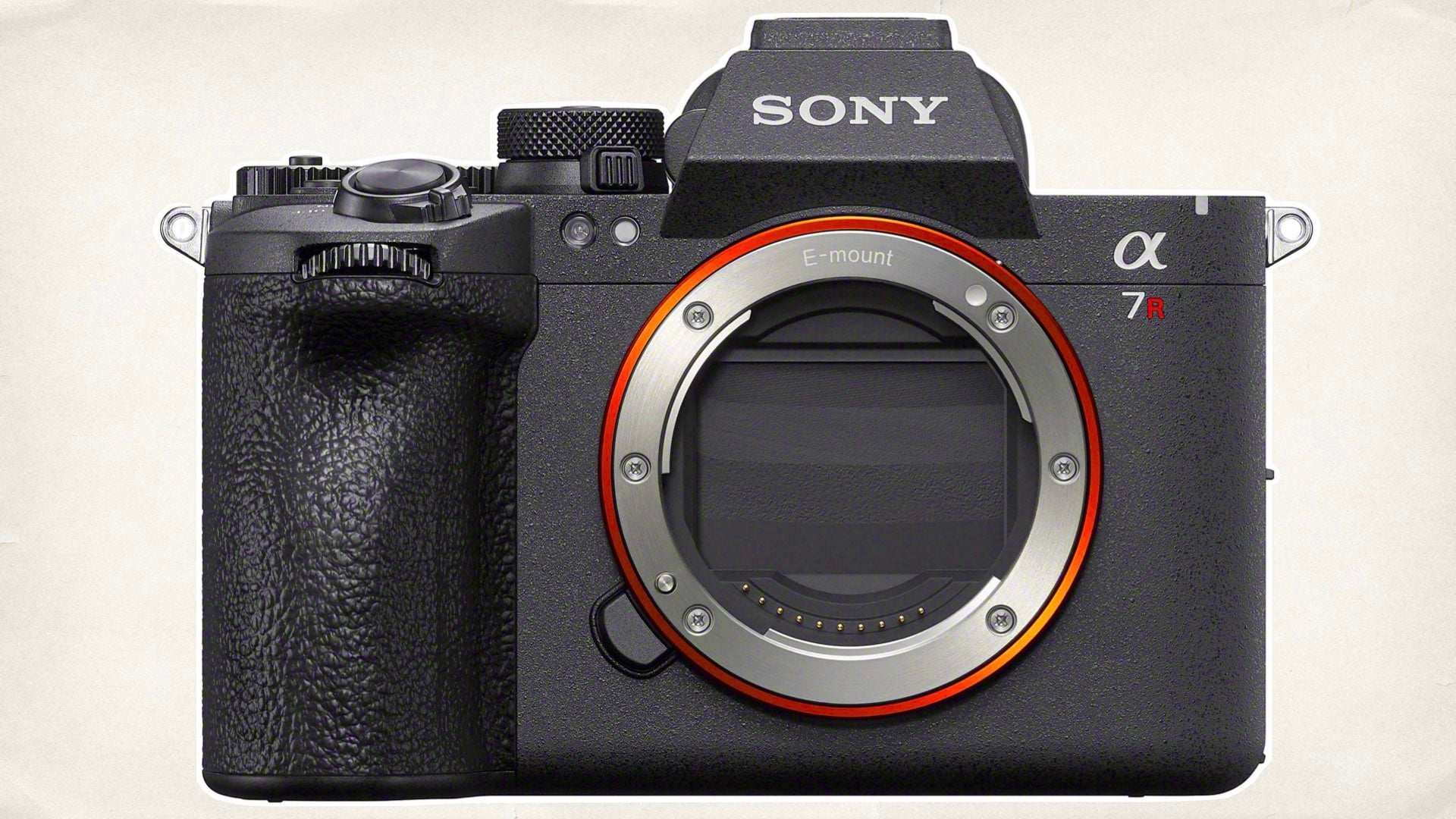
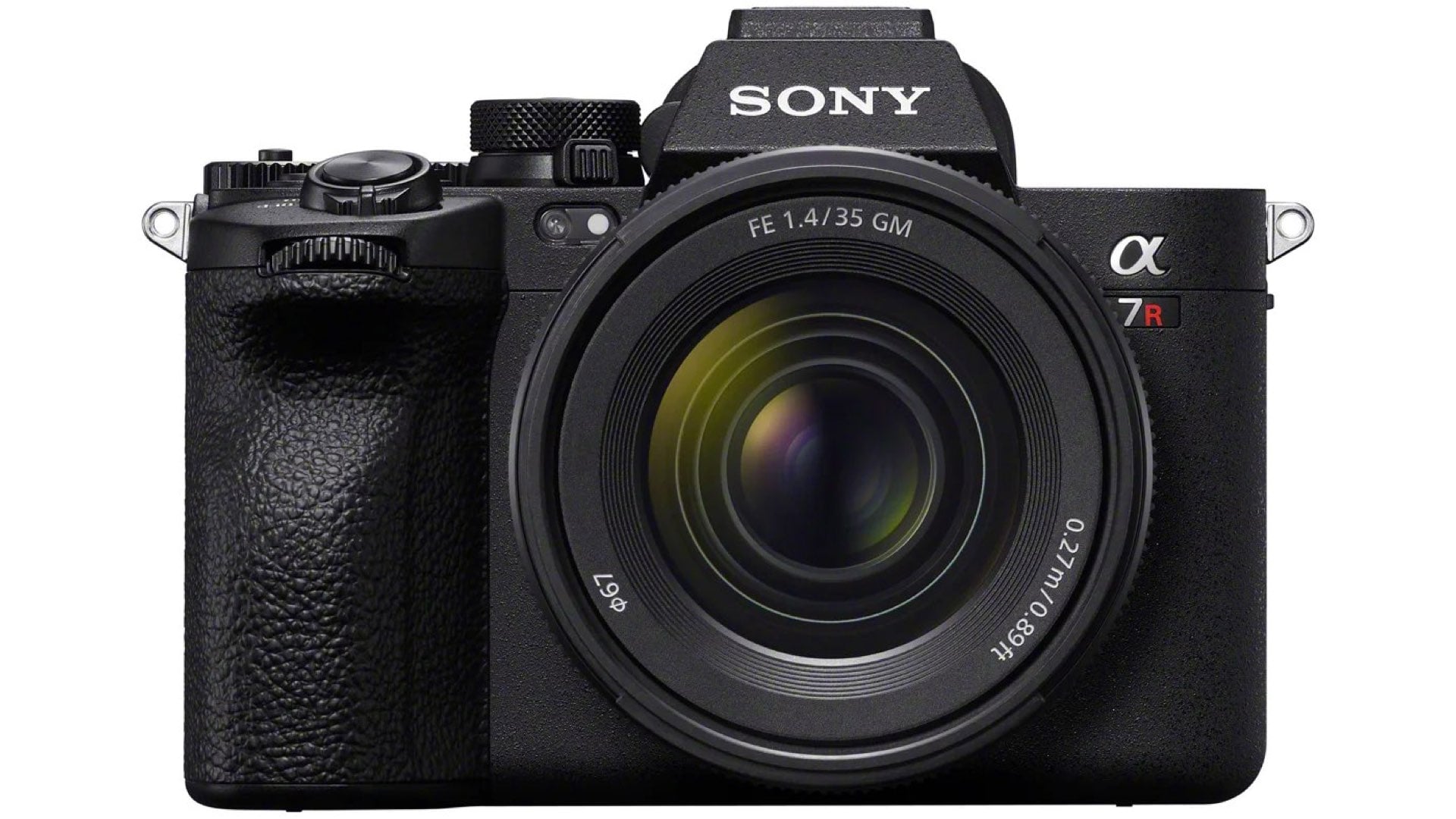
The problem for Sony is that the A7R V remains extremely capable. It has a 61MP full-frame sensor, strong AI-based autofocus, 8K video, very good stabilization, a high-quality electronic viewfinder, and one of Sony’s best screen mechanisms. For many hybrid creators, it already does the job. If your filmmaking work is based on interviews, product videos, travel films, controlled studio setups, YouTube content, architecture, corporate films, educational videos, gear reviews, landscape filmmaking, or slow cinematic sequences, the A7R V may still be more than enough. These productions usually do not require 30 fps stills, blackout-free shooting, or the fastest sensor readout Sony can deliver. That is where the $2,840 Amazon Renewed Excellent deal becomes difficult to ignore. At that price, the A7R V becomes a high-end hybrid camera at a mid-generation discount. It may lack the newest stacked sensor and the strongest video package, but it still offers the core A7R experience: huge resolution, serious detail, strong autofocus, and a body suitable for demanding creative work.
The $1,660 question
The price gap is the center of the article. The A7R VI launches at around $4,499. The renewed A7R V shown on Amazon is $2,840. That is roughly $1,660 in savings. In filmmaking terms, that difference can fund a serious lens, a wireless audio kit, a cage and rig, ND filters, batteries, media, a monitor, lighting, or part of a gimbal setup. That does not make the A7R VI overpriced. It means the buyer has to understand the kind of work they actually do. If the new camera’s stacked sensor, 4K 120p full frame recording, faster readout, improved heat management, better stabilization, and dual USB-C workflow directly solve real production problems, the extra money can be justified. If those features sound impressive but rarely affect your footage, the A7R V deal becomes the smarter choice.
The filmmaking verdict
The A7R VI is the better camera. The A7R V may be the better filmmaking investment (for now!). The A7R VI delivers the technology Sony users have been asking for: more speed, stronger video, faster readout, improved stabilization, and a stacked sensor inside a high-resolution body. It pushes the A7R line into new territory and makes the old idea of a slow high-resolution camera feel outdated. However, the A7R V at $2,840 changes the buying logic. For many filmmakers, the saved money can improve the final image more than the new body can. Better lenses, audio, lighting, filtration, support, and media often have a larger impact on production quality than moving from 61MP to 66.8MP. So the answer depends on the work. If you shoot fast motion, wildlife, sports, events, demanding hybrid projects, and full frame slow motion, the A7R VI is the correct upgrade. If you shoot controlled cinematic content, high-resolution stills, interviews, travel films, product videos, studio work, or YouTube productions, the renewed A7R V deal may be the smarter move.
As an Amazon Associate, Y.M.Cinema earns from qualifying purchases. If you purchase through the Amazon links above, Y.M.Cinema may earn a small commission at no additional cost to you. This helps support our work.
Gear mentioned in this article
Available on Amazon
| Product | New | Renewed | Used |
|---|---|---|---|
| Sony Alpha A7R VI | $4,498 | — | From $4,275 |
| Sony Alpha 7R V | $3,498 | — | From $2,274 |
Prices checked: Sep 15, 2026, 9:30 PM GMT+0000
As an Amazon Associate, Y.M.Cinema earns from qualifying purchases. If you buy through our links, we may earn a small commission at no extra cost to you.
Product prices and availability are accurate as of the date/time indicated and are subject to change. Any price and availability information displayed on Amazon.com at the time of purchase will apply to the purchase of this product.
CERTAIN CONTENT THAT APPEARS ON THIS SITE COMES FROM AMAZON. THIS CONTENT IS PROVIDED “AS IS” AND IS SUBJECT TO CHANGE OR REMOVAL AT ANY TIME.




Not being a sports photographer the extra speed isn’t really important to me, and most of that extra speed is only going to be seriously utilized when you’ve pros in front of you, not kids. My dogs can’t run very fast anymore either. I’ll wait until the resolution really jumps and keep clicking with the A7RV until then. But for those that are new to this and do have the extra money I’d recommend you buy the VI. Taken together all of the new features are probably worth it over the course of the next 3 to 6 years. If you don’t have the extra money the V is great, and if you are just starting the IV or even III are still good cameras, just not with today’s bells and whistles. I have an A7RII that’s fine for slower situations, landscape and the like. It’s that first great E mount lens I’d put money into initially if I could only buy used. The Sony system overall is great. Build within it and carry those great lenses along.