
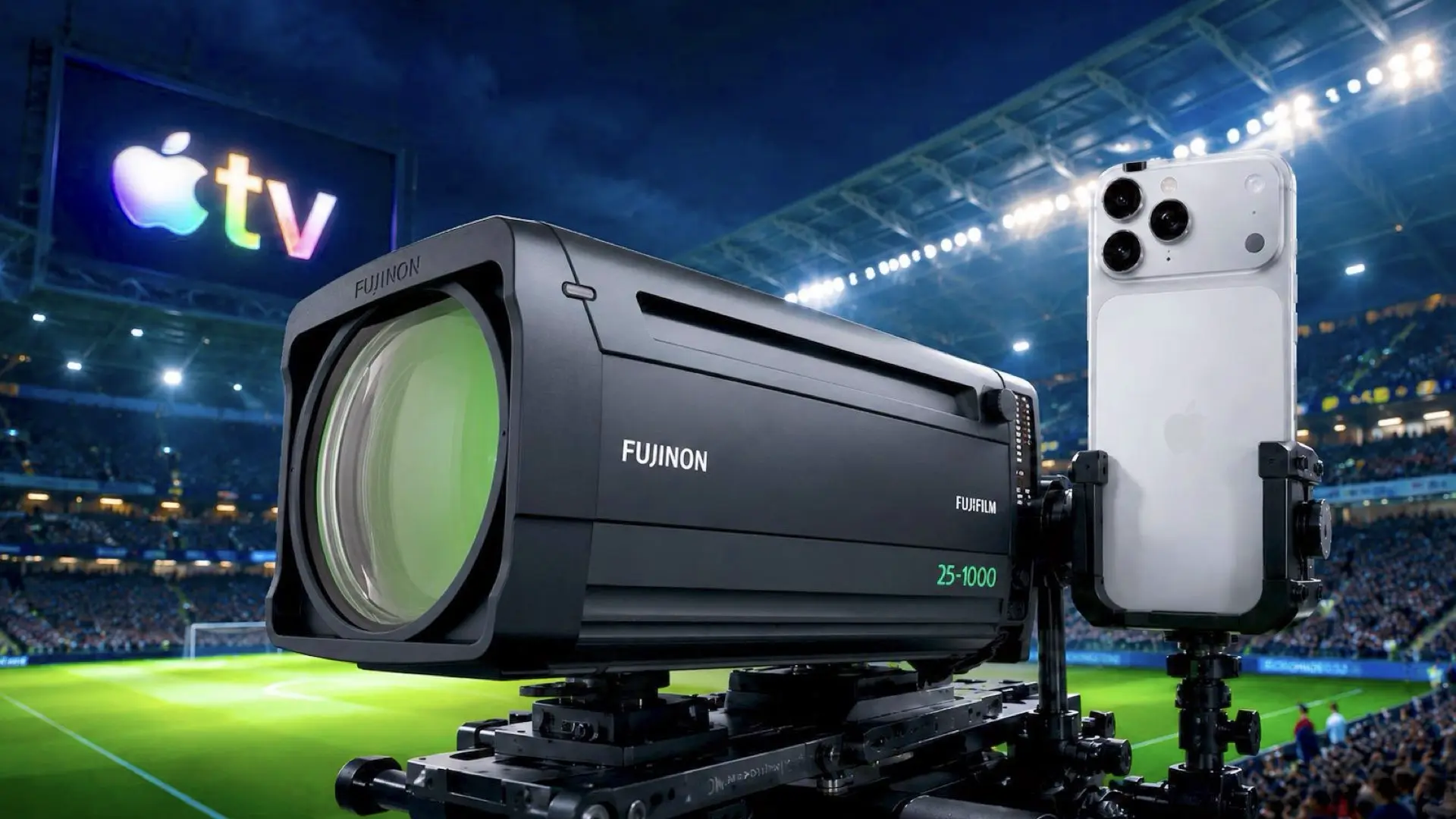
Apple TV has pushed the iPhone into serious live production territory. On May 23, the LA Galaxy vs. Houston Dynamo FC MLS match was presented as the first major professional live sporting event captured entirely on iPhone 17 Pro . The match was streamed live from Dignity Health Sports Park in Carson, California, with iPhones positioned across the venue to capture match action, warmups, player introductions, in-goal angles, sideline views, and stadium atmosphere. The iPhone was paired with Fujinon Duvo 25-1000 cinema box lens that costs $265,000. Yes – this glass beast on an iPhone to capture an official Apple TV event.
The iPhone became a broadcast camera head
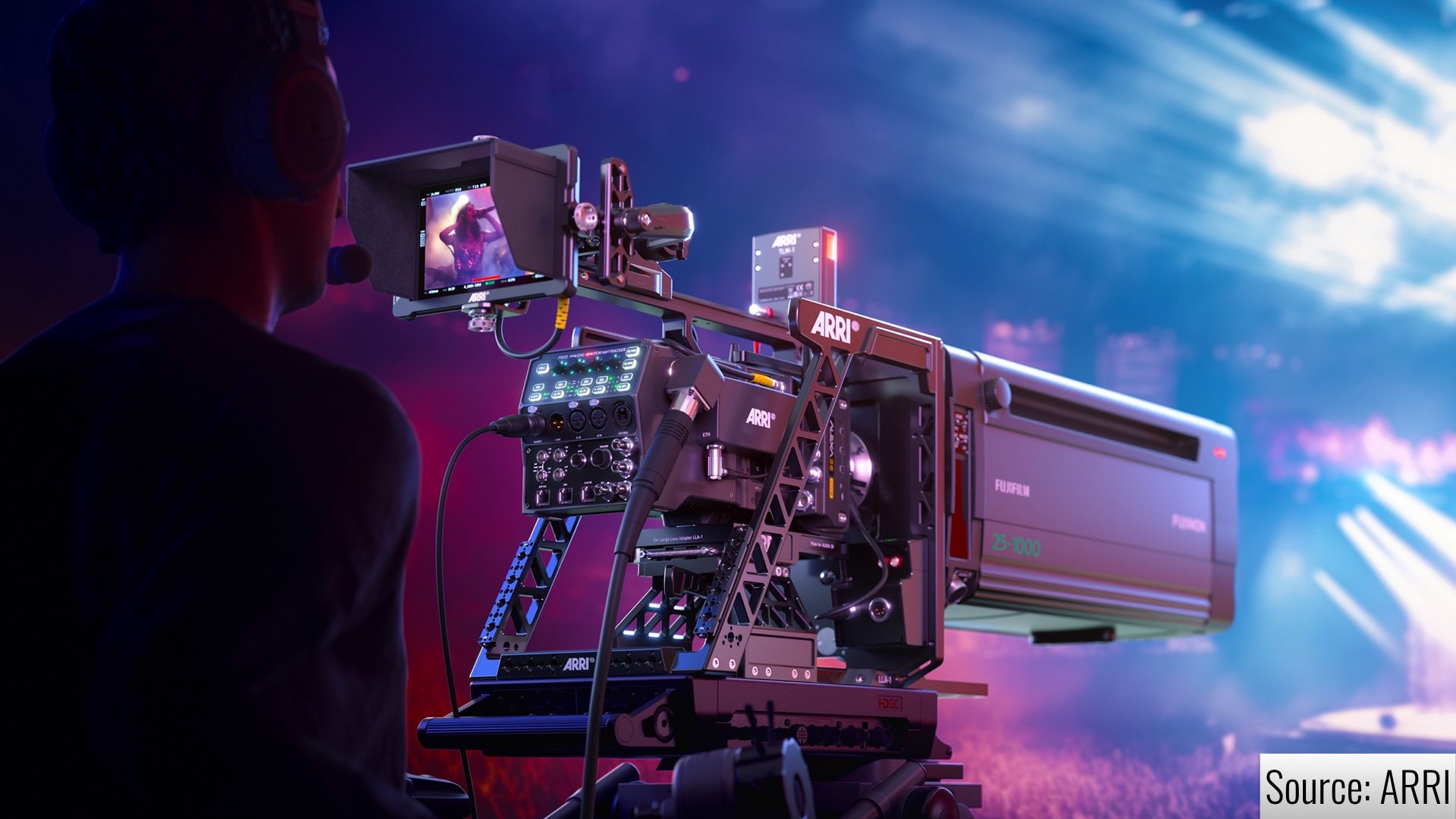
An entire MLS match was shot on an iPhone. This was a full live sports workflow where the iPhone operated as a compact camera head inside a much larger broadcast ecosystem. Behind the scenes footage shows iPhones mounted inside Beastcage-style rigs, connected to external monitoring, Blackmagic hardware, professional power, camera control tools, and production infrastructure. Several iPhone units were labeled like conventional broadcast cameras, including iPhone #3, iPhone #13, and iPhone #14. That tells us the phones were treated as real camera positions, rather than casual mobile devices placed around the stadium. The iPhone is physically small, but the rig around it is serious. External monitors, cables, cages, adapters, Blackmagic gear, mounting plates, and operator controls are all visible.
The $265,000 Fujinon detail changes the story
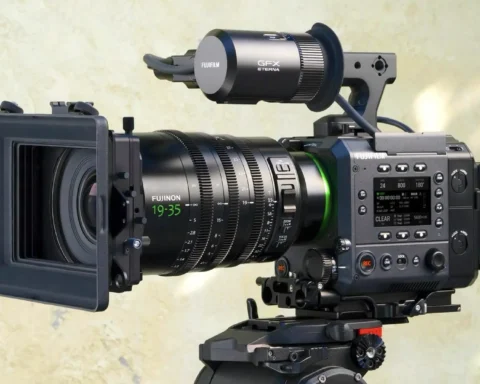
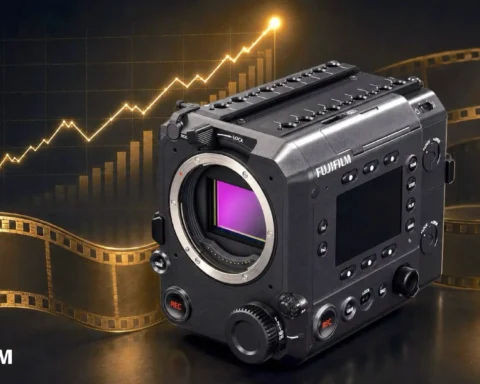
The most fascinating image from the production shows an iPhone based setup next to a massive Fujifilm branded broadcast lens marked 25 to 1000. This appears to be the FUJINON Duvo HZK25 to 1000mm, one of the most extreme live production lenses available today. It offers a 40x zoom range, reaches 1000mm, and expands even further with its built in extender. It is designed for sports, concerts, large venues, and high end live production, where long reach and precise servo operation are essential. Now, when people hear “shot on iPhone,” they imagine a phone replacing a traditional broadcast camera. But when the iPhone is placed beside a $265,000 Fujinon lens and surrounded by professional broadcast hardware, the real story becomes more complex.

Apple Log 2 and Blackmagic Camera app
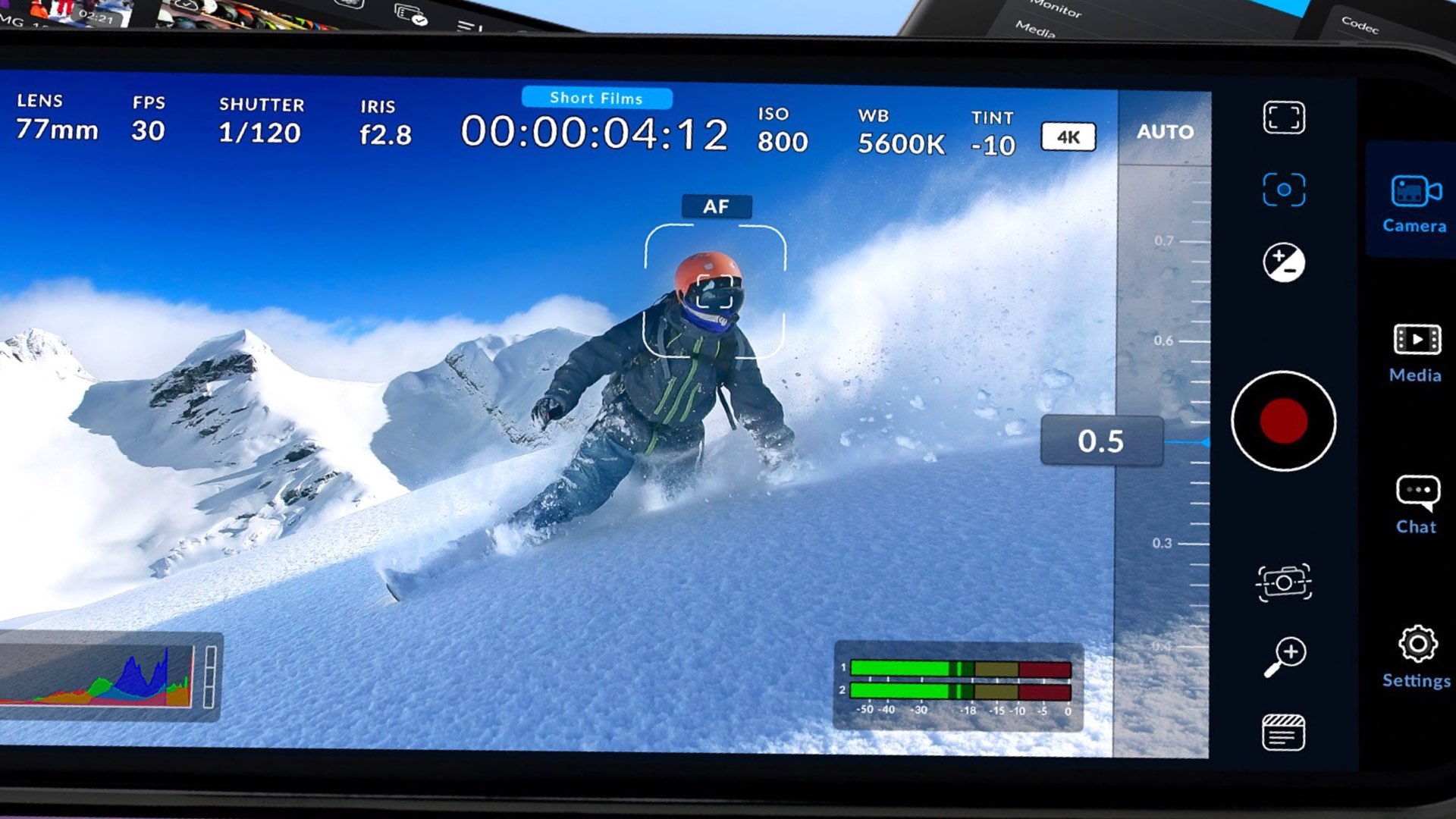
The iPhone enters this environment because the workflow around it has matured. Apple Log 2, the Blackmagic Camera app, external monitoring, and professional control tools are what move the phone beyond casual capture and into production territory. The Blackmagic Camera app gives the iPhone a more professional operating language, with deeper exposure control, monitoring options, codec control, metadata, and a workflow that camera operators can understand. In this MLS broadcast, that software layer appears to be part of the bridge between a smartphone and a live production pipeline.
Broadcast cameras are safe, for now
This event will create exaggerated reactions. Some will claim that iPhone has replaced traditional broadcast cameras. That is the wrong conclusion. Live sports production is one of the toughest imaging environments in the industry. A proper sports camera must handle long lens operation, fast zooming, accurate focus, rapid exposure shifts, long operating windows, heat, weather, low latency, tally, return video, intercom, stable mounting, and fast color matching across multiple cameras. The iPhone solves some of these challenges because it is compact, powerful, and software-driven. It does not solve all of them by itself. The main broadcast camera remains a specialized tool. A 25 to 1000mm Fujinon box lens exists because sports coverage demands extreme reach, smooth servo control, stable framing, and repeatable operation across an entire match. Traditional broadcast systems still dominate top tier sports for a reason. The iPhone brings a different kind of value. It can go where a full-size camera is too large, too expensive, too exposed, or too intrusive. Also, let’s face it! It’s a cool marketing gimmick.


I worked that game. It looked terrible
& malfunctioned many times. Iphone is still a ways away from even
Broadcast quality.