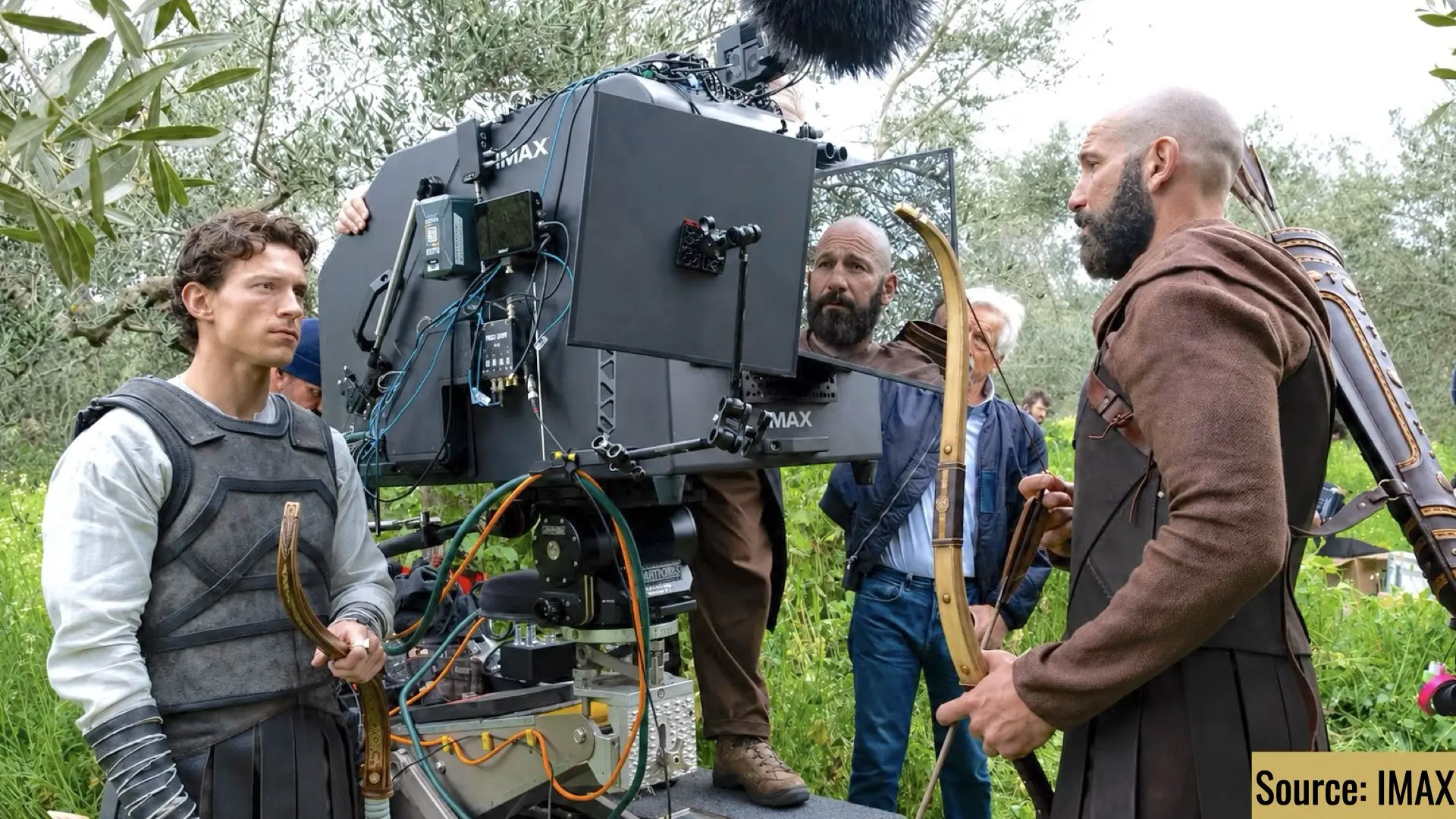
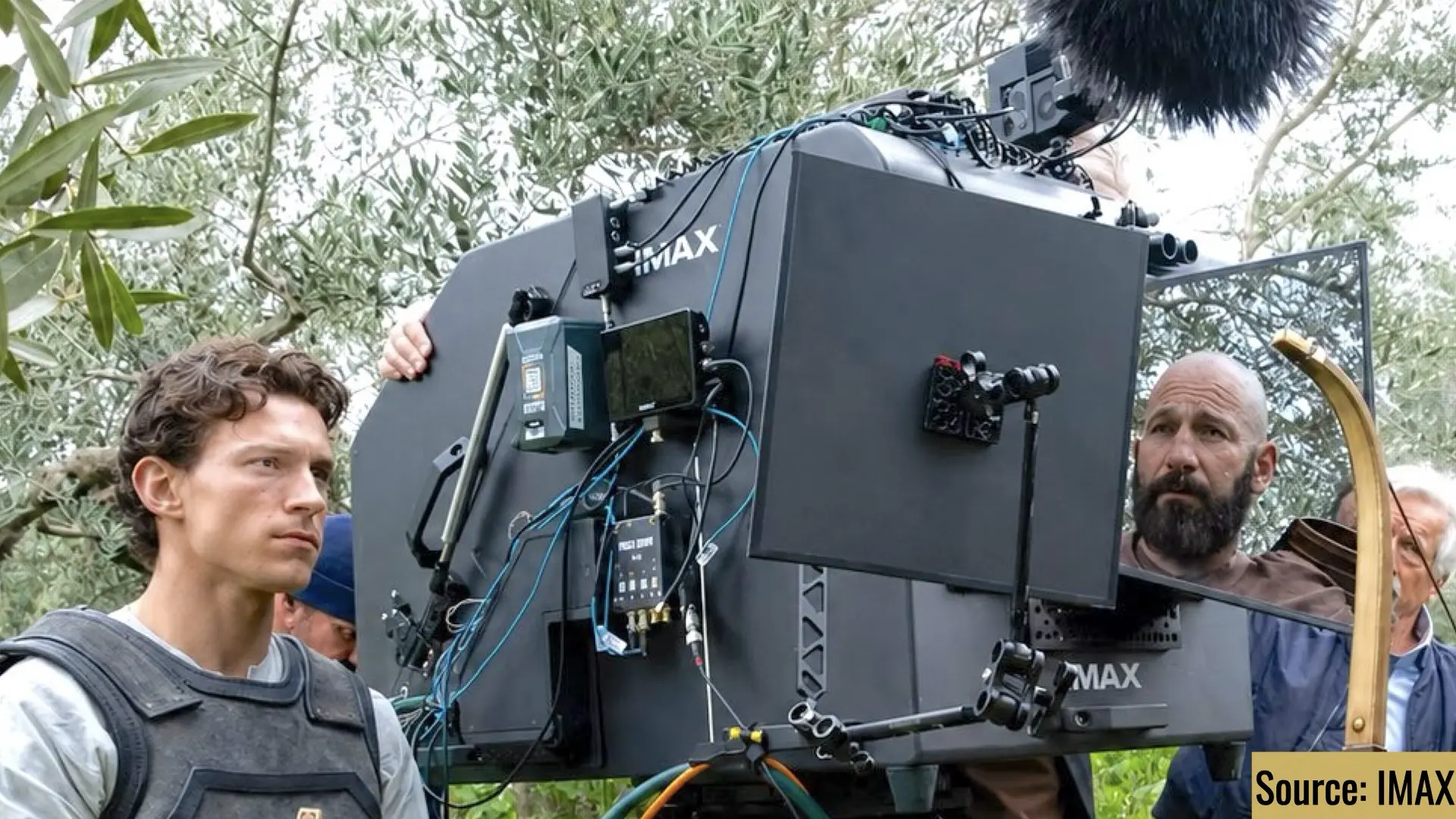
The new IMAX featurette reveals one of the coolest practical solutions behind Christopher Nolan’s The Odyssey: a mirror system designed so actors could see each other around the massive blimped 15/65 IMAX film camera. Christopher Nolan’s The Odyssey is being discussed as an IMAX milestone, and rightly so. The movie was shot entirely with IMAX film cameras, turning one of cinema’s most demanding capture formats into the production’s main visual language. But one of the most fascinating details in the new IMAX behind-the-scenes featurette is not about resolution, negative size, aspect ratio, or even camera noise. It is about mirrors. In the featurette (as we covered before), the crew explains that they had to create a mirror system so actors could see each other around the camera. At first, that sounds almost like a strange technical footnote. But the BTS images make the problem very clear: once the IMAX camera is placed inside a large sound blimp, the camera does not merely sit between actors. It becomes a wall.
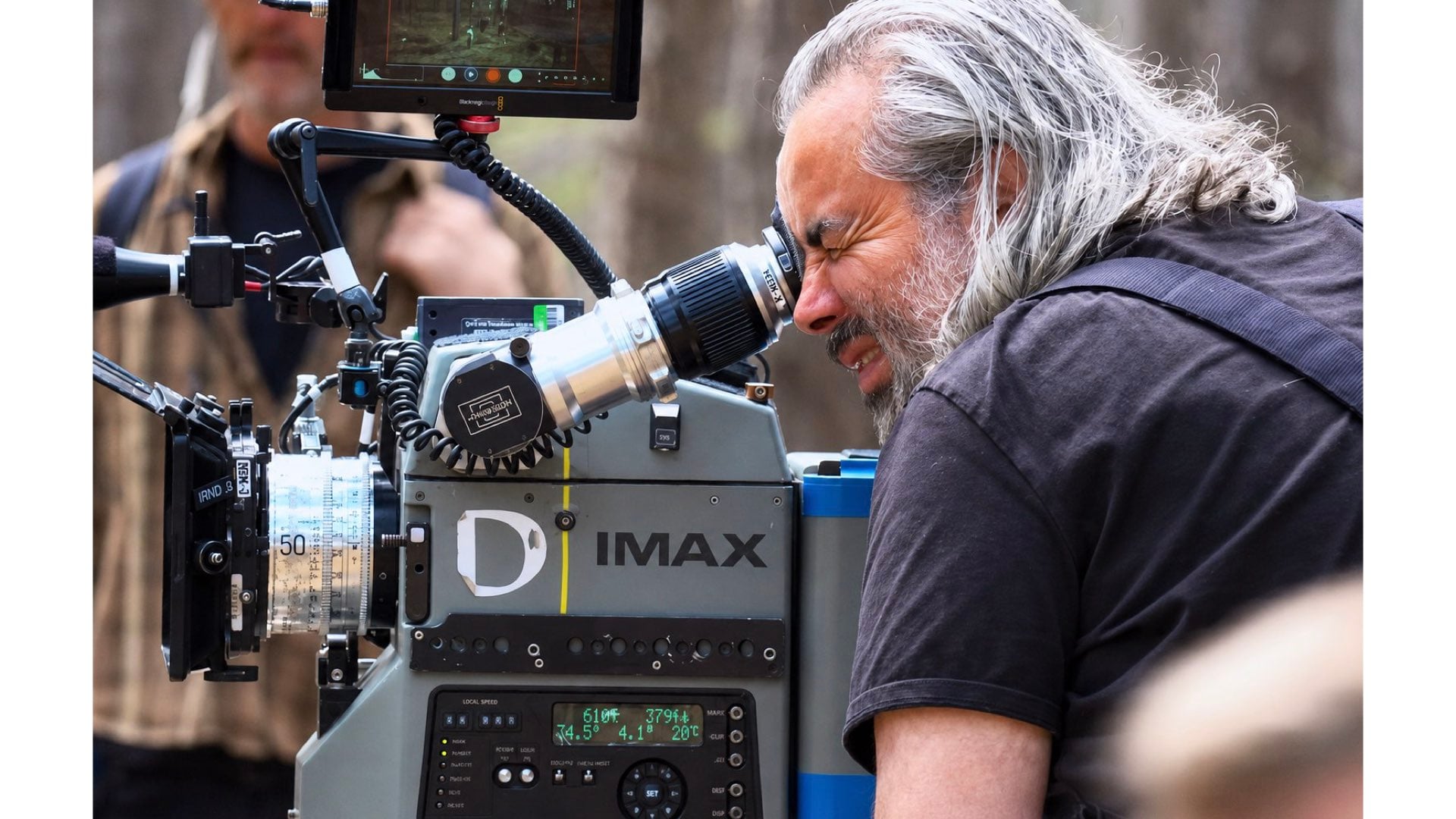
IMAX is a camera that doesn’t lie.
– Hoyte van Hoytema – The Odyssey cinematographer
The blimp solved one problem and created another
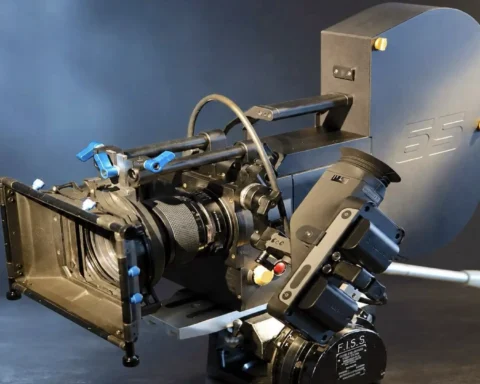
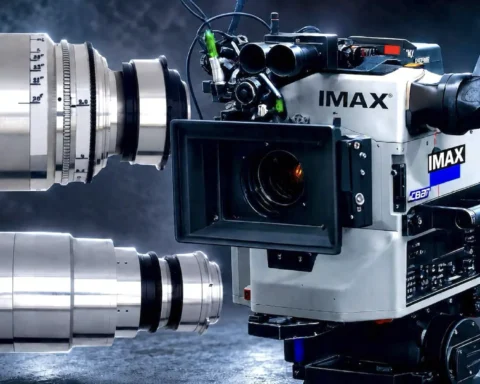
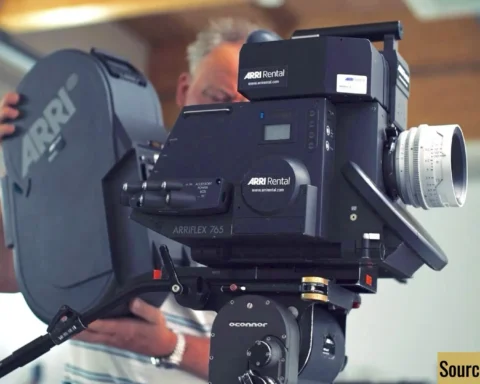
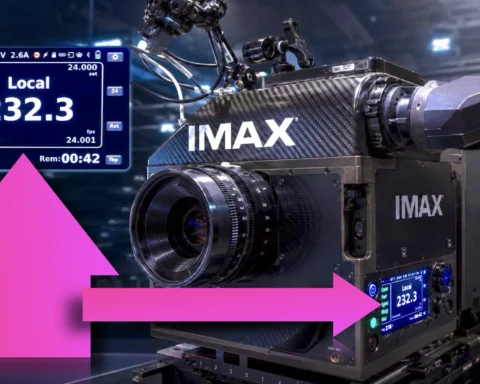
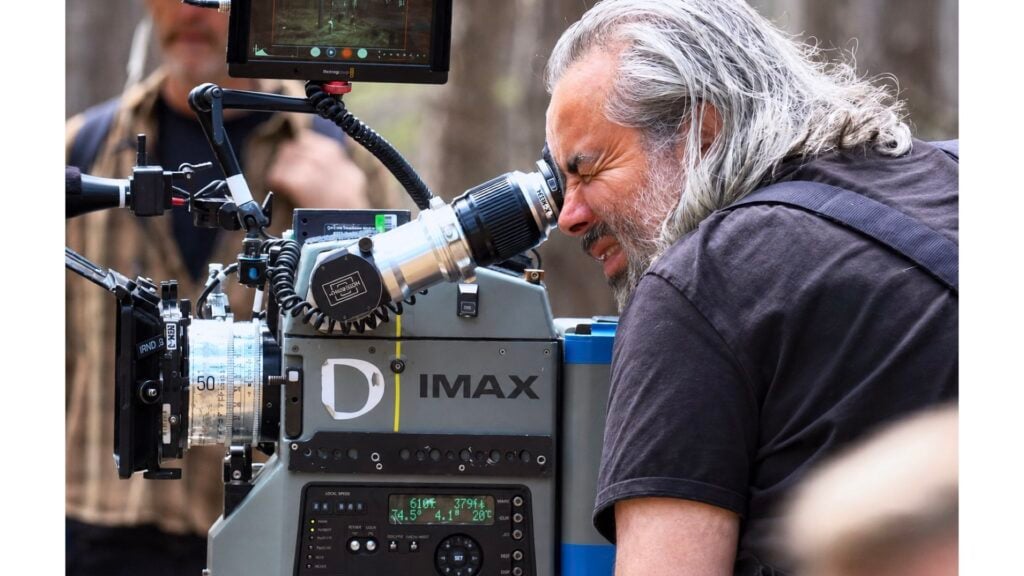
The sound issue of IMAX film cameras is well known. These cameras are large, mechanical, and loud, which makes dialogue scenes extremely challenging. For The Odyssey, IMAX developed new cameras and a blimp to help reduce the noise of the 15/65 system. But that solution created a new problem. The blimped IMAX camera seen in the BTS footage is enormous. It surrounds the camera body inside a large rectangular housing, turning the already massive IMAX film system into something closer to a production vehicle than a traditional cinema camera. In one BTS frame, two actors are positioned face-to-face, but the blimped camera sits directly between them. The camera is exactly where it needs to be for the shot, but it physically blocks the actors’ direct view of each other. That is where the mirror system becomes so interesting. The blimp helped tame the sound of IMAX. The mirrors helped solve the human problem created by the blimp.
Mirrors as an acting tool
Actors rely on eyelines, timing, body language, facial reactions, and direct visual connection. In a dialogue scene, especially one built around emotional exchange, the ability to actually see the other performer can matter enormously. But when a blimped IMAX camera occupies the space between them, that connection can be broken. The mirror system appears to have been designed to restore that connection. It allowed actors to see each other around the camera while Nolan and Hoyte van Hoytema kept the huge 15/65 IMAX system in the correct position. That is a rare kind of filmmaking problem. Usually, the camera adapts to the actors. Here, the camera was so large that the production had to adapt the human geometry of the scene around the camera.
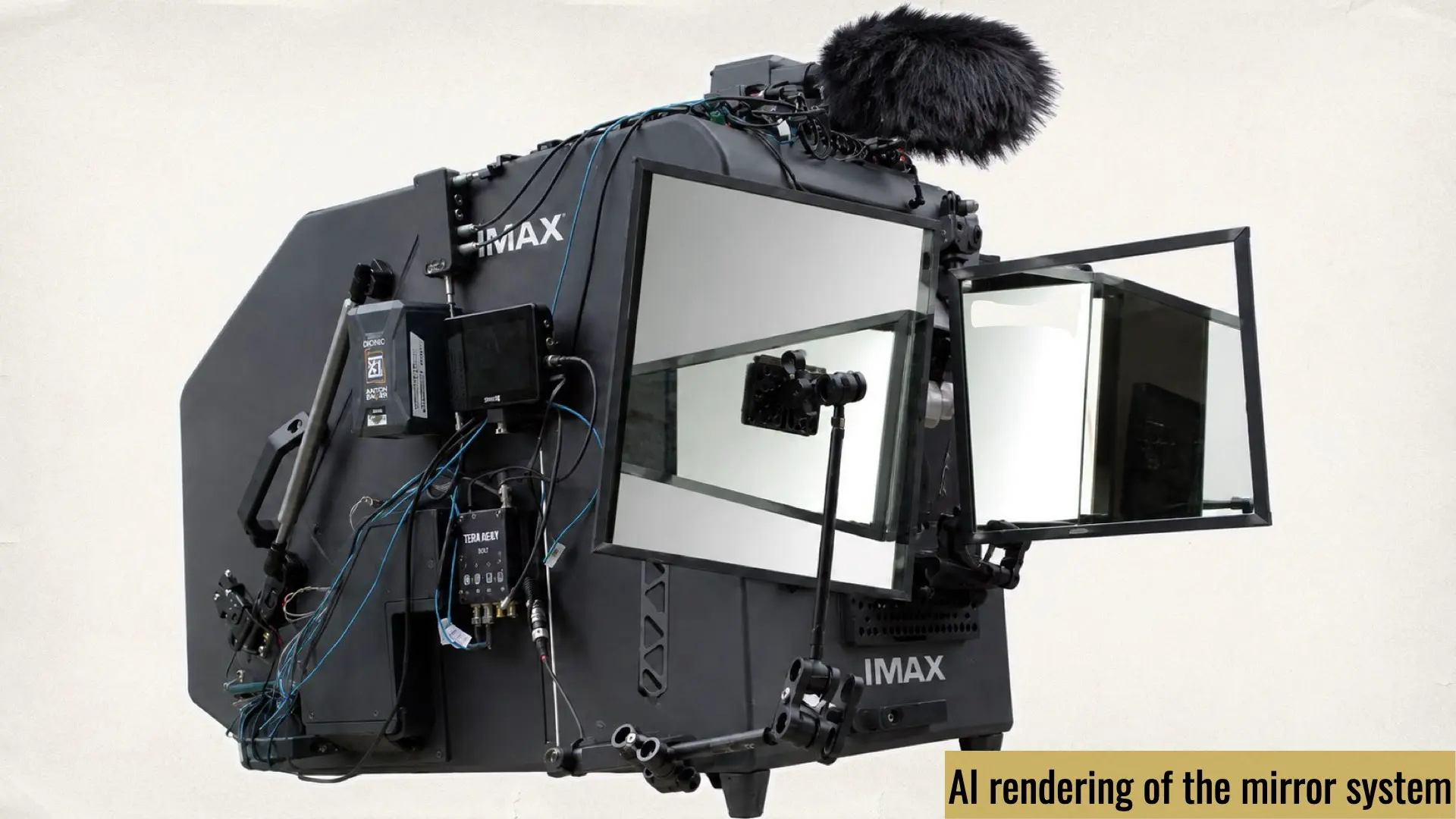
Hoyte van Hoytema and large-format problem-solving
This kind of practical engineering fits Hoyte van Hoytema’s large-format career very well. He is not new to complex capture systems, strange optical solutions, or physically ambitious camera builds. A good example is Nope, which used a unique day-for-night rig combining the ALEXA 65 Infrared and Panavision System 65. That setup was designed to solve a very specific large-format imaging problem: how to create convincing night exteriors with unusual scale, texture, and visibility. The Odyssey mirror system belongs to the same family of thinking. It is not technology for its own sake. It is a practical response to a physical production problem.
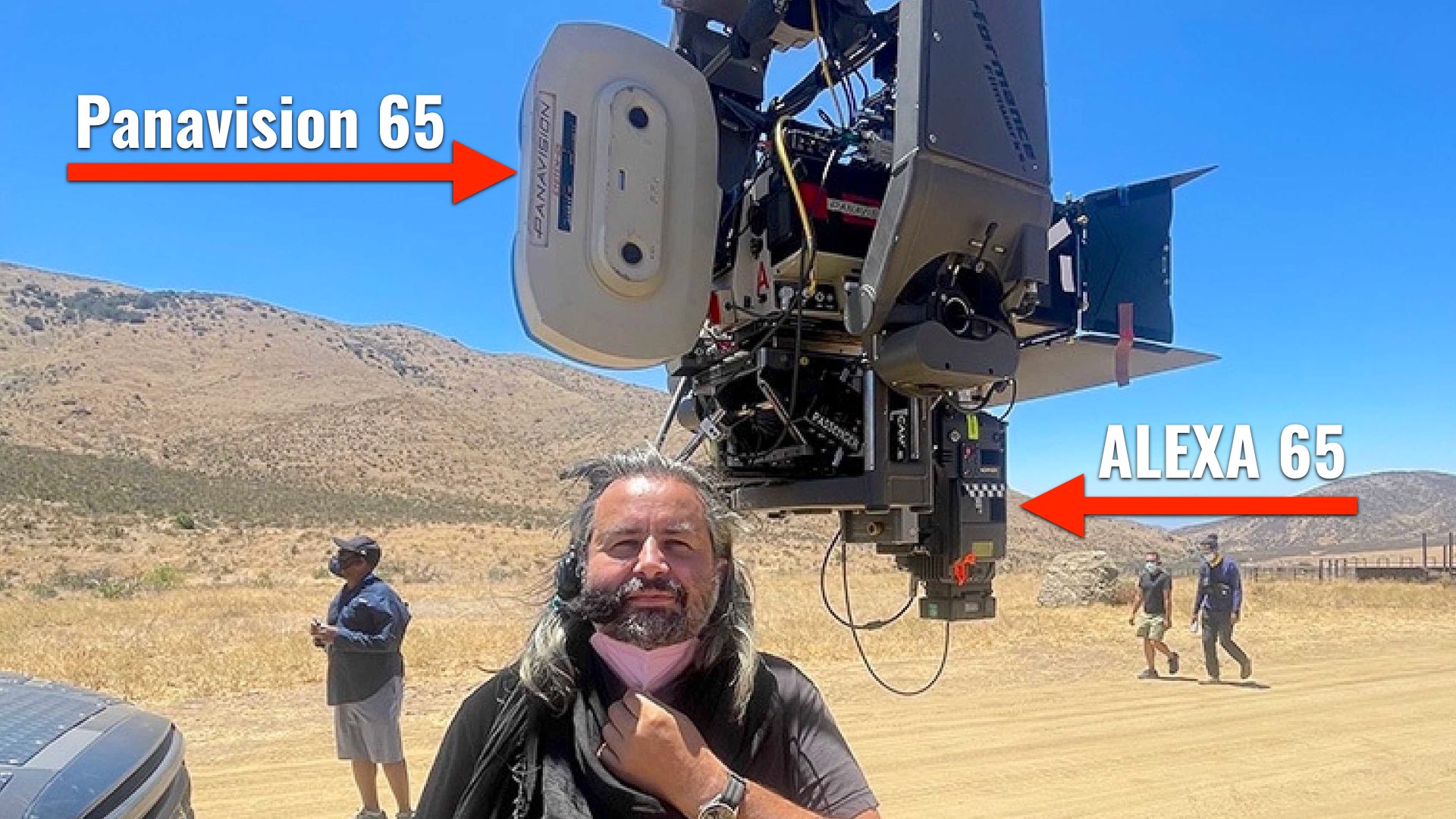
We, as filmmakers, we’re not supposed to be comfortable. We’re supposed to present the audience with the best experience possible
– Hoyte van Hoytema – The Odyssey cinematographer
“IMAX is a camera that doesn’t lie”
In the IMAX featurette, van Hoytema says that “IMAX is a camera that doesn’t lie.” That is a revealing statement. IMAX film is brutally direct. It sees scale, texture, faces, landscapes, movement, and physical reality with very little forgiveness. That is part of its power. But a camera that does not lie is also a camera that does not make life easy. Hoytema says another important line in the featurette: “We as filmmakers, we’re not supposed to be comfortable. We’re supposed to present the audience with the best experience possible.” That sentence could almost define the entire Odyssey IMAX workflow. The production accepted discomfort as part of the method. Heavy cameras. Giant blimps. Rugged locations. Complex movement. Digital monitoring around analog capture. Mirrors for actor eyelines. A full production ecosystem built around a format that is difficult precisely because it can deliver something different. The mirror system is a small detail, but it expresses that philosophy perfectly. See how IMAX is explaining this in their video below.