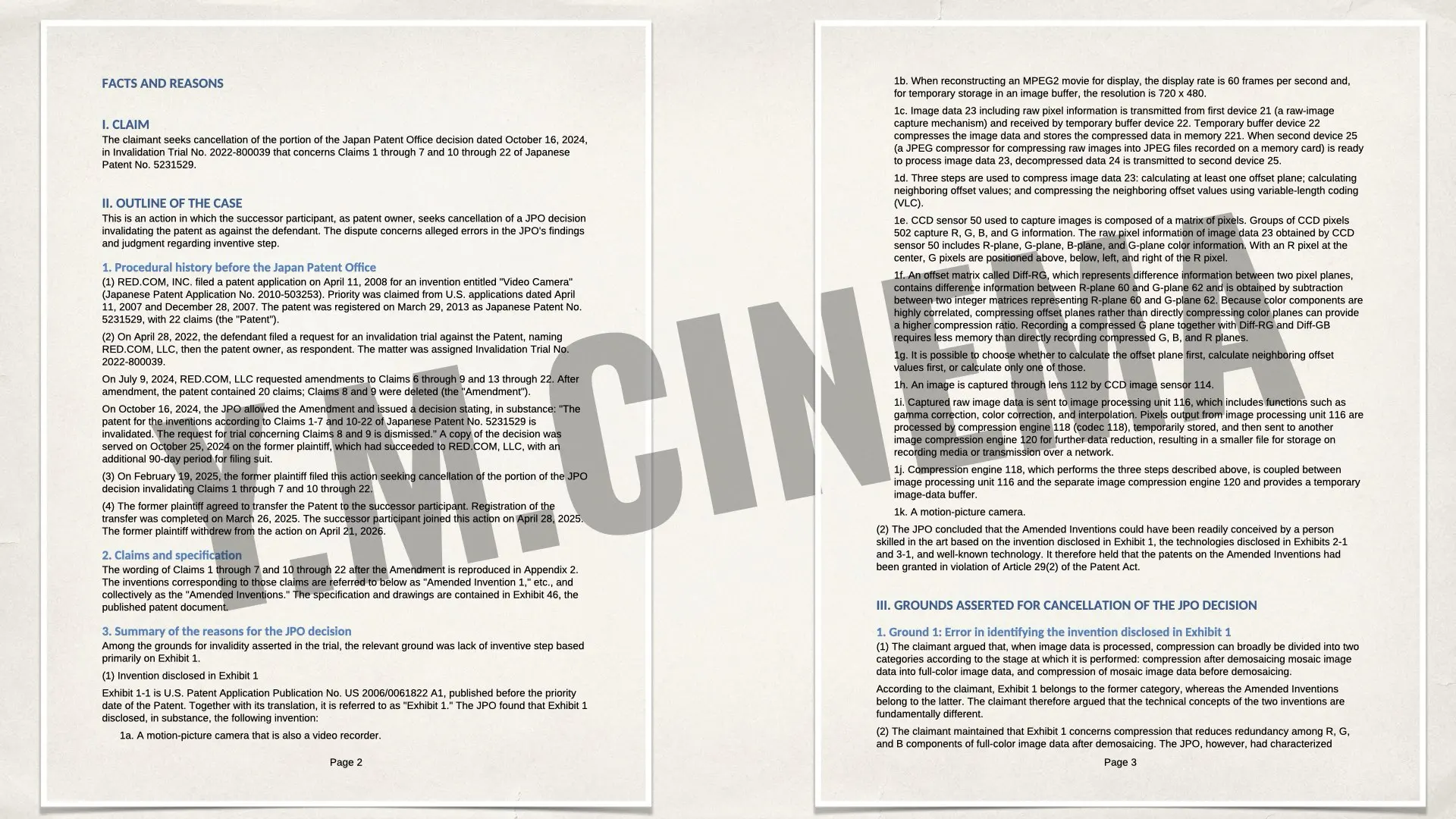
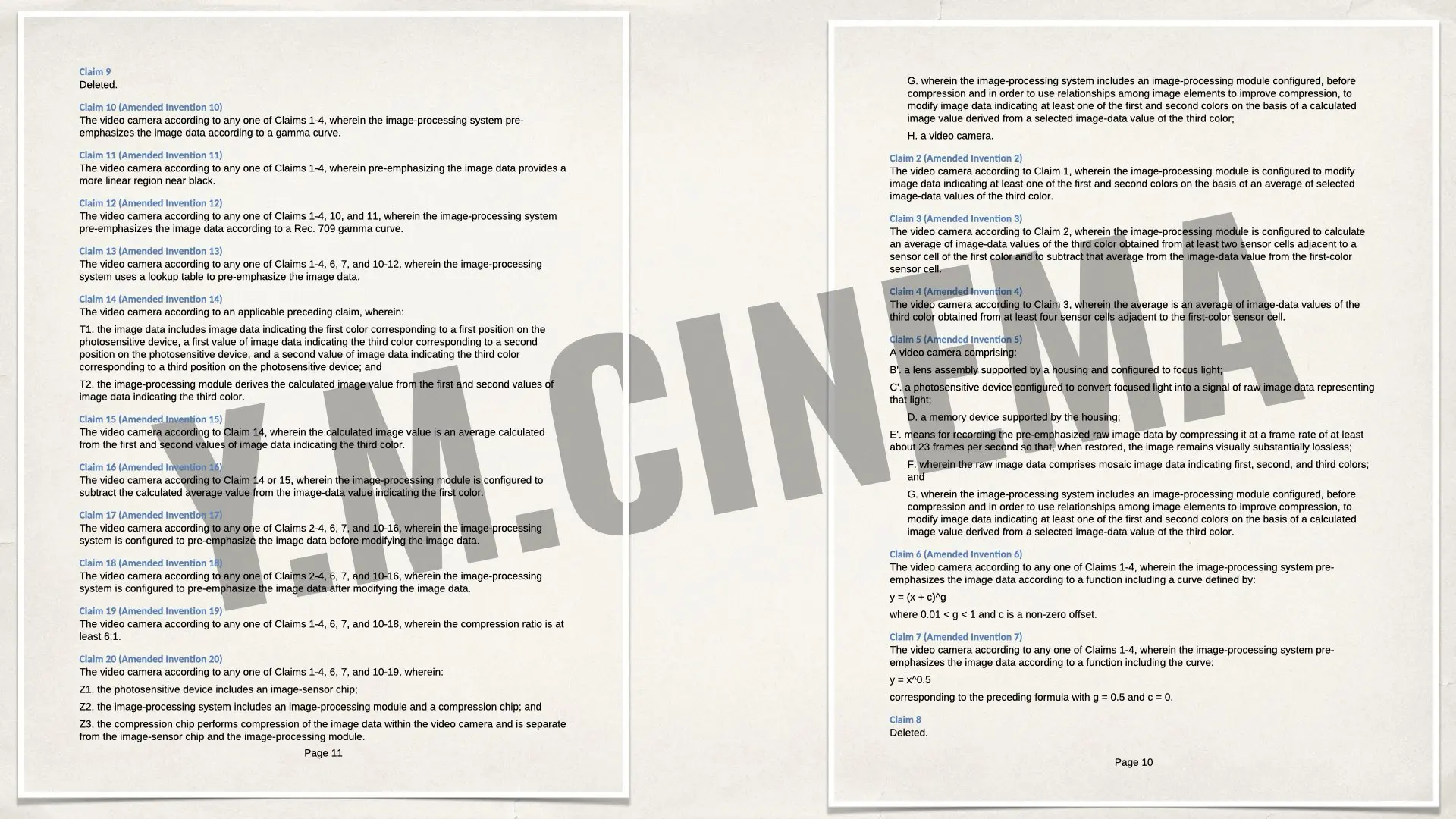
Panasonic’s victory over RED’s compressed RAW patent in Japan has already produced an obvious headline: Panasonic succeeded where several major technology and camera companies had previously failed. But the more revealing story is buried inside the June 30, 2026 judgment itself. Japan’s Intellectual Property High Court did not simply decide that Panasonic had the stronger case. It examined what RED, and later Nikon, claimed was technically different about the patented RAW workflow and rejected the two distinctions on which that argument depended. The case concerns Japanese Patent No. 5231529, originally filed by RED and titled “Video Camera.” Panasonic challenged the patent in 2022 through invalidation proceeding No. 2022-800039. In October 2024, the Japan Patent Office invalidated claims 1–7 and 10–22. Claims 8 and 9 had already been deleted through amendments. The patent was subsequently transferred to Nikon, which entered the court proceeding as RED’s successor and attempted to overturn that decision. The court rejected the challenge. The interesting part is why.

The decisive issue was not simply compressed RAW. The court found that two technical distinctions used to defend RED’s patent were already present, or insufficiently different, in earlier imaging technology.
RED’s key distinction was RAW before demosaicing
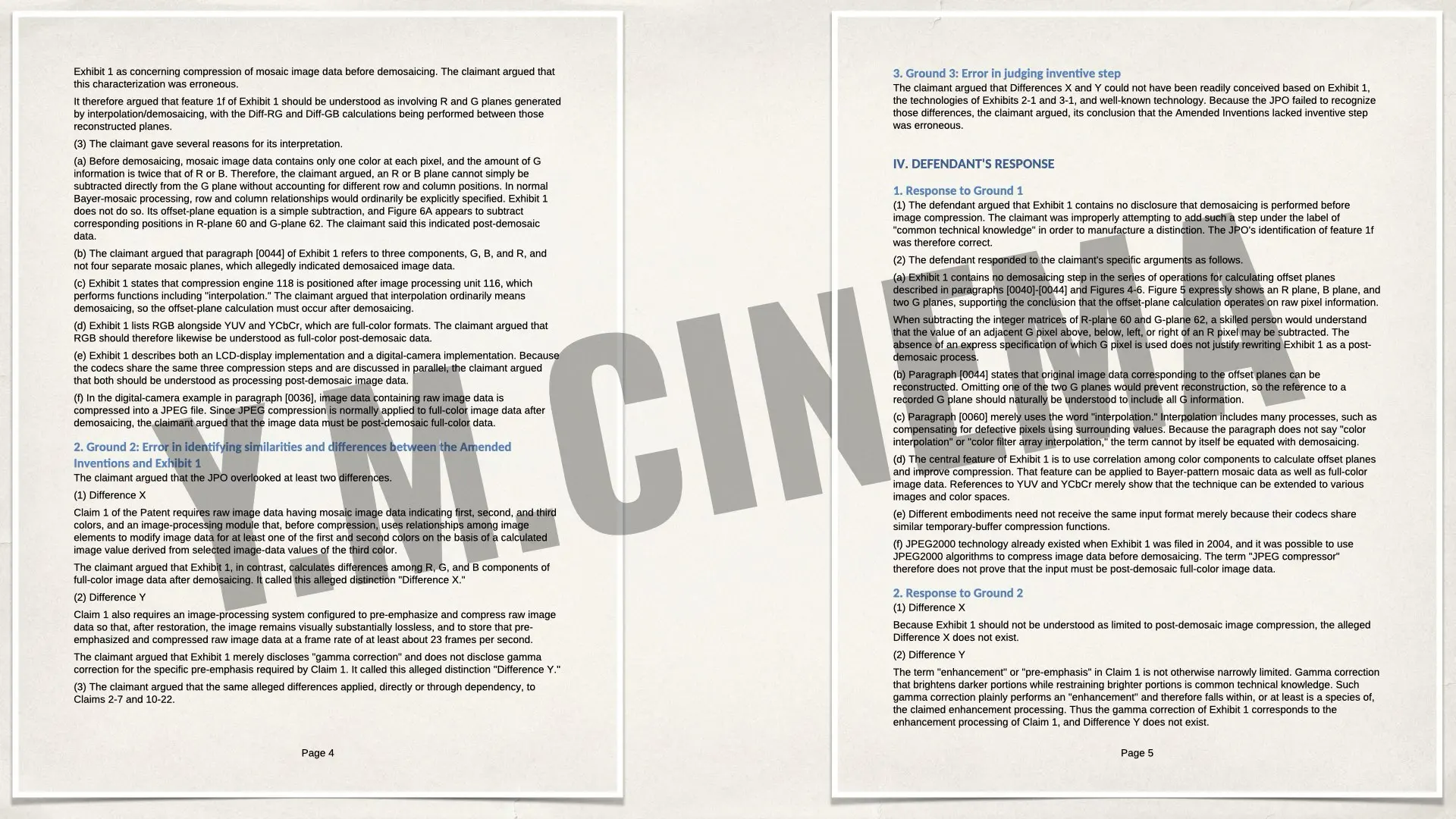
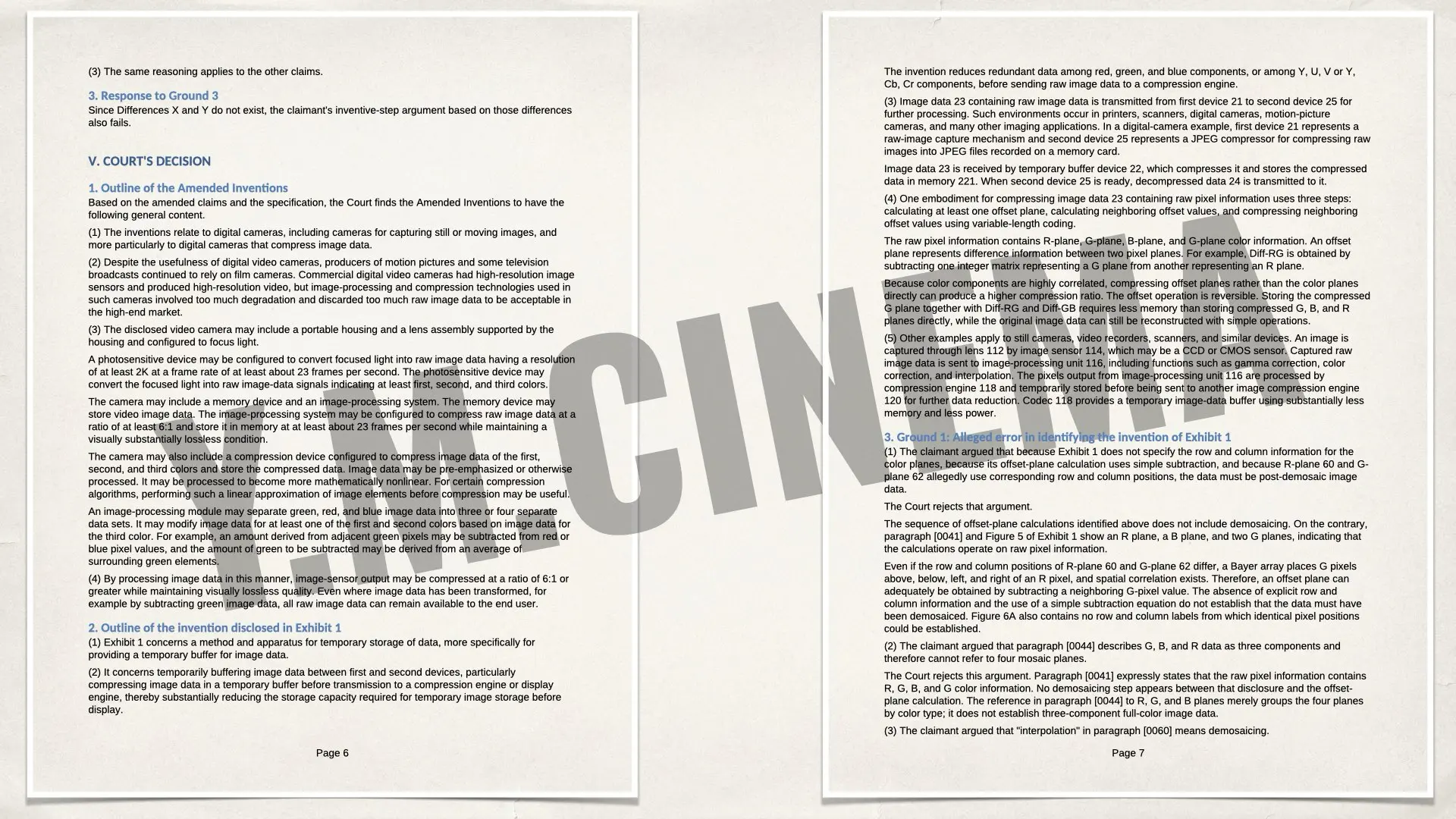
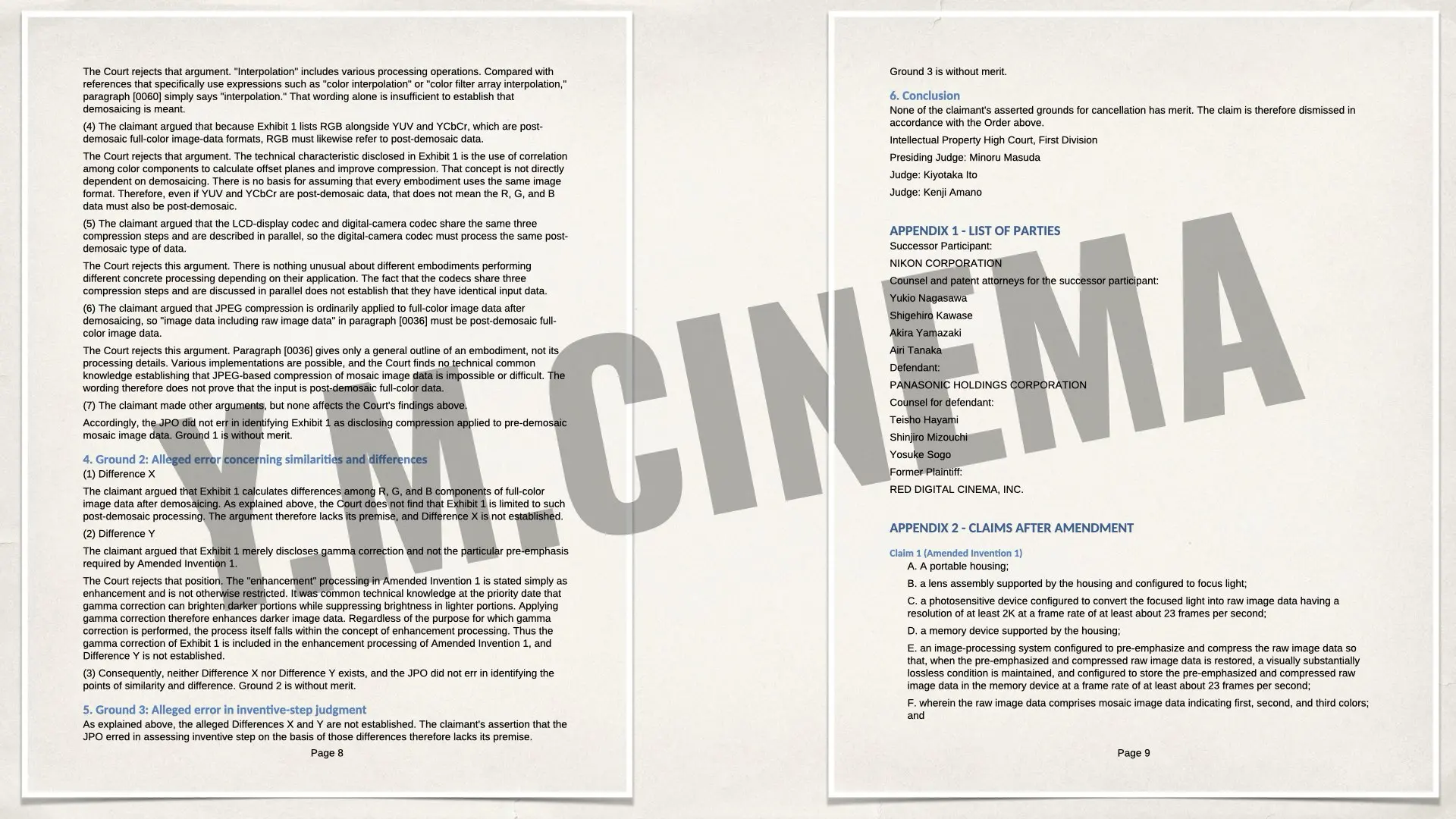
At the center of the dispute was a technical boundary familiar to anyone working with digital cinema cameras: what happens to sensor data before demosaicing. The amended RED claims describe mosaic image data containing first, second, and third colors, with image processing that uses relationships between those color samples before compression. The patent also describes a portable video camera capable of generating at least 2K RAW image data at approximately 23 frames per second or higher and storing compressed image data while maintaining a visually substantially lossless result. RED/Nikon argued that the earlier technology cited against the patent operated differently. Their position was essentially that the prior art performed compression on full-color RGB image data after demosaicing, whereas RED’s invention worked on mosaic RAW information before demosaicing. Compressing Bayer-pattern sensor data before interpolation is not the same imaging pipeline as first reconstructing full RGB pixels and then compressing the resulting image. But the court did not accept that reading of the prior art. The principal reference was US 2006/0061822 A1, an earlier image-processing invention describing temporary compression of image data to reduce memory requirements. It discusses raw pixel information separated into R, G, B and G planes and calculates differences between color planes, including a Diff-RG plane, to exploit correlation between color components and improve compression efficiency. RED/Nikon attempted to establish that this processing must have occurred after interpolation. The court found otherwise. It pointed out that the earlier reference itself describes R, B and two G planes, consistent with raw mosaic information. It also found no requirement in the disclosed processing sequence that demosaicing occur before those calculations. The court specifically rejected the argument that the simple subtraction between color planes proved that full RGB reconstruction had already taken place. That finding removed what RED/Nikon called “Difference X.” And this may be the most important technical element of the entire judgment: the court did not accept pre-demosaic processing of mosaic image data as the distinguishing feature RED/Nikon said it was in this patent.
Panasonic won the case. But the more revealing result is what the court decided: RED had not sufficiently distinguished itself from technology that came before it.
An old memory-saving technique became the problem
The prior art that caused trouble for RED was not another famous digital cinema RAW system. Its core purpose was far less glamorous: reducing the amount of memory required when temporarily buffering image data. The system compressed image information before passing it farther through an imaging pipeline. One method calculated differences between color planes rather than simply storing each plane independently. Because neighboring color information is correlated, representing those differences can require less data. In other words, a technique designed around efficient image buffering and memory usage ended up becoming central prior art against a patent closely associated with one of digital cinema’s most consequential recording concepts. That changes the way this ruling should be read. The patent was not invalidated because a court decided that compressed RAW itself was somehow unpatentable. The problem was narrower: when RED/Nikon tried to distinguish the claimed invention from what had already been disclosed, the court found the gap much smaller than they argued.
The court did not accept pre-demosaic processing of mosaic image data as the distinguishing feature RED/Nikon said it was in this patent.
Gamma correction did not save the claims either
There was a second attempted distinction. RED’s claims included preprocessing, described as pre-emphasis, before compression. RED/Nikon argued that the gamma correction disclosed in the prior art was not equivalent to the preprocessing described in their patent. Again, the court disagreed. It found that the claim language for the enhancement processing was not narrowly limited enough to exclude ordinary gamma correction. Since gamma correction can brighten darker image values while restraining brighter ones, the court considered it to fall within the claimed concept of enhancement. That eliminated “Difference Y,” the second technical distinction RED/Nikon relied on. Once both Difference X and Difference Y failed, the inventive-step argument was left without the technical separation needed to overturn the JPO’s decision. The court therefore rejected the challenge and left the invalidation of claims 1–7 and 10–22 intact.
Nikon ultimately found itself defending a RED patent portfolio after acquiring the company, even though Nikon had previously been on the opposite side of RED’s compressed RAW patent battles.
Nikon inherited more than RED’s cameras
There is an unusual corporate layer to the case. RED originally owned the patent and was the party defending it. During the litigation, the patent rights were transferred to Nikon. Nikon entered the proceeding as successor participant, while RED later withdrew. The official judgment lists Nikon Corporation as the successor participant, Panasonic Holdings Corporation as the defendant, and RED Digital Cinema as the former plaintiff. That means Nikon ultimately found itself defending a RED patent portfolio after acquiring the company, even though Nikon had previously been on the opposite side of RED’s compressed RAW patent battles. But the June ruling is more useful than that irony suggests. It provides a rare technical view into exactly where one court found the boundary between RED’s claims and older imaging technology too weak to sustain the patent. The decision is also limited to this Japanese patent. It does not automatically invalidate RED/Nikon patents in the United States or other jurisdictions, nor does it establish that internal compressed RAW recording is universally free of patent restrictions. What it does establish is more specific: for Japanese Patent No. 5231529, RED/Nikon could not convince the court that processing mosaic RAW before demosaicing, together with the claimed preprocessing step, created the inventive distinction they needed over the cited prior art. Panasonic won the case. But the more revealing result is what the court decided: RED had not sufficiently distinguished itself from technology that came before it.