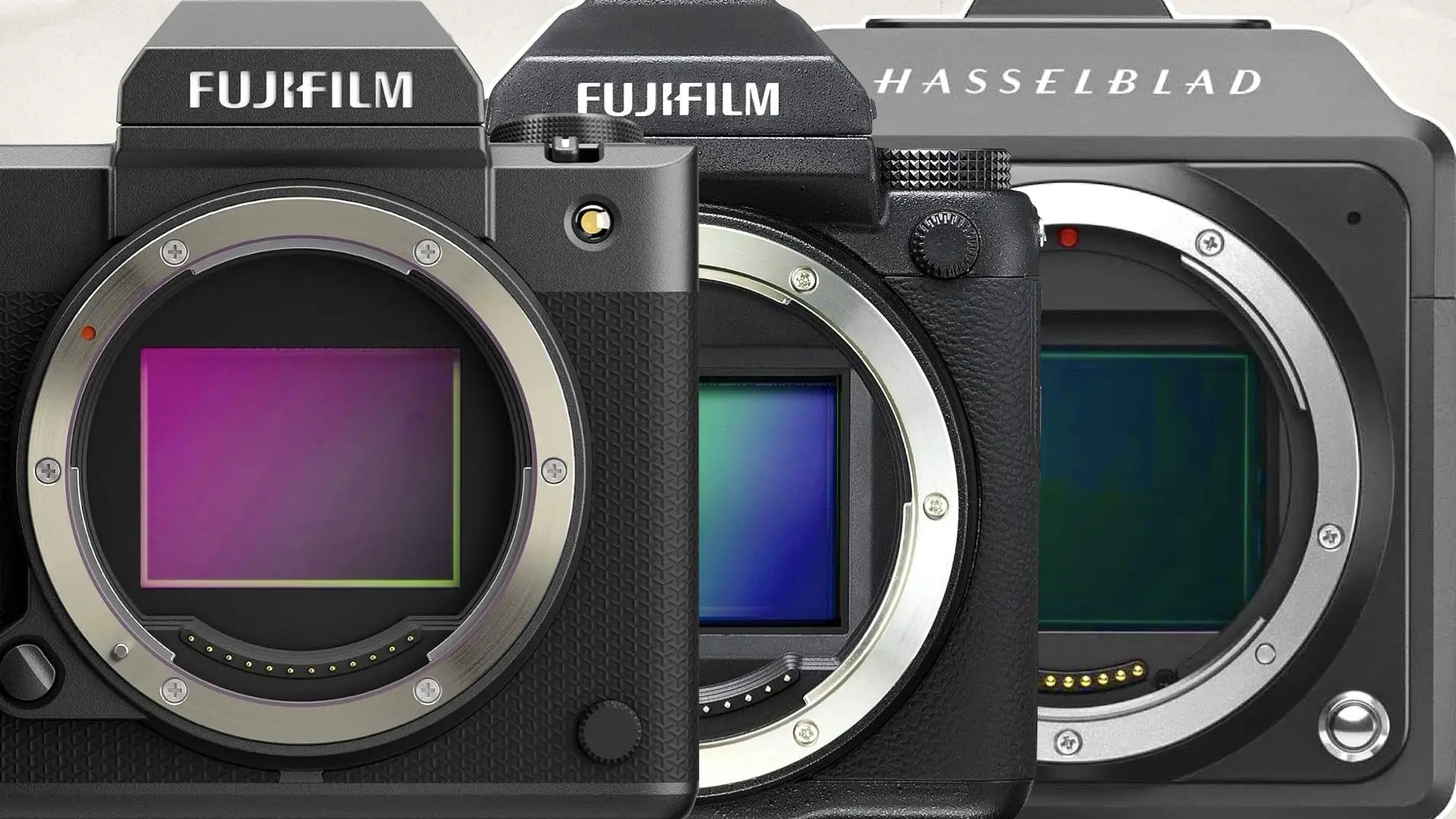
Medium format used to sit in a very different pricing category from mainstream full-frame cameras. That gap still exists at the high end, but Amazon’s current listings show how much the market has changed. You can now find 100MP medium-format bodies below $4,000 if you are willing to buy used, while new flagship models still sit well above $7,000. The important part is that these cameras are not interchangeable. Resolution may look similar on paper, but handling, autofocus, stabilization, system design, lens cost, and condition make a major difference. Let’s check ehtm out.
Fujifilm GFX100S
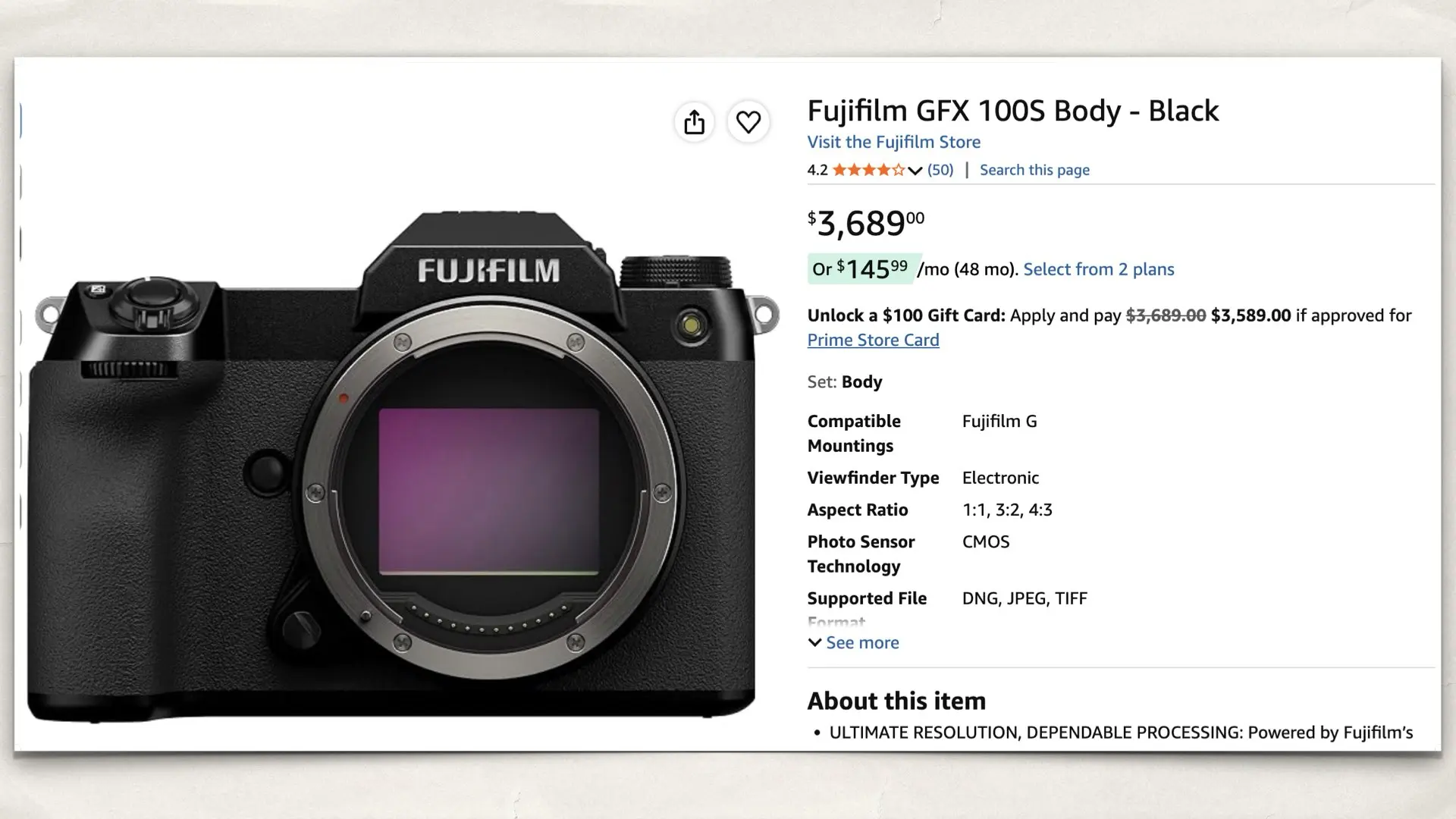
At $3,689 used in Like New condition, the GFX100S is probably the most important camera in this group from a pure value perspective. It gives buyers a 102MP medium-format sensor, in-body stabilization, a relatively compact body, and access to Fujifilm’s mature GF lens ecosystem for less than many current professional full-frame cameras. The main compromise is age. The GFX100S is no longer Fujifilm’s newest generation, so autofocus, processor speed, responsiveness, and video implementation are behind the latest GFX bodies. Even so, for studio work, landscape, architecture, product photography, and controlled commercial shooting, the image quality remains extremely competitive. The biggest caution is simply that this is a used listing, so condition and seller reputation matter almost as much as the price.
Hasselblad X2D 100C
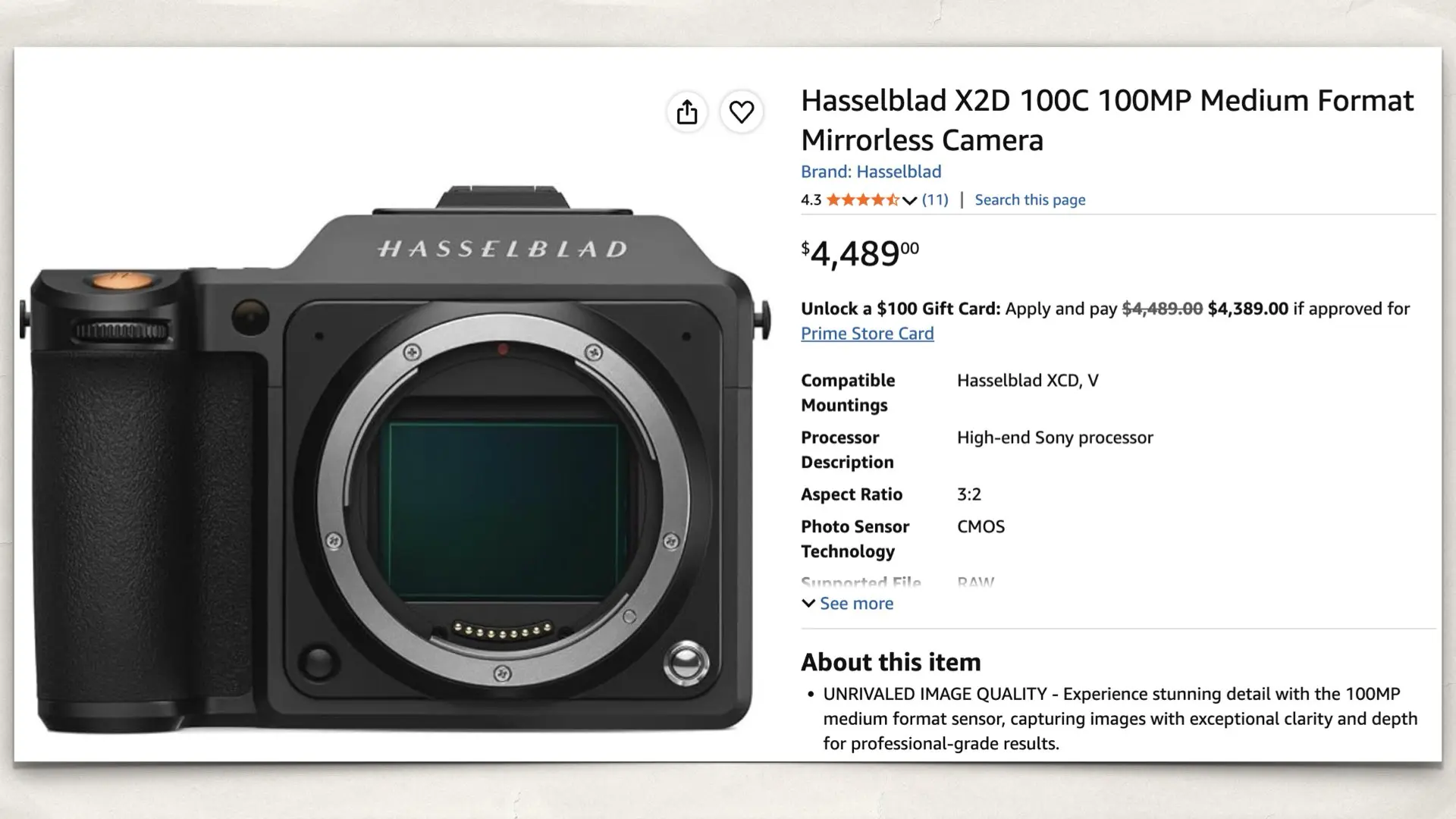
The used Hasselblad X2D 100C at $4,489 is another striking option because it brings 100MP medium format into territory that is no longer dramatically above premium full-frame pricing. Its strengths are straightforward: excellent image quality, strong color reproduction, a very refined body, in-body stabilization, and an interface that many photographers consider unusually clean. The tradeoff is that the X2D is still very much a photography-first camera. It is not designed as a hybrid video tool, autofocus performance is not its defining advantage, and the XCD lens ecosystem remains expensive. At this price, however, the value proposition becomes much easier to understand for photographers who care more about image quality and shooting experience than speed or video.
Fujifilm GFX100RF
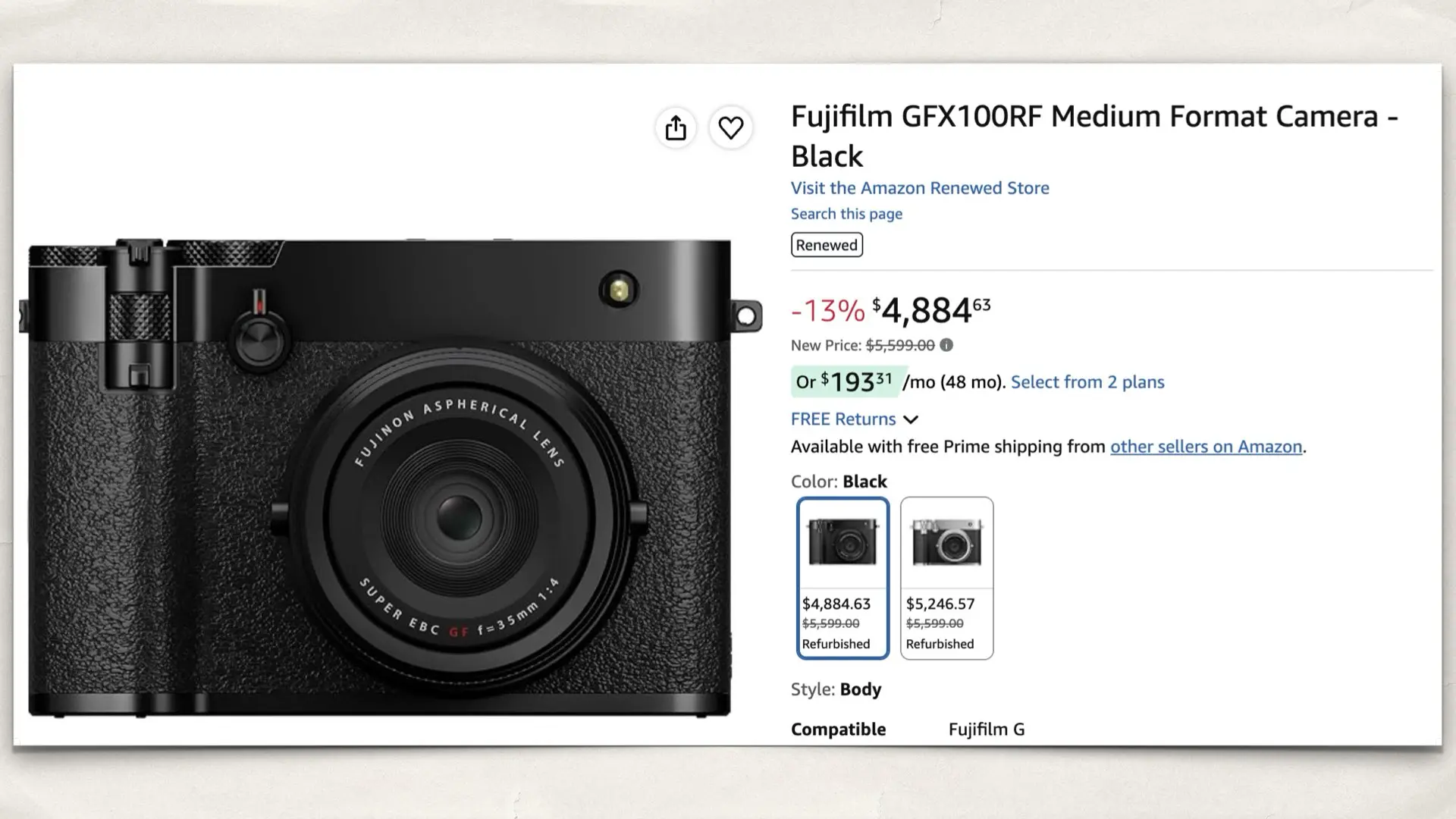
The GFX100RF ($5,599 on Amazon) sits in a different category because it is a fixed-lens camera rather than a conventional interchangeable-lens body. The refurbished listing at $4,884.63 makes it one of the least expensive ways to enter current-generation 100MP medium format, but the built-in lens changes the entire buying decision. The advantage is simplicity: one camera, one optimized lens, no need to build a GF lens kit, and a relatively portable package for a medium-format system. The disadvantage is equally obvious: you are committing to one focal length. For travel, documentary work, environmental portraiture, and photographers who already know they like that field of view, the concept can make a lot of sense. For studio, sports, wildlife, or anyone who wants lens flexibility, it is far more limiting than the price alone suggests.
Fujifilm GFX100S II
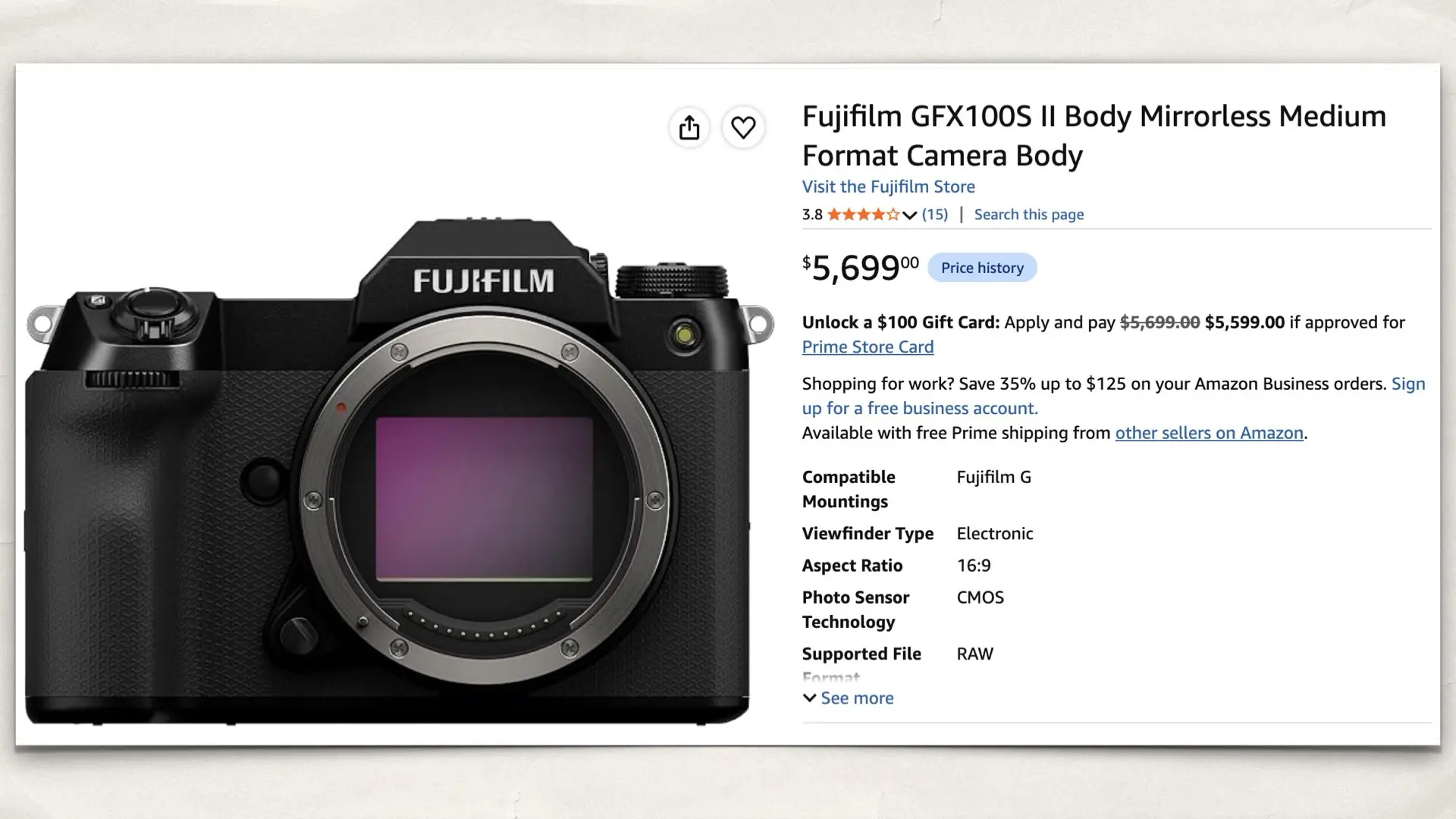
At $5,699 new, the GFX100S II ($5,699 on Amazon) represents the more sensible modern GFX entry point for buyers who want current-generation performance without moving all the way to the GFX100 II ($8,499 on Amazon). It keeps the 102MP medium-format format but improves autofocus, subject detection, processor performance, stabilization, and overall responsiveness compared with the original GFX100S. It is also a much more rounded hybrid tool. The downside is that the used GFX100S below $4,000 makes the price gap impossible to ignore. Buyers who mainly shoot static subjects may struggle to justify the extra money, while photographers working with people, movement, or video are more likely to benefit from the newer body.
Fujifilm GFX50R
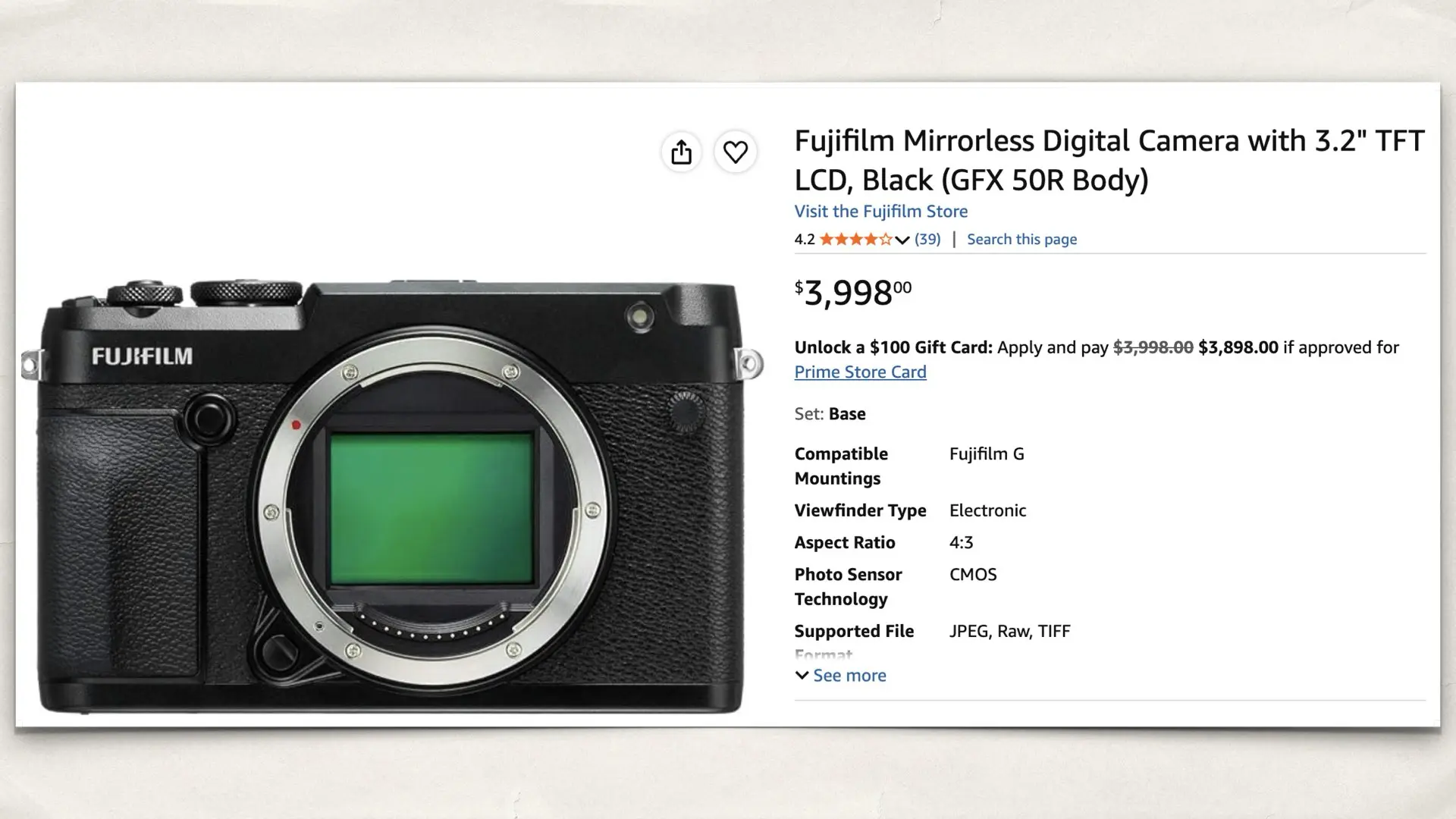
The GFX50R is one of the older cameras here, and its $3,998 used price shows why medium-format shopping requires context rather than simply sorting by price. It uses a 51.4MP sensor rather than the newer 100MP architecture and lacks the speed, stabilization, autofocus, and processing improvements found in later GFX bodies. What it still offers is a distinctive rangefinder-style design and the same large-sensor rendering that originally made the GFX system attractive. The problem is value. At nearly $4,000 used, it sits very close to the used GFX100S, which offers twice the resolution and a much more modern feature set. The GFX50R still has appeal for buyers who specifically want its body style, but it is difficult to view it as the obvious general-purpose choice at this price.
Fujifilm GFX50S
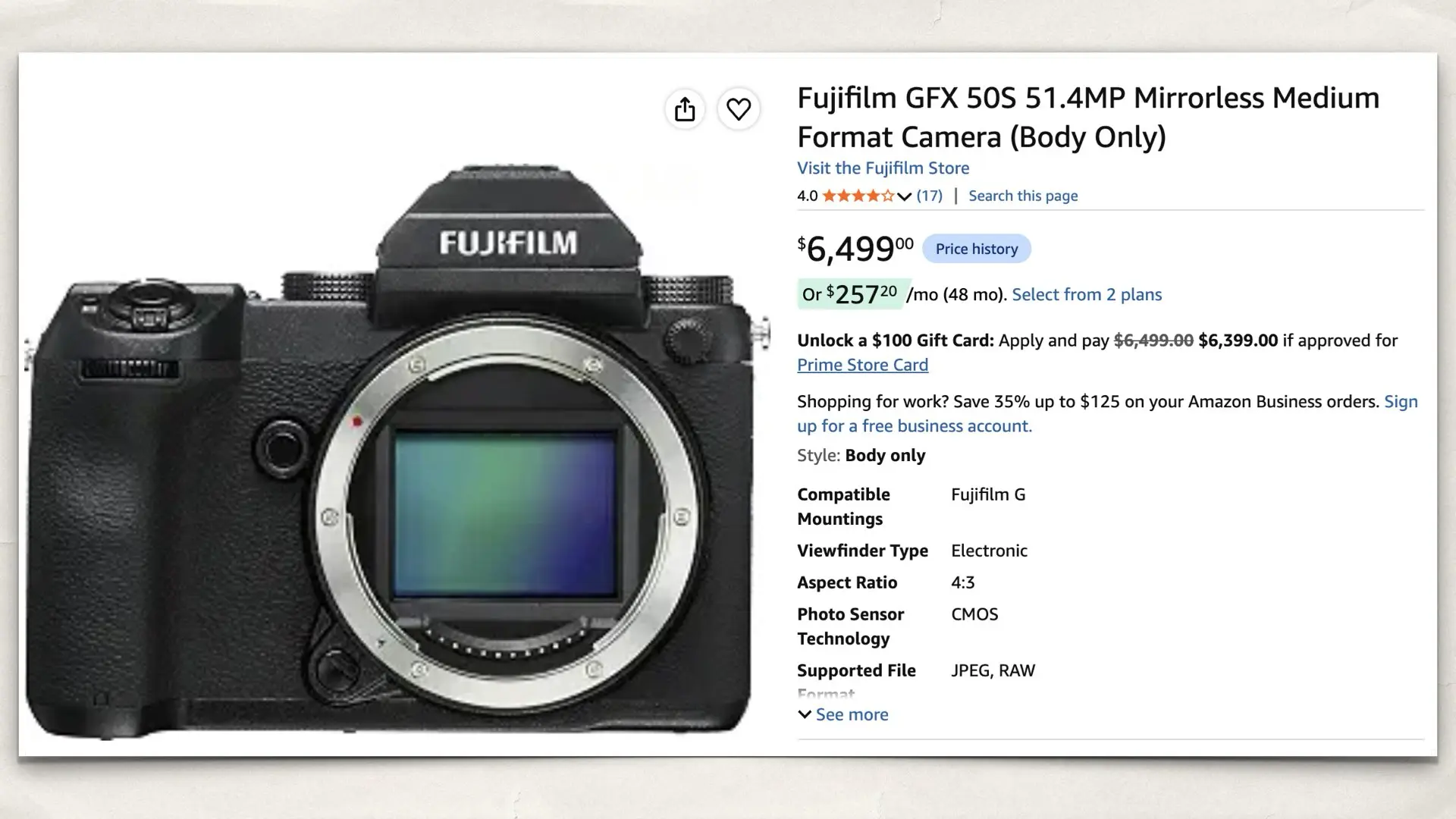
The GFX50S ($6,499 on Amazon) listing is perhaps the clearest example of why Amazon Marketplace prices need to be interpreted carefully. At $6,499 new, this older 51MP camera currently costs more than a brand-new GFX100S II. The camera itself is historically important and still capable of excellent image quality, especially for studio and landscape work, but its autofocus, body design, processing, stabilization situation, and overall speed reflect an earlier generation of the GFX system. There is nothing inherently wrong with buying one, but this particular new price makes little sense compared with newer alternatives. It is a reminder that availability on Amazon does not automatically mean competitive pricing.
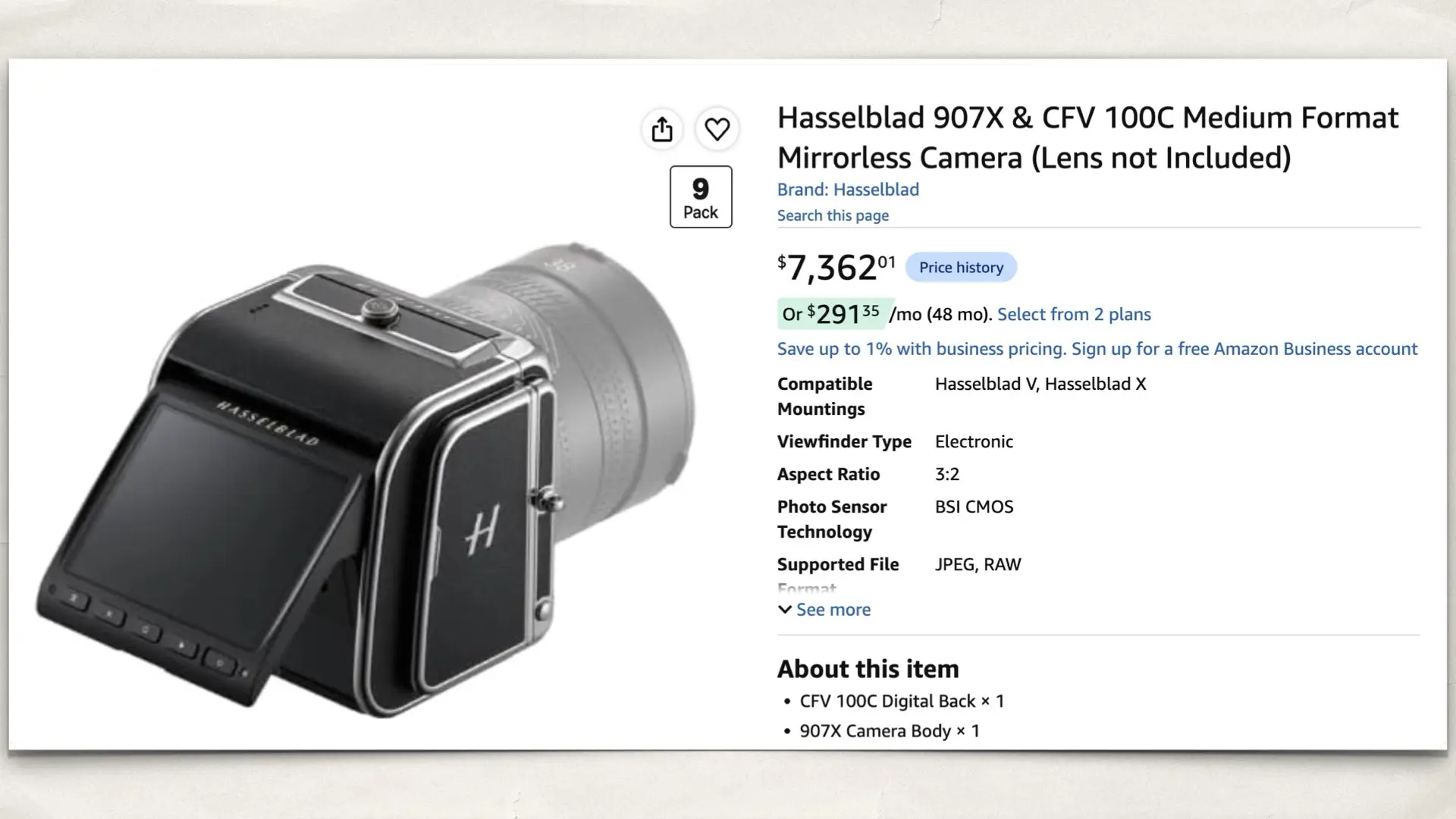
Hasselblad 907X + CFV 100C
At $7,362.01, the 907X and CFV 100C combination is the most specialized camera system in this group. It pairs Hasselblad’s 100MP digital back with the extremely compact 907X body, creating a modular system that can also connect to compatible Hasselblad V-system equipment. Its main advantage is versatility within the Hasselblad ecosystem and a shooting experience that is very different from a conventional mirrorless camera. The downside is equally clear: this is not the camera to buy if speed, autofocus performance, ergonomics, or all-purpose handling are priorities. It is better understood as a premium modular photographic tool for photographers who specifically value the digital-back concept and Hasselblad system compatibility.
Hasselblad X2D II 100C
The X2D II 100C at $7,799 represents the newer end of Hasselblad’s mirrorless lineup. It retains the 100MP medium-format concept while refining the shooting experience around autofocus, stabilization, processing, and general responsiveness. For photographers already invested in XCD lenses, it is the most straightforward Hasselblad option here. The downside is cost. Once the body approaches $8,000, lenses quickly push the complete system well into five figures, and buyers still need to accept that Hasselblad prioritizes photography rather than high-end video or sports-level performance. It makes the most sense for photographers who specifically want the Hasselblad system rather than buyers simply shopping for the most megapixels per dollar.
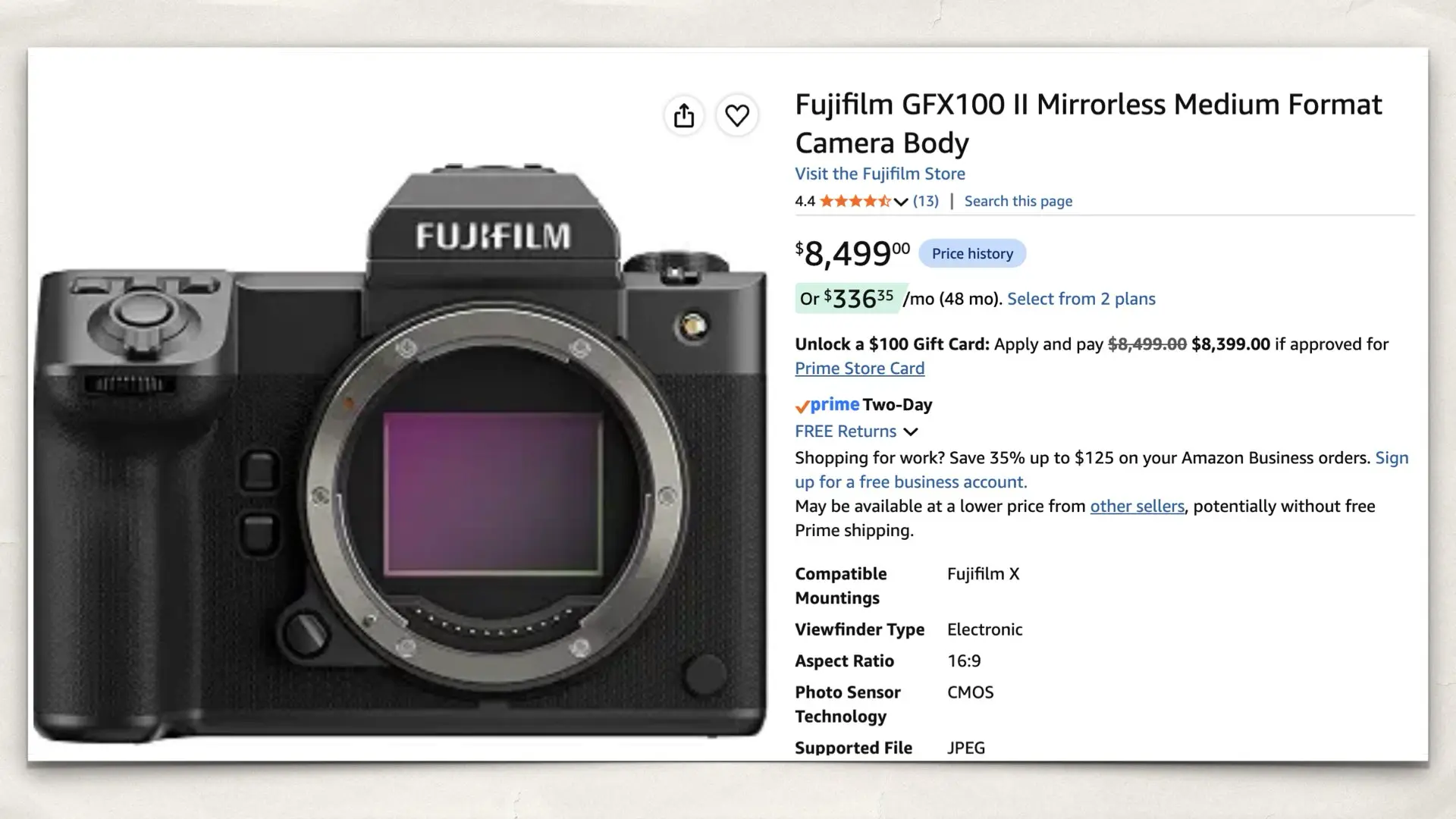
Fujifilm GFX100 II
At $8,499 new, the GFX100 II sits at the top of this Amazon group and shows how far the GFX system has expanded beyond slow, studio-oriented medium format. It combines 102MP resolution with far better autofocus, subject recognition, faster operation, strong stabilization, improved video capability, and a body designed to handle a wider range of professional work. It is the most performance-focused camera here and the one that comes closest to behaving like a modern high-end full-frame flagship while retaining the larger sensor. The downside is that this performance comes at a significant premium. Buyers focused mainly on static photography can get similar headline resolution for thousands less, especially on the used market. The GFX100 II makes more sense when speed, autofocus, video, and overall system performance are part of the requirement rather than resolution alone.
The bottom line
Amazon’s medium-format listings show a market that is now much broader than it was only a few years ago. The biggest shift is not simply that 100MP cameras have become cheaper. It is that buyers now have very different types of 100MP cameras at very different prices. A used GFX100S below $4,000 targets value-focused photographers, the GFX100S II provides a more modern middle ground, Hasselblad offers a more specialized premium shooting experience, and the GFX100 II pushes medium format further into high-performance territory. The main lesson is simple: megapixels are no longer enough to explain the price. With medium format, buyers need to look at autofocus, stabilization, generation, lens costs, body design, video features, condition, and seller quality. Amazon may now offer several ways into medium format, but the smartest purchase still depends on what kind of work the camera is actually expected to do.
Gear mentioned in this article
Available on Amazon
| Product | New | Renewed | Used |
|---|---|---|---|
| Fujifilm GFX100S | — | — | From $3,689 |
| Fujifilm GFX100RF | $5,599 | — | From $4,976 |
| Fujifilm GFX100S II | $5,699 | — | From $5,199 |
| Fujifilm GFX100 II | $8,499 | — | From $7,243 |
| Fujifilm GFX50R | — | — | From $3,998 |
| Fujifilm GFX50S | $6,499 | — | — |
Prices checked: Sep 27, 2026, 1:41 PM GMT+0000
As an Amazon Associate, Y.M.Cinema earns from qualifying purchases. If you buy through our links, we may earn a small commission at no extra cost to you.
Product prices and availability are accurate as of the date/time indicated and are subject to change. Any price and availability information displayed on Amazon.com at the time of purchase will apply to the purchase of this product.
CERTAIN CONTENT THAT APPEARS ON THIS SITE COMES FROM AMAZON. THIS CONTENT IS PROVIDED “AS IS” AND IS SUBJECT TO CHANGE OR REMOVAL AT ANY TIME.