There is a moment in the making of Heart of the Beast that neatly explains the philosophy behind the movie. Brad Pitt swims down to a submerged aircraft, enters the cabin, waits underwater for the call to action, performs the scene, and then returns to the surface for another breath. Normally, that kind of work would be handed to a stunt double. Here, Pitt’s face remains in the shot because Pitt is actually inside the aircraft. No digital double. No comfortable dry stage pretending to be the bottom of a lake. Just an actor, a camera, a submerged plane, and a carefully coordinated safety team. That approach runs throughout David Ayer’s survival thriller. Heart of the Beast was made with modern cameras and sophisticated visual effects, but its foundation feels refreshingly old school: put the performers in a real environment, photograph something physical, and use digital tools only where reality becomes impossible or unsafe.
A camera inside the wilderness
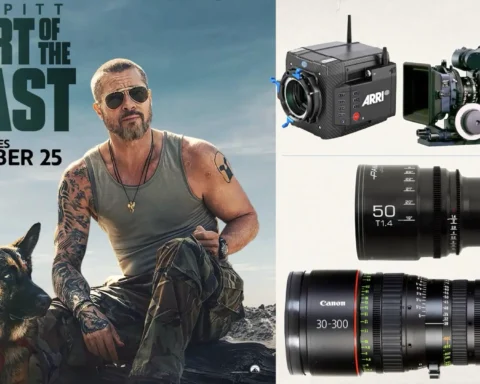
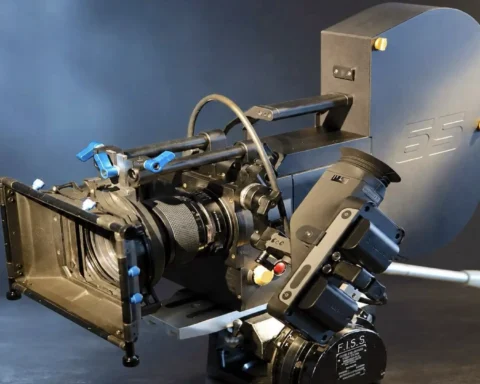
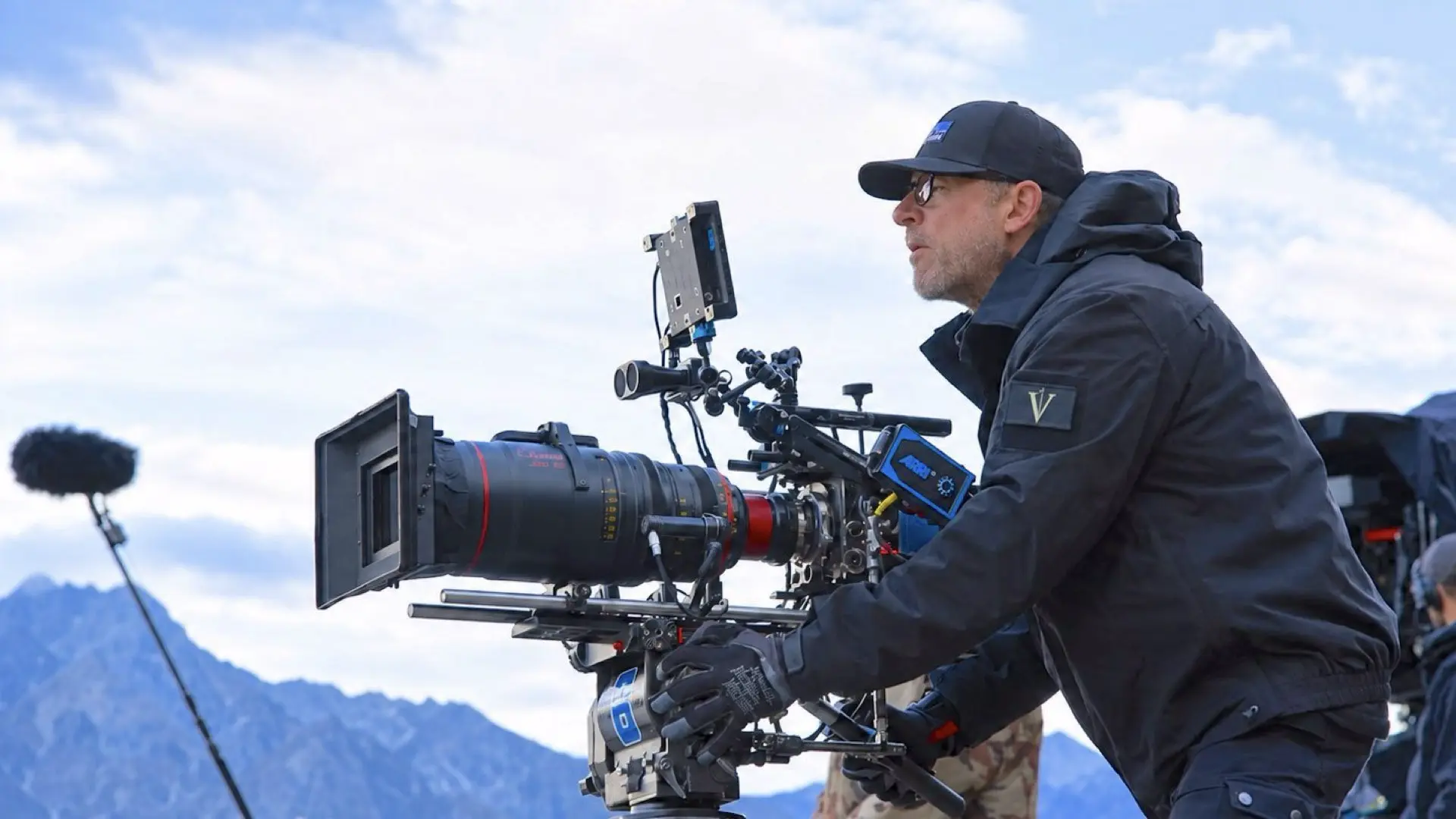
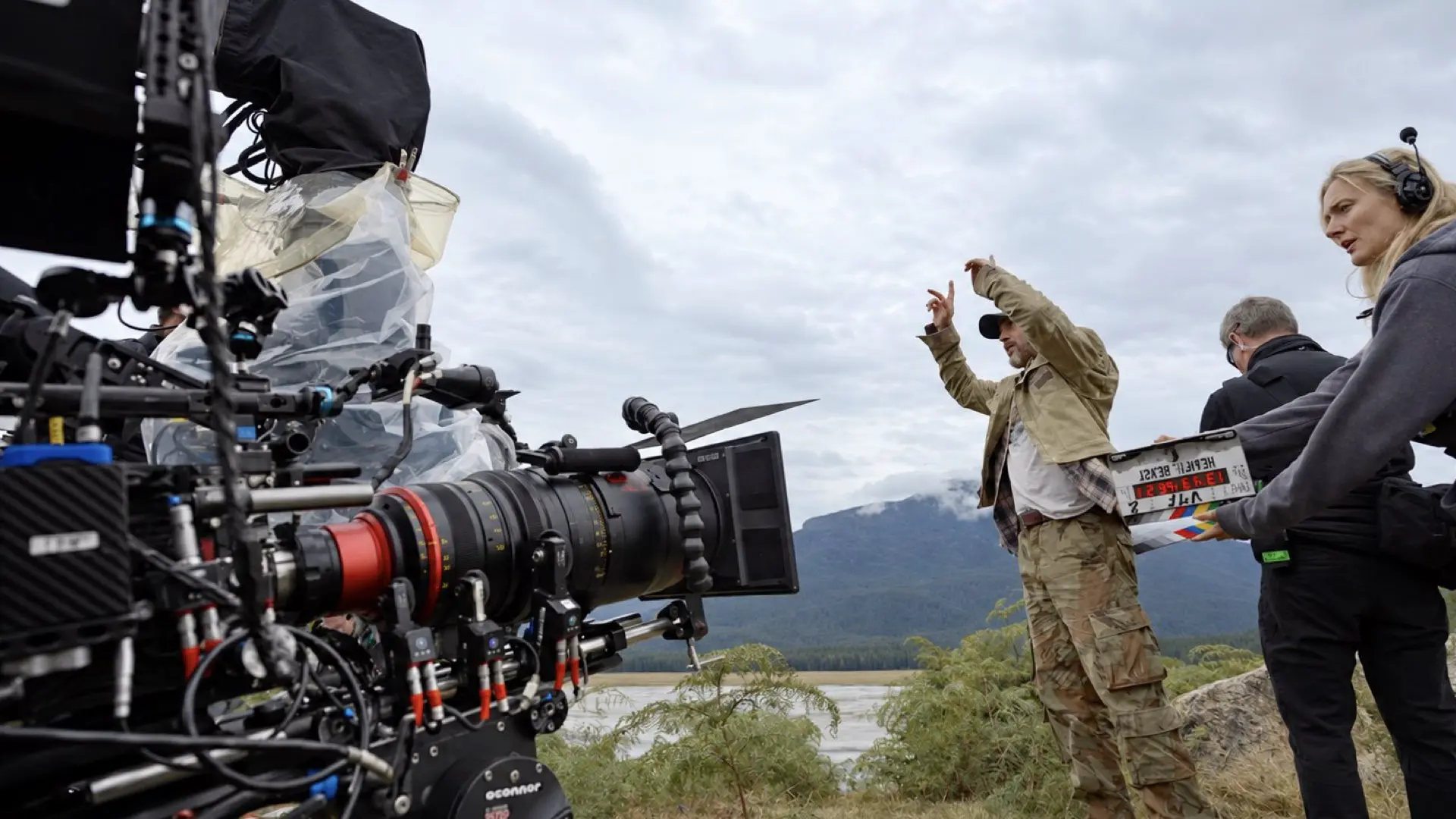
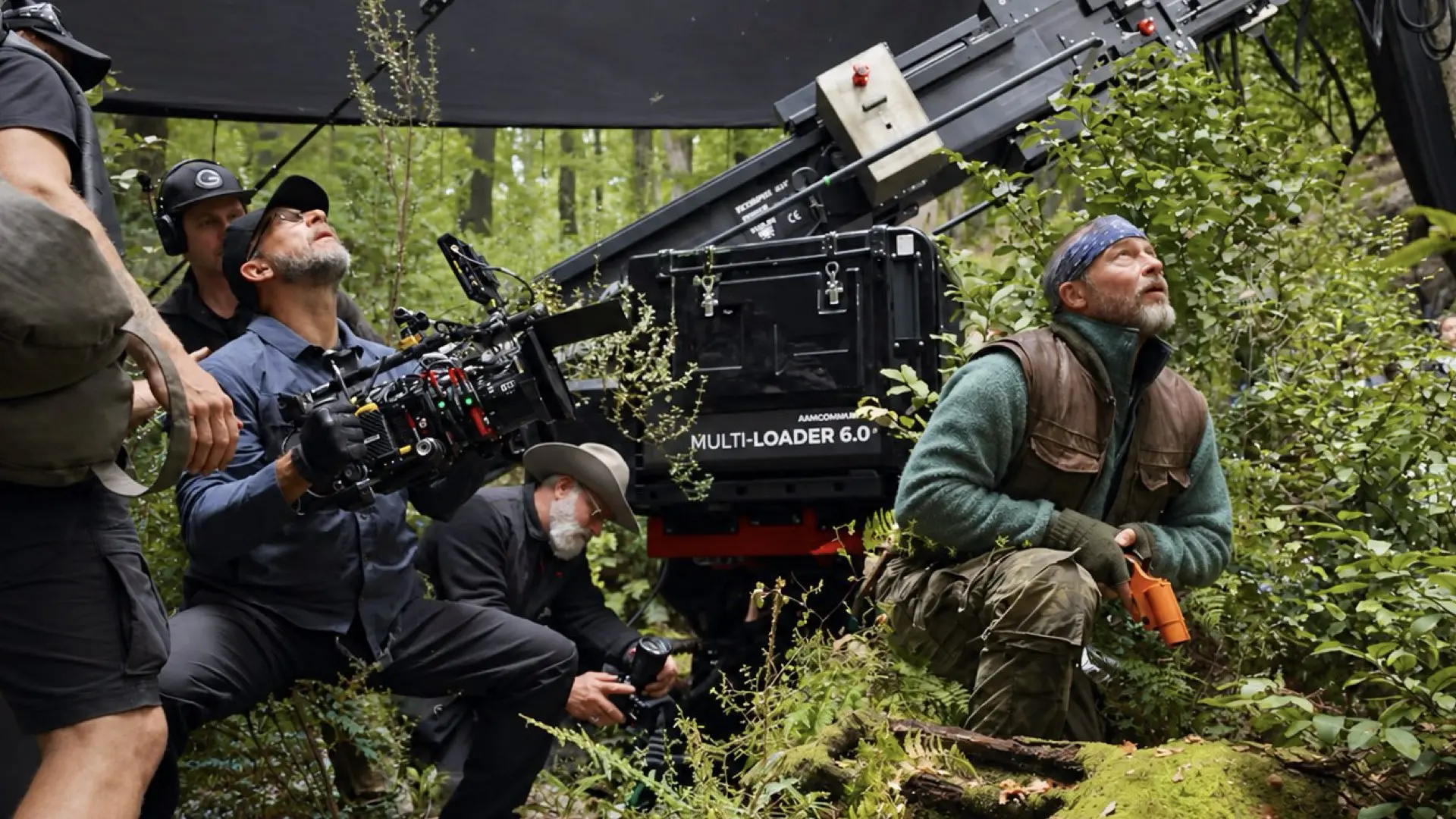
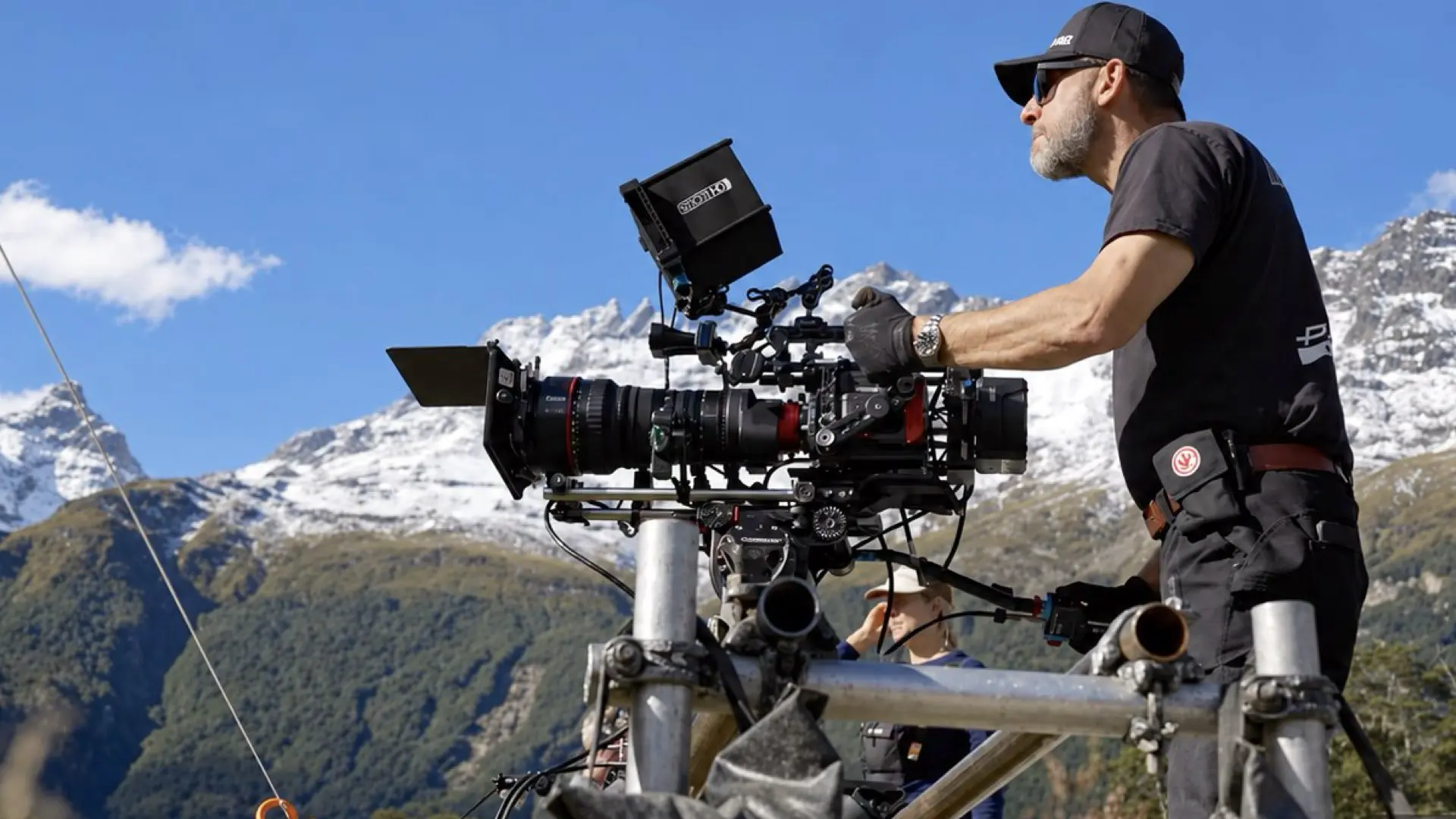
The movie was photographed primarily on Panavised ARRI ALEXA Mini LF cameras by cinematographer Mauro Fiore, ASC. New Zealand’s South Island stood in for Alaska, but the locations were not convenient roadside substitutes. Some were accessible only by helicopter. For one ridge sequence, the production was limited to three helicopter loads of equipment, with Pitt and the dog dropped directly onto the ridge and photographed inside the real landscape. That logistical restriction becomes part of the cinematography. A large format camera may provide expansive imagery, but it still has to reach the mountain. Camera bodies, lenses, support equipment, batteries, media, and safety gear had to be moved through ravines, over hills, and into areas where conventional production infrastructure did not exist. Ayer frequently operated a camera himself. He calls it the “emotion camera,” usually positioned closest to the action. A typical setup could employ three cameras: Fiore capturing the geography with a crane, another camera covering the action at a medium distance, and Ayer operating from inside the chaos. The goal was not perfectly diagrammed action. It was proximity, reaction, and controlled disorder.
From floating movement to handheld survival
Fiore designed the camera language to deteriorate with the characters’ situation. The beginning uses cable cameras and cranes, allowing the camera to float across idealized landscapes. As the journey becomes harsher, that visual stability begins to disappear. The camera moves closer to the ground, becomes more subjective, and eventually shifts heavily toward handheld photography. The progression is simple but effective: the camera begins by observing nature and ends up fighting through it. The 2.35:1 frame gives the landscape room to dominate, while the Mini LF allows the characters to remain visually present within those enormous spaces. The wilderness is not merely a background. It continuously threatens to overwhelm the human figure.
Customized Panavision glass
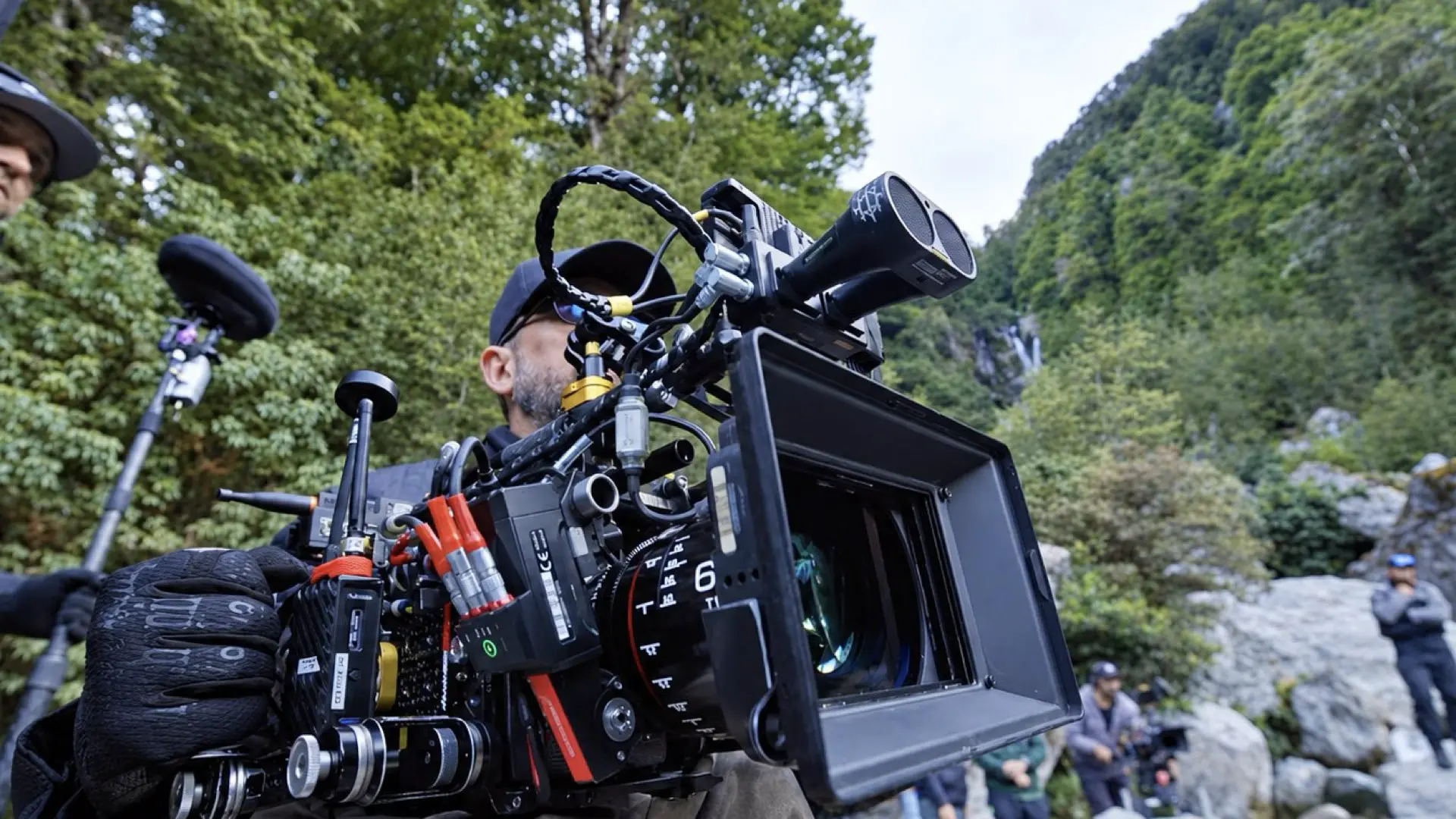
Fiore selected Panavision Panaspeed large format spherical primes as the primary lenses. Working with optical designer Dan Sasaki and Panavision’s Special Optics team, he modified their warmth and image falloff for the production. Panaspeeds can open to T1.4, an obvious advantage when working in remote locations where large lighting packages are impractical. Fiore, however, says he probably stopped around T2 because shooting completely open would have made focus unnecessarily difficult. That is an important distinction: fast glass provided flexibility, but the production did not chase shallow depth of field simply because it could. For selected images in the expressionistic third act, Panavision supplied customized Portrait Lenses. Their point of focus and bokeh were deliberately distorted, helping the movie move away from its initially romantic landscapes and toward something more psychologically unstable.
Real water, digitally connected
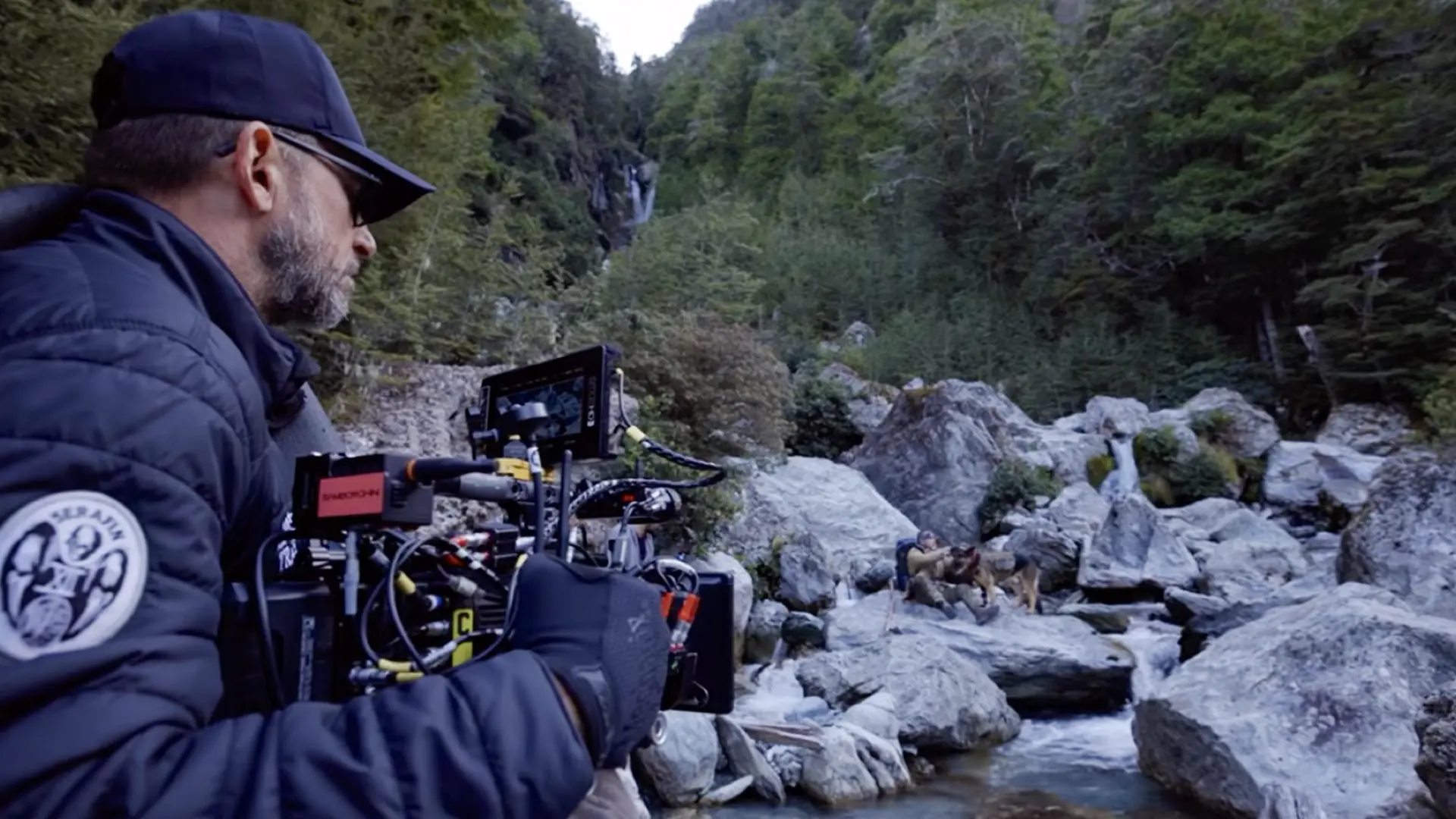
The river crossing demonstrates how old-school photography and modern production technology can work together without producing digital bullshit. The ideal river existed in New Zealand, but it was accessible only by helicopter followed by an hour carrying equipment on foot. Bringing Pitt, dogs, a full crew, cranes, and safety rigging into the gorge was impossible. Building an entire artificial river was also prohibitively expensive. The solution began with the real location. The team LiDAR scanned the gorge, selected a section of its rock formations, and reconstructed matching rocks on a backlot. The physical set was positioned according to the real sun so its lighting could connect naturally with the location. A Leica Total Station recorded the relationships between the camera, lens, actors, bridge, and rocks on the backlot. Those coordinates were transferred back into the location scan. A heavy-lift drone carrying an ALEXA and matching lenses could then be flown to the corresponding camera positions at the real river. The result combined performers and practical set pieces with photographed water and location plates. CG rocks and trees were used where necessary to join the elements, but the water itself remained real photography. The technology solved a physical filmmaking problem without replacing the physical world.
A real plane before a digital crash
The opening flight followed the same principle. Pitt flew in a real Cessna over the New Zealand mountains while Ayer operated from inside the cramped cabin. Those images established the camera positions, lenses, movement, and lighting language for everything that followed. For the crash, the aircraft was mounted on a motion base, while a six camera array attached to a helicopter retraced the real flight path to capture a spherical map of the environment. For the water impact, the crew mounted a hollow aircraft cockpit to a large truss rig and physically dropped it into a tank to generate a real collision and real splash. The dangerous portions were completed digitally, but the sequence was designed around real aircraft photography, physical movement, practical water, and Pitt’s performance. That is what makes Heart of the Beast feel like a production from another era. It is not anti technology and certainly not free of CGI. It simply follows an older rule that remains difficult to beat: first photograph something real. Then use technology to take it somewhere reality alone cannot reach. No AI bullshit here! Just the good old cinematography.