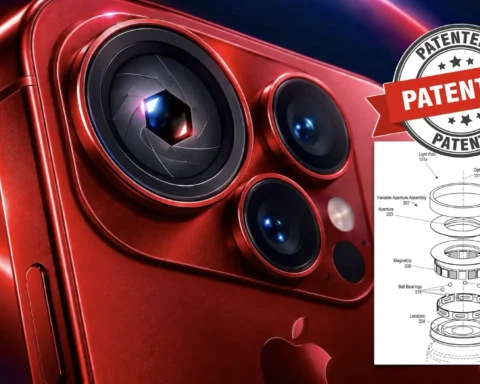
A new Apple patent titled Suspension Wires For Optical Image Stabilization (OIS) Function Of Cameras, reveals how suspension wires and springs might give iPhones cinema-grade optical image stabilization. Here’s what it means for mobile filmmakers.

Apple’s latest camera patents are coordinated components of a much larger vision. From smarter cooling to advanced dynamic range, and now to physically rethinking image stabilization mechanics, the company is systematically removing every barrier between mobile cameras and professional cinema tools.
Building a Better Camera, Wire by Wire
Apple’s latest patent, titled “Suspension Wires For Optical Image Stabilization (OIS) Function Of Cameras,” introduces a clever new way to stabilize image sensors inside mobile cameras. And while it may sound like a small mechanical tweak, it represents something much bigger: Apple’s continuous push to transform the iPhone into a truly professional cinematography tool. This time, the innovation is about how the camera module physically handles motion, the kind of stabilization that separates jittery clips from smooth, cinematic footage.

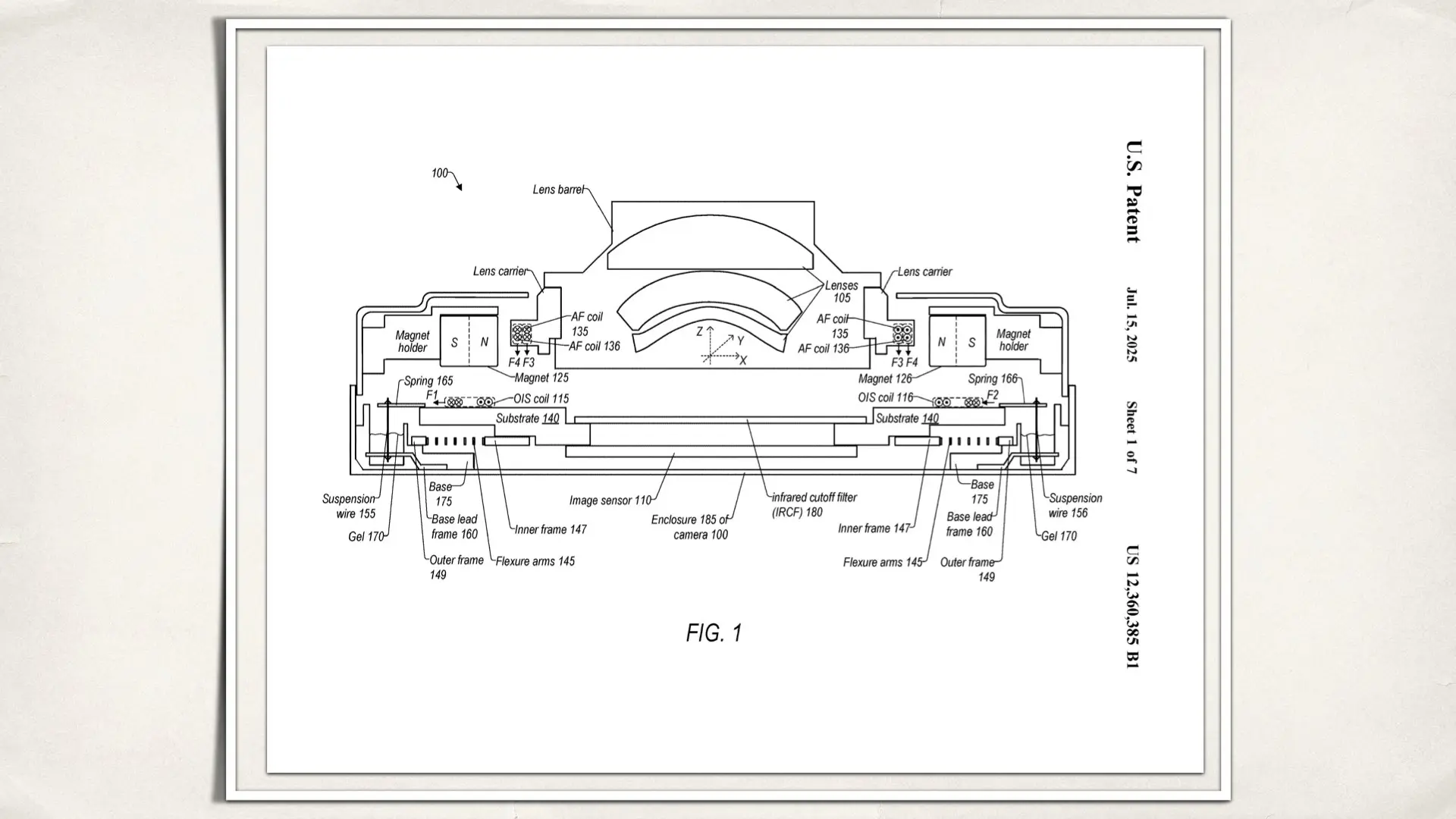
A camera may include at least one actuator configured to move an image sensor relative to one or more lenses in one or more directions to implement an optical image stabilization (OIS) function. The camera may include a first suspension wires having one or more flexure arms to allow the image sensor to move relative to the lenses in the one or more directions for performing the OIS. The camera may further include a second suspension structure having one or more suspension wires to stabilize the image sensor and restrain it from moving in other directions.
– From the Apple’s patent Suspension Wires For Optical Image Stabilization (OIS) Function Of Cameras
What’s New in Apple’s Patent?
At the heart of Apple’s new patent is a novel approach to optical image stabilization (OIS), a system designed to compensate for the tiny movements and shakes that occur while taking a photo or shooting a video. Traditionally, OIS in smartphone cameras relies on a mechanism that allows the image sensor to move slightly in two directions (X and Y) to counteract motion. This movement is typically made possible by flexure arms — ultra-thin, spring-like structures that hold the image sensor in place while allowing it to shift when needed. But here’s the engineering problem: flexure arms must be flexible in the horizontal plane (X and Y) to allow stabilization, while also being stiff along the vertical axis (Z) to prevent unwanted movement that can mess with the focus or alignment. Balancing flexibility and stiffness becomes especially difficult as sensors get larger and heavier (large format anyone?), which is exactly where smartphone camera tech is headed.
Apple’s new design solves this dilemma by splitting the job of movement and stability into two separate systems:
-
The First Suspension System: This is the traditional setup flexure arms that allow the sensor to shift slightly side to side (X/Y) when OIS is engaged. These arms handle stabilization but no longer need to carry the burden of vertical (Z-axis) support.
-
The Second Suspension System: This is the breakthrough. Apple introduces a system of thin suspension wires connected to tiny springs, positioned to support the sensor along the Z-axis — meaning, they help keep the sensor stable in depth while the flexure arms do their job laterally. These wires don’t interfere with side-to-side movement but provide vertical stiffness, preventing the sensor from wobbling or drifting forward and backward.
This clever decoupling has multiple advantages:
-
It reduces the design pressure on flexure arms, which can now be optimized purely for lateral movement.
-
It simplifies manufacturing, because extreme precision in arm design is no longer as critical.
-
It allows for larger sensors, which are essential for better low-light performance and higher image quality — both major goals for mobile cinematography.
Apple even notes that these suspension wires can also be used to carry electrical signals, such as power or data, between the sensor and other components. This adds further integration without increasing complexity. In other words, this patent doesn’t just improve image stabilization but paves the way for more advanced camera modules in devices that have extremely limited space, like smartphones, AR/VR headsets, or compact pro tools. It reflects the kind of mechanical innovation that makes high-end image quality possible in a thin device.
Put all of these together, and it becomes clear: Apple is racing to engineer a full-featured professional camera inside the iPhone.

Why It Matters for Pro Mobile Filmmaking
This mechanical improvement is a necessary step toward pro-level mobile cinematography. Apple is working to physically decouple stabilization and focusing systems inside an incredibly tight space, creating a platform that supports much heavier and more capable sensors. And this fits perfectly into Apple’s recent stream of high-end camera patents, which collectively paint a clear picture: The iPhone is evolving into a professional imaging device.
Take a look:
-
Apple’s New Battery Patent Hints at Small Cameras With Professional Potential shows how miniaturized, high-performance batteries could power more advanced image processors in tight smartphone housings.
-
Apple Reinvents the Iris: New Patent Reveals Soft-Membrane Aperture for Future iPhone Cameras dives into Apple’s plan to use flexible materials to create variable apertures in miniature modules.
-
Apple’s Active Cooling Patent May Unlock the Future of Mobile Cinematography highlights how Apple plans to tame heat buildup during long high-resolution shoots.
-
Apple Just Patented an Image Sensor With 20 Stops of Dynamic Range, which could dramatically improve highlight and shadow recovery in mobile video.
Put all of these together, and it becomes clear: Apple is racing to engineer a full-featured professional camera inside the iPhone.

Smart Design for Smarter Manufacturing
Another often overlooked win here: manufacturability. By offloading the vertical stability role to simple suspension wires, Apple no longer needs to push the flexure arms to do it all. This not only makes the system more robust but also easier to build consistently at scale, a critical factor when you’re shipping tens of millions of units. More design flexibility means better tolerances, higher yield rates, and ultimately, more consistent OIS performance across devices.


Final Takeaway: The Professional iPhone Camera Isn’t Science Fiction — It’s a Patent Trail
Apple’s latest camera patents are coordinated components of a much larger vision. From smarter cooling to advanced dynamic range, and now to physically rethinking image stabilization mechanics, the company is systematically removing every barrier between mobile cameras and professional cinema tools. If this dual-suspension system makes it into future iPhones, expect smoother, sharper, and more reliable handheld shooting, even in extreme conditions. For mobile filmmakers, that’s a game-changer.