
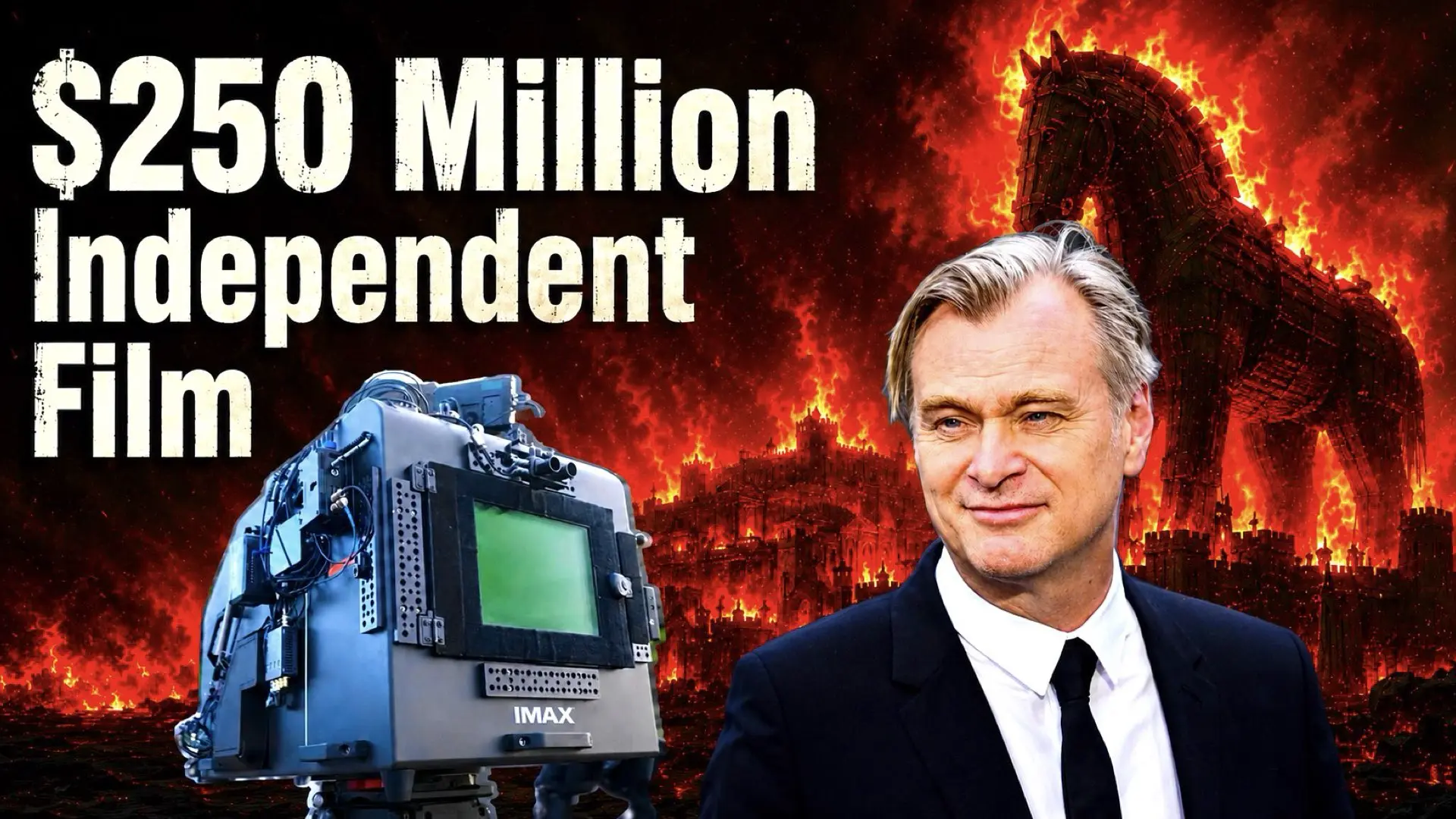
Christopher Nolan’s The Odyssey is beautiful, ambitious, and undeniably impressive on an IMAX screen. Its landscapes possess extraordinary texture, its close-ups carry tremendous weight, and its enormous 70mm frames frequently make the viewer feel physically present beside Odysseus and his crew. There is no doubt that this is a film worth experiencing in IMAX. It is also a film that demands another viewing. Yet for a production reportedly carrying a budget of approximately $250 million, The Odyssey often feels surprisingly restrained. Sometimes, it feels less like a massive Hollywood epic and more like an independent film made by Christopher Nolan with access to the most advanced large-format cinematography system in the world. That is not necessarily an insult. It may be the defining characteristic of the entire production.

Compared with the muscular visual language of productions such as Troy and Gladiator, the combat in The Odyssey can feel surprisingly limited. The scenes lack the kinetic momentum, geographic clarity, and choreographed escalation normally associated with a large Hollywood historical epic.
A Monumental image, but not always a monumental movie
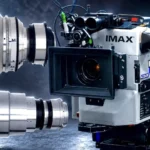
The Odyssey is the first feature film photographed entirely with IMAX film cameras. Nolan and cinematographer Hoyte van Hoytema used the format not merely for selected action sequences or visual highlights, but as the photographic foundation of the entire movie. The result is technically remarkable. Faces, costumes, water, stone, fire, ships, and natural landscapes are captured with a richness that digital cinematography still struggles to reproduce. The image is organic, highly detailed, and immersive without appearing artificially polished. But an enormous image does not automatically create enormous cinematic spectacle. This becomes particularly apparent during the film’s battle sequences. Compared with the muscular visual language of productions such as Troy and Gladiator, the combat in The Odyssey can feel surprisingly limited. The scenes lack the kinetic momentum, geographic clarity, and choreographed escalation normally associated with a large Hollywood historical epic. There are weapons, formations, bodies, mud, and physical contact, but the action rarely develops into a truly overwhelming cinematic event. Rather than presenting war as an immense, carefully orchestrated spectacle, Nolan often photographs it as a raw incident occurring in front of the camera. At times, the simplicity is so pronounced that the scenes could have been produced in a forest or an accessible exterior location by a much smaller production. The image remains magnificent, but the filmmaking around it feels intentionally stripped down. It is as though a powerful independent filmmaker had somehow acquired a $250 million budget and several IMAX cameras, but had refused to adopt the conventional visual machinery of a $250 million studio blockbuster.
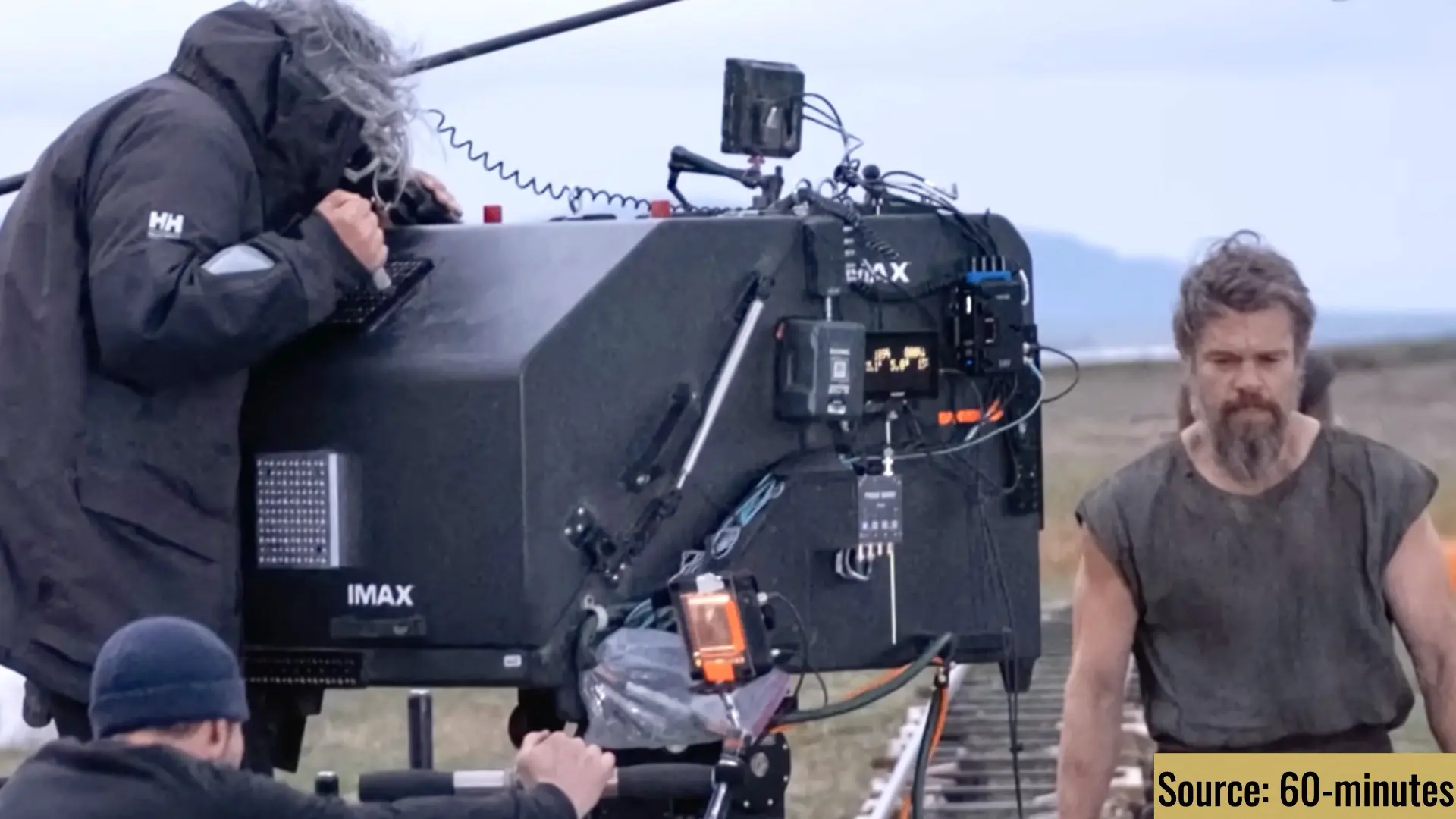
Yet for a production reportedly carrying a budget of approximately $250 million, The Odyssey often feels surprisingly restrained. Sometimes, it feels less like a massive Hollywood epic and more like an independent film made by Christopher Nolan with access to the most advanced large-format cinematography system in the world.
The physical reality of shooting everything in IMAX
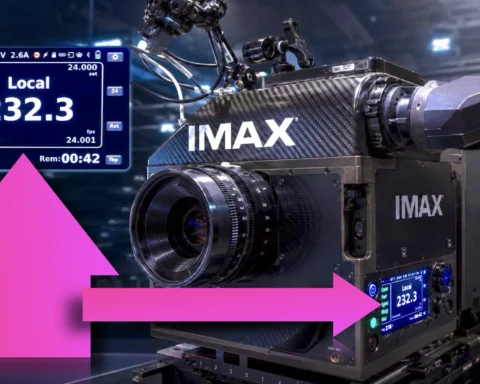
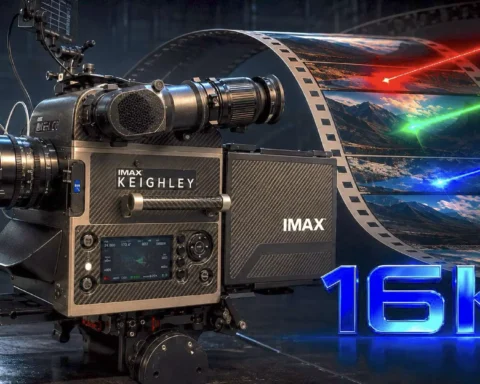
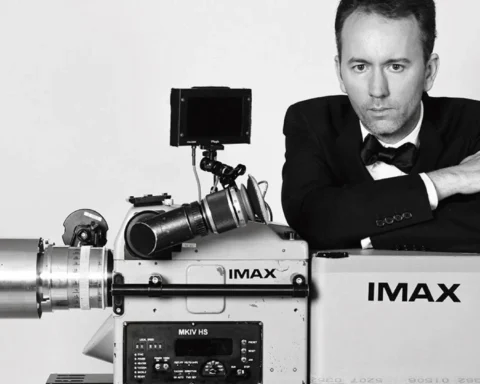
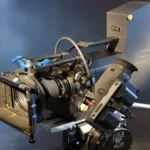
The decision to shoot an entire narrative feature on IMAX film was a historic technical achievement. It was also an enormous operational challenge. Traditional IMAX film cameras are large, mechanically noisy, and significantly less flexible than modern digital cinema cameras. IMAX developed a new camera, codenamed Keighley, which reduced some of those limitations and made all-IMAX production more practical. Nevertheless, quieter does not mean silent. For dialogue scenes that required synchronized production sound, the camera could still be placed inside a huge sound-insulating enclosure known as a blimp. Cast members publicly described the scale and noise of the camera system, with Nolan explaining that sound had long been the main obstacle preventing him from shooting an entire feature on IMAX. The production even developed creative workarounds to preserve communication and eye contact between performers when the enormous camera enclosure physically occupied the space between them. That ingenuity deserves admiration. But it also demonstrates the extraordinary compromises required to serve the format. Every camera system shapes the visual language of the movie being photographed. A compact digital body can be mounted, carried, stabilized, hidden, accelerated, or placed inside a chaotic action environment with relative freedom. A large-format film camera, particularly when surrounded by additional soundproofing hardware, naturally imposes a different rhythm. It influences where the camera can be positioned, how rapidly it can be moved, how many cameras can cover an event simultaneously, and how closely the operator can enter a complicated physical sequence. It would be too simplistic to claim that IMAX prevented Nolan from creating more dynamic action. Nolan and van Hoytema are far too experienced for the equipment to dictate every creative decision. However, the trade-off is visible. The same system that produces astonishing faces and landscapes may also discourage the fluid, aggressive, multidirectional coverage that traditionally helps filmmakers construct large battle sequences.
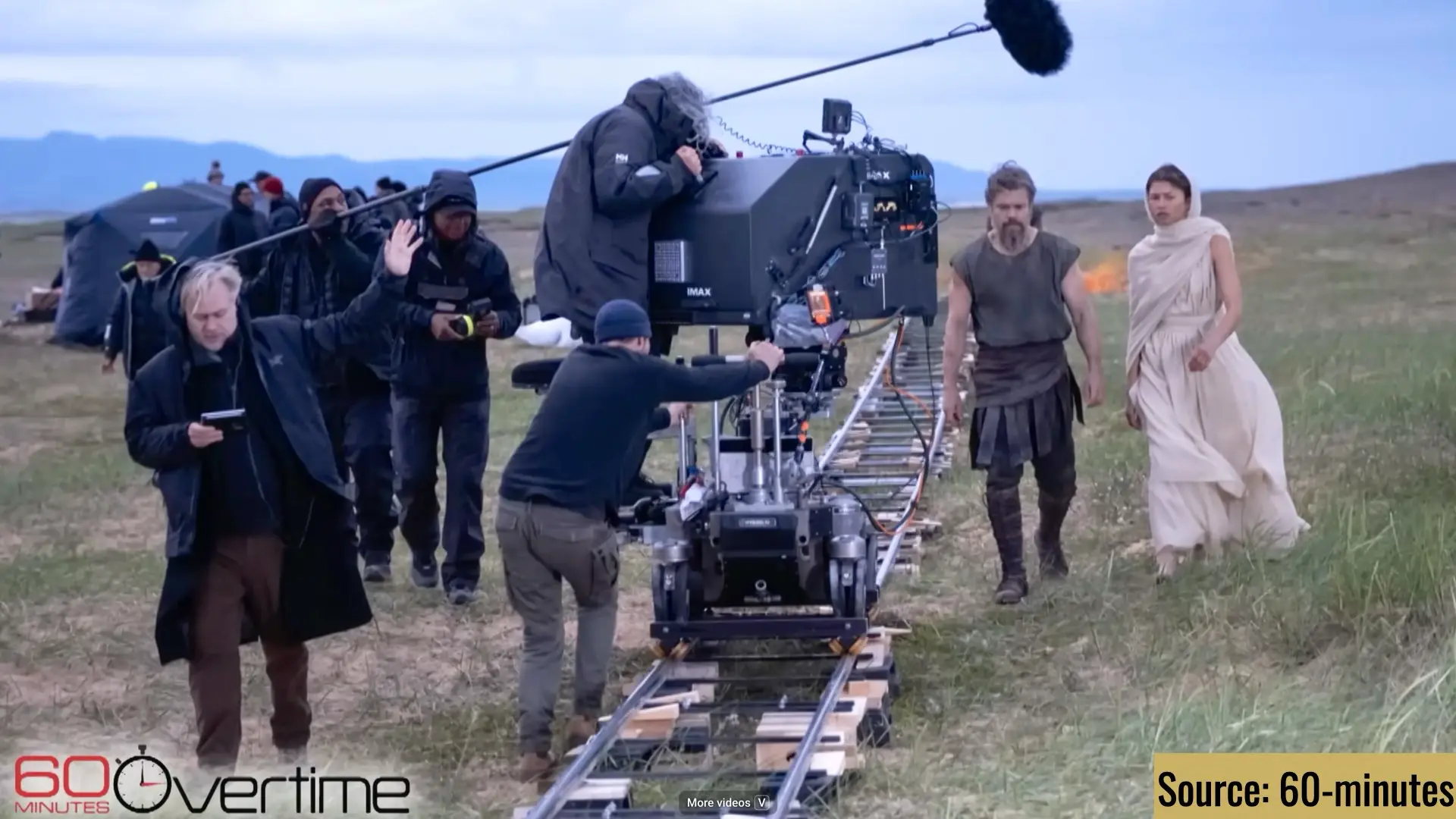
It would be too simplistic to claim that IMAX prevented Nolan from creating more dynamic action. Nolan and van Hoytema are far too experienced for the equipment to dictate every creative decision. However, the trade-off is visible.
Troy photographed a war. The Odyssey photographs men inside one
The comparison with Troy is especially relevant because both films operate within the same mythological world. Wolfgang Petersen’s film was designed as a classical Hollywood war epic. Its action sequences establish the scale of the armies, the geography of the battlefield, the movement of individual fighters, and the strategic relationship between commanders and soldiers. The camera is constantly helping the viewer understand the event. Wide establishing shots create scale. Medium shots clarify movement. Close-ups create impact. Rapid cuts connect personal combat with the larger battle. Ridley Scott employed a similarly deliberate visual architecture in Gladiator. Its battles are chaotic, but they are engineered chaos. The camera, editing, sound design, stunt work, visual effects, and production design cooperate to amplify the spectacle. Nolan takes a different approach. Troy photographed a war. The Odyssey frequently photographs men trapped inside one. The camera does not always step back to organize the battle for the audience. It stays close to bodies, faces, armor, dust, and confusion. That creates physical immediacy, but it can also reduce the perceived scale of the event. The viewer may understand that a huge conflict is taking place without necessarily feeling that the film has shown it. This is a valid artistic choice. It is arguably closer to the confusion experienced by an individual soldier than the clean, panoramic perspective offered by many historical blockbusters. But it also makes the film less satisfying as pure action cinema. The battles feel observed rather than choreographed for maximum cinematic impact.
This can make the movie feel smaller than its budget. It can also make it feel more honest.

Practical filmmaking without the Hollywood gloss
Nolan’s determination to capture physical reality is evident throughout The Odyssey. The production traveled extensively, placed actors in actual environments, built functioning vessels, exposed the cast to difficult weather and water, and attempted to photograph as much as possible directly through the lens. Matt Damon described it as the hardest film he had made, citing both the scale of Nolan’s ambition and the physical preparation required for the role. Other cast members have similarly discussed the demanding locations, rough seas, practical environments, and Nolan’s resistance to creating the journey inside a comfortable studio. This commitment gives the film considerable authenticity. The sea looks hostile because the actors are actually on the sea. The wind, water, terrain, sunlight, and physical exhaustion cannot be perfectly reproduced through digital compositing. But Nolan’s practical approach does not necessarily produce the polished grandeur expected from a modern blockbuster. There are moments when the locations look like locations rather than enormous movie sets. Some environments feel exposed, sparse, and almost ordinary. Instead of digitally enlarging every setting or filling the background with additional visual information, Nolan allows the natural landscape to remain visible in its imperfect simplicity. This can make the movie feel smaller than its budget. It can also make it feel more honest. The apparent contradiction may be intentional. Nolan has used the resources of a major studio not to manufacture an immaculate fantasy world, but to transport a relatively traditional filmmaking operation into real environments and photograph what happens there. The scale exists behind the camera more than in front of it.
The world’s most expensive ‘independent production’
Independent filmmaking is not defined exclusively by a low budget. It can also describe a method and a mentality: a director maintaining strong authorship, working efficiently, rejecting standardized visual solutions, and structuring the production around a specific creative obsession. By that definition, The Odyssey may be the most expensive independent film ever produced. It is unmistakably a Christopher Nolan film. There appears to have been little effort to make it conform to the established appearance of contemporary fantasy franchises or historical action movies. It does not resemble a Marvel production, a streaming spectacle, or even a conventional sword-and-sandals epic. Its visual identity is determined by Nolan’s interests: physical reality, mechanical filmmaking, enormous film formats, natural environments, minimal digital mediation, subjective experience, and actors placed under genuine physical pressure. Universal did not spend approximately $250 million to force Nolan into the Hollywood system. It effectively financed his escape from it. That freedom produces some of the film’s greatest images. It may also explain why certain action sequences feel unexpectedly modest.
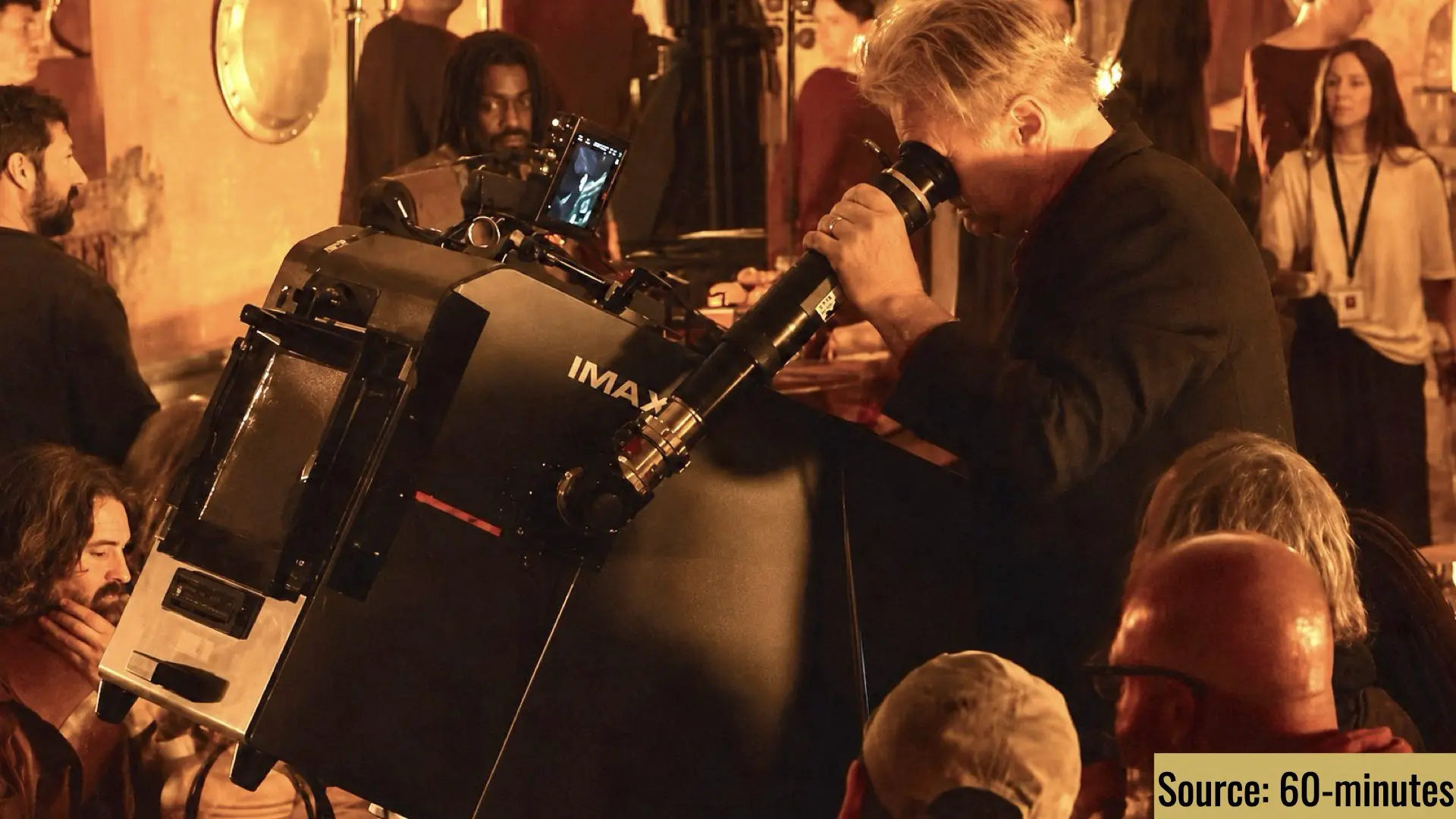
Independent filmmaking is not defined exclusively by a low budget. It can also describe a method and a mentality: a director maintaining strong authorship, working efficiently, rejecting standardized visual solutions, and structuring the production around a specific creative obsession. By that definition, The Odyssey may be the most expensive independent film ever produced.
Bigger images do not automatically create bigger action
The Odyssey demonstrates an important distinction between image quality and cinematic impact. IMAX can provide extraordinary resolution, scale, color, texture, and immersion. It can make a human face feel monumental and transform a real landscape into a tactile environment. But it cannot independently create movement, tension, choreography, geography, or dramatic escalation. Those qualities come from blocking, lens selection, camera placement, camera movement, stunt coordination, editing, sound, and the relationship between shots. In The Odyssey, the photography is often more impressive than the action being photographed. That does not make the IMAX experiment a failure. On the contrary, the film proves that the format can sustain an entire narrative, including intimate dialogue scenes, without constantly feeling like a succession of oversized showcase sequences. However, it also reveals that shooting everything in the largest possible format does not make every scene feel larger. Occasionally, the opposite happens. The astonishing clarity of IMAX exposes the simplicity of the location, the limited number of moving elements, or the relatively restrained choreography. The format magnifies not only production value, but also its absence.
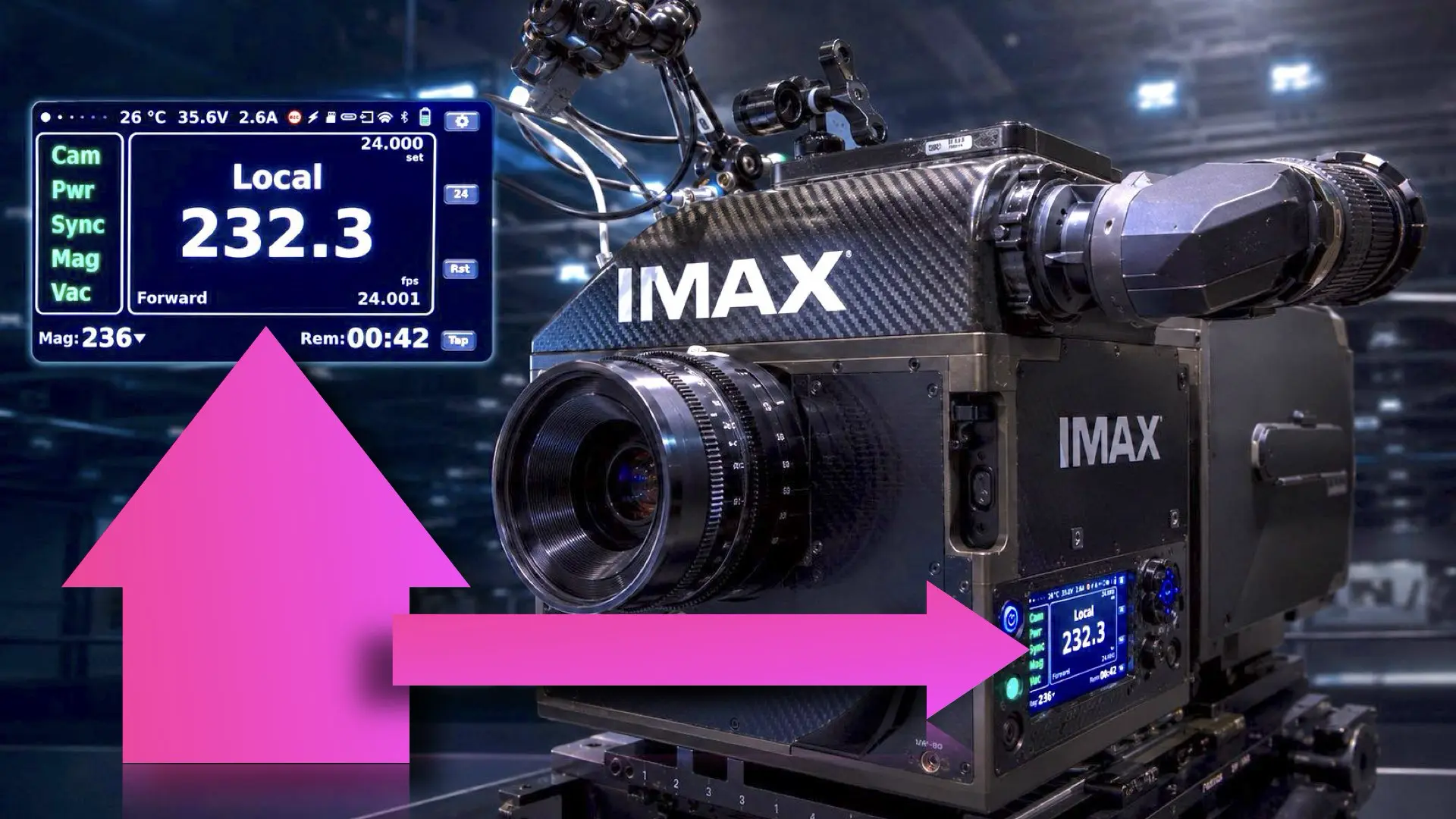
In The Odyssey, the photography is often more impressive than the action being photographed.
An overrated film and an essential cinematic experiment
Calling The Odyssey overrated does not mean dismissing it. The film is visually beautiful, technically significant, and frequently absorbing. Its commitment to film, practical production, and theatrical exhibition should be celebrated at a time when many expensive movies increasingly resemble digitally assembled content. It deserves to be seen in IMAX, and it deserves to be seen more than once. But the scale of the achievement surrounding the movie should not prevent a critical assessment of what appears on the screen. The battle sequences are not as dynamic or memorable as those in Troy or Gladiator. Some supposedly epic moments feel surprisingly sparse. The filmmaking can appear more rugged than majestic and more immediate than spectacular. Perhaps that is precisely the point. Nolan has not made a traditional $250 million Hollywood epic. He has made a highly personal, physically demanding, technologically unprecedented independent film and persuaded a major studio to finance it. The Odyssey is monumental in format but frequently modest in visual construction. It is both an impressive demonstration of what IMAX film can achieve and a reminder of what the format cannot provide by itself. Whether that feels radical or underwhelming depends on what the viewer expects from the word “epic.”. Having said all of that, it deserves an Oscar.




I wondered if he was trolling Hollywood with his casting.
Exactly! The author put into words exactly what I was feeling about the movie. Great article.